

Many UK landlords assume predictive maintenance is an industrial luxury reserved for factories and warehouses, far too expensive for residential properties. That misconception is outdated. Sensor costs have dropped by over 40% in the last 3 years, making predictive maintenance accessible to small and medium property owners. This article explores how you can implement predictive maintenance to reduce energy consumption, comply with upcoming regulations, and protect your property investments through proactive upkeep.
Table of Contents
- Understanding Predictive Maintenance
- Technologies And Tools Enabling Predictive Maintenance
- Energy Efficiency And Regulatory Relevance In UK Properties
- Comparing Maintenance Strategies: Predictive Vs Reactive Vs Preventive
- Challenges, Misconceptions, And Best Practices
- Practical Steps For UK Property Owners To Implement Predictive Maintenance
- Enhance Your Property’s Energy Efficiency With Home Energy Model Solutions
Key Takeaways
| Point | Details |
|---|---|
| Definition and Benefits | Predictive maintenance uses real-time data from sensors to anticipate failures before they occur, reducing energy waste and downtime. |
| Core Technologies | IoT sensors, cloud platforms, and AI analytics power affordable predictive maintenance systems for UK landlords. |
| Regulatory Advantages | Helps meet 2025 Home Energy Model requirements and improves EPC ratings through optimized asset performance. |
| Strategy Comparison | Outperforms reactive and preventive maintenance by cutting downtime up to 30% and reducing maintenance costs by 25%. |
| Implementation Steps | Assess assets, select compatible sensors, implement analytics, train staff, and monitor continuously for best results. |
Understanding Predictive Maintenance
Predictive maintenance is a condition-based, data-driven approach that uses IoT sensors to monitor assets in real time. Unlike reactive maintenance, which waits for equipment to fail, or preventive maintenance, which follows fixed schedules regardless of actual need, predictive maintenance analyzes continuous data streams to identify problems before they escalate.
Think of your boiler or HVAC system. Traditional approaches either fix them after they break or service them on a calendar schedule. Predictive maintenance monitors temperature fluctuations, vibration patterns, and energy consumption minute by minute. When sensors detect anomalies, the system alerts you immediately.
Here’s how predictive maintenance differs from traditional approaches:
- Reactive maintenance fixes problems after failure, causing tenant disruption and emergency repair costs
- Preventive maintenance schedules regular service regardless of actual condition, potentially wasting resources
- Predictive maintenance intervenes only when data signals an emerging issue, optimizing timing and cost
The advantages extend beyond convenience. Predictive systems can increase equipment uptime by 20 to 30 percent while reducing energy waste from inefficient operation. For UK landlords managing the energy lifecycle in UK properties, this means lower utility bills and happier tenants.
Real-time data collection happens through small, affordable sensors attached to heating systems, plumbing, electrical panels, and ventilation equipment. These devices transmit information to cloud platforms where AI analytics identify patterns humans might miss. You receive actionable alerts on your phone or computer, often with specific recommendations.
The home energy model explained framework aligns perfectly with predictive maintenance because both prioritize continuous monitoring and optimization. As UK regulations shift toward performance-based assessments, predictive maintenance positions your properties ahead of compliance curves.
Technologies and Tools Enabling Predictive Maintenance
Affordable IoT and cloud platforms, combined with AI analytics, make predictive maintenance practical for UK landlords. The technology stack consists of four key layers that work together seamlessly.
Sensors form the foundation. These small devices monitor temperature, humidity, vibration, pressure, and energy consumption. Modern sensors are wireless, battery powered, and designed for quick installation without extensive property modifications. You can attach them to boilers, heat pumps, water heaters, and electrical circuits within minutes.
IoT devices transmit sensor data to cloud platforms via Wi-Fi or cellular networks. This eliminates the need for complex on-site servers or IT infrastructure. Cloud platforms store historical data, run analytics, and deliver insights through web dashboards and mobile apps accessible anywhere.
AI and machine learning algorithms analyze patterns across thousands of data points. These systems learn what normal operation looks like for each piece of equipment. When readings deviate from established baselines, the AI flags potential issues and predicts failure timelines. Some platforms even recommend specific maintenance actions.
The cost barrier has collapsed. Where industrial predictive systems once required five-figure investments, small property portfolios can now start with systems costing under £1,000. Cloud subscriptions typically run £20 to £50 monthly, comparable to basic property management software.
Key technologies include:
- Vibration sensors detect mechanical wear in pumps, fans, and motors before catastrophic failure
- Thermal imaging identifies insulation gaps, electrical hotspots, and heating inefficiencies
- Smart meters track real-time energy consumption patterns across circuits and appliances
- Water flow monitors spot leaks and inefficient fixtures that waste energy heating unnecessary water
Pro Tip: Start with sensors on your highest energy consumers. HVAC systems typically account for 40 to 60 percent of property energy use, making them the logical first target for predictive monitoring and the fastest path to measurable savings.
Integration with existing building management systems is straightforward. Most platforms offer APIs and standard protocols that connect with thermostats, lighting controls, and security systems you already use. This creates a unified view of property performance without replacing functional equipment.
For landlords serious about energy upgrade prioritisation, predictive maintenance data reveals which upgrades deliver maximum return. Rather than guessing, you see exactly where energy waste occurs and can target improvements accordingly.
Energy Efficiency and Regulatory Relevance in UK Properties
Predictive maintenance can reduce energy consumption by 10 to 15 percent, aiding compliance with upcoming 2025 Home Energy Model regulations. Early fault detection prevents the energy waste cascade that occurs when systems operate inefficiently.
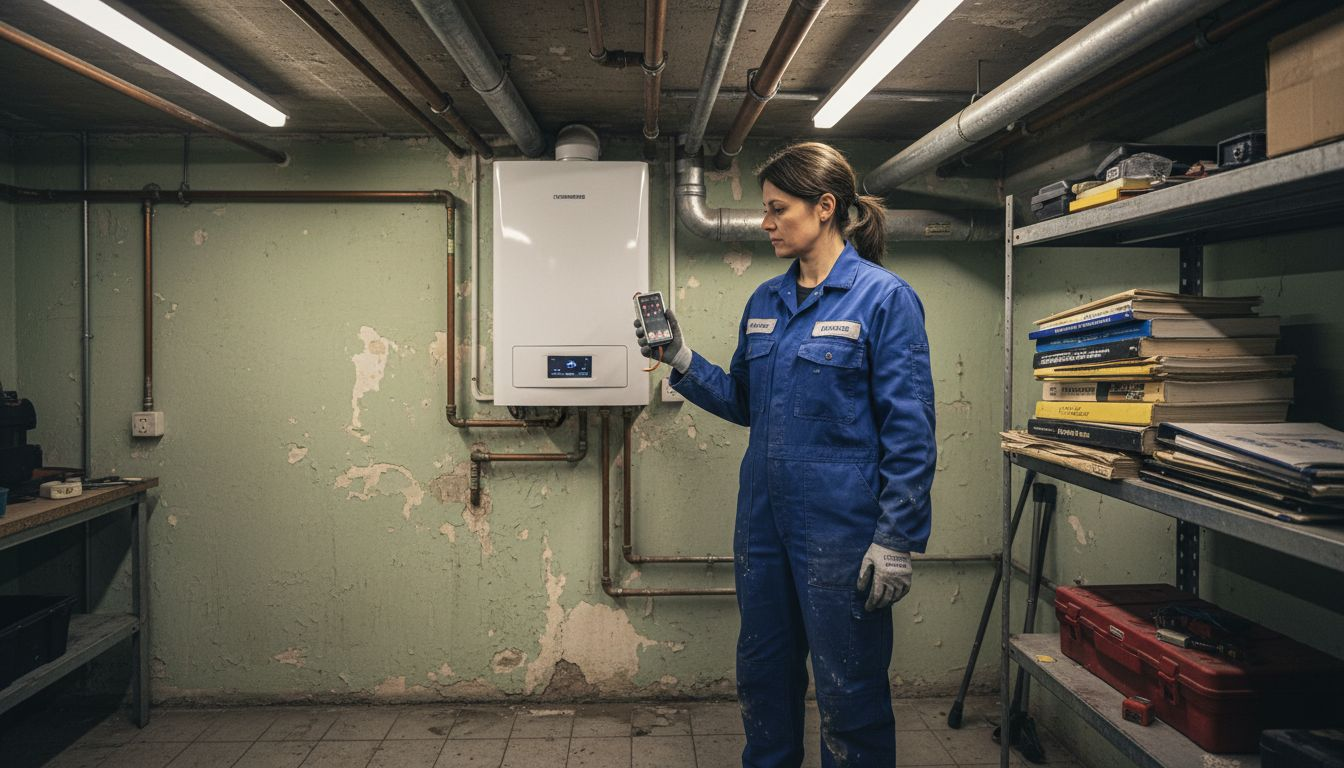
Consider a boiler with a failing circulation pump. Without predictive monitoring, the pump struggles for weeks or months, forcing the boiler to work harder and consume more gas. Tenants complain about uneven heating. Energy bills climb. Eventually the pump fails completely, requiring emergency replacement. Predictive maintenance catches the declining pump performance immediately, allowing scheduled replacement before efficiency drops.
The Home Energy Model (HEM) replacing SAP in 2025 emphasizes actual performance over theoretical calculations. Predictive maintenance systems generate the continuous performance data HEM assessments will value. Your properties demonstrate efficiency through real measurements, not estimates.
Compliance with Minimum Energy Efficiency Standards becomes easier. Properties must achieve at least an E rating on Energy Performance Certificates, with plans to require C ratings by 2028. Predictive maintenance helps maintain and improve EPC ratings by ensuring all systems operate at peak efficiency.
Energy efficiency benefits include:
- Optimized heating cycles that match actual occupancy and weather patterns, eliminating waste
- Leak detection that prevents water and energy loss from unnoticed plumbing failures
- Ventilation balancing that maintains air quality without excessive heating or cooling
- Equipment longevity through timely interventions that prevent accelerated wear
Operational cost reductions extend beyond energy. Predictive maintenance cuts overall maintenance spending by 20 to 25 percent compared to reactive approaches. You avoid emergency callout fees, minimize tenant turnover from maintenance disruptions, and extend equipment lifespan through optimal operation.
Property values benefit too. Demonstrable energy efficiency through documented predictive maintenance records attracts quality tenants and supports premium rents. When selling, comprehensive maintenance data provides evidence of proper stewardship, reducing buyer concerns.
Understanding UK energy standards and models helps you align predictive maintenance with regulatory trajectories. The shift toward performance-based standards rewards landlords who can prove efficiency through operational data. The home energy modelling benefits multiply when combined with predictive maintenance, creating a comprehensive approach to property optimization.
Comparing Maintenance Strategies: Predictive vs Reactive vs Preventive
Predictive maintenance reduces downtime by up to 30 percent and cuts maintenance costs by up to 25 percent, outperforming reactive and preventive methods. Understanding these differences helps you choose the right strategy for your property portfolio.
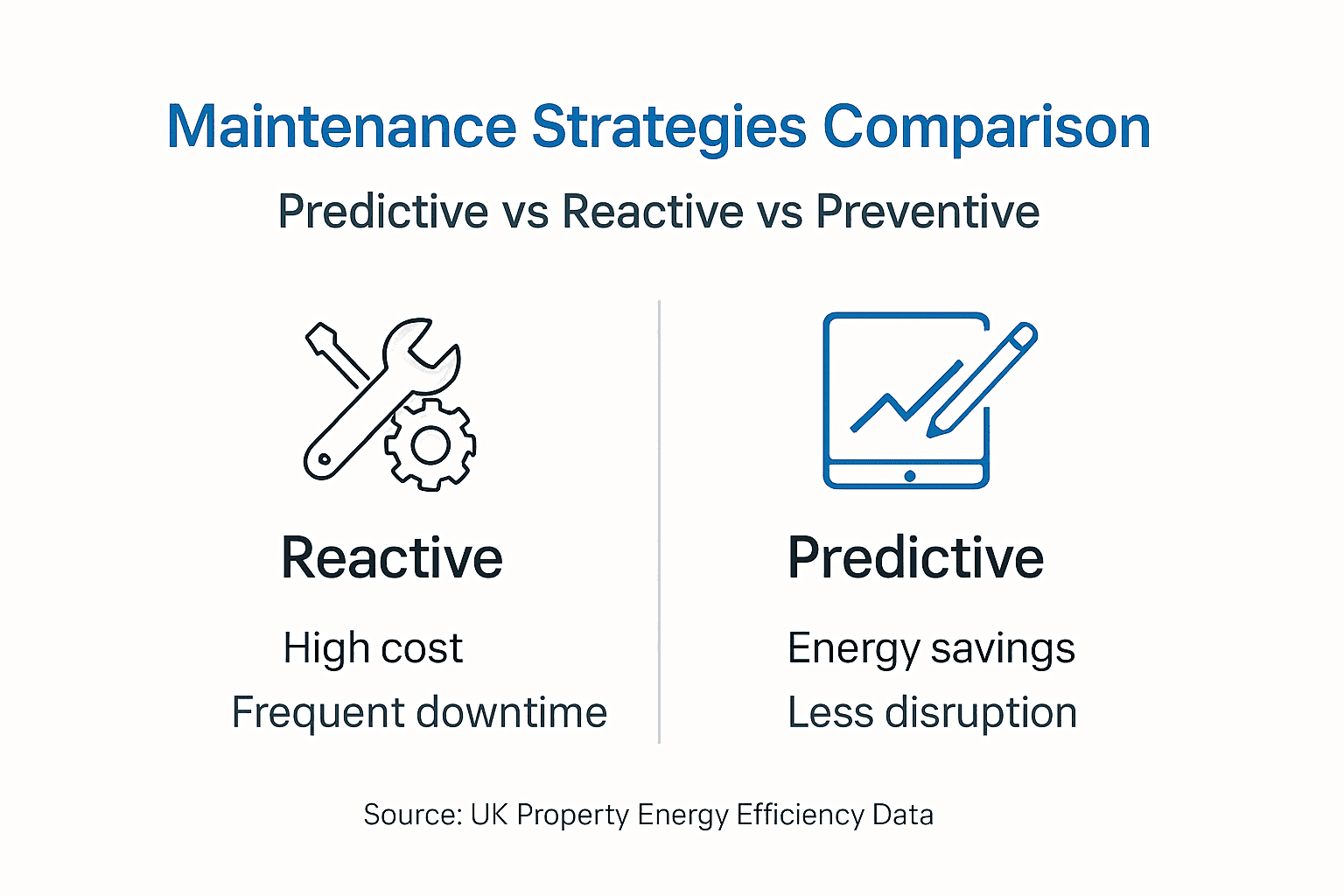
Reactive maintenance, the traditional fix-it-when-it-breaks approach, creates the highest costs and tenant disruption. Equipment failures happen at inconvenient times, often during peak heating or cooling demand. Emergency repairs cost two to three times more than planned maintenance. Energy waste accelerates as systems degrade before failure.
Preventive maintenance schedules regular service regardless of actual condition. While better than reactive approaches, it often performs unnecessary work on equipment still operating efficiently. You pay for parts and labor that could wait months or years. Energy savings occur but remain moderate because you still miss emerging inefficiencies between scheduled services.
Predictive maintenance uses real-time data to intervene precisely when needed. No premature replacements. No unexpected failures. Minimal downtime. Maximum energy efficiency. The following table compares key metrics:
| Strategy | Annual Cost | Energy Waste | Downtime | Equipment Lifespan |
|---|---|---|---|---|
| Reactive | Highest | 25-40% excess | 10-15 days | Shortest |
| Preventive | Moderate | 10-20% excess | 3-5 days | Moderate |
| Predictive | Lowest | 5-10% excess | 1-2 days | Longest |
Key advantages of predictive maintenance:
- Precision timing eliminates both premature and delayed interventions
- Resource optimization focuses spending on actual needs rather than schedules
- Tenant satisfaction improves through fewer disruptions and consistent comfort
- Budget predictability increases as emergency repairs decline sharply
Trade-offs exist. Predictive maintenance requires upfront technology investment and staff training. Initial setup takes time and planning. However, payback typically occurs within 12 to 18 months through combined energy and maintenance savings.
For landlords managing multiple properties, the energy saving checklist for landlords should prioritize predictive systems. The scalability advantage grows with portfolio size as one monitoring platform manages dozens or hundreds of properties from a single dashboard.
Challenges, Misconceptions, and Best Practices
Misconceptions about high costs and complexity often deter landlords; effective integration and complementary use with preventive maintenance overcome these hurdles. Addressing common myths helps you make informed decisions.
Myth one: predictive maintenance costs too much for residential properties. Reality shows technology costs have plummeted. Systems now compete price wise with traditional maintenance contracts while delivering superior results. The question is not whether you can afford predictive maintenance, but whether you can afford to ignore it as competitors adopt these advantages.
Myth two: predictive systems replace preventive maintenance entirely. Effective strategies combine both approaches. Predictive maintenance handles condition monitoring and early fault detection. Preventive maintenance continues for tasks requiring scheduled attention regardless of condition, like filter changes and safety inspections. The combination optimizes results.
Myth three: technology is too complex for small landlords. Modern platforms are designed for non-technical users. Setup wizards guide installation. Mobile apps present data through simple dashboards with color-coded alerts. You do not need engineering knowledge to benefit.
Common implementation challenges include:
- Legacy equipment integration where older systems lack sensor compatibility
- Data privacy concerns regarding tenant information and property monitoring
- Staff resistance from maintenance teams accustomed to traditional approaches
- Internet connectivity in properties with weak Wi-Fi or no broadband
Solutions exist for each challenge. Retrofit sensors work with most equipment manufactured after 2000. Data privacy protections are built into reputable platforms with encryption and access controls. Staff training programs demonstrate how predictive tools make jobs easier rather than threatening employment. Cellular IoT devices bypass Wi-Fi requirements.
Pro Tip: Partner with energy assessment professionals experienced in predictive system integration. They navigate technical details, ensure regulatory compliance, and accelerate your learning curve. The investment in expert guidance pays for itself through avoiding common pitfalls and optimizing initial sensor placement.
Best practices for successful adoption:
- Start small with one or two properties to learn before scaling
- Focus initially on highest value assets like commercial HVAC systems
- Document baseline performance before implementation to measure improvements
- Train staff thoroughly on interpreting alerts and taking appropriate action
- Review data weekly during the first months to refine alert thresholds
For properties requiring compliance documentation, monitoring energy usage for compliance through predictive systems creates audit trails satisfying regulatory requirements. The data you collect for maintenance optimization doubles as compliance evidence.
Practical Steps for UK Property Owners to Implement Predictive Maintenance
Stepwise approach including assessment, technology selection, staff training and monitoring maximizes predictive maintenance benefits for UK landlords. Follow these practical steps to implement systems efficiently.
-
Assess your property assets and current maintenance practices. Inventory all mechanical and electrical systems. Document current maintenance costs, energy consumption, and failure frequency. Identify which assets consume the most energy or cause the most tenant complaints. This assessment reveals where predictive maintenance delivers maximum impact.
-
Select IoT sensors and compatible platforms meeting UK data privacy standards. Research platforms offering GDPR compliance, encryption, and secure data storage within the UK or EU. Compare sensor options for your specific equipment types. Request demonstrations or trial periods. Verify compatibility with your existing building management systems.
-
Implement AI-driven analytics and alert systems. Configure alert thresholds based on manufacturer specifications and your risk tolerance. Set up notification channels including email, SMS, and mobile app push alerts. Establish escalation procedures for critical alerts requiring immediate attention versus routine notifications.
-
Train staff or hire specialists to interpret signals and take action. Ensure maintenance teams understand what alerts mean and how to respond. Provide decision trees for common scenarios. Consider hiring energy management specialists for complex portfolios. Document procedures so knowledge persists beyond individual employees.
-
Monitor continuously and refine systems to improve energy savings and compliance. Review monthly reports on energy consumption, maintenance interventions, and system performance. Adjust alert thresholds as you learn equipment behavior patterns. Track savings against baseline measurements. Use insights to inform future property improvement decisions.
-
Integrate with broader energy management strategies. Connect predictive maintenance data with energy modeling, retrofit planning, and regulatory compliance efforts. Use performance metrics to prioritize capital improvements. Share successful approaches across your property portfolio.
Pro Tip: Prioritize critical systems first to optimize return on investment. HVAC equipment, domestic hot water systems, and commercial refrigeration typically offer the fastest payback through energy savings and downtime prevention. Add sensors to secondary systems once you prove the concept and build internal expertise.
For properties undergoing energy improvements, retrofit assessments for UK standards should incorporate predictive maintenance planning. Installing sensors during retrofit work costs less than adding them later and ensures new equipment operates optimally from day one.
Timeline expectations vary by portfolio size. A single property can have basic predictive monitoring operational within two to four weeks. Larger portfolios require three to six months for phased rollout with proper training and optimization. Patience during implementation pays dividends through decades of improved performance.
Enhance Your Property’s Energy Efficiency with Home Energy Model Solutions
Ready to optimize your property portfolio for 2025 regulations and beyond? Home Energy Model provides UK landlords with comprehensive tools to understand, plan, and implement energy efficiency improvements including predictive maintenance integration. Our platform helps you navigate the transition from SAP to HEM while maximizing energy savings and regulatory compliance. Explore types of home energy models tailored to your property types, understand the home energy model explained for practical application, and access our energy simulation UK housing guide to visualize improvements before investing. Take control of your property performance today.
What Is Predictive Maintenance? Frequently Asked Questions
What exactly is predictive maintenance for UK properties?
Predictive maintenance uses sensors and AI to monitor property systems continuously, detecting problems before they cause failures. Unlike scheduled maintenance, it intervenes only when data indicates an actual need, reducing costs and energy waste.
Is predictive maintenance cost effective for small property portfolios?
Yes, technology costs have dropped over 40 percent in recent years, making systems affordable for portfolios of any size. Initial investment typically pays back within 12 to 18 months through combined energy and maintenance savings, with ongoing costs comparable to traditional maintenance contracts.
How does predictive maintenance integrate with my existing property management systems?
Most modern predictive platforms offer APIs and standard protocols that connect with thermostats, building management systems, and property management software you already use. Integration typically requires minimal technical expertise, and many providers offer setup assistance as part of their service.
Which property types benefit most from predictive maintenance?
Properties with significant mechanical systems see the greatest benefits. Multi-unit residential buildings, commercial properties, and mixed-use developments with substantial HVAC, plumbing, and electrical infrastructure generate the fastest returns. Even single-family rentals with modern heating systems can justify implementation.
Can predictive maintenance improve my property’s EPC rating?
Yes, predictive maintenance keeps systems operating at peak efficiency, reducing energy consumption that EPC assessments measure. The continuous monitoring data also provides evidence of proper maintenance and optimization efforts, supporting applications for improved ratings under the new Home Energy Model methodology.
Do I need technical expertise to manage predictive maintenance systems?
No, modern platforms are designed for property managers without engineering backgrounds. Mobile apps present data through intuitive dashboards with color-coded alerts and plain language recommendations. Most users manage systems effectively after brief training, though specialist support remains available for complex situations.