Get Your Commercial EPC Quote Online Or Call 0800 020 9191
A Commercial Energy Performance Certificate
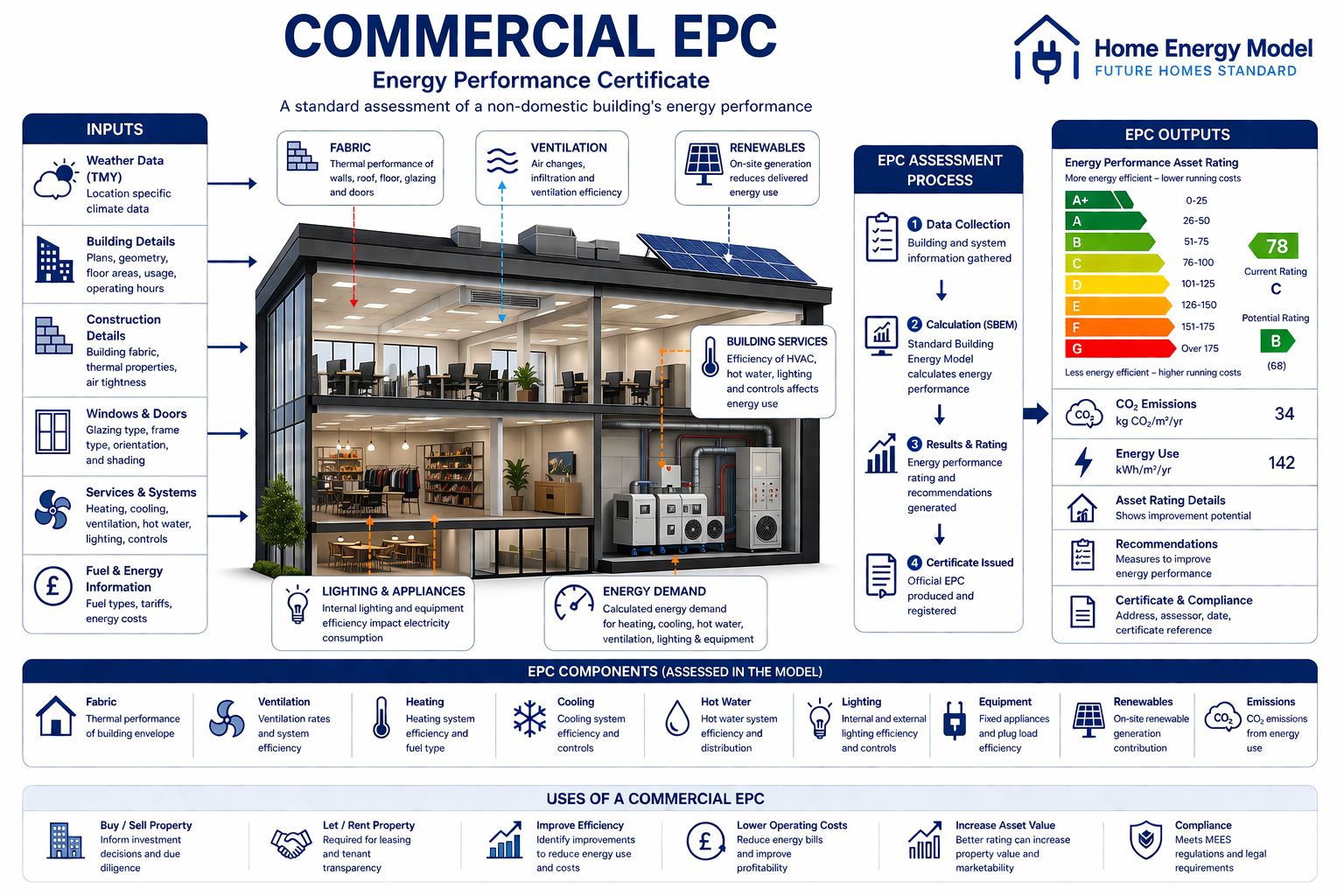
A Commercial Energy Performance Certificate (EPC) is a document that shows the energy efficiency of a building. It is similar to the labels you see on appliances, but for buildings. It is rated from A (most efficient) to G (least efficient), with A-rated buildings being the most energy efficient and therefore the cheapest to run. Having a valid Commercial EPC allows consumers to get grants to make improvements recommended in the EPC certificate.
This helps improve the energy efficiency of your property, along with giving home-buyers a home energy rating. Energy Performance Certificates (EPC) were introduced in England and Wales on 1 August 2007 to cut carbon emissions and tackle climate change and are being introduced all across Europe. A Commercial EPC is essential in understanding energy performance.
Commercial Energy Performance Assessors
Commercial EPC assessors, also known as Non-Domestic Energy Assessors (NDEAs), play a crucial role in evaluating the energy performance of commercial buildings and are responsible for issuing Energy Performance Certificates (EPCs). These certificates serve not only as a measure of a building’s energy efficiency but also as a legal requirement for certain property transactions.
The assessment process begins with on-site inspections, where assessors visit the property to gather extensive information regarding its size, age, construction materials, and key energy-related systems such as heating, ventilation, and air conditioning (HVAC). This on-site evaluation is essential, as it allows the assessor to obtain a comprehensive understanding of the building’s characteristics and operational efficiency, which directly influences its energy performance.
How important is a Commercial EPC?
A Commercial EPC is vital for property owners to understand and improve energy efficiency, ensuring compliance and enhancing marketability.
Having a Commercial EPC not only demonstrates energy efficiency but also aligns with sustainability goals.
Additionally, a solid Commercial EPC can significantly impact operational costs.
A Commercial Energy Performance Certificate (EPC) is a crucial document that assesses the energy efficiency of a commercial building. This certificate plays a significant role in the property and real estate sectors for several reasons.
First and foremost, an EPC provides a rating of the building’s energy performance on a scale from A to G, with A being the most energy-efficient and G indicating the least. This rating helps potential tenants, buyers, and investors to make informed decisions regarding their energy costs and environmental impact. As energy prices continue to fluctuate, efficiency becomes a vital consideration for any commercial enterprise looking to minimize operational costs.
Additionally, the presence of an EPC is legally mandated in many jurisdictions. In the United Kingdom, for example, it is a legal requirement for commercial properties to have an EPC when they are constructed, sold, or rented out. The absence of a valid EPC can lead to penalties and subsequently deter potential tenants or buyers who are increasingly pursuing properties with favorable energy ratings.
Furthermore, having a good EPC rating can enhance the marketability of a property. In an era where corporate responsibility, sustainability, and green initiatives are becoming increasingly important, businesses are prioritizing energy-efficient buildings that align with their own sustainability goals. A high EPC rating can demonstrate a commitment to environmental stewardship, potentially attracting tenants or buyers who prioritize energy efficiency and sustainability.
Moreover, energy-efficient buildings tend to provide long-term financial benefits. Properties with higher EPC ratings typically experience lower energy costs, which can lead to higher net operating income for landlords and improved cash flow for businesses occupying such premises. Additionally, investments made to improve a building’s energy efficiency can often yield significant returns over time.
In conclusion, a Commercial Energy Performance Certificate serves as an essential tool for evaluating a building’s energy efficiency, fulfills legal obligations, enhances property marketability, aligns with corporate sustainability goals, and can contribute to reduced operational costs. As the focus on energy conservation and sustainability continues to grow, obtaining and maintaining a favorable EPC rating becomes increasingly important for property owners and commercial enterprises alike.
How long does a Commercial EPC Assessment take?
The duration of a commercial Energy Performance Certificate (EPC) assessment can vary based on several factors, including the size and complexity of the property, the level of detail required in the assessment, and the availability of the assessor. Therefore, obtaining a Commercial EPC should be done thoughtfully.
Typically, the onsite assessment itself may take anywhere from 1 to 3 hours for standard commercial properties, such as office buildings, retail spaces, or warehouses. However, larger or more complex properties, such as multi-tenanted buildings or industrial facilities, may require additional time for evaluation, leading to a longer assessment period. The final goal is to ensure that your Commercial EPC accurately reflects the energy performance of the building.
Why is a Commercial EPC beneficial?
A Commercial Energy Performance Certificate (EPC) serves as an essential tool in assessing the energy efficiency of commercial properties. The benefits of obtaining such a certificate are manifold and can have significant implications for property owners, tenants, and the environment alike. Below are some key reasons why a Commercial EPC is beneficial:
1. **Regulatory Compliance**: Many jurisdictions require commercial properties to possess an energy performance certificate, particularly when they are sold, leased, or rented. Having a valid EPC ensures compliance with local regulations, thereby avoiding potential fines and legal complications.
2. **Enhanced Marketability**: A high-energy efficiency rating on an EPC can make a commercial property more attractive to potential buyers or tenants. Energy-efficient buildings typically incur lower operating costs, which can be a deciding factor for businesses that are conscious of their overhead expenses.
3. **Cost Savings**: By providing insights into energy usage, an EPC can help property owners identify areas where improvements can be made to enhance energy efficiency. Implementing recommended improvements can lead to significant cost savings on energy bills over time, thereby improving the overall financial performance of the property.
4. **Sustainability and Corporate Social Responsibility**: In today’s market, there is an increasing emphasis on sustainability. Possessing a commercial EPC can bolster an organization’s reputation by demonstrating a commitment to reducing carbon footprints and promoting energy-efficient practices, satisfying both stakeholders and customers who prioritize environmental responsibility.
5. **Access to Incentives**: Many governments and local authorities offer financial incentives or grants for upgrading properties to improve their energy efficiency. A legitimate EPC can help property owners qualify for these programs, thereby reducing renovation costs and improving overall property value.
6. **Benchmarking Performance**: The EPC provides a comparative rating system that allows property owners to assess their building’s energy performance against similar properties. This benchmarking process can motivate owners to implement necessary energy-saving measures and enhance property performance.
7. **Future-Proofing Investments**: The growing focus on energy efficiency and sustainability is leading to regulatory frameworks that may impose stricter energy performance requirements in the future. By obtaining a Commercial EPC now and making appropriate improvements, property owners can future-proof their investments against emerging regulations that could limit leasing opportunities for lower-rated buildings.
In conclusion, a Commercial Energy Performance Certificate is not merely a regulatory requirement; it is a strategic asset that can enhance the value, marketability, and sustainability of commercial properties. By understanding and utilizing the benefits of an EPC, property owners can position themselves favorably in an increasingly energy-conscious marketplace.
A valid Commercial EPC is essential for compliance and can enhance your property’s appeal.
Leveraging the insights from a Commercial EPC can lead to significant cost reductions.
Hence, investing in energy efficiency through your Commercial EPC can yield financial benefits.

How Much Does It Cost?
The cost of obtaining a commercial Energy Performance Certificate (EPC) can vary significantly based on several factors, including the size, complexity, and geographical location of the building in question. Generally, businesses can expect to pay anywhere from £100 to £150,000 for this certification.
What is an Energy Performance Certificate service?
Our EPC services encompass the following key elements:
1. **Comprehensive Assessments**: Our qualified assessors conduct thorough evaluations of residential and commercial properties. This includes inspecting insulation, heating systems, lighting, and the overall energy consumption of the building.
2. **Detailed Reporting**: After the assessment, we provide a detailed report that outlines the energy rating of the property, along with specific recommendations for improvements. This can be invaluable for potential buyers or tenants looking for energy-efficient living and operational spaces.
3. **Regulatory Compliance Guidance**: We keep ourselves updated on the latest legislation and energy efficiency policies, ensuring that our clients remain compliant with all relevant regulations.
4. **Ongoing Support**: After receiving your EPC, our team is available to provide ongoing support and advice on how to implement the recommended changes. We also offer follow-up assessments to track improvements in energy efficiency over time.
5. **Fast and Efficient Service**: We pride ourselves on offering a prompt service, with a commitment to delivering EPCs within tight timeframes to accommodate commercial and residential transactions.
By choosing our EPC services, you can not only ensure compliance with legal requirements but also contribute to a more sustainable future by making informed decisions about energy consumption and efficiency.

Investing in an Energy Performance Certificate
Investing in an Energy Performance Certificate (EPC) is an astute decision that not only enhances your property’s value but also promotes environmental stewardship. A Commercial EPC serves as a crucial tool in assessing and improving the energy efficiency of buildings, providing a detailed overview of how energy is utilized within a space. Maximising the potential of your Commercial EPC is key to long-term savings.
By obtaining a Commercial EPC, property owners can identify specific areas where energy consumption can be minimized, which translates into substantial reductions in utility bills over time. For example, implementing recommended improvements based on the EPC findings, such as upgrading insulation or installing energy-efficient appliances, can lead to significant savings while simultaneously creating a more comfortable living or working environment.
A Commercial EPC also plays a vital role in ensuring compliance with regulations.
In essence, a Commercial EPC helps in aligning individual goals with broader sustainability efforts.

Commercial EPC Quote

"*" indicates required fields