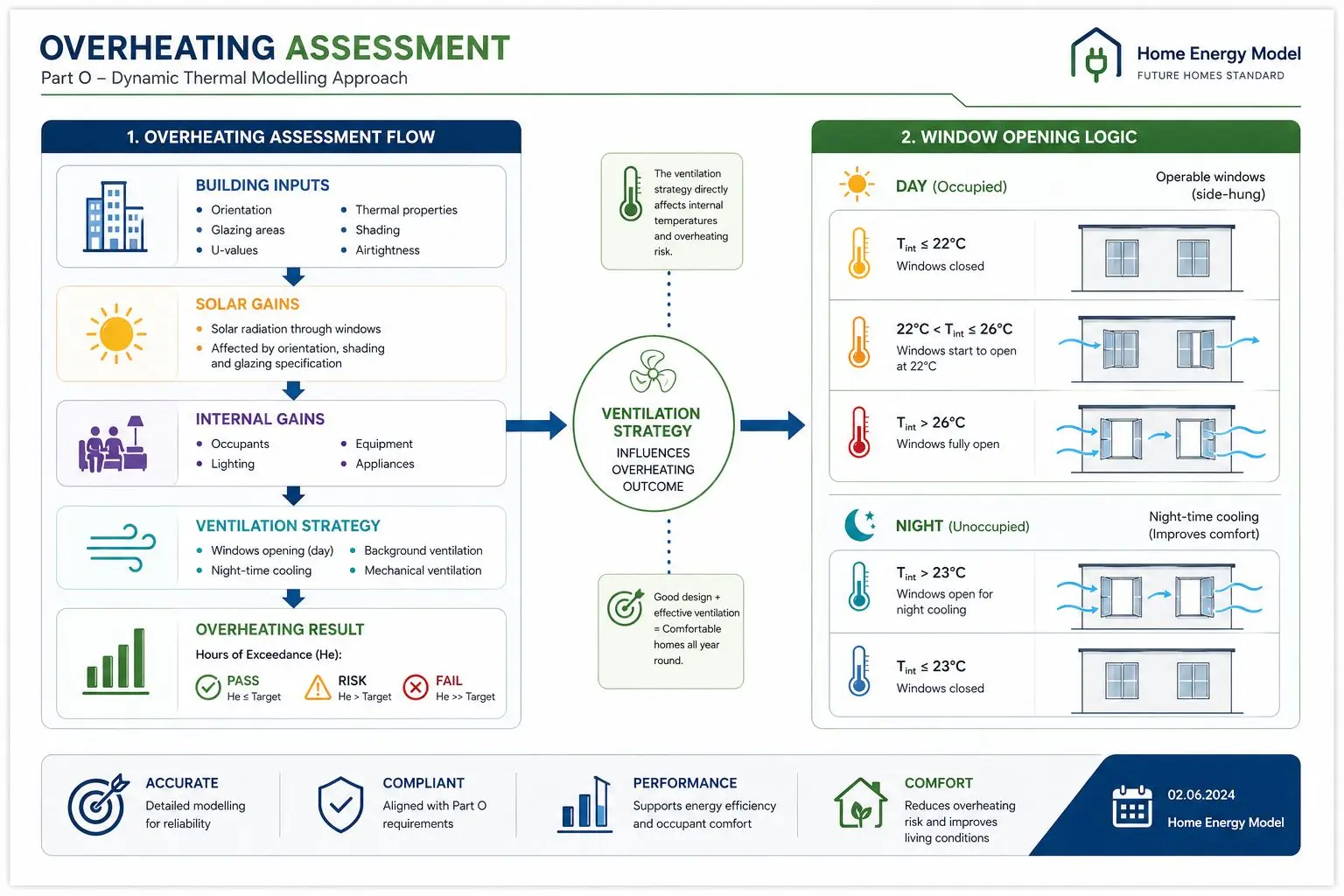
Overheating can lead to discomfort, health issues, and even mortality, making it imperative for buildings to be designed and operated to mitigate these risks. The Chartered Institution of Building Services Engineers (CIBSE) has provided guidelines, notably TM52 and TM59, to assist in this process. This page focuses on TM52 compliance, detailing the assessment process and the importance of adhering to these standards.
What is TM52?
TM52 outlines three criteria that buildings must meet to avoid overheating:
TM52, formally known as CIBSE Technical Memorandum 52: The Limits of Thermal Comfort: Avoiding Overheating in European Buildings, provides criteria for evaluating and mitigating overheating in buildings. It sets out a method to assess whether a building is likely to overheat based on the indoor temperatures experienced during typical summer conditions. TM52 is applicable to non-residential buildings, though its principles can be extended to residential applications.
Overheating Assessment Criteria in TM52
TM52 outlines three criteria that buildings must meet to avoid overheating:
1.Criterion 1: Hours of Exceedance (He)
This criterion assesses the number of hours during which the indoor operative temperature exceeds a specified threshold. The threshold is typically set as the comfort temperature plus a small allowance (usually 1°C or 2°C). If the number of exceedance hours exceeds 3% of the occupied hours, the building fails this criterion.
2. Criterion 2: Daily Weighted Exceedance (We)
This criterion evaluates the severity of temperature exceedances by weighting the duration and magnitude of temperature excursions above the comfort threshold. A daily weighted exceedance above 6 indicates that the building fails this criterion.
3.Criterion 3: Upper Limit Temperature (Tupp)
This criterion ensures that the indoor operative temperature does not exceed a defined upper limit (comfort temperature + 4°C) for more than 1% of the occupied hours. Surpassing this limit indicates a failure.
Our Process for TM52 Compliance
At Home Energy Model, we take great pride in adhering to a thorough and stringent process designed to ensure that all buildings meet the TM52 standards. This commitment not only focuses on compliance but also emphasizes creating a safe and comfortable environment for all occupants, which is our top priority.
To achieve this, we begin with an in-depth assessment of the building’s design and existing conditions. This assessment includes a detailed analysis of thermal performance and energy efficiency, taking into consideration various factors such as insulation, ventilation, and solar gain. Next, we utilize advanced modeling software to simulate how the building will perform under different environmental conditions, allowing us to identify any potential issues before they arise.
Moreover, we ensure that all relevant regulations and guidelines are closely followed throughout the process. This includes collaborating with architects, engineers, and contractors, fostering a team effort to design spaces that not only meet the TM52 requirements but also optimize energy use and contribute to a sustainable future.
Our team also provides ongoing support and consultation to help clients understand the implications of TM52 standards. We walk them through the key aspects of the process and offer tailored solutions based on their specific needs. Additionally, we conduct thorough inspections during and after the construction phase to ensure that all elements comply with the required standards, ultimately leading to a higher quality of living for the occupants.
In essence, our comprehensive approach reflects our dedication to excellence in energy modeling and building compliance, ensuring every space is designed with both safety and comfort in mind. We are here to help every step of the way, committed to creating environments that enrich lives and promote well-being.
Initial Consultation
Understanding the specific needs and uses of the building, as well as any particular concerns regarding overheating.
Modelling and Simulation
Using advanced software to create detailed thermal models of the building. These simulations consider various factors, including building orientation, materials, occupancy patterns, and local climate data.
Assessment
Applying the TM52 criteria to the model, identifying potential overheating risks.
Mitigation Strategies
Proposing design modifications and operational strategies to mitigate overheating risks. These might include enhancing natural ventilation, shading, insulation improvements, or adopting passive cooling techniques.
Verification
Re-assessing the modified design to ensure compliance with TM52 criteria.
What is TM59?
TM59, known as CIBSE Technical Memorandum 59: Design Methodology for the Assessment of Overheating Risk in Homes, provides criteria for assessing overheating risk specifically in residential buildings. Unlike TM52, which is more geared towards non-residential buildings, TM59 offers tailored criteria to address the unique thermal comfort needs of homes.
Overheating Assessment Criteria in TM59
TM59 outlines specific criteria for assessing overheating in residential buildings, divided into two main types of rooms: living areas and bedrooms.
Living Areas
The internal temperature should not exceed 26°C for more than 3% of the annual occupied hours.
Bedrooms
The internal temperature should not exceed 26°C for more than 1% of the annual occupied hours. Additionally, there is a criterion for nighttime comfort, ensuring that the temperature does not exceed 24°C for more than 1% of the annual nighttime occupied hours (typically 10 pm to 7 am).
Our Process for TM59 Compliance
Ensuring compliance with TM59 requires a detailed and methodical approach, which we at Complete EPC are committed to providing. Our process includes
Initial Consultation
Assessing the specific requirements of the residential project and any particular concerns regarding overheating.
Thermal Modelling and Simulation
Creating accurate thermal models of the residential spaces using advanced simulation software. This includes considering various factors such as building orientation, materials, occupancy patterns, and local climate data.
Assessment
Applying the TM59 criteria to the thermal model to identify potential overheating risks in living areas and bedrooms.
Mitigation Strategies
Recommending design and operational modifications to mitigate identified overheating risks. Solutions may include enhancing natural ventilation, improving shading devices, using reflective materials, and optimizing insulation.
Verification
Re-assessing the modified design to ensure that it meets the TM59 criteria, thereby ensuring the thermal comfort and safety of residents.
Conclusion
Compliance with TM59 and TM52 is crucial for maintaining thermal comfort in residential buildings amidst the UK’s warming climate. By adhering to TM59 guidelines, we can ensure that homes are designed to avoid overheating, thus safeguarding the health and well-being of residents.
For more information on how we can assist with TM52 and TM59 compliance, please contact us today. We are dedicated to delivering solutions that ensure comfort, safety, and regulatory compliance in building design.