(H.M.O) House of Multiple Occupation
HMO stands for House in Multiple Occupation. It is a property occupied by three or more tenants who are not part of the same household and share basic amenities such as a kitchen or bathroom. HMOs are typically owned by landlords who rent individual rooms or units within the property to different tenants. The arrangement is common in urban areas where demand for affordable housing is high, especially among students, young professionals, and small families who do not require a full separate dwelling.
In many jurisdictions, HMOs are subject to specific regulations and licensing requirements to ensure safety, minimum standards, and adequate management. This can include obtaining an HMO license from the local council, meeting occupancy limits based on the size of the dwelling, ensuring proper fire safety measures such as working smoke alarms, fire doors, and clear escape routes, and maintaining adequate facilities and space per tenant. Licensing often involves inspections to verify compliance with standards related to room sizes, shared facilities, waste management, and security. Failure to obtain the necessary licenses or to maintain compliance can result in penalties, enforcement action, and potential eviction or closure of the property.
Beyond licensing and safety, HMOs are typically subject to planning and housing regulations that govern the alteration, use, and management of the property. Landlords are expected to implement robust tenancy agreements, regular property maintenance, and clear policies on behavior and nuisance to protect tenants and neighboring residents. By contrast, standard single-family rentals do not usually require the same level of licensing as HMOs and are governed by general landlord-tenant laws. In summary, an HMO is a purpose-built or converted dwelling accommodating multiple tenants under shared facilities, regulated to ensure safety, suitability, and proper management.
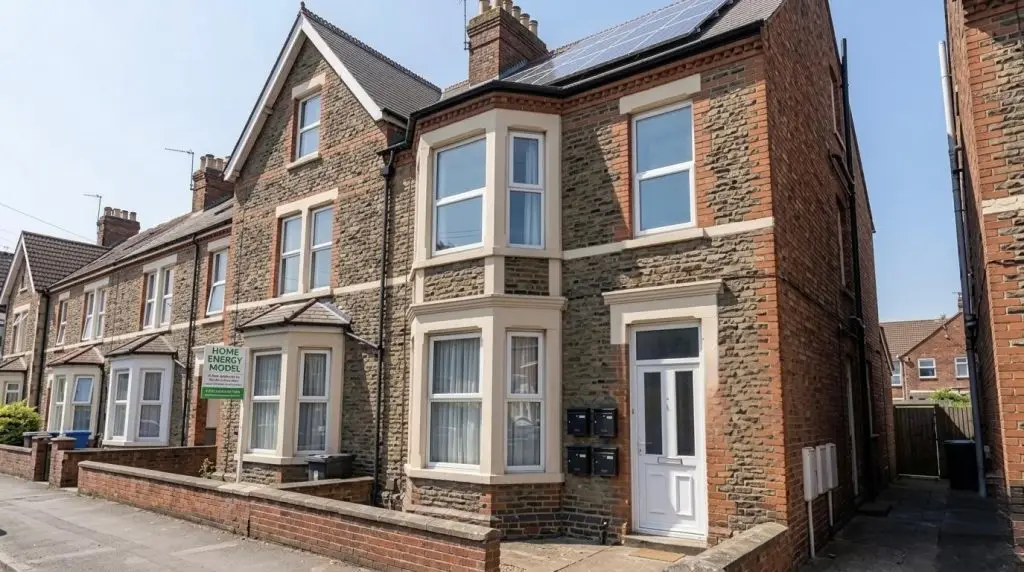
The Housing Act 2004 introduced licensing for multiple occupation (HMO).
The Housing Act 2004 introduced licensing for houses in multiple occupation (HMO). The Act provides a detailed definition of HMOs and sets out the standards for managing this type of property.
Under the Act, Local Authorities (LAs) have two possible licensing approaches for HMOs: mandatory licensing and additional licensing.
Mandatory licensing applies to all HMOs occupied by five or more people forming two or more households.
Additional licensing allows a LA to impose a licence on other categories of HMOs within its area.
When a Local Authority grants a licence, it considers several factors:
– the suitability of the HMO for the number of occupants;
– the suitability of the facilities;
– the suitability of the landlord and the management of the HMO.
In addition, the LA must ensure that mandatory standards are met and maintained for the HMO. These standards include:
– an annual gas safety certificate;
– keeping electrical appliances and furniture supplied by the landlord in a safe condition and providing a declaration of their safety to the council on demand;
– installing and maintaining smoke alarms and providing the council with a declaration regarding their location and condition;
– providing occupants with a statement of the terms on which they occupy the HMO.
The LA may also specify additional conditions relating to the facilities, condition, and management of the HMO.
Increasingly, due to this ability to impose additional conditions on HMO licensing, scheme members are being asked to provide EPCs for HMOs to comply with Local Authority HMO licensing requirements. LAs are using EPCs as a means of assessing the HMO’s condition. HMOs are not a trigger under EPB and, as such, are not covered by that legislation.
HMOs are viewed differently from a domestic dwelling as defined by EPB. HMOs are:
– occupied in a more intensive manner than a standard domestic or commercial property;
– licensed not for the property itself, but for the way it is occupied and whether it is in a fit condition;
– permitting the property to be rented as a single-family dwelling even if a HMO licence exists.
EPB legislation concerns different drivers when assessing a property. These drivers include:
– the methodology is driven by the building type and its designed use;
– RdSAP and SBEM apply a “standard occupancy” factor to the calculation and ignore the actual number of occupants.
Summary
Occupancy does not influence the building assessment; the design use of the building is a key factor. The appropriate methodology for the assessment may be RdSAP or SBEM, depending on the building’s original design use. It is observed that similar properties are being assessed with different methodologies, which can lead to similar properties receiving different certificates.
Conclusion
Although the EPC is used within the HMO process, the choice of assessment methodology should be driven by the requirements of EPB. Therefore, the fact that the building is used as an HMO should not influence the selection of the assessment method. The building and its original intended use should determine which methodology is appropriate.
Guidance
The DCLG document Improving the Energy Efficiency of our Buildings, issued in April 2014, states that an EPC is not required for an individual room when rented out, as it is not a building or a building unit designed or altered for separate use. The whole building will require an EPC if it is sold or rented out. Accordingly, this guidance should be applied to the whole dwelling or building rather than to an individual room.
If the original intended use of a building was for a single family (for example, a Victorian mid-terrace house), the appropriate method for assessing the building is SAP or RdSAP, which will yield a result that more accurately reflects the building’s performance than other methodologies.
If the original intended use of a building involved shared amenities (for example, halls of residence), the correct method for assessment is SBEM, which will produce a more appropriate result for evaluating the building.
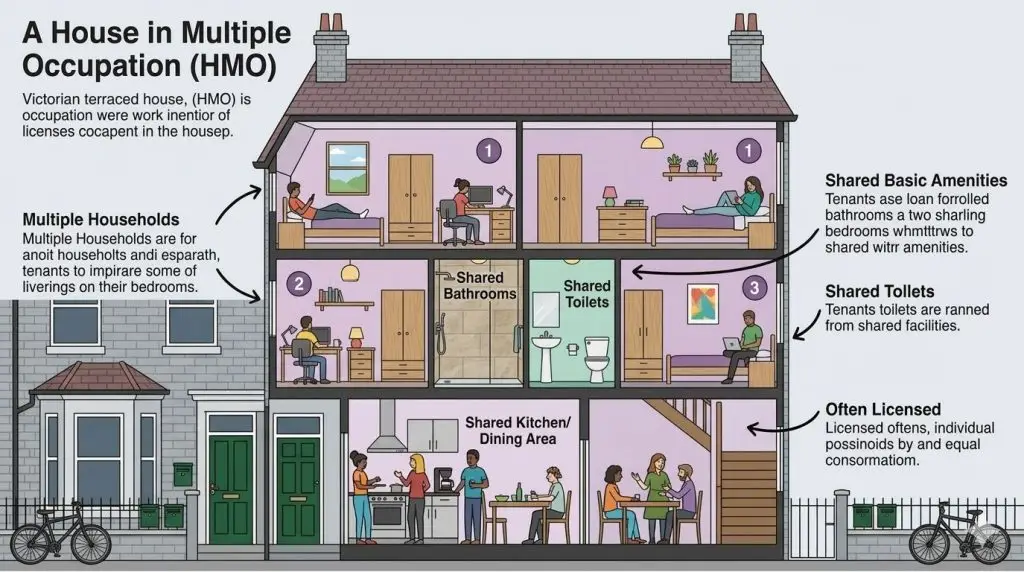
Examples of HMOs:
Joint and Several
If you grant a joint and several tenancy where all the tenants are on one agreement, then this is, in legal terms, no different to letting a normal dwelling to a single family. Therefore, one EPC will be required for the whole dwelling.
Individual let rooms
When individual rooms in a building are rented out on separate tenancies and shared facilities such as a kitchen and/or bathroom are provided, an EPC is not required. An EPC is only required for a dwelling that is self-contained, meaning it does not share essential facilities such as a bathroom/shower room, a toilet, or a kitchen with any other dwelling, and it has its own entrance. This is because an EPC is required only for the rental of a building or part of a building that is “designed or altered to be used separately.” Renting a room does not meet the definition of a “part of a building.” Put simply, an EPC is required for a habitable unit only if the unit is self-contained.
Example 1
A house or flat may be occupied by multiple tenants who have exclusive use of their bedrooms while sharing a kitchen and bathroom. In this arrangement, each tenant has a contract with the landlord for the parts they access, but not for the entire dwelling. Consequently, an Energy Performance Certificate (EPC) is not required for every individual tenant move, although an EPC is required for the entire dwelling if the property is sold or rented as a whole.
Example 2
A group of friends wishes to rent a property under a single contract with the landlord for the tenancy of the entire dwelling, i.e., a joint and several tenancy. An Energy Performance Certificate (EPC) is required for the entire dwelling.
Example 3
Individual tenants rent rooms in a hall of residence. Each room does not constitute a building or part of a building designed to be used separately. An EPC is not required, for each individual room. However, an EPC will be required on the whole building if it is sold or rented. It will also be required on self-contained units within the hall, for example, a self-contained caretaker’s flat, if this is sold or rented