Energy Compliance with Dynamic Simulation Modelling
Dynamic Simulation Modelling (DSM)
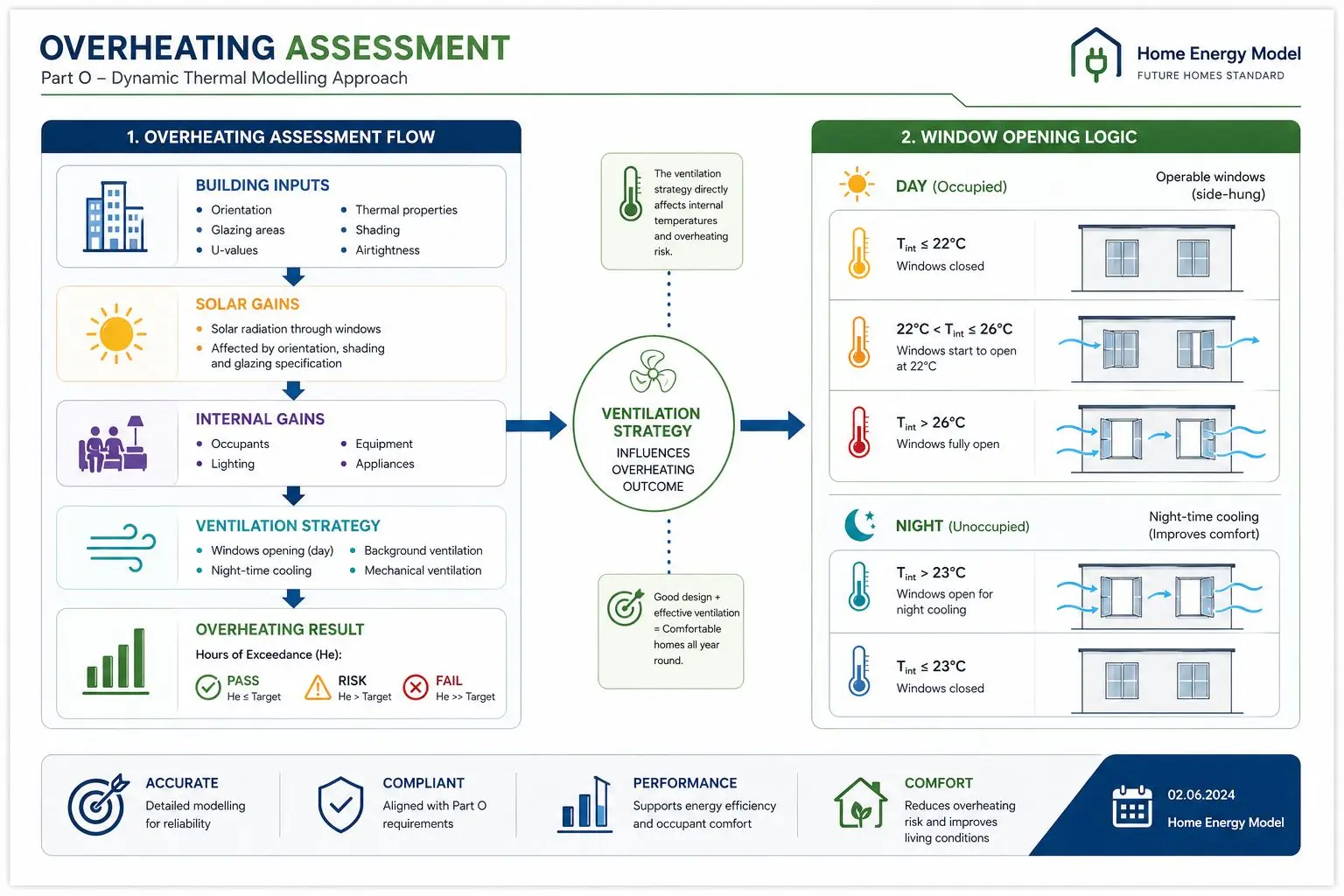
Dynamic Simulation Modelling (DSM) refers to the systematic process of constructing mathematical and computational representations of complex dynamic systems in order to analyze their behavior over time. DSM integrates concepts from systems thinking, mathematics, engineering, and computer science to capture the interactions, feedback loops, delays, and nonlinearities that influence system performance. The primary aim is to develop a model that is sufficiently accurate to provide insights, support decision making, and test interventions in a risk-managed and cost-effective manner.
Typically, DSM involves several key steps. First, problems are clarified, objectives are defined, and the system boundaries are established to determine what will be included or excluded from the model. Second, relevant components and relationships are identified and translated into a coherent set of differential or difference equations, compartmental structures, agent-based rules, or a combination of methodologies. Third, data collection and calibration are performed to estimate parameters and validate the model against real-world observations. Fourth, the model is subjected to various scenarios, experiments, and sensitivity analyses to explore how changes in inputs, policies, or external conditions affect outcomes. Finally, results are synthesized into actionable insights, with clear communication of assumptions, limitations, and recommended actions for stakeholders.
DSM is widely applicable across industries such as manufacturing, supply chain management, healthcare, energy systems, environmental management, and urban planning. In manufacturing and supply chains, DSM helps optimize inventory, production scheduling, and capacity planning under uncertainty. In healthcare, it supports patient flow analysis, resource allocation, and the evaluation of new care pathways. In energy and environmental contexts, DSM can model demand response, generation dispatch, and climate-responsive planning. In urban systems, it enables the evaluation of transportation networks, land-use changes, and service delivery under demographic and policy shifts.
Key advantages of DSM include the ability to test hypotheses without disrupting real operations, to explore the consequences of rare or extreme events, and to quantify trade-offs between competing objectives such as cost, time, quality, and risk. It also facilitates communication with stakeholders by providing a visual and quantitative representation of complex processes, thereby improving transparency and consensus-building. Nevertheless, DSM presents challenges such as data quality and availability, model complexity, the risk of overfitting, and the need for rigorous validation and verification. Good practice involves rigorous documentation, iterative refinement, stakeholder involvement, and the use of modular, scalable modeling architectures that can be updated as new information becomes available.
In summary, Dynamic Simulation Modelling is a powerful, interdisciplinary approach for understanding and managing dynamic systems. By integrating detailed representations of structure and behavior with systematic experimentation and validation, DSM enables informed decision making, strategic planning, and continual improvement in the face of uncertainty.
DSM: Pillar of Modern Energy Compliance
DSM, or Demand Side Management, stands as a foundational pillar of modern energy compliance, integrating technological innovation, regulatory alignment, and stakeholder collaboration to ensure that energy systems operate safely, efficiently, and transparently. As energy markets evolve toward greater decentralization and decarbonization, DSM enables utilities and regulators to manage demand in concert with supply, reducing peak loads, smoothing fluctuations in the grid, and supporting the integration of renewable resources. This approach not only meets compliance requirements related to reliability, resilience, and emissions targets, but also promotes fair access to energy services, protects vulnerable customers, and incentivizes prudent investment in infrastructure and efficiency measures.
A robust DSM framework emphasizes data-driven decision making, standardized reporting, and continuous improvement. It relies on granular consumption analytics, advanced metering infrastructure, and intelligent demand response programs to quantify savings, track performance, and prove ongoing compliance with regulatory mandates. Critical elements include clear governance structures, cybersecurity and privacy protections, and robust audit trails that demonstrate the integrity of data and processes. By aligning DSM initiatives with national and regional codes, standards, and performance metrics, organizations can satisfy both current requirements and evolving expectations, while fostering customer engagement, service quality, and long-term grid sustainability.
Integrating DSM in Energy Statement Formulation
The phrase Integrating DSM in Energy Statement Formulation signals a deliberate shift toward incorporating demand-side management considerations as a core element of how energy statements are developed and communicated. This approach recognizes that energy efficiency, load management, and consumer engagement can fundamentally alter the projected energy balance, reduce peak demand, and improve reliability while lowering overall system costs. By embedding DSM strategies into the energy statement formulation process, organizations can present a more accurate and holistic view of future energy needs, potential savings, and the distributional impacts on customers and stakeholders.
A rigorous integration begins with clarifying the objectives of the energy statement and mapping them to DSM targets. It involves identifying credible DSM measures such as efficiency programs, dynamic pricing options, and time-of-use tariffs, then quantifying their expected energy savings, peak reduction, and timing. This requires robust data collection from metering systems, consumption analytics, and program performance records. Equally important is the articulation of assumptions, including weather normalization, technological adoption rates, behavioral responses, and the regulatory landscape that may influence program eligibility and funding. Clear traceability from DSM inputs to energy outcomes enhances transparency and stakeholder confidence.
Methodologically, integrating DSM into energy statements demands a coordinated framework that links planning, procurement, and policy instruments. This includes establishing governance roles for DSM evaluation, measurement and verification, and ongoing performance monitoring. It also entails scenario analysis to explore a range of DSM penetration levels and their impact on supply adequacy, price formation, and risk exposure. Financial implications should be addressed through life-cycle costing, including the capital costs of enabling technologies, operational costs of program administration, and anticipated rebates or incentives. The resulting energy statement becomes not only a projection of supply-side capacity but a negotiated depiction of how demand-side actions shape reliability, affordability, and environmental outcomes.
From a stakeholder perspective, integrating DSM requires engaging customers, regulators, utilities, and technology providers in a transparent consultative process. Communication should convey the rationale for DSM measures, expected benefits, potential disruptions or behavioral changes, and the mechanisms for accountability and performance reporting. In addition, risk management considerations should be incorporated, specifying contingencies if DSM uptake lags, if technological performance diverges from expectations, or if external factors such as market price volatility affect the cost-effectiveness of DSM programs. The energy statement should present clear metrics and milestones for DSM performance, along with governance processes to revise assumptions as new data becomes available.
Ultimately, the integration of DSM in energy statement formulation aims to deliver a more resilient and adaptable energy future. It aligns economic and environmental objectives by promoting efficient energy use, smoothing demand peaks, and enabling more cost-effective investments in generation and grid infrastructure. By embedding DSM considerations early and systematically, organizations can produce energy statements that are more accurate, credible, and responsive to evolving technology, policy, and consumer behavior.

DSM’s Influence in Sustainable Building Design
DSM’s influence in sustainable building design extends beyond the traditional use of materials to encompass a holistic approach that integrates performance, durability, and lifecycle thinking. As a science-based company focused on sustainable solutions, DSM provides advanced materials and technologies that help reduce embodied and operational carbon, improve indoor environmental quality, and extend the useful life of buildings. Key contributions include high-performance polymers and resin systems that enable lighter, stronger structural components with reduced material consumption, as well as durable coatings and sealants with low volatile organic compound emissions and long service life. In glazing and facade applications, DSM’s solutions support better thermal performance, UV resistance, and color stability, contributing to reduced energy demands for heating, cooling, and lighting.
DSM also emphasizes the importance of circularity and lifecycle thinking in building design. By offering materials that are easier to repair, reuse, or recycle at end of life, DSM supports circular construction practices that lessen waste and conserve resources. The company’s portfolio often focuses on reducing the carbon footprint of integrations and finishes, with emphasis on long-term performance that minimizes maintenance interventions and fossil-energy use. In collaboration with architects, engineers, and sustainability consultants, DSM helps embed material choices within broader strategies such as passive design, energy-positive envelopes, and intelligent building systems that optimize energy use.
In practice, DSM’s influence is realized through co-development projects, technical guidance, and testing that align with recognized sustainability standards and certifications, including life cycle assessment methodologies and green building rating schemes. By combining material science advancements with transparent supply chains and clear environmental metrics, DSM empowers designers to make informed choices that balance performance, cost, and environmental impact. This integrated approach supports buildings that are not only functionally efficient and aesthetically enduring but also resilient and aligned with broader climate and health objectives.
DSM and the UK's Sustainable Future
DSM, a global science-based company with a long history of advancing health, nutrition, and sustainable materials, has a significant role to play in the United Kingdom’s path toward a sustainable future. As the UK pursues ambitious decarbonization goals, circular economy strategies, and resilient economic growth, DSM’s expertise and capabilities can contribute across multiple dimensions, from energy efficiency and low-carbon solutions to improved agricultural productivity and healthier, more sustainable consumer products.
One central area of contribution is in sustainable materials and polymers. DSM develops and supplies advanced materials and additives that enable lighter, stronger, and more durable products with lower environmental footprints. In sectors such as automotive, construction, and consumer electronics, DSM’s polymer additives, biobased or recycled-content materials, and performance-enhancing solutions can help manufacturers reduce weight, extend product life, and lower energy consumption during use and at the end of life. By supporting the UK’s transition to lower-emission equipment and vehicles, DSM can help accelerate decarbonization across value chains while maintaining performance and cost-effectiveness.
In the realm of nutrition and health, DSM’s portfolio aligns with the UK’s public health and sustainability objectives. DSM supplies essential nutrients, fortification solutions, and specialty ingredients that improve the nutritional quality of food and beverages, support maternal and child health, and enhance the stability and shelf life of products. These capabilities contribute to reducing food waste and losses, increasing the resilience of the food system, and promoting healthier dietary patterns. Moreover, DSM’s focus on science-based solutions for sustainable farming—such as soil health, crop yield optimization, and reduced reliance on chemical inputs—supports UK farmers in achieving higher productivity with a smaller environmental footprint, aligning with government strategies to improve food security while protecting natural resources.
Energy transition and decarbonization are at the heart of the UK’s Sustainable Future plan, and DSM’s knowledge base in energy-efficient processes and systems can prove valuable. Through collaboration with UK partners, DSM can help optimize industrial processes to reduce energy intensity, improve heat integration, and enable smarter, more resilient manufacturing. Its expertise in catalysis, materials science, and process innovation can be leveraged to design solutions that minimize waste and recover valuable materials, supporting the UK’s circular economy objectives. In addition, DSM’s potential involvement in bio-based materials and renewable feedstocks can contribute to lower lifecycle emissions for various sectors, provided there is a supportive policy and market framework.
Collaboration with academia, industry, and government will be essential for maximizing impact. The UK has a strong ecosystem of universities, research institutions, and innovation programs through bodies such as UK Research and Innovation, Innovate UK, and regional development initiatives. DSM can participate by funding research projects, co-developing pilot facilities, sharing global best practices, and offering workforce development opportunities to address skills shortages in science, engineering, and manufacturing. Such partnerships would help translate laboratory breakthroughs into scalable, commercially viable solutions that address real-world sustainability challenges.
Supply chain resilience is another critical consideration. The UK’s shift toward domestic manufacturing of strategic materials and products—especially in response to energy price volatility and geopolitical risk—requires reliable partners and diversified supply chains. DSM’s global footprint, coupled with a willingness to adapt to local needs, can support the UK by providing access to advanced materials, technical support, and dependable supply lines. Local training programs and knowledge transfer initiatives could further nurture a skilled workforce capable of sustaining these high-value activities.
Policy clarity and a stable investment environment will enhance DSM’s ability to contribute meaningfully. Clear incentives for green manufacturing, decarbonization investments, and the deployment of sustainable technologies will make it easier for DSM and its UK partners to plan, finance, and scale projects. Transparent regulatory pathways for the introduction of bio-based materials, recycled content, and low-carbon products will accelerate adoption and market growth, delivering environmental and economic benefits for communities across the country.
In communicating its role, DSM should emphasize long-term commitments to the UK’s sustainable development goals, including decarbonization, jobs, economic diversification, and responsible production and consumption. By articulating a concrete roadmap with measurable milestones—ranging from pilot projects and capacity expansions to regional innovation hubs and upskilling programs—DSM can demonstrate its readiness to collaborate, invest, and deliver impact that aligns with the UK’s national strategy.
In summary, DSM’s strengths in sustainable materials, nutrition and health, and energy-efficient processes position it well to support the United Kingdom’s Sustainable Future. Through strategic collaboration with industry partners, academia, and government, DSM can help reduce environmental footprints, strengthen food and energy security, create skilled employment, and accelerate the adoption of innovative, low-impact technologies. Realizing this potential will depend on constructive policy signals, a stable investment climate, and proactive partnerships that align DSM’s global capabilities with the UK’s unique needs and long-term sustainability objectives.
DSM Education and Resources
Resources abound for professionals and enthusiasts eager to master DSM. Beyond foundational concepts, there is a growing ecosystem of practical guidance, case studies, and hands-on tools that help teams translate theory into real-world results. Engaging with industry groups and peers can illuminate how demand-side management strategies integrate with smart grids, energy storage, and building automation to reduce peak demand, lower costs, and improve reliability for customers and utilities alike.
Institutions like the Building Services Research and Information Association (BSRIA) offer detailed DSM application insights, including best practices for data collection, measurement and verification, and performance benchmarking. Their guidance can help organizations tailor DSM programs to the unique characteristics of their facilities, whether in commercial offices, hospitality, or manufacturing environments. In addition, participating in their seminars and publications can keep practitioners up to date with evolving standards, regulatory requirements, and emerging technologies that influence DSM planning and execution.
Moreover, educational platforms like the Energy Institute provide courses and certifications in DSM and energy management, equipping stakeholders with the knowledge to advance in this critical field. These programs often combine theoretical foundations with practical modules on energy auditing, demand response design, customer engagement strategies, and regulatory compliance. Completing such credentials can bolster credibility within teams and with clients, while also expanding career opportunities in energy consulting, facilities management, and utility programs. For those seeking a broader view, universities and professional societies frequently host workshops, webinars, and networking events that pair technical learning with peer collaboration, helping practitioners share lessons learned, discuss challenges, and benchmark against industry standards.
To get started, consider identifying your strategic goals: are you aiming to reduce peak demand, optimize energy procurement, or enhance resilience? Then look for DSM resources that address your sector and asset mix, from commercial buildings to industrial processes. Practical next steps often include conducting an energy audit to establish baselines, selecting a small pilot program to test demand response strategies, and building a cross-functional team that includes facilities, operations, IT, and finance. As you progress, leverage case studies and certification programs to validate your approach and demonstrate value to stakeholders. With the right education, collaboration, and hands-on experimentation, DSM becomes not just a theoretical concept but a tangible driver of efficiency, cost savings, and a more sustainable energy future.
Case Studies: DSM in Practice
The tangible impact of DSM is vividly demonstrated in numerous case studies across the UK, where real projects show how early planning decisions can steer a building or development toward lasting sustainability. These examples reveal not just theoretical benefits but practical outcomes that matter to communities, developers, and occupiers alike. By weaving sustainable design principles into the initial brief, DSM helps teams anticipate energy needs, materials choices, and end-of-life planning, reducing waste and unlocking efficiencies long before construction begins.
Across projects highlighted by organisations like the UK Green Building Council, DSM has led to measurable improvements such as lower energy consumption, reduced carbon emissions, and improved indoor environmental quality. Teams are able to quantify benefits through lifecycle assessments, cost-benefit analyses, and performance monitoring, creating a compelling business case for sustainable investment. Importantly, these case studies also emphasize collaboration among planners, engineers, designers, and end users, ensuring that sustainability is not a bolt-on feature but a core prerequisite of the design process. This approach has not only delivered greener outcomes but also enhanced resilience to regulatory changes and market shifts, ultimately paving the way for an environmentally conscious future that is economically viable, socially beneficial, and technically robust.
The Future of DSM: Ongoing Innovations
The DSM landscape continues to evolve rapidly as new software tools, data models, and analytical methods unlock deeper insights into energy use and demand management. Modern platforms enable seamless integration of building systems, real-time monitoring, and predictive maintenance, helping professionals simulate scenarios, quantify savings, and communicate results more clearly to clients and stakeholders. Advances in BIM-based workflows, energy modeling, and cloud collaboration are reducing turnaround times and supporting more iterative, evidence-based design decisions. As the volume of data grows, researchers and practitioners are refining methods for handling uncertainty, validating models, and presenting actionable recommendations that tie together technical feasibility with user comfort and operational practicality.
Associations such as the AECB lead the charge in promoting and disseminating the latest sustainable building practices and DSM innovations, keeping professionals at the cutting edge of design technology. They provide valuable guidance through webinars, conferences, and knowledge hubs that showcase real-world case studies, performance metrics, and lessons learned from diverse projects. By developing and sharing best-practice frameworks, certification pathways, and practical toolkits, the AECB helps members translate complex data into clear, implementable strategies—from efficiency upgrades and smart controls to retrofit planning and lifecycle cost analysis. This collaborative ecosystem not only elevates individual expertise but also strengthens the industry as a whole, fostering a culture of continuous improvement and responsible innovation in sustainable design.
The Key to Future-Proof Building Design
The sophistication of DSM goes beyond simply meeting energy codes; it becomes a strategic tool for shaping buildings that are not only compliant today but agile enough to adapt as the UK’s sustainability targets evolve. By coordinating when and how energy is used, DSM helps reduce peak demand, lowers emissions, and supports a more stable and affordable energy system. This dynamic approach enables building operators to balance comfort, performance, and efficiency, ensuring spaces remain healthy and productive even as climate expectations and regulations continue to shift.
As sustainability becomes imperative, DSM is pivotal in realising the nation’s long-term environmental goals. It enables smarter design and operation of heating, cooling, lighting, and-electrified systems, while integrating renewables and storage to maximise self-consumption and resilience. Through proactive demand shaping, occupants experience fewer disruptions, retrofit planning becomes more cost-effective, and local grids gain flexibility to accommodate evolving technologies and local generation. In short, DSM helps future-proof buildings, supporting a cleaner, more reliable energy future for the UK.
DSM's Role in the Green Building Movement
The green building movement in the UK has gained unprecedented momentum with DSM at its core. By DSM we mean demand-side management—a strategic approach that uses energy more intelligently, shifting consumption to align with when clean, low-carbon power is available and costs are lower. This is not just about saving energy in isolation; it’s about creating buildings that behave like responsive partners within a wider energy system, coordinating with the grid rather than fighting against it. The movement, in tandem with the Green Building Council’s mission, is leveraging DSM to revolutionise the sustainability of the built environment by integrating smart controls, real-time data analytics, and flexible operating strategies into every stage of a building’s life cycle.
With DSM, the design and operation of buildings become more adaptive and resilient. By enabling the simulation of diverse scenarios, DSM provides architects and engineers with the tools to model how a building will perform under different climate futures, occupancy patterns, and energy pricing environments. This supports the design of spaces that can automatically adjust lighting, heating, cooling, and ventilation in response to weather conditions, occupancy, and grid signals, reducing peak demand and enhancing occupant comfort. It also opens up opportunities for retrofit projects, where existing structures can be upgraded with smart meters, sensors, and energy management systems to unlock significant efficiency gains and flexible demand services.
Beyond technical performance, DSM fosters stronger collaboration among developers, operators, utilities, and policy makers. It encourages investment in digital twin models, data sharing, and standardized protocols so that energy savings are verifiable and scalable. It also helps illustrate the economic case for sustainable design, highlighting long-term cost savings from lower energy bills, reduced peak charges, and potential revenue streams from participating in demand response programs.
The emphasis on DSM aligns with broader UK goals for Net Zero, grid stability, and affordable, comfortable living environments. It supports electrification in a measured, consumer-friendly way, smoothing transitions for occupants and ensuring that greener buildings remain affordable to run. While challenges remain—such as data privacy considerations, the upfront costs of smart equipment, and the need for skilled workforce training—the momentum and collaborative spirit across the industry are turning DSM from a promising concept into a practical standard for future-proof, low-carbon buildings.


"*" indicates required fields