
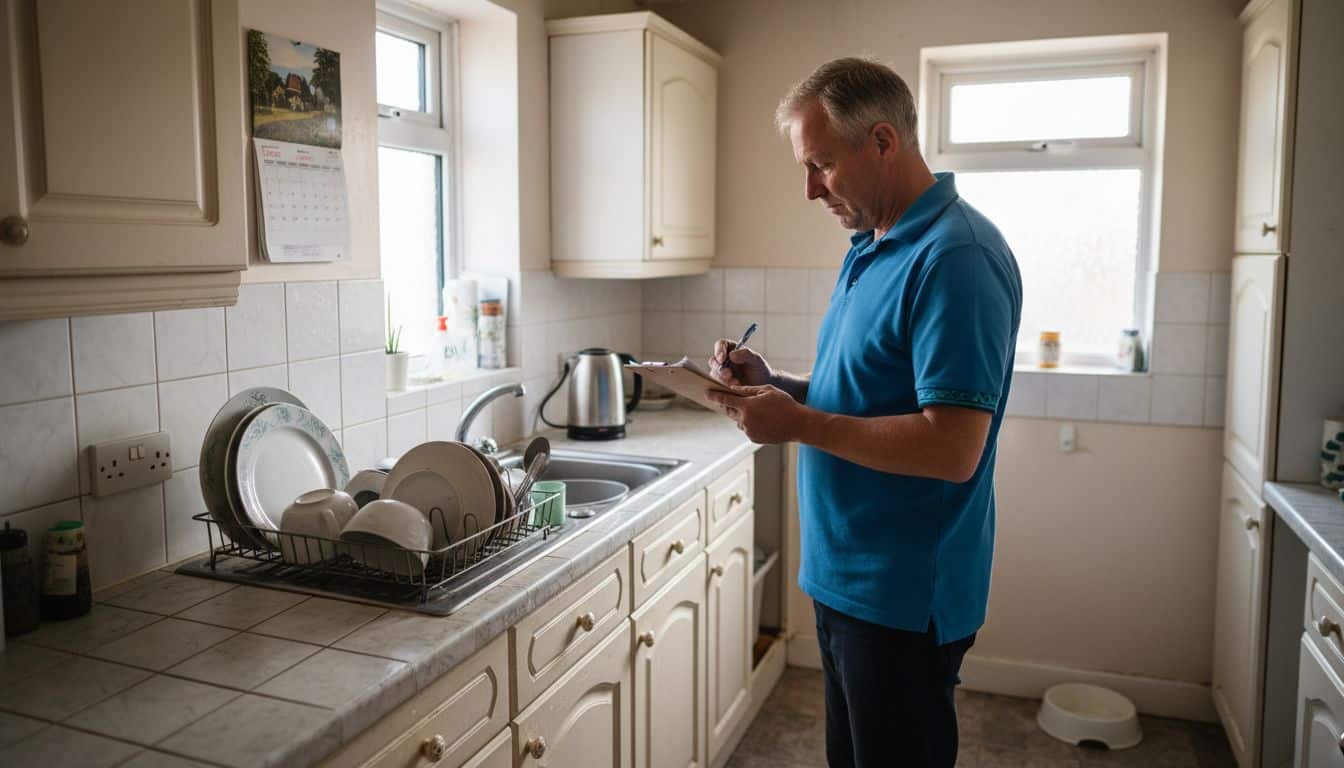
Most british homes still rely on outdated energy ratings that miss the real picture. With the United Kingdom preparing to shift from the old Standard Assessment Procedure, property owners face transformative changes in how energy efficiency is measured. The new Home Energy Model offers a dynamic upgrade that promises far more accurate data on consumption, costs, and carbon emissions. This guide explains how these changes will affect every homeowner, developer, and energy consultant seeking to stay ahead of new standards.
Table of Contents
- What Is The Home Energy Model?
- Key Differences: HEM Versus SAP Methodology
- How HEM Affects Energy Performance Certificates
- HEM’s Role In Future Homes Standard Compliance
- Practical Steps For Adapting To HEM
Key Takeaways
| Point | Details |
|---|---|
| Transition to HEM | The Home Energy Model (HEM) will replace the Standard Assessment Procedure (SAP) in 2025, enhancing energy performance evaluation in the UK. |
| Dynamic Energy Simulation | HEM introduces half-hourly energy tracking and more precise carbon emission calculations, offering a detailed understanding of household energy dynamics. |
| Impact on Energy Performance Certificates | EPCs will leverage HEM to provide more accurate and actionable insights regarding energy efficiency and potential savings for property owners. |
| Future Homes Standard Compliance | HEM will be essential for meeting stringent building energy regulations, supporting the UK’s zero-carbon readiness goals in new residential constructions. |
What Is the Home Energy Model?
The Home Energy Model (HEM) represents a pivotal evolution in how the United Kingdom assesses domestic property energy performance. Set to replace the Standard Assessment Procedure (SAP) in 2025, this government-developed methodology introduces a sophisticated approach to energy simulation in housing that promises more accurate insights into residential energy consumption.
At its core, HEM delivers a revolutionary half-hourly dynamic simulation that tracks a home’s energy use, carbon emissions, and projected running costs with unprecedented precision. Unlike previous assessment methods, this model considers real-world performance variables, accounting for emerging low-carbon technologies and the complex interactions within modern residential environments. The methodology aims to support the UK’s ambitious net-zero objectives by providing property owners and developers with granular, actionable energy performance data.
The key features of the Home Energy Model include:
- Half-hourly energy consumption tracking
- Comprehensive carbon emission calculations
- Dynamic simulation of residential energy systems
- Incorporation of emerging low-carbon technology assessments
- More accurate representation of actual household energy dynamics
By offering a more nuanced understanding of residential energy performance, HEM will significantly impact how UK property standards are evaluated. Property developers, homeowners, and energy consultants will gain access to more sophisticated tools for understanding and improving domestic energy efficiency, ultimately contributing to broader national sustainability goals.
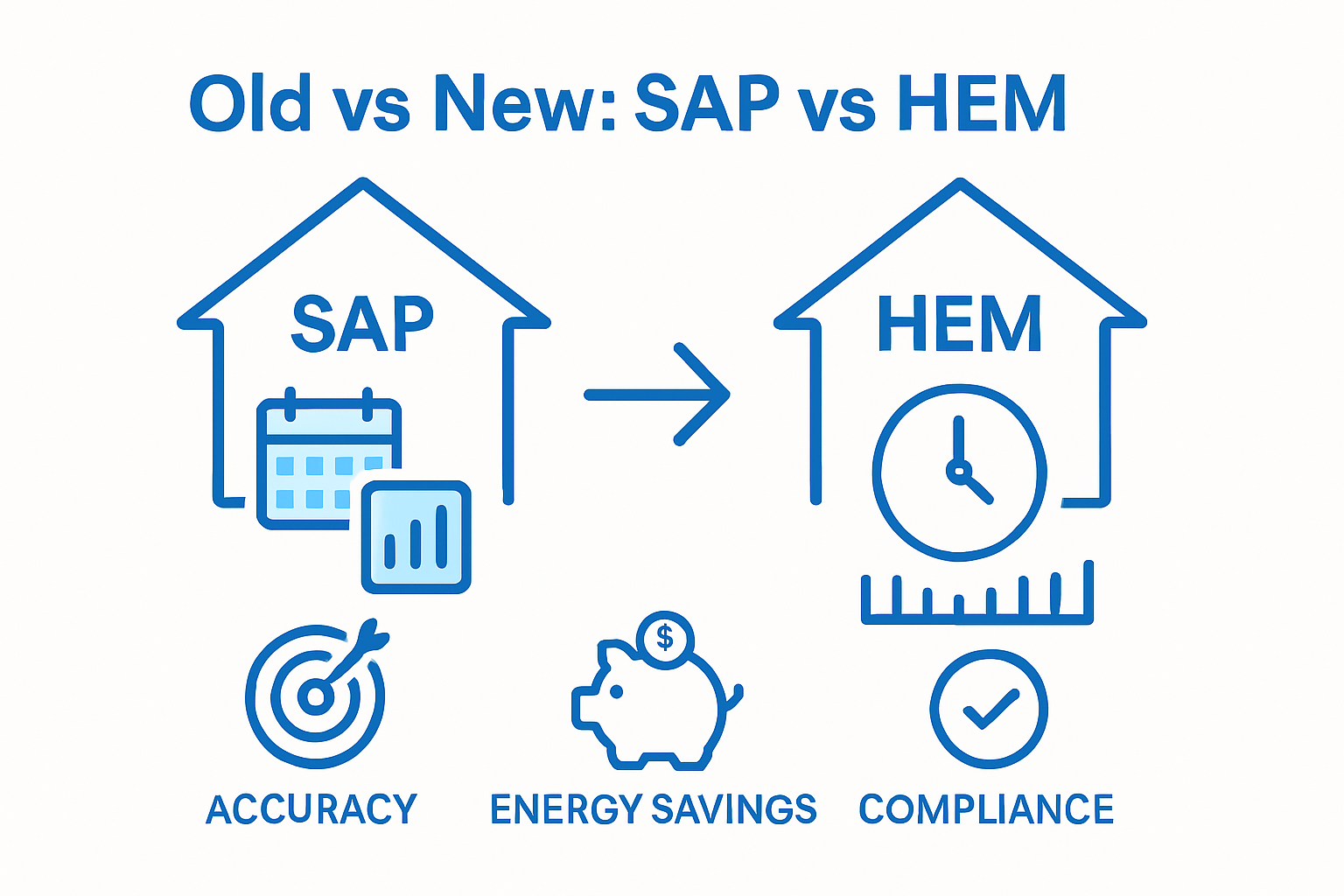
Key Differences: HEM Versus SAP Methodology
The transition from the Standard Assessment Procedure (SAP) to the Home Energy Model (HEM) represents a significant leap in energy performance assessment for UK residential properties. While SAP has been the cornerstone of energy calculations for decades, SAP calculations in London will soon be replaced by a more sophisticated and dynamic methodology that promises unprecedented accuracy and insight.
Key technical distinctions emerge in the computational approach. Where SAP traditionally relied on monthly average calculations, HEM introduces a revolutionary half-hourly dynamic simulation that captures energy consumption with remarkable precision. This granular approach enables more nuanced tracking of thermal performance, incorporating detailed inputs such as local weather data, specific appliance ratings, and complex interactions within residential energy systems.
The comprehensive differences between HEM and SAP can be summarised through several critical dimensions:
- Calculation Frequency: HEM uses half-hourly intervals versus SAP’s monthly averages
- Weather Integration: More sophisticated local climate data incorporation
- Thermal Modelling: Advanced zonal heat loss calculations
- Technology Adaptability: Enhanced recognition of emerging low-carbon technologies
- Transparency: More evidence-based assessment structure
Ultimately, the Home Energy Model represents more than a technical upgrade—it is a strategic approach to understanding residential energy performance. By providing property owners, developers, and energy consultants with more accurate and actionable insights, HEM will play a crucial role in supporting the United Kingdom’s ambitious net-zero carbon emissions targets.
How HEM Affects Energy Performance Certificates
The introduction of the Home Energy Model (HEM) is set to fundamentally transform Energy Performance Certificates (EPCs), providing a more sophisticated and accurate representation of residential energy efficiency. By adopting a comprehensive UK home energy labelling guide, property owners will gain unprecedented insights into their buildings’ energy performance that go far beyond traditional assessment methods.

Under the new HEM framework, Energy Performance Certificates will incorporate more dynamic and precise measurements. Where previous EPCs relied on static monthly calculations, the new methodology introduces half-hourly energy consumption tracking, local weather data integration, and detailed thermal performance modelling. This approach enables a more nuanced understanding of a property’s actual energy characteristics, offering occupants, prospective buyers, and landlords a clearer picture of potential energy savings and carbon emission implications.
The key transformations in EPC assessments under HEM include:
- More granular energy consumption tracking
- Enhanced accuracy in predicting energy costs
- Detailed carbon emission calculations
- Recognition of emerging low-carbon technologies
- Transparent, evidence-based performance ratings
Ultimately, the Home Energy Model represents a significant advancement in how we understand and evaluate residential energy efficiency. By providing high-confidence predictions of potential energy savings, HEM-driven EPCs will empower property owners to make more informed decisions about energy improvements, ultimately supporting the United Kingdom’s ambitious carbon reduction objectives.
HEM’s Role in Future Homes Standard Compliance
The Home Energy Model emerges as a critical methodology for implementing the Future Homes Standard, serving as the primary mechanism for demonstrating compliance with increasingly stringent building energy regulations. By exploring UK building regulations energy guidance, developers and construction professionals can understand the pivotal role HEM will play in shaping residential energy performance standards from 2025 onwards.
Under the upcoming Future Homes Standard, the Home Energy Model will replace existing assessment procedures by providing a robust, physics-based approach to evaluating new dwelling energy efficiency. This comprehensive methodology introduces half-hourly energy consumption tracking, detailed thermal performance modelling, and sophisticated carbon emission calculations, ensuring that new residential constructions meet the ‘zero-carbon ready’ targets specified in Part L of Building Regulations.
Key compliance aspects of HEM include:
- Precise energy performance measurement
- Comprehensive carbon emission tracking
- Advanced thermal efficiency assessment
- Integration of low-carbon technology evaluations
- Dynamic real-world performance simulation
Property developers and architects must recognise that HEM represents more than a technical update—it is a fundamental shift towards more sustainable, energy-efficient housing. By mandating a more granular and scientifically rigorous approach to energy assessment, the Home Energy Model will play a crucial role in supporting the United Kingdom’s ambitious carbon reduction objectives and driving meaningful change in residential construction practices.
Practical Steps for Adapting to HEM
Navigating the transition to the Home Energy Model requires a strategic and proactive approach for property professionals, developers, and homeowners. By exploring home energy retrofit strategies, stakeholders can develop a comprehensive understanding of the practical steps needed to align with the new energy assessment methodology.
Key preparation strategies involve updating technical knowledge, reviewing current building designs, and investing in advanced energy modelling capabilities. Professionals must familiarise themselves with the HEM’s half-hourly energy consumption tracking, detailed thermal performance modelling, and sophisticated carbon emission calculation methods. This will require significant training and potential software upgrades to ensure compliance with the Future Homes Standard’s rigorous requirements.
Practical adaptation steps include:
- Attending HEM methodology workshops and training sessions
- Investing in updated energy modelling software
- Reviewing existing building designs for HEM compatibility
- Updating technical skills in thermal performance assessment
- Conducting preliminary energy simulations using HEM principles
Ultimately, successful adaptation to the Home Energy Model demands a holistic approach that combines technical expertise, continuous learning, and a commitment to enhancing residential energy efficiency. Property professionals who proactively embrace these changes will be best positioned to meet the evolving regulatory landscape and contribute to the United Kingdom’s ambitious carbon reduction objectives.
Understand the Home Energy Model and Prepare Your Property for the Future
The transition to the Home Energy Model presents a clear challenge for homeowners, developers, and energy professionals across the United Kingdom. With its half-hourly dynamic simulation and advanced carbon emission tracking, HEM demands a new level of precision and understanding in assessing residential energy performance. Many face uncertainty about how to adapt current practices to meet these stringent requirements and align with the Future Homes Standard.
Do not wait until 2025 to face unexpected compliance hurdles. Visit homeenergymodel.co.uk today for comprehensive guidance on adapting to this innovative methodology. Explore practical advice on home energy retrofit strategies and deepen your knowledge through our UK building regulations energy guide. Take decisive action now to secure your property’s energy efficiency and confidently meet new government standards.
Frequently Asked Questions
What is the Home Energy Model (HEM)?
The Home Energy Model (HEM) is a government-developed methodology for assessing domestic property energy performance in the UK, set to replace the Standard Assessment Procedure (SAP) in 2025. It offers a dynamic half-hourly simulation of energy use, carbon emissions, and running costs for residential properties.
How does HEM differ from the Standard Assessment Procedure (SAP)?
HEM introduces a half-hourly dynamic simulation for tracking energy consumption, while SAP relies on monthly averages. This results in more accurate assessments, taking into account local weather data and complex interactions within residential energy systems.
What are the implications of HEM for Energy Performance Certificates (EPCs)?
HEM will enhance Energy Performance Certificates by providing more granular energy consumption tracking, improved accuracy in predicting energy costs, and detailed carbon emission calculations, leading to more informed decisions for property owners and prospective buyers.
How can property developers and homeowners prepare for the transition to HEM?
Preparation steps include attending workshops on HEM methodology, investing in updated energy modelling software, reviewing current building designs for compatibility, and enhancing technical skills related to thermal performance assessment.
Recommended
- Energy Consumption in UK Homes Explained: Key Facts
- Energy Use Reduction Explained: UK Strategies and Impact
- Modelled Energy Consumption: Complete UK Guide
- Energy Performance Explained: UK Property Standards
- The Essential Guide to Saving Energy at Home – Projector Display
- Energy-Efficient Shutters: Smart Solutions for UK Homes 2025 | Shutter World