

Most British homeowners are surprised to learn that over 80 percent of older properties leak energy through poorly insulated walls and outdated heating systems. With rising energy costs and mounting pressure to meet national net zero goals, understanding home energy performance has never been more critical. This guide demystifies Home Energy Modelling, revealing how new government-backed methods empower British residents to optimise efficiency, cut expenses, and lower carbon emissions using detailed building data.
Table of Contents
- Home Energy Modelling Defined and Debunked
- The Shift from SAP to HEM in 2025
- Key Features of the Home Energy Model
- Impact on Energy Performance Certificates (EPCs)
- Benefits for Landlords, Investors, and Homeowners
- Compliance, Costs, and Common Pitfalls
Key Takeaways
| Point | Details |
|---|---|
| Enhanced Energy Assessment | The Home Energy Model (HEM) provides a sophisticated analysis of residential energy consumption, enabling accurate predictions of energy performance. |
| Transition to HEM by 2025 | The Standard Assessment Procedure (SAP) will be replaced by HEM, requiring stakeholders to adapt to a more dynamic evaluation method for energy efficiency. |
| Benefits for Property Stakeholders | Landlords, investors, and homeowners can leverage detailed insights from HEM to optimise energy efficiency and improve property value. |
| Proactive Compliance and Training | Stakeholders must begin preparing for HEM by understanding compliance requirements and investing in necessary training to ensure a smooth transition. |
Home Energy Modelling Defined and Debunked
Home Energy Modelling represents a sophisticated approach to understanding and optimising residential energy performance, providing property owners with unprecedented insights into their building’s thermal efficiency. The Home Energy Model (HEM) is a cutting-edge dynamic, physics-based simulation tool developed by the UK government to revolutionise how we assess dwelling energy consumption and potential environmental impact.
At its core, HEM goes beyond traditional assessment methodologies by offering a comprehensive analysis that considers multiple factors affecting home energy dynamics. Unlike previous standard approaches, this model can simulate advanced technologies such as heat pumps and solar photovoltaic systems, enabling property owners to understand precise energy performance metrics. The methodology aligns closely with the UK’s ambitious net-zero goals, providing a granular assessment that supports governmental housing sustainability targets.
Key characteristics of Home Energy Modelling include its ability to:
- Provide detailed thermal performance analysis
- Predict energy consumption with high accuracy
- Model complex heating and cooling scenarios
- Assess potential retrofit interventions
- Support strategic property improvements
Pro Tip for Energy Efficiency: Conduct a preliminary Home Energy Model assessment before making any significant property upgrades to understand potential energy savings and prioritise interventions effectively.
By embracing this advanced modelling approach, UK property owners can make informed decisions about energy efficiency, potentially reducing carbon emissions and minimising long-term energy expenditure.
The Shift from SAP to HEM in 2025
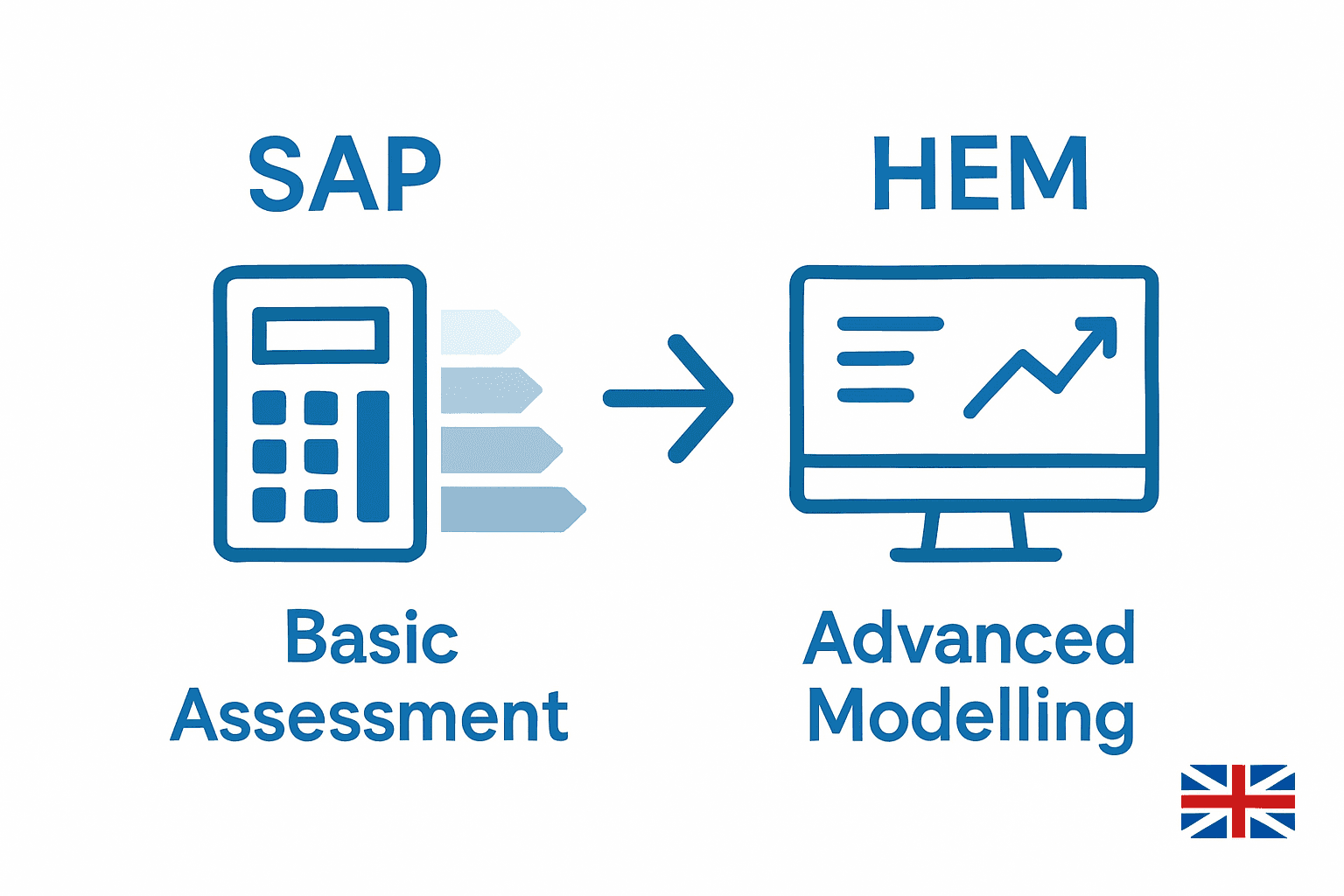
The UK energy assessment landscape is undergoing a significant transformation with the planned transition from the Standard Assessment Procedure (SAP) to the Home Energy Model (HEM) in 2025. This strategic shift represents a critical milestone in the nation’s commitment to more accurate and comprehensive energy performance evaluation for residential properties. The government’s transition plan involves running both systems concurrently to ensure a smooth migration for industry professionals and stakeholders.
Under the proposed changes, the Home Energy Model will replace SAP as the primary methodology for assessing residential energy efficiency. This transition is particularly significant for Wales, which plans to adopt HEM as the approved calculation methodology for Part L regulations, marking a substantial evolution in building performance standards. The new model offers more dynamic and precise energy performance assessment, incorporating advanced technologies and providing a more nuanced understanding of residential energy consumption.
Key differences between SAP and HEM include:
- More sophisticated thermal performance modelling
- Enhanced ability to simulate complex energy systems
- Greater accuracy in predicting renewable technology integration
- Improved assessment of heating and cooling dynamics
- More comprehensive carbon emission calculations
The transition will require significant adaptation from energy assessors, property developers, and building professionals who have long relied on the existing SAP framework. Stakeholders will need to invest in training, update assessment methodologies, and familiarise themselves with the more advanced HEM approach.
Pro Tip for Transition Preparation: Begin familiarising yourself with HEM methodologies now, attending professional development workshops and staying informed about specific implementation guidelines to ensure a smooth transition in 2025.
By embracing this more sophisticated energy assessment approach, the UK demonstrates its commitment to precise, technology-driven strategies for improving residential energy efficiency and supporting national decarbonisation objectives.
To help understand the fundamental differences between the old and new assessment methods, here is a comparison table:
| Assessment Aspect | SAP (Standard Assessment Procedure) | HEM (Home Energy Model) |
|---|---|---|
| Modelling Frequency | Annual average calculations | Half-hourly dynamic simulation |
| Technology Coverage | Limited to standard systems | Advanced tech integration (e.g. heat pumps) |
| Carbon Emissions Accuracy | Basic estimations | Detailed, physics-based calculations |
| Flexibility for Future Tech | Static, slow to adapt | Modular, open to innovations |
| Building Fabric Assessment | Generalised approach | Precise thermal mapping |
Key Features of the Home Energy Model
The Home Energy Model (HEM) represents a quantum leap in residential energy assessment technology, introducing a sophisticated approach that goes far beyond traditional evaluation methods. With a half-hourly dynamic engine and advanced physics-based calculations, the model provides unprecedented granularity in understanding residential energy performance. This innovative system enables property owners and energy professionals to obtain a comprehensive, nuanced view of a building’s thermal characteristics and energy consumption patterns.
At the core of HEM’s architectural design is a modular framework that supports complex net-zero objectives and evolving energy technologies. The model’s open-source code and centralized calculation service ensure transparency and continuous improvement, allowing for rapid integration of emerging technological innovations. Its ability to model advanced energy systems such as heat pumps, solar photovoltaic installations, and sophisticated heating configurations sets it apart from previous assessment methodologies.
Key technological capabilities of the Home Energy Model include:
- Half-hourly energy consumption simulation
- Advanced thermal performance mapping
- Comprehensive renewable technology integration assessment
- Dynamic carbon emission calculations
- Precise building fabric performance analysis
- Sophisticated heating and cooling system modeling
The model’s technical sophistication enables more accurate predictions of energy performance, supporting property owners in making informed decisions about energy efficiency improvements and technological investments. Its flexible architecture allows for detailed scenario modeling, helping stakeholders understand potential energy savings and carbon reduction strategies.

Pro Tip for Energy Assessment: Leverage the HEM’s detailed half-hourly simulation capabilities to identify specific energy consumption patterns and targeted improvement opportunities in your property.
By providing a more comprehensive and adaptable approach to energy assessment, the Home Energy Model represents a significant step forward in supporting the UK’s ambitious decarbonisation and energy efficiency goals.
Impact on Energy Performance Certificates (EPCs)
The introduction of the Home Energy Model (HEM) is set to revolutionise Energy Performance Certificates (EPCs), bringing unprecedented depth and accuracy to property energy assessments. The UK government’s planned integration of HEM into EPCs by 2025 signals a transformative approach to understanding residential energy performance. This strategic shift will provide property owners, investors, and tenants with more comprehensive insights into a building’s energy efficiency and potential environmental impact.
A key innovation in the new EPC framework is the introduction of advanced assessment metrics, such as the Heat Retention Rating (HRR). These new scoring mechanisms will offer more nuanced evaluations of dwelling energy performance, moving beyond traditional binary ratings. The HEM enables a more dynamic assessment that considers complex factors like thermal performance, technological integration, and potential energy savings.
Key changes to Energy Performance Certificates will include:
- More granular energy efficiency ratings
- Detailed thermal performance mapping
- Integration of renewable technology assessments
- Half-hourly energy consumption analysis
- Advanced carbon emission calculations
- Personalised energy improvement recommendations
These enhanced EPCs will provide stakeholders with a more actionable and transparent understanding of a property’s energy characteristics. Landlords, homeowners, and property investors will benefit from more precise information about potential energy efficiency improvements and their associated costs and benefits.
Pro Tip for EPC Understanding: Request a comprehensive breakdown of your property’s energy performance metrics when obtaining a new EPC, focusing on specific improvement opportunities highlighted by the Home Energy Model assessment.
By implementing these sophisticated assessment techniques, the UK is positioning itself at the forefront of global energy efficiency standards, creating a more transparent and environmentally responsible approach to residential property evaluation.
Benefits for Landlords, Investors, and Homeowners
The Home Energy Model (HEM) presents a transformative opportunity for property stakeholders, offering unprecedented insights into energy performance and potential value enhancement. By aligning with net-zero policy and supporting strategic property improvements, the model provides a comprehensive framework for understanding and optimising residential energy efficiency. This approach enables landlords, investors, and homeowners to make data-driven decisions that can significantly impact property value and operational costs.
The UK government’s commitment to more accurate energy performance assessments translates into tangible benefits across different property stakeholder groups. Landlords can leverage detailed energy performance insights to justify premium rental rates, investors can make more informed purchasing decisions, and homeowners gain a clear roadmap for energy-efficient improvements.
Specific benefits for each stakeholder group include:
- Landlords:
- Enhanced property marketability
- Potential for higher rental yields
- Clearer compliance with emerging energy regulations
- Investors:
- More precise property valuation metrics
- Better understanding of long-term energy costs
- Risk mitigation through comprehensive energy assessments
- Homeowners:
- Detailed energy improvement recommendations
- Potential energy cost savings
- Increased property value through efficiency upgrades
The model’s advanced capabilities enable a granular understanding of energy consumption, technological integration potential, and carbon reduction strategies. This level of insight empowers property stakeholders to make proactive decisions that align with both financial objectives and environmental responsibilities.
Pro Tip for Property Optimisation: Conduct a comprehensive Home Energy Model assessment before any property transaction or significant renovation to uncover hidden energy performance opportunities and potential value enhancements.
By embracing the Home Energy Model, property stakeholders can position themselves at the forefront of energy efficiency, potentially unlocking significant financial and environmental benefits.
Below is a summary of how major property stakeholders benefit from adopting the Home Energy Model:
| Stakeholder Group | Main Benefit | Example Advantage |
|---|---|---|
| Landlords | Market appeal | Justify higher, sustainable rents |
| Investors | Informed decisions | Better predict long-term running costs |
| Homeowners | Efficiency upgrades | Identify and prioritise retrofit options |
| Assessors | Professional relevance | Upskill for advanced energy modelling |
Compliance, Costs, and Common Pitfalls
Navigating the transition to the Home Energy Model (HEM) requires a strategic approach to understanding regulatory requirements, potential financial implications, and implementation challenges. The UK government’s planned implementation alongside the Future Homes Standard in 2025 introduces a complex landscape of compliance and adaptation that property stakeholders must carefully manage.
Transitional provisions, particularly in regions like Wales, demonstrate the nuanced approach to regulatory implementation. During this transition period, both the existing Standard Assessment Procedure (SAP) and the new Home Energy Model will be available, allowing professionals and property owners a gradual adaptation window. This approach mitigates potential disruption and provides time for necessary skill development and system integration.
Key compliance and cost considerations include:
- Regulatory Compliance:
- Understanding new Part L building regulations
- Adapting to HEM assessment methodologies
- Maintaining documentation for energy performance
- Financial Implications:
- Initial assessment and training costs
- Potential investment in energy efficiency upgrades
- Long-term savings from improved energy performance
- Common Implementation Challenges:
- Technical complexity of new assessment methods
- Software and training adaptation
- Interpreting more detailed energy performance metrics
The most significant pitfalls arise from inadequate preparation and a reactive approach to the transition. Property professionals and homeowners must proactively understand the new requirements, invest in necessary training, and develop strategies for incorporating HEM insights into property management and investment decisions.
Pro Tip for Smooth Transition: Start budgeting and planning for HEM compliance now, allocating resources for training, software updates, and potential property efficiency improvements well before the 2025 implementation deadline.
By anticipating challenges and preparing strategically, property stakeholders can transform the HEM transition from a regulatory burden into an opportunity for enhanced energy efficiency and potential value appreciation.
Discover How Home Energy Modelling Can Transform Your Property’s Efficiency
The article highlights the challenges UK property owners face with the upcoming shift from SAP to the Home Energy Model (HEM) in 2025. Those seeking clearer insights on detailed energy consumption, advanced thermal performance, and compliance with new regulations must act now to avoid costly pitfalls and missed opportunities. Whether you are a landlord, investor, or homeowner, understanding how HEM affects your Energy Performance Certificates and retrofit options is crucial to maximising property value and reducing energy costs.
Explore Home Energy Model’s comprehensive resources to gain expert guidance on navigating this transition. Learn about the model’s key features, how it integrates with the Future Homes Standard, and practical steps for compliance. Access detailed advice tailored for UK stakeholders ready to embrace precise energy assessments and make informed decisions. Don’t wait until 2025 arrives — secure your property’s sustainable future today by visiting Home Energy Model and enhance your knowledge on this essential government initiative.
Frequently Asked Questions
What is Home Energy Modelling (HEM)?
Home Energy Modelling (HEM) is an advanced simulation tool developed to provide comprehensive insights into a property’s energy performance, helping homeowners and property professionals understand and optimise their residential energy consumption and efficiency.
How does HEM differ from the traditional Standard Assessment Procedure (SAP)?
HEM offers more sophisticated thermal performance modelling, dynamic energy consumption simulations, and better integration of modern technologies, leading to more accurate assessments compared to the annual average calculations used in the SAP.
What benefits does Home Energy Modelling provide to property owners?
HEM allows property owners to access detailed energy performance metrics, identify potential energy savings, optimise investments in energy-efficient technologies, and enhance overall property value through informed decision-making.
How can I prepare for the transition to Home Energy Modelling?
Preparation includes familiarising yourself with HEM methodologies, attending training workshops, and investing in software updates to align your energy assessment practices with the upcoming changes in regulations.