

Most british households are surprised to learn that small shifts in daily habits can lead to major savings on their energy bills. Rising costs have made managing energy use more important than ever, but confusion often surrounds what drives higher bills. This guide clears up the difference between what you pay and what you actually use, helping every british property owner take smarter steps to keep costs down.
Table of Contents
- Defining Energy Bills And Energy Use
- How Energy Bills Are Calculated
- Measuring And Improving Energy Use
- Role Of Epcs And The Home Energy Model
- Financial And Legal Impacts For Property Owners
Key Takeaways
| Point | Details |
|---|---|
| Understanding Energy Bills | Energy bills reflect the monetary cost of energy consumed, while energy use is measured in kilowatt hours (kWh) and varies based on household behaviours and property characteristics. |
| Energy Bill Calculation | Bills are calculated using the unit rate and daily standing charge, influenced by meter type and consumption patterns, allowing for strategic household expense management. |
| Importance of Energy Efficiency | Homeowners should implement changes such as smart meters and energy audits to boost efficiency, reduce carbon footprints, and lower bills. |
| Regulatory Compliance | Property owners must adhere to evolving energy efficiency standards to maintain property value and avoid potential fines, making proactive investments in energy upgrades essential. |
Defining Energy Bills and Energy Use
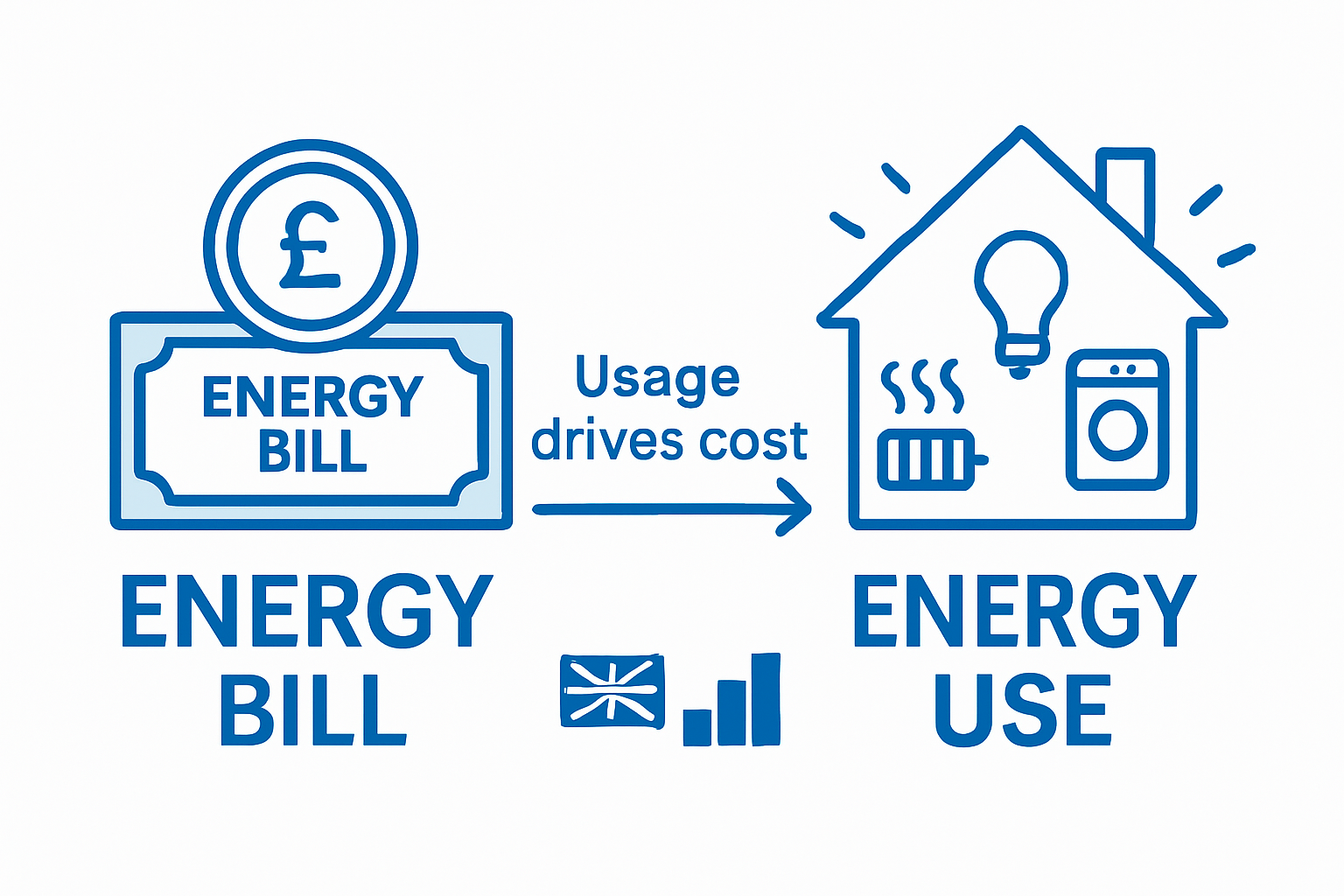
Understanding the difference between energy bills and energy use is crucial for UK homeowners seeking to manage their household expenses effectively. Energy bills represent the actual monetary cost of electricity and gas consumed, while energy use refers to the total quantity of energy your property consumes, measured in kilowatt hours (kWh).
At its core, energy bills are calculated by multiplying the unit rates of gas or electricity by the amounts used, plus a daily standing charge. The UK government explains that while the energy price cap limits the rates suppliers can charge per unit, the total bill depends entirely on individual consumption. This means two households with identical unit rates might have dramatically different bills based on their specific energy usage patterns.
Energy use itself is influenced by multiple factors, including property age, insulation quality, appliance efficiency, and individual household behaviours. Comprehensive research from the National Energy Action highlights that understanding your energy consumption involves more than just reading a bill. Homeowners need to consider:
- The age and thermal performance of their property
- Types of heating systems installed
- Number and efficiency of electrical appliances
- Personal energy consumption habits
By recognising the intricate relationship between energy bills and energy use, UK property owners can make informed decisions about reducing consumption and managing household expenses more effectively.
How Energy Bills Are Calculated
Understanding the intricate process of energy bill calculations is essential for UK homeowners seeking transparency and control over their household expenses. Energy bills are primarily composed of two fundamental components: the unit rate and a daily standing charge. Detailed research from the National Energy Action reveals that the total bill is calculated by multiplying the number of kilowatt hours (kWh) consumed by the current unit rate, then adding a fixed daily standing charge.

The calculation process varies depending on the type of energy meter installed in your property. Households can have either credit meters or prepayment meters, each with distinct billing mechanisms. Credit meters typically involve monthly or quarterly bills based on actual meter readings or estimated consumption, while prepayment meters require customers to pay for energy in advance, often through top-up cards or digital payment methods.
Key factors influencing energy bill calculations include:
- Total energy consumption in kilowatt hours
- Current unit rates for electricity and gas
- Daily standing charge amounts
- Meter type (credit or prepayment)
- Seasonal variations in energy usage
By comprehending these calculation methods, UK homeowners can develop more strategic approaches to managing their energy consumption and potentially reduce overall household expenses. Regularly monitoring meter readings, understanding unit rates, and implementing energy-efficient practices can significantly impact the final bill amount.
Measuring and Improving Energy Use
Measuring energy use effectively requires a systematic approach that combines technological tools and informed household practices. Guidance from the National Energy Action emphasises the importance of regular meter readings and comprehensive understanding of consumption patterns. Homeowners can leverage smart meters, energy monitoring apps, and detailed bill analysis to gain precise insights into their energy consumption across different appliances and times of day.
Improving energy efficiency involves a multi-faceted strategy targeting both immediate behavioural changes and long-term property upgrades. The UK government highlights the critical role of adopting clean power sources and energy-efficient technologies as key mechanisms for reducing overall consumption and protecting households from volatile energy markets.
Practical steps for measuring and improving energy use include:
- Install smart meters to track real-time energy consumption
- Conduct comprehensive home energy audits
- Upgrade insulation in walls, floors, and roofs
- Replace older appliances with energy-efficient models
- Implement behavioural changes like reducing standby power usage
By adopting a proactive approach to energy management, UK households can significantly reduce their carbon footprint, lower energy bills, and contribute to broader national sustainability objectives. Continuous monitoring, strategic investments in energy-efficient technologies, and conscious consumption habits are the cornerstone of effective energy use reduction.
Role of EPCs and the Home Energy Model
Energy Performance Certificates (EPCs) serve as critical documents providing comprehensive insights into a property’s energy efficiency and potential environmental impact. The comprehensive guide to UK home energy labelling reveals that these certificates offer property owners, buyers, and tenants a standardised assessment of energy performance, ratings, and recommended improvements.
The Home Energy Model represents a significant advancement in energy assessment methodologies, replacing the existing Standard Assessment Procedure (SAP) to provide more accurate and nuanced evaluations of residential energy consumption. Energy simulation research in housing indicates that this new model will incorporate more sophisticated calculations, considering factors like building fabric, heating systems, renewable technologies, and actual occupancy patterns.
Key aspects of EPCs and the Home Energy Model include:
- Detailed energy efficiency ratings from A (most efficient) to G (least efficient)
- Comprehensive recommendations for reducing energy consumption
- Calculation of potential carbon dioxide emissions
- Assessment of heating, lighting, and hot water systems
- Identification of cost-effective improvement opportunities
By providing transparent, data-driven insights, EPCs and the Home Energy Model empower UK homeowners and property stakeholders to make informed decisions about energy efficiency, ultimately contributing to national sustainability goals and potentially reducing long-term energy expenditures.
Financial and Legal Impacts for Property Owners
The evolving landscape of energy regulations presents significant financial and legal considerations for UK property owners. Compliance with energy efficiency standards is no longer optional but a critical requirement that can substantially impact property value, rental potential, and potential legal responsibilities. Energy performance standards now directly influence a property’s marketability and potential financial returns.
Landlords and property investors face increasingly stringent legal obligations regarding energy efficiency. From 2025, properties will need to meet minimum energy performance ratings to be legally rentable, with potential financial penalties for non-compliance. This means property owners must proactively invest in energy upgrades, potentially facing substantial renovation costs or risking reduced rental income and property valuation.
Key financial and legal implications include:
- Mandatory minimum Energy Performance Certificate (EPC) ratings
- Potential fines for non-compliant properties
- Reduced rental and resale values for low-efficiency buildings
- Increased costs for mandatory energy efficiency improvements
- Potential tax incentives for energy-efficient property upgrades
Navigating these complex regulatory requirements demands a strategic approach. Property owners must balance immediate investment costs against long-term financial benefits, considering potential energy savings, increased property value, and compliance with evolving UK environmental regulations. Proactive investment in energy efficiency is rapidly transforming from a voluntary initiative to a critical financial and legal necessity.
Take Control of Your Energy Bills and Usage Today
Understanding the true difference between energy bills and energy use is the first step towards managing your household expenses more effectively. With rising energy prices and stricter government regulations, it is vital for UK homeowners and landlords to familiarise themselves with concepts like Energy Performance Certificates and the upcoming Home Energy Model. These tools offer clear guidance on how to track, measure, and ultimately reduce your energy consumption while staying compliant with legal requirements.
Discover how the Home Energy Model can empower you with accurate insights into your property’s energy efficiency and help you prepare for the new standards replacing SAP in 2025. Don’t wait until costly penalties or surging energy bills catch you off guard. Visit homeenergymodel.co.uk today to explore essential resources, expert advice, and solutions to optimise your property’s energy use and secure financial savings for the future.
Frequently Asked Questions
What is the difference between energy bills and energy use?
Energy bills represent the monetary cost for the electricity and gas consumed, while energy use refers to the total quantity of energy consumed in kilowatt hours (kWh).
How are energy bills calculated in the UK?
Energy bills are calculated by multiplying the number of kilowatt hours (kWh) used by the unit rates for electricity and gas, then adding a daily standing charge.
What factors influence a household’s energy use?
Factors include the age and thermal performance of the property, types of heating systems, efficiency of electrical appliances, and individual consumption habits.
What steps can homeowners take to improve their energy efficiency?
Homeowners can install smart meters, conduct home energy audits, upgrade insulation, replace old appliances with energy-efficient models, and reduce standby power usage.