

Every british homeowner faces a maze of energy terms that can be confusing. Over 60 percent of property buyers consider energy performance before making a decision, highlighting how vital it is to understand what these words really mean. Grasping the essentials helps you make smarter choices about efficiency, costs, and sustainability. This guide breaks down the core domestic energy terms, so you can take control of your property’s future with confidence.
Table of Contents
- Core Terms In UK Domestic Energy
- Types Of Domestic Energy Measurements
- Understanding Epcs And Government Assessments
- The Role Of The Home Energy Model (Hem)
- Compliance, Costs, And Legal Implications
Key Takeaways
| Point | Details |
|---|---|
| Understanding Key Terms | Familiarising yourself with essential terms such as EPC and kWh is vital for navigating domestic energy efficiently. |
| Importance of Energy Performance Certificates (EPCs) | EPCs evaluate property energy efficiency, influencing buyer decisions and potential renovations. |
| Role of the Home Energy Model (HEM) | HEM provides advanced assessments of energy consumption and carbon emissions, supporting better energy management. |
| Compliance and Legal Obligations | Property owners must adhere to evolving energy regulations to avoid penalties and enhance property value. |
Core Terms in UK Domestic Energy
Navigating the complex world of domestic energy can feel like decoding a sophisticated puzzle. According to the UK Parliament Commons Library, understanding key terminology is crucial for homeowners seeking to comprehend their energy landscape.
Standard Assessment Procedure (SAP) forms the backbone of energy performance evaluation in residential properties. As defined by Wikipedia, SAP is the UK government’s primary method for calculating residential energy ratings, tracking typical annual energy costs for critical household systems like heating, water, and lighting.
Key domestic energy terms every UK homeowner should understand include:
- Energy Performance Certificate (EPC): An official document rating a property’s energy efficiency from A (most efficient) to G (least efficient)
- Kilowatt Hour (kWh): The standard unit measuring energy consumption
- Carbon Emissions: The total greenhouse gases produced by household energy usage
- Renewable Energy: Power generated from sustainable sources like solar, wind, or hydroelectric systems
Understanding UK building energy regulations can help homeowners make informed decisions about energy efficiency upgrades and potential cost savings. Each term represents a critical component in comprehending how domestic energy systems operate and impact both environmental sustainability and household expenses.
Types of Domestic Energy Measurements
Understanding the nuanced world of domestic energy measurements requires more than casual knowledge. Energy UK provides critical insights into how households track their energy consumption through standardised measurement techniques.
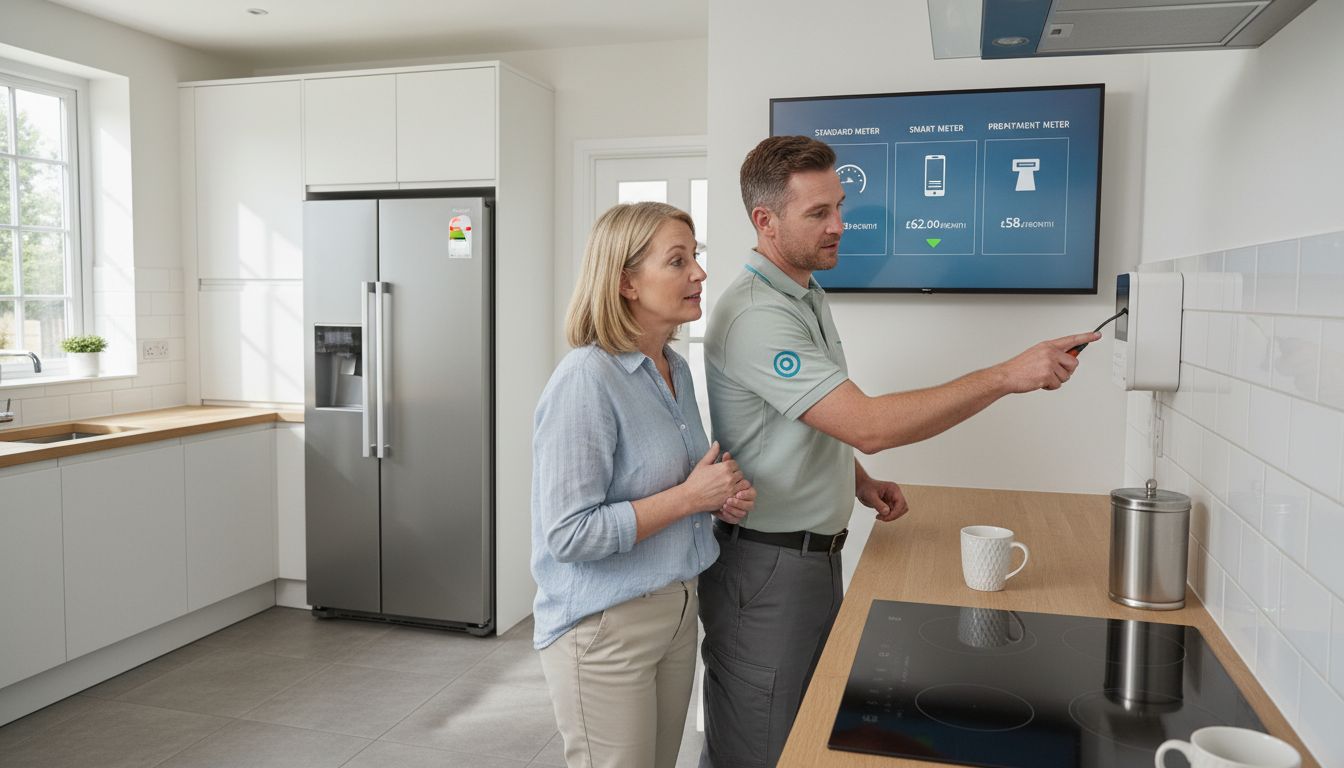
Electricity Meters represent the primary method for tracking electrical energy usage in UK homes. According to Which, these devices come in several sophisticated formats:
- Standard Credit Meters: Traditional meters requiring manual reading
- Smart Meters: Digital devices transmitting real-time consumption data
- Prepayment Meters: Allowing consumers to pay for energy in advance
Key energy measurement units every homeowner should understand include:
- Kilowatt Hour (kWh): The standard unit measuring electrical energy consumption
- British Thermal Unit (BTU): Used for measuring heat energy
- Typical Domestic Consumption Values (TDCVs): Industry-standard figures representing average annual household energy usage
Energy usage patterns in UK homes reveal that understanding these measurement techniques enables more informed decisions about energy efficiency and potential cost reductions. Each measurement type provides unique insights into household energy dynamics, helping residents manage their consumption more effectively.
Understanding EPCs and Government Assessments
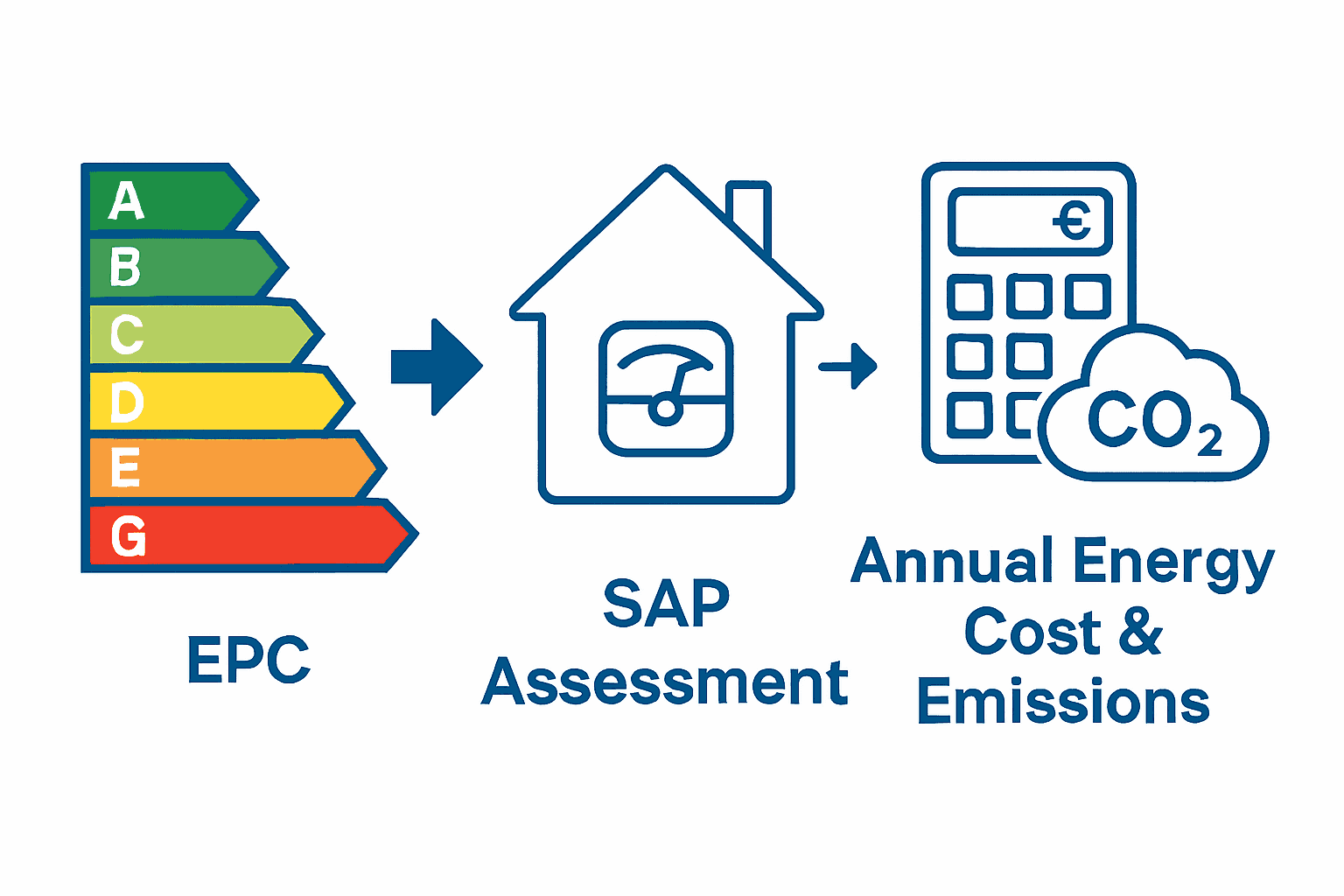
Energy Performance Certificates (EPCs) are crucial tools for understanding a property’s energy efficiency in the United Kingdom. Wikipedia explains that the Standard Assessment Procedure (SAP) serves as the UK government’s primary methodology for measuring residential energy ratings, calculating annual energy costs and carbon emissions across critical household systems.
Government Energy Assessment Frameworks play a pivotal role in promoting energy efficiency and sustainability. The National Home Energy Rating (NHER), as detailed by Wikipedia, provides an accreditation scheme for energy assessors and a comprehensive rating scale for housing energy performance.
Key components of energy assessments include:
- Energy Efficiency Rating: A scale from A (most efficient) to G (least efficient)
- Carbon Emission Ratings: Measuring the property’s environmental impact
- Recommended Improvements: Specific suggestions for enhancing energy performance
- Estimated Energy Costs: Projected annual expenses based on current property characteristics
Understanding EPCs in London reveals how these assessments are critical for property owners, potential buyers, and tenants. They provide transparent insights into a building’s energy performance, potential upgrade opportunities, and long-term sustainability considerations.
The Role of the Home Energy Model (HEM)
The Home Energy Model (HEM) represents a groundbreaking approach to assessing residential energy performance in the United Kingdom. As the successor to the Standard Assessment Procedure, Wikipedia highlights the critical need for advanced methodologies in calculating residential energy ratings, tracking annual energy costs, and measuring carbon emissions across household systems.
Key Functions of the Home Energy Model include comprehensive evaluation of property energy characteristics, providing detailed insights into potential efficiency improvements. The HEM goes beyond traditional assessment methods by offering a more nuanced and dynamic approach to understanding domestic energy consumption.
Primary features of the Home Energy Model encompass:
- Detailed Energy Performance Analysis: In-depth assessment of property energy efficiency
- Carbon Emission Calculations: Precise measurement of environmental impact
- Predictive Energy Consumption Modeling: Forecasting potential energy usage and costs
- Recommendations for Improvement: Tailored suggestions for enhancing property energy performance
Energy simulation in UK housing demonstrates how the Home Energy Model provides property owners, developers, and policymakers with a comprehensive tool for understanding and improving domestic energy efficiency. By offering a more sophisticated approach to energy assessment, the HEM plays a crucial role in supporting the UK’s sustainability and carbon reduction goals.
Compliance, Costs, and Legal Implications
The landscape of domestic energy regulation in the United Kingdom is rapidly evolving, with significant legal frameworks shaping property owners’ obligations. Wikipedia highlights the Energy Act 2023 as a pivotal piece of legislation aimed at securing energy supply and promoting comprehensive energy efficiency across residential properties.
Legal Compliance Requirements have become increasingly stringent for property owners and landlords. The Great British Insulation Scheme, as detailed by Wikipedia, represents a government initiative focused on reducing energy costs and carbon emissions through targeted residential insulation measures.
Key legal and financial considerations include:
- Minimum Energy Efficiency Standards (MEES): Legally mandated performance thresholds for rental properties
- Potential Financial Penalties: Fines for non-compliance with energy efficiency regulations
- Energy Performance Certificate (EPC) Requirements: Mandatory ratings for property sales and rentals
- Potential Property Value Implications: Energy efficiency directly impacting market valuation
Energy consumption in UK homes demonstrates the complex interplay between legal requirements, financial investments, and environmental sustainability. Property owners must navigate an increasingly sophisticated regulatory environment that demands proactive energy management and continuous improvement in residential energy performance.
Understand UK Domestic Energy and Prepare for the Home Energy Model Now
The journey to mastering domestic energy terminology and navigating evolving standards can feel overwhelming. Whether you are a homeowner, landlord, or property investor, staying ahead means understanding critical concepts like the Standard Assessment Procedure, Energy Performance Certificates, and the forthcoming Home Energy Model. These terms are not just jargon but keys to unlocking better energy efficiency, legal compliance, and cost savings.
Take control of your property’s energy future today by visiting Home Energy Model. Gain in-depth insights into the new government methodology replacing SAP in 2025, discover how to improve your energy ratings, and learn what the changes mean for EPCs and compliance. Act now to stay informed, meet upcoming regulations, and enhance your property’s value with clear guidance from Understanding EPCs in London and Energy simulation in UK housing. Your path to smarter, sustainable energy management starts here.
Frequently Asked Questions
What is an Energy Performance Certificate (EPC)?
An Energy Performance Certificate (EPC) is an official document that rates a property’s energy efficiency on a scale from A (most efficient) to G (least efficient). It provides insights into energy usage and potential improvements.
How is energy consumption measured in UK homes?
Energy consumption in UK homes is primarily measured using electricity meters, which can be standard credit meters, smart meters, or prepayment meters. Consumption is typically recorded in kilowatt hours (kWh).
What does the Standard Assessment Procedure (SAP) entail?
The Standard Assessment Procedure (SAP) is the UK government’s method for calculating energy ratings of residential properties, assessing annual energy costs, and measuring carbon emissions based on key household systems.
What are the legal compliance requirements for energy efficiency in rental properties?
Legal compliance requirements for rental properties include Minimum Energy Efficiency Standards (MEES), which set performance thresholds, and maintaining valid Energy Performance Certificates (EPCs). Non-compliance can result in financial penalties.