
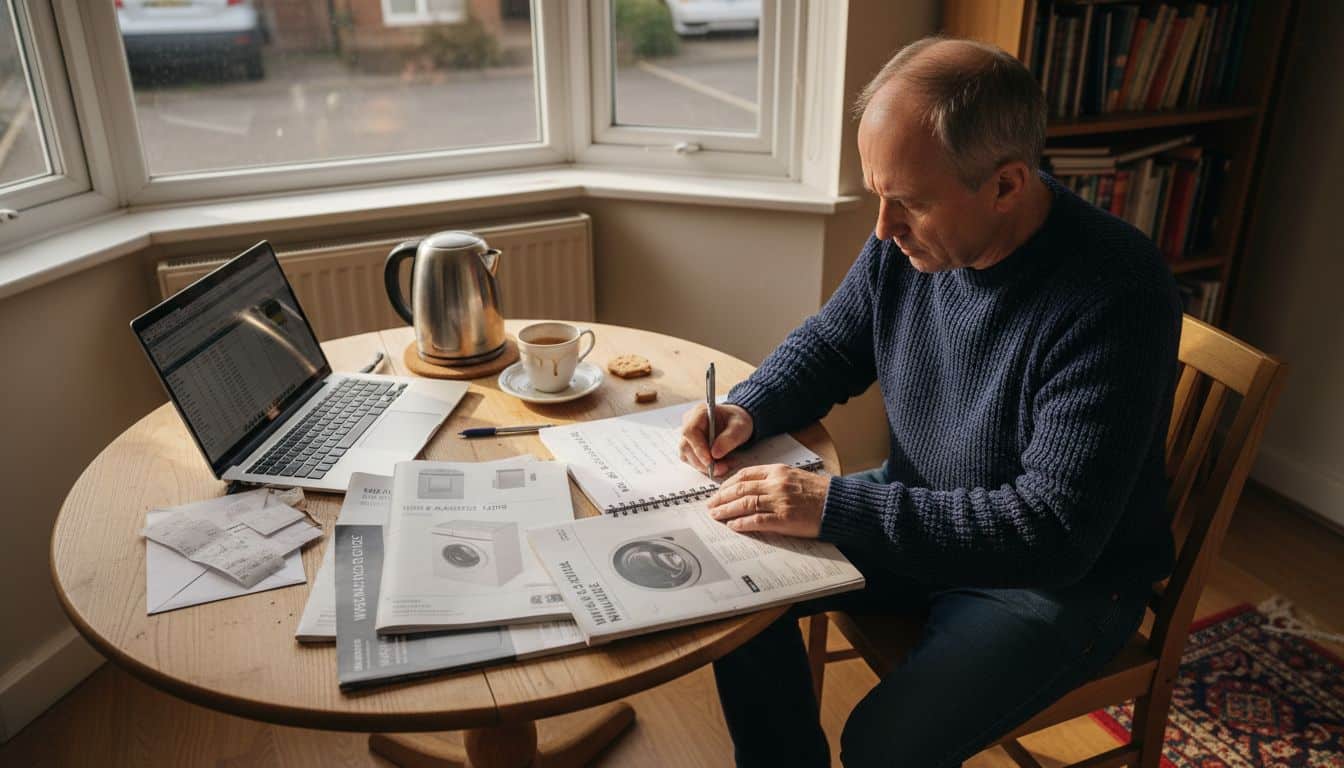
More than 60 percent of British homeowners admit they find estimating their annual energy use confusing. Yet understanding your property’s unique energy profile is crucial with costs rising and efficiency standards tightening across the United Kingdom. This step-by-step guide demystifies the process by showing you exactly how to gather the right information, assess property features, and use approved tools so you can calculate and verify your true energy consumption with confidence.
Table of Contents
- Step 1: Gather Essential Property and Appliance Data
- Step 2: Assess Current Heating, Lighting and Insulation
- Step 3: Apply the Home Energy Model or Approved Tools
- Step 4: Calculate Estimated Annual Energy Consumption
- Step 5: Review and Verify Your Energy Use Estimation
Quick Summary
| Key Point | Explanation |
|---|---|
| 1. Gather comprehensive data on appliances | Document the specifications of all electrical appliances to understand energy use patterns accurately. |
| 2. Assess heating, lighting, and insulation | Evaluate the efficiency of heating systems, lighting types, and insulation to identify potential improvement areas. |
| 3. Apply an approved energy modelling tool | Use a recognised calculation methodology to translate property data into meaningful energy insights. |
| 4. Calculate estimated annual energy use | Multiply daily energy consumption by 365, adjusting for seasonal variations to determine annual usage. |
| 5. Review and verify your estimates | Compare calculations with utility bills and consider hiring a professional assessor for accuracy verification. |
Step 1: Gather essential property and appliance data
Precise energy use estimation begins with comprehensive data collection about your property and its appliances. Gathering accurate information forms the foundation for understanding your home’s energy consumption patterns. Insights from the University of Edinburgh’s IDEAL Household Energy Dataset demonstrate the importance of detailed residential energy tracking.
Start by creating a systematic inventory of all electrical appliances and their specifications. This includes major systems like heating and cooling, along with smaller household devices. Document each appliance’s wattage, average daily usage time, and energy efficiency rating. Pay special attention to older appliances which often consume significantly more electricity compared to modern equivalents. Essential home appliance efficiency tips can help refine your understanding of energy consumption.
While recording appliance details, note additional property characteristics that impact energy consumption such as total square footage, insulation quality, window types, and number of occupants. Each of these factors contributes to overall energy demand. The more precise your initial data collection, the more accurate your subsequent energy use estimates will become. Prepare to transition into detailed energy calculations by ensuring your property inventory is comprehensive and meticulously documented.
Step 2: Assess current heating, lighting and insulation
Identifying your property’s current energy performance requires a systematic evaluation of heating systems, lighting infrastructure, and insulation quality. Energy Performance Certificates in the UK provide a standardised framework for understanding your home’s energy efficiency rating across these critical areas.
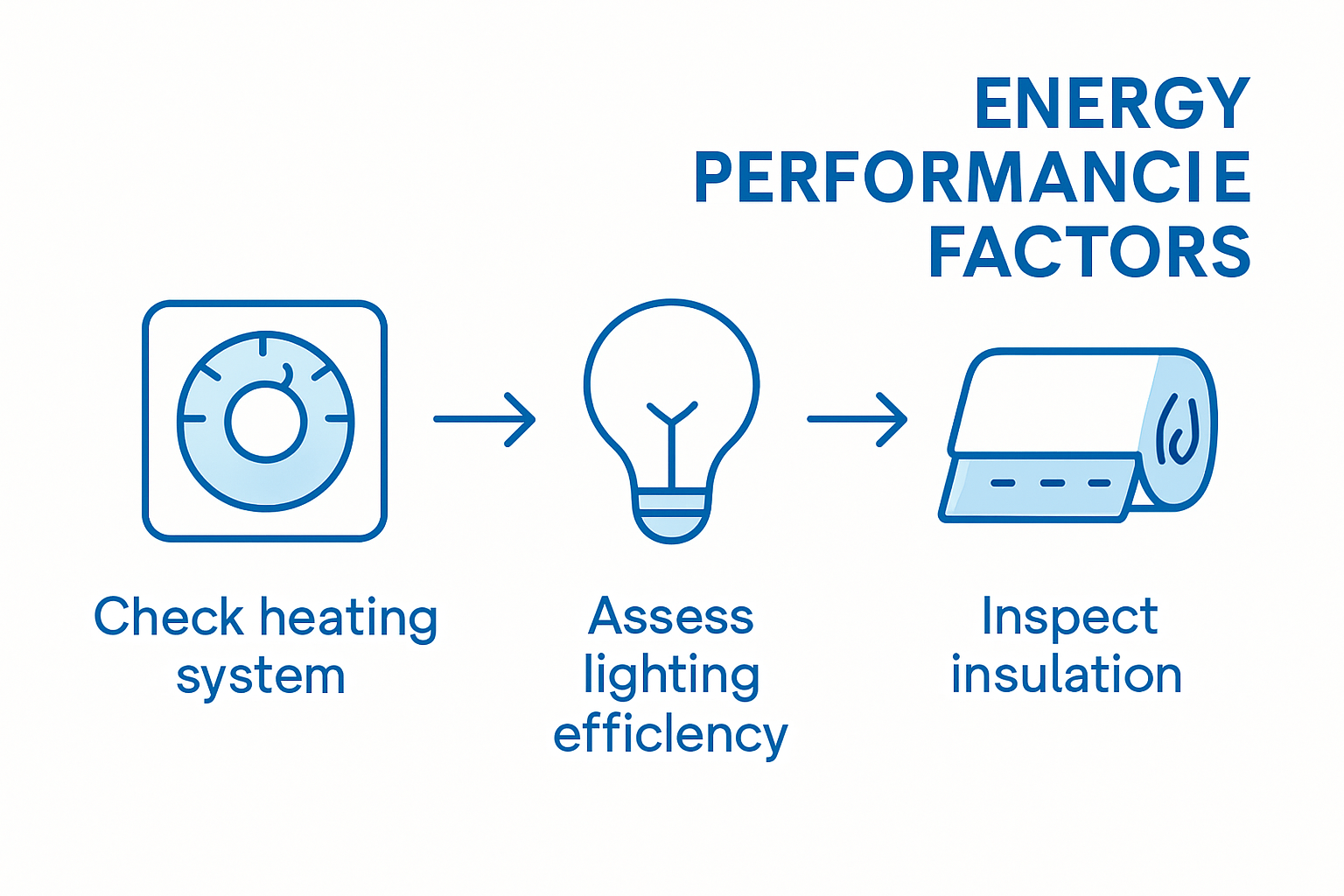
Begin by conducting a comprehensive inspection of your heating system, examining the boiler efficiency, radiator conditions, and overall thermal distribution. Check the age and maintenance history of your primary heating equipment, as older systems typically consume more energy. Lighting assessment involves cataloguing all light fixtures, identifying their wattage and comparing them against modern LED alternatives. For insulation, evaluate wall cavities, loft spaces, and window seals to determine potential heat loss points. Energy efficient home upgrades can help address potential improvement areas.
The Standard Assessment Procedure offers a robust methodology for calculating your property’s energy performance. Pay attention to details like window glazing, roof insulation thickness, and the thermal efficiency of external walls. Each element contributes to your overall energy consumption profile. Documenting these specifics prepares you for more detailed energy calculations and potential retrofit strategies to enhance your home’s thermal performance.
Step 3: Apply the Home Energy Model or approved tools
Implementing the Home Energy Model requires a methodical approach to transforming your collected property data into meaningful energy insights. Energy simulation techniques provide sophisticated methods for translating raw information into comprehensive energy performance assessments.
Select an approved calculation methodology that aligns with UK government standards, focusing on tools specifically designed for residential properties. Begin by inputting your detailed property characteristics such as floor area, construction materials, heating systems, and insulation specifications into the chosen energy modelling platform. Carefully cross-reference your gathered data against standard calculation protocols to ensure accuracy. Home Energy Model guidance can help navigate the specific requirements and nuances of this assessment process.
Pay close attention to the precision of your data entry, as even minor discrepancies can significantly impact the final energy use estimate. Most advanced energy modelling tools will generate comparative scenarios, allowing you to understand potential energy consumption under different conditions. These insights will help you identify targeted improvements and potential cost savings, transforming your raw data into actionable energy efficiency strategies.
Step 4: Calculate estimated annual energy consumption
Calculating your property’s annual energy consumption requires precision and a systematic approach to translating collected data into comprehensive financial and environmental insights. Standard Assessment Procedure calculations provide a robust methodology for understanding typical annual energy expenditure across heating, lighting, and overall property performance.
Begin by multiplying each appliance’s daily energy consumption by 365 to establish a baseline annual usage. Factor in seasonal variations such as increased heating during winter months and potential changes in occupancy patterns. Annual energy consumption insights can help refine these calculations by offering nuanced perspectives on consumption trends.

Cross reference your initial calculations with home energy model APIs that generate detailed monthly energy use breakdowns. These advanced tools can help validate your manual calculations and provide granular insights into potential energy efficiency improvements. Pay particular attention to outliers or unexpected consumption patterns that might indicate inefficient systems or opportunities for targeted energy savings.
Step 5: Review and verify your energy use estimation
Validating your energy use estimation requires a methodical and critical approach to ensuring accuracy and reliability. Domestic Energy Assessors provide professional insights into comprehensive energy performance verification, offering an external perspective on your calculations.
Compare your manual calculations against utility bill records from the past 12 months, identifying any significant discrepancies or unexpected variations. Look for patterns in seasonal energy consumption and cross reference your estimated usage with actual recorded data. Domestic energy use analysis can provide additional context for understanding potential calculation variances.
Consider engaging a professional energy assessor to conduct an independent review of your estimation methodology. These experts can identify nuanced factors that might have been overlooked in your initial calculations. Pay particular attention to potential energy efficiency improvements suggested during this verification process, as they can offer valuable insights into reducing overall consumption and minimising future energy expenditure.
Unlock Accurate Energy Use Estimations for Your UK Property Today
Understanding how to estimate your home’s energy use precisely is essential to managing costs and improving efficiency. The article highlights key challenges such as gathering detailed appliance and property data, assessing heating and insulation quality, and applying the Home Energy Model methodology—all vital steps to comply with the upcoming energy regulations.
Take control now with trusted guidance from HomeEnergyModel.co.uk. From mastering the new Home Energy Model to navigating changes in Energy Performance Certificates, our site equips you with clear, actionable insights tailored for UK homeowners and property investors. Don’t wait until the 2025 rollout of the Home Energy Model leaves you unprepared. Visit Home Energy Model Explained to learn more and start transforming your property’s energy efficiency today.
Frequently Asked Questions
How do I gather data for estimating my home’s energy use?
To estimate your home’s energy use accurately, start by creating a detailed inventory of all electrical appliances. Include major systems like heating and cooling, as well as smaller devices, noting their wattage, average daily usage, and energy efficiency ratings.
What factors should I assess regarding my heating and insulation?
Examine your heating system’s efficiency, check the age of your boiler, and assess your home’s insulation quality, focusing on wall cavities, loft spaces, and window seals. This evaluation will reveal areas for potential improvements that can enhance energy efficiency.
Which tools should I use for energy modelling?
Utilise an approved energy modelling tool that meets UK government standards to input your property’s specifics, such as construction materials and insulation types. Ensure all data entries are accurate to derive a precise energy use estimate.
How can I calculate my estimated annual energy consumption?
Calculate your annual energy consumption by multiplying each appliance’s daily energy use by 365, considering variations in seasonal usage. This approach provides a comprehensive view of your yearly energy expenditure and can identify areas for potential savings.
How can I verify the accuracy of my energy use estimation?
To verify your estimation’s accuracy, compare your calculations against utility bills from the previous year and look for significant discrepancies. Engaging a professional energy assessor can provide an independent review and highlight further opportunities for energy efficiency improvements.
What should I do if I find discrepancies in my energy use estimates?
If you discover discrepancies in your estimates, re-evaluate your data collection methods and re-check each appliance’s specifications and usage. Correct any errors to ensure your subsequent energy use assessments are reliable and represent actual consumption patterns.