
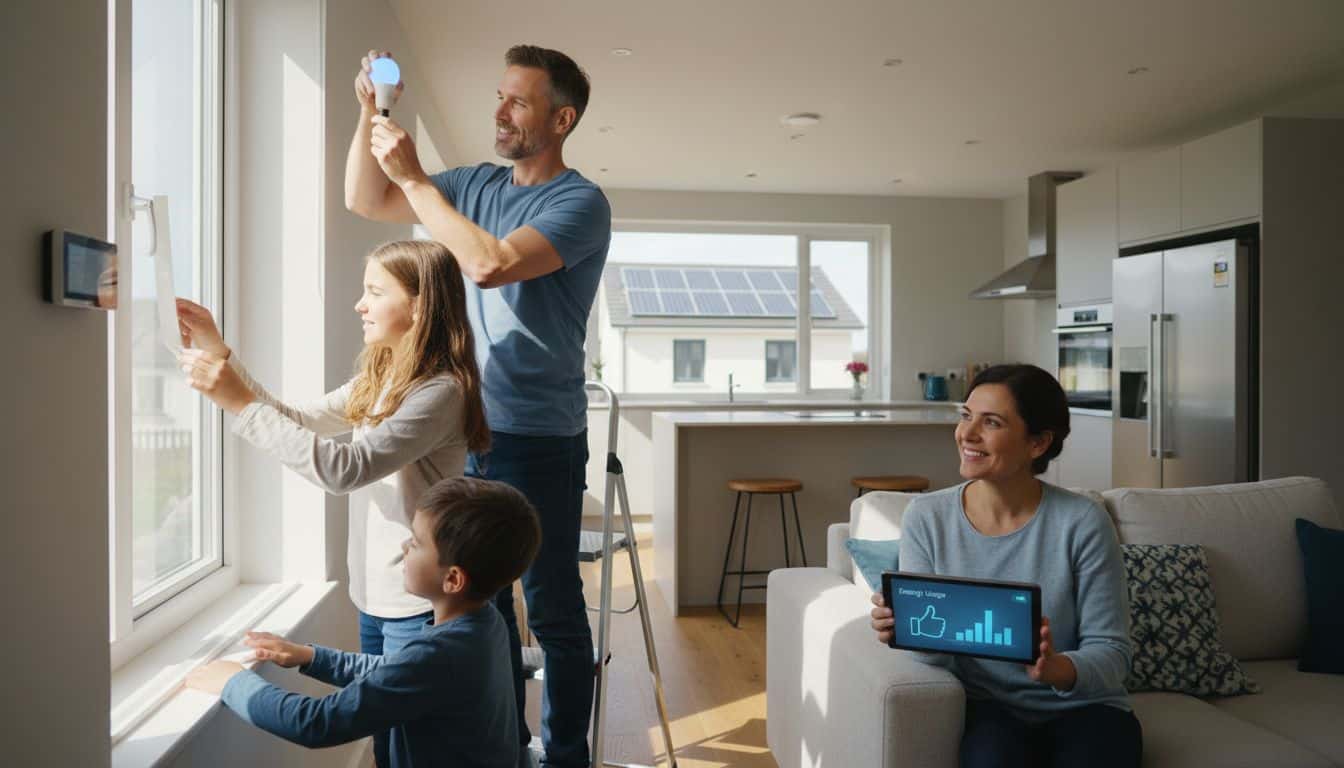
Switching to smarter energy habits can do more than just trim your monthly bills. Up to 75% of household lighting energy can be saved with LED bulbs alone, according to leading research. As costs rise and environmental concerns grow, finding reliable ways to cut energy use is crucial for every homeowner. From lighting upgrades to smart technologies, this guide breaks down proven strategies that help you save money, boost comfort, and make a real difference in your home’s efficiency.
Table of Contents
- Switch To Energy-Efficient LED Lighting
- Upgrade To High-Performance Insulation
- Embrace Smart Heating Controls
- Prevent Heat Loss With Draught Proofing
- Use Appliances Efficiently And Responsibly
- Monitor Energy Use With Smart Meters
- Save Water To Reduce Energy Bills
Quick Summary
| Takeaway | Explanation |
|---|---|
| 1. Switch to LED Lighting | Transitioning to LED bulbs can save up to 75% on energy costs while providing longer-lasting illumination. |
| 2. Upgrade to High-Performance Insulation | Effective insulation reduces energy demand by minimizing heating and cooling needs, enhancing comfort and efficiency. |
| 3. Use Smart Heating Controls | Smart controls adjust heat settings based on occupancy, allowing for precise temperature management and energy savings. |
| 4. Implement Draught Proofing | Sealing gaps prevents heat loss, improving energy efficiency without extensive renovations to your home. |
| 5. Monitor Energy Use with Smart Meters | Smart meters provide real-time insights into energy consumption, helping identify wasteful habits and savings opportunities. |
1. Switch to Energy-Efficient LED Lighting
Transforming your home’s lighting strategy is one of the smartest and simplest ways to reduce energy consumption and lower electricity bills. LED lighting represents a revolutionary approach to illumination that can dramatically cut your household’s energy usage.
Research from the University of Cambridge reveals groundbreaking insights into LED technology potential. Their studies demonstrate that Gallium Nitride (GaN) LEDs can reduce household lighting electricity consumption by up to 75%, offering property owners a significant opportunity to decrease both energy bills and environmental impact.
The shift to LED lighting is more than just a trendy upgrade. Traditional incandescent bulbs waste substantial energy through heat generation, whereas LED bulbs convert almost all electricity directly into light. This efficiency translates into immediate and long lasting benefits for your home.
Key Benefits of LED Lighting:
- Consumes up to 75% less electricity compared to traditional bulbs
- Generates significantly less heat
- Provides longer lasting illumination
- Reduces overall household energy expenditure
The UK government is actively encouraging this transition, with proposed initiatives aiming to increase minimum efficiency standards for lighting. By adopting LED technology now, you are not just saving money but also aligning with emerging national energy conservation strategies UK Government.
Implementing LED lighting is straightforward. Start by replacing your most frequently used bulbs in high traffic areas like kitchens, living rooms, and hallways. Look for bulbs with high lumens and lower wattage ratings to ensure maximum efficiency. While LED bulbs might have a slightly higher upfront cost, the long term savings on electricity bills make them an incredibly smart investment for any property owner.
2. Upgrade to High-Performance Insulation
Transforming your property’s energy efficiency begins with a critical yet often overlooked element: insulation. Your home’s thermal performance plays a pivotal role in reducing energy consumption and maintaining comfortable indoor temperatures while minimising heating and cooling costs.
Proper insulation acts like a thermal blanket for your property. It creates a protective barrier that prevents heat loss during winter and keeps your home cooler during summer. Effective insulation can significantly reduce your energy expenditure by minimising the workload on your heating and cooling systems.
Key Areas for High Performance Insulation:
- Roof and attic spaces
- Wall cavities
Modern insulation technologies offer multiple solutions tailored to different property types. Materials like fibreglass, mineral wool, and advanced synthetic options provide exceptional thermal resistance. These innovative materials not only improve energy efficiency but also contribute to soundproofing and overall building durability.
Implementing high performance insulation requires a strategic approach. Begin by conducting a professional energy assessment to identify your property’s specific insulation needs. Focus on areas with the highest heat transfer potential such as roofs, walls, and floors. Professional installers can help you select materials that match your property’s unique architectural characteristics.
Additionally, proper insulation offers benefits beyond energy savings. It helps prevent moisture accumulation, reduces external noise transmission, and can potentially increase your property’s market value. By investing in quality insulation, you are not just saving on energy bills but also enhancing your home’s overall comfort and long term structural integrity.
For comprehensive guidance on home energy upgrades, explore our energy efficient home upgrades guide to understand how strategic improvements can transform your property’s performance.
3. Embrace Smart Heating Controls
Revolutionising your home’s energy management starts with intelligent heating controls that transform how you regulate temperature and consume energy. Smart heating systems provide unprecedented control over your property’s thermal environment while dramatically reducing unnecessary energy expenditure.
How Smart Heating Controls Work:
- Learn your household temperature preferences
- Automatically adjust heating based on occupancy
- Enable remote temperature management
- Provide detailed energy consumption insights
These advanced systems go beyond traditional thermostats by using sophisticated algorithms and sensors to optimise your heating strategy. They can detect when rooms are unoccupied and automatically reduce temperature, preventing energy waste. Some models even integrate with smartphone applications allowing you to control your home’s temperature from anywhere in the world.
Implementing smart heating controls requires selecting systems compatible with your existing infrastructure. Look for technologies that offer zonal heating capabilities enabling different temperature settings in various rooms. This granular control means you can warm living spaces while keeping bedrooms or less frequently used areas cooler.
Modern smart heating controls provide comprehensive energy consumption analytics. They generate detailed reports showing exactly how and when your heating system operates. This transparency helps you make informed decisions about energy usage and identify potential savings opportunities.
For property owners seeking to enhance their home’s energy efficiency, explore our energy saving tips to understand how smart technologies can transform your property’s performance and reduce long term energy costs.
4. Prevent Heat Loss with Draught Proofing
Draught proofing represents one of the most cost effective strategies for improving your home’s energy efficiency. Tiny gaps and unsealed openings can silently drain your heating budget and compromise your property’s thermal performance.
Common Draught Entry Points:
- Windows and door frames
- Chimneys and fireplaces
- Floorboards and skirting boards
- Pipes and electrical outlets
Unsealed openings create invisible thermal bridges that allow warm air to escape and cold air to penetrate your living spaces. These microscopic passages might seem insignificant but collectively can account for substantial energy waste. Professional draught proofing creates an airtight seal that locks in warmth and prevents unnecessary heat loss.
Implementing draught proofing does not require extensive renovations. Simple solutions like weatherstripping, silicone sealants and foam strips can dramatically reduce air infiltration. Focus on areas where different building materials meet such as window frames window sills and door thresholds. These junction points are typically most vulnerable to air leakage.
Consider professional draught proofing services for a comprehensive assessment. Trained experts can conduct thermal imaging scans to identify hidden air leakage points that might escape untrained detection. Their specialised equipment can pinpoint exact locations where your property is losing thermal energy.
For property owners seeking comprehensive energy efficiency strategies, explore our energy saving tips to understand how targeted improvements can transform your home’s thermal performance and reduce long term energy expenditure.
5. Use Appliances Efficiently and Responsibly
Your household appliances represent significant opportunities for energy conservation and cost reduction. Understanding how to use these devices strategically can transform your home’s overall energy consumption profile and reduce unnecessary electricity expenditure.
Key Strategies for Appliance Efficiency:
- Unplug devices when not in use
- Choose energy efficient models
- Use appliances during off peak hours
- Perform regular maintenance
Modern appliances consume electricity even when seemingly switched off a phenomenon known as standby power drain. This invisible energy consumption can account for up to 10% of your total household electricity usage. By unplugging devices or using smart power strips you can eliminate these silent energy consumers and reduce your carbon footprint.
When purchasing new appliances prioritise those with high energy efficiency ratings. Look for labels indicating low electricity consumption and advanced technological features. Newer models often incorporate intelligent power management systems that automatically reduce energy use during periods of minimal activity.
Additional efficiency tips include running washing machines and dishwashers with full loads only avoiding unnecessary partial cycles. Choose lower temperature settings where possible and consider air drying clothes instead of using tumble dryers during warmer months.
For a comprehensive understanding of energy saving strategies, explore our essential energy saving appliances guide to discover how targeted technological choices can significantly reduce your household energy expenditure.
6. Monitor Energy Use with Smart Meters
Smart meters represent a technological breakthrough in understanding and managing household energy consumption. These intelligent devices provide real time insights into your electricity and gas usage transforming how you approach energy management.
Smart Meter Key Features:
- Provide instant energy consumption data
- Track electricity and gas usage
- Generate detailed usage reports
- Help identify energy waste patterns
According to the UK Government, smart meters function as advanced monitoring tools that automatically send meter readings to your energy supplier. This eliminates estimated bills and provides precise consumption tracking. The digital displays allow you to see exactly how much energy you are using and its associated costs in real time.
Implementing a smart meter strategy involves more than just installation. Learn to interpret the data by monitoring your consumption during different times of day. Observe which appliances consume the most electricity and adjust your usage patterns accordingly. Many smart meters offer colour coded displays indicating low medium and high energy consumption periods.
The most significant advantage of smart meters is their ability to create awareness. Seeing your energy consumption visualised can motivate behavioural changes. Small adjustments like turning off standby devices or using appliances during off peak hours can result in substantial energy savings.
For property owners seeking to understand their energy consumption patterns in greater depth, explore our energy usage patterns guide to gain comprehensive insights into managing your household energy effectively.
7. Save Water to Reduce Energy Bills
Most property owners overlook a critical connection between water consumption and energy expenditure. Reducing water usage directly translates to lower energy bills by minimising the electricity required for heating water and operating water related systems.
Water Saving Strategies:
- Install water efficient fixtures
- Reduce hot water consumption
- Fix leaks promptly
- Use appliances efficiently
Water heating represents a significant portion of household energy consumption. Electric water heaters and boilers consume substantial electricity to warm water for bathing cleaning and cooking. By implementing strategic water conservation techniques you can dramatically reduce the energy required to heat and pump water throughout your property.
Practical approaches include installing low flow showerheads which can reduce water usage by up to 60%. Choose fixtures with integrated aerators that maintain water pressure while minimising overall consumption. Modern water efficient taps and showerheads use advanced technologies to provide excellent performance with minimal water expenditure.
Additional tactics involve insulating water pipes to prevent heat loss and reducing shower duration. Consider using cold water for laundry when possible and only running washing machines and dishwashers with full loads. These small behavioural modifications can yield significant energy savings over time.
Property owners seeking comprehensive energy management strategies can explore our business energy consumption guide to gain deeper insights into holistic energy efficiency approaches.
Below is a comprehensive table summarising the key energy efficiency strategies discussed throughout the article.
| Strategy | Implementation | Benefits/Outcomes |
|---|---|---|
| LED Lighting | Replace traditional bulbs with LED in high traffic areas. Focus on high lumens and low wattage. | Reduces electricity use by up to 75%, lowers bills. |
| High-Performance Insulation | Conduct energy assessment; focus on roofs, attics, and walls. Use advanced materials. | Minimises heating/cooling costs; enhances comfort. |
| Smart Heating Controls | Choose systems with zoning, remote access, and analytics. | Optimises energy use and reduces unnecessary heating. |
| Draught Proofing | Seal windows, doors, and other openings using weatherstripping and sealants. | Prevents heat loss; increases thermal efficiency. |
| Efficient Appliance Use | Unplug devices, choose energy-efficient models, and use during off-peak hours. | Lowers electricity bills and reduces standby power waste. |
| Smart Meters | Install and monitor real-time consumption data for electricity and gas. | Identifies waste patterns; helps in reducing energy costs. |
| Water Saving | Install low-flow fixtures, fix leaks, and minimise hot water use. | Reduces energy used in water heating; lowers bills. |
Take Control of Your Home’s Energy Future Today
Saving energy is more than a good idea it is becoming a necessity as new standards like the Future Homes Standard drive change across the UK. This article highlights key smart habits such as switching to LED lighting, embracing smart heating controls, and draught proofing which all contribute to lowering your energy bills and improving comfort. However understanding how these changes align with evolving regulations is crucial. At homeenergymodel.co.uk, we provide clear, up-to-date insights on the upcoming Home Energy Model (HEM) that will replace SAP in 2025 helping you navigate new Energy Performance Certificate (EPC) requirements and optimise your property’s energy rating.
Don’t wait for costly penalties or inefficiencies to catch you unprepared. Explore our comprehensive energy saving tips to deepen your practical knowledge. Discover expert guidance for property owners and landlords seeking to meet future legislation confidently with homeenergymodel.co.uk. Take the first step now to enhance your home’s energy performance and secure long-term savings.
Frequently Asked Questions
What are the best energy-efficient habits for property owners?
Adopting habits like switching to LED lighting, upgrading insulation, and using smart heating controls can significantly reduce energy waste. Start by replacing traditional bulbs with LED ones throughout your home to immediately cut energy use by up to 75%.
How can I effectively reduce heat loss in my home?
To minimize heat loss, focus on draught proofing by sealing gaps around windows, doors, and other entry points. Use weatherstripping or silicone sealants to create an airtight seal, which can reduce heating costs by up to 20%.
What steps should I take to monitor my energy usage?
Implement a smart meter to track your household’s real-time energy consumption. By analyzing the data provided by the smart meter, you can identify high-usage appliances and make adjustments to reduce your energy bills by 10-15%.
How can I ensure my appliances are used efficiently?
To maximize appliance efficiency, prioritize using energy-efficient models and unplug devices when not in use. For example, running large appliances like washers and dishwashers at off-peak hours or with full loads can maximize energy savings each month.
What simple methods can I use to save water and reduce energy costs?
Install water-efficient fixtures like low flow showerheads and promptly fix leaks to decrease water usage. Reducing hot water consumption can lead to a decrease in energy needed for heating water, saving you about 15% on your monthly energy bill.
What areas of my home should I focus on for high-performance insulation?
Target insulation improvements in critical areas such as your roof, attic, and wall cavities. Begin with a professional assessment to identify gaps, and properly insulating these areas can lower your heating and cooling costs noticeably.