
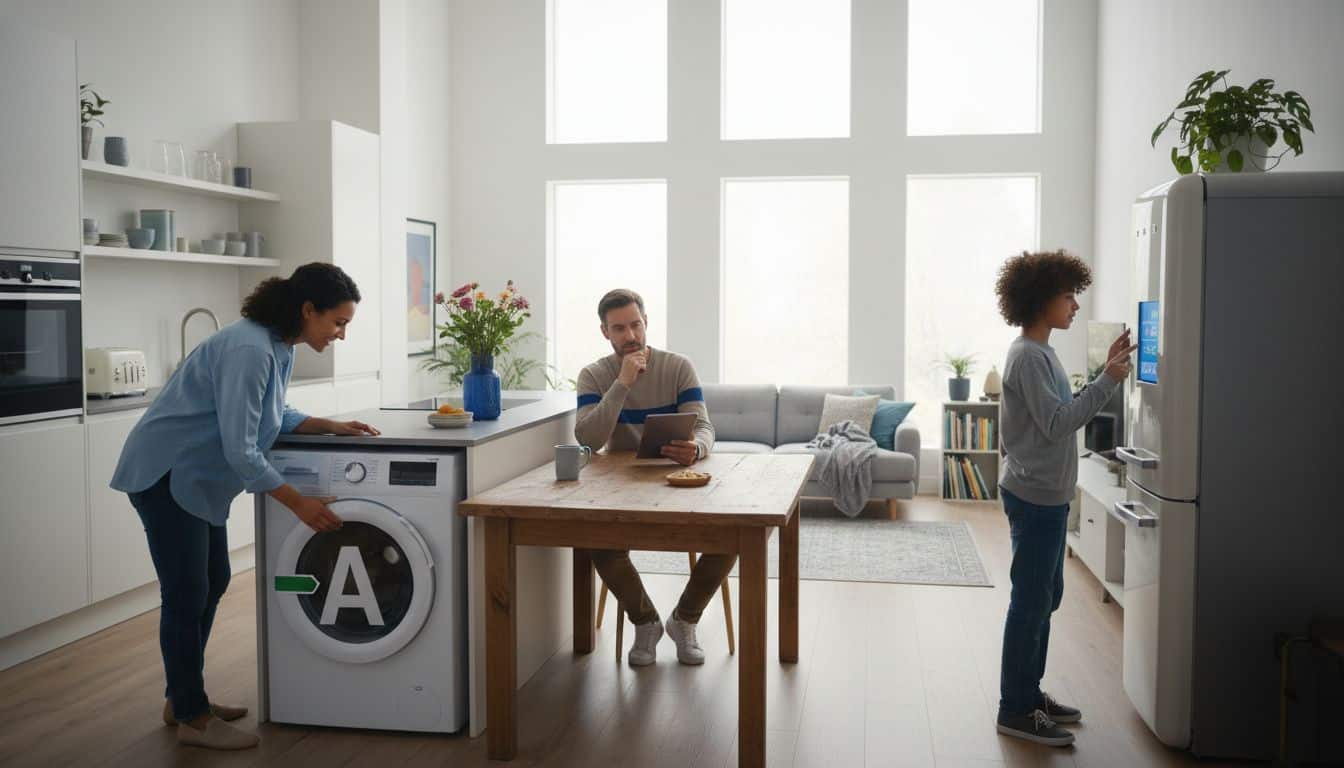
Over 60 percent of a typical UK home’s electricity bill comes from running everyday appliances. Even small choices, like the energy rating on your next washing machine, can have a real impact on both your wallet and the environment. Learning how to choose, use, and maintain appliances more efficiently can help you save hundreds of pounds each year while reducing your carbon footprint. Discover practical ways to make smarter decisions and get more from every appliance in your home.
Table of Contents
- Understand Appliance Energy Ratings And Labels
- Use Smart Timers And Programmable Controls
- Maintain Appliances For Optimal Performance
- Replace Old Devices With Efficient Models
- Utilise Eco Settings And Low-Power Modes
- Eliminate Standby Energy Waste
- Choose The Right Size Appliance For Your Needs
Quick Summary
| Takeaway | Explanation |
|---|---|
| 1. Choose high-rated appliances | Select appliances rated A or B for energy efficiency to save on electricity bills over time. |
| 2. Utilize smart timers | Implement smart timers to automate appliance usage, reducing unnecessary energy consumption and saving up to 15% on bills. |
| 3. Perform regular maintenance | Maintain appliances regularly to enhance efficiency and lifespan, potentially lowering energy use by up to 15%. |
| 4. Replace old devices | Swap outdated appliances for modern, energy-efficient models to significantly cut energy consumption and costs. |
| 5. Employ eco settings | Use eco modes on appliances to reduce energy use by up to 30%, which helps lower utility bills without sacrificing performance. |
1. Understand Appliance Energy Ratings and Labels
Decoding appliance energy ratings is your first step towards smarter energy consumption in UK homes. The government mandates clear energy labels that help you make informed purchasing decisions and understand the true cost of running your household appliances.
The updated energy labels use a straightforward A to G rating system, replacing the previously complex A+++ to G ratings. This simplified scale provides an immediate visual representation of an appliance’s energy efficiency. According to the UK Government, these labels help consumers understand the energy usage, running costs, and carbon dioxide emissions of different products.
What the Labels Tell You:
- Energy Efficiency Rating: From A (most efficient) to G (least efficient)
- Annual Energy Consumption: Estimated kilowatt hours per year
- Estimated Running Costs: Potential electricity expenses
By choosing appliances with higher ratings typically in the A or B range, you can potentially save significant money on electricity bills. For instance, an A rated refrigerator could save you up to £100 annually compared to an older G rated model. Our guide to UK home energy labelling provides deeper insights into understanding these efficiency indicators.
Remember that while the initial purchase price might be higher for energy efficient appliances, the long term savings make them a smart investment for both your wallet and the environment.
2. Use Smart Timers and Programmable Controls
Smart timers and programmable controls represent a powerful strategy for reducing energy consumption and optimising home appliance efficiency. These intelligent devices allow you to automate and schedule your electrical equipment precisely, minimising unnecessary power usage.
According to Medlocks, plug-in timers offer fully programmable settings with 7-day and 24-hour customisation options, enabling you to create tailored schedules for various household devices. This means you can automatically manage lighting, heating, and electrical appliances without constant manual intervention.
Key Benefits of Smart Timers:
- Automatic power management
- Reduced energy waste
- Precise scheduling capabilities
- Lower electricity bills
Interesting research from academic sources suggests advanced neural network technologies are emerging to help identify optimal appliance operation times. This means future smart timer technologies will become even more sophisticated in managing energy consumption.
Practical implementation can be straightforward. Start by identifying appliances that frequently remain on unnecessarily such as computer equipment, entertainment systems, and kitchen appliances. Use programmable plugs to set specific operating windows or create timed shutdown sequences. Some smart plugs even allow smartphone control, giving you real time management of your home energy consumption.
By investing in these smart control technologies, you can potentially reduce your annual electricity expenses by up to 15%, making them a smart financial and environmental choice for UK homeowners.
3. Maintain Appliances for Optimal Performance
Regular maintenance of home appliances is more than just a mechanical task it is a strategic approach to energy efficiency and long term cost savings. Well maintained appliances consume less electricity, operate more effectively, and have a significantly extended lifespan.
Cutting edge research suggests that advanced monitoring technologies can help homeowners identify potential inefficiencies in their appliances. According to emerging studies in energy disaggregation, researchers have developed techniques using variational autoencoders to track individual appliance consumption patterns and detect maintenance needs before they become serious problems.
Key Maintenance Strategies:
- Clean refrigerator coils every six months
- Replace air filters in heating and cooling systems quarterly
- Check and clean dryer vents to prevent lint buildup
- Descale kettles and coffee machines regularly
- Lubricate moving parts in washing machines and dishwashers
Your proactive maintenance routine can prevent unexpected breakdowns and reduce energy consumption by up to 15%. Simple tasks like cleaning filters, checking seals, and ensuring proper ventilation can make a substantial difference in your appliances performance and energy efficiency.
For comprehensive guidance on maintaining energy efficient appliances, explore our energy saving tips guide that provides detailed insights into keeping your home appliances running smoothly and economically.
4. Replace Old Devices with Efficient Models
Replacing outdated home appliances with modern energy efficient models is a strategic approach to reducing household energy consumption and lowering electricity bills. As technology advances, newer appliances offer significantly improved performance and dramatically reduced energy usage.
According to the UK Government, the re-scaled energy labels introduced in 2021 provide consumers with a clearer comparison of product efficiency. The new A to G rating system makes it easier to identify and choose appliances that will deliver substantial energy savings over time.
Appliances to Prioritize for Replacement:
- Refrigerators more than 10 years old
- Washing machines manufactured before 2015
- Electric ovens with low energy ratings
- Tumble dryers with poor efficiency scores
- Obsolete heating systems
When shopping for new appliances, focus on models with A or B ratings. While these might have a higher upfront cost, they can generate significant long term savings. For example, replacing an old G rated refrigerator with a modern A rated model could save you approximately £200 in electricity costs over its lifetime.
Consider timing your replacements strategically. Watch for seasonal sales, government rebate programmes, and energy efficiency incentives that can help offset the initial investment. By making smart replacement choices, you can reduce your carbon footprint and create a more sustainable home environment.
5. Utilise Eco Settings and Low-Power Modes
Modern appliances come equipped with intelligent eco settings and low-power modes that can dramatically reduce your household energy consumption. These built-in features are designed to help you save electricity without compromising on performance or convenience.
According to AO Media, new energy labels now provide specific information about energy consumption for eco settings, such as the ‘Eco 40-60’ programme in washing machines. This transparency helps consumers make more informed choices about energy efficient appliance use.
Practical Eco Setting Strategies:
- Use washing machine eco modes for everyday laundry
- Activate low-power standby modes on electronics
- Select energy saving programmes on dishwashers
- Use economy settings on refrigerators and freezers
- Enable power management features on computers and televisions
By implementing these settings, you can potentially reduce your appliance energy consumption by up to 30%. The ‘Eco 40-60’ washing machine programme, for instance, uses lower temperatures and less water while still providing effective cleaning performance. This means you save energy and reduce your electricity bills without sacrificing cleanliness.
Remember that small changes in how you use your appliances can lead to significant energy savings over time. Take a few moments to explore the eco settings on your devices and make them a regular part of your household routine.
6. Eliminate Standby Energy Waste
Standby energy consumption silently drains electricity from your home, costing you money and contributing to unnecessary carbon emissions. These hidden energy vampires continue drawing power even when devices appear to be switched off, creating a continuous and often unnoticed electrical drain.
Research exploring smart meter data reveals fascinating insights into household energy patterns. According to studies using the Behavior Measurement Indicator, researchers can now detect precise appliance usage patterns and identify potential standby energy waste through advanced monitoring techniques.
Effective Standby Energy Reduction Strategies:
- Use multi plug power strips with individual switches
- Unplug chargers and adapters when not in use
- Enable automatic power down modes on electronics
- Install smart plugs with remote switching capabilities
- Remove plugs from sockets during extended periods of non use
The average UK household can save approximately £80 annually by completely eliminating standby energy consumption. A typical television left in standby mode can consume up to 10 watts of electricity continuously, which translates to unnecessary expense and environmental impact. By implementing simple disconnection habits, you can significantly reduce your home energy waste.
For more comprehensive strategies to reduce home energy consumption, explore our guide on smart home energy saving habits that provides detailed insights into creating an energy efficient household.
7. Choose the Right Size Appliance for Your Needs
Selecting the appropriate size appliance is a critical strategy for maximising energy efficiency and minimising unnecessary electricity consumption in your home. Oversized or undersized appliances can lead to significant energy waste and increased operational costs.
Considerations for Appliance Sizing:
- Assess your household size and daily usage patterns
- Measure available space accurately before purchasing
- Calculate typical load requirements for specific appliances
- Consider future household changes
- Balance capacity with energy efficiency ratings
For refrigerators, a two person household typically requires a 200 to 300 litre model, while larger families might need 350 to 500 litres. An oversized refrigerator running half empty consumes substantially more electricity than a correctly sized unit. Similarly, a washing machine should match your weekly laundry volume to prevent unnecessary energy expenditure.
When shopping, look beyond the initial price tag and evaluate long term energy consumption. A slightly more expensive but appropriately sized appliance with a high energy efficiency rating can save you significant money over its lifetime. For additional insights into making smart appliance choices, explore our energy saving appliances guide that provides comprehensive recommendations for UK homes.
Remember that the most energy efficient appliance is one that precisely meets your specific household requirements without excess capacity.
Below is a comprehensive table summarising key strategies and recommendations for energy efficiency in UK households as discussed throughout the article.
| Strategy | Implementation | Expected Results |
|---|---|---|
| Energy Ratings and Labels | Choose appliances with high ratings (A/B) for efficiency. | Significant savings on electricity bills and reduced carbon emissions. |
| Smart Timers and Controls | Set programmed schedules to minimise power usage. | Reduction in energy waste and up to 15% savings on bills. |
| Appliance Maintenance | Regular cleaning and checks for optimal performance. | Extended lifespan of appliances and up to 15% energy reduction. |
| Replacing Old Devices | Upgrade to newer, energy-efficient models with high ratings. | Long-term cost savings and reduced household energy consumption. |
| Eco Settings and Modes | Utilise energy-saving programmes on appliances. | Up to 30% reduction in appliance energy consumption. |
| Eliminating Standby Waste | Use power strips and unplug devices when not in use. | Save approximately £80 annually and reduce carbon footprint. |
| Appliance Sizing | Select appropriately sized appliances based on household needs. | Avoid energy waste and reduce operational costs. |
Take Control of Your Home Appliance Efficiency Today
If you are seeking to reduce energy bills and improve your property’s energy rating, understanding and applying the right home appliance efficiency tips is crucial. The challenges discussed in the article highlight how selecting the correct appliance size, using smart controls, and maintaining devices can save up to 30 percent on energy consumption. These actions not only lower costs but also align with the forthcoming energy performance standards like the Home Energy Model.
Now is the perfect time to deepen your knowledge and prepare for upcoming regulations by exploring homeenergymodel.co.uk. Discover how the innovative Home Energy Model is designed to replace SAP in 2025, offering clear guidance on improving energy performance in UK properties. Equip yourself with practical advice through our energy saving tips guide, or learn about compliant measures for landlords and property investors by visiting our main homepage. Take action today to make your home more sustainable and energy efficient before the new standards take effect.
Frequently Asked Questions
How can I understand appliance energy ratings in my home?
To understand appliance energy ratings, look for the A to G scale on the energy label of appliances. Choose products in the A or B range to ensure better energy efficiency and potentially lower electricity costs.
What are some effective ways to reduce energy waste from home appliances?
You can reduce energy waste by using smart timers or programmable controls to schedule your appliances, helping to eliminate unnecessary power consumption. Implementing these devices can cut your energy costs by up to 15% within the first year.
What maintenance tasks can help improve the efficiency of my appliances?
Regular maintenance tasks like cleaning refrigerator coils and replacing air filters can enhance your appliances’ efficiency. Set a reminder to perform these tasks every six months to maintain optimal performance and save up to 15% on energy consumption.
When should I replace old appliances with new energy-efficient models?
Replace old appliances that are over ten years old or have low energy ratings with new energy-efficient models. Doing so can result in significant savings; for example, switching a G-rated refrigerator for an A-rated one could save you around £200 in electricity over its lifespan.
How do eco settings on appliances help reduce energy consumption?
Eco settings on appliances like washing machines and dishwashers lower energy and water usage without sacrificing performance. Activate these settings for everyday use to potentially reduce energy consumption by up to 30% while maintaining cleaning effectiveness.
What strategies can I use to eliminate standby energy waste?
To eliminate standby energy waste, unplug devices or use multi-plug power strips with individual switches to turn them off completely. By adopting these habits, you can save approximately £80 per year on your energy bill.
Recommended
- 7 Smart Home Energy Saving Habits Every Property Owner Needs – Home Energy Model
- 7 Essential Energy Saving Appliances List for UK Homes – Home Energy Model
- Complete EPC – Energy Saving Tips For Your Home
- 7 Smart Energy Efficient Home Upgrades for Property Owners – Home Energy Model
- Effizienzsteigerung Elektrotechnik: Leitfaden für Augsburg – Elektrotechnik Ernst