

Managing several rental properties across England and Wales brings real challenges when it comes to juggling new energy regulations and improving Energy Performance Certificate ratings. With compliance deadlines approaching and the minimum EPC requirement rising to C by 2030, knowing which upgrades will make the biggest difference can feel overwhelming. This step-by-step guide shows landlords how to assess, prioritise, and plan efficient energy improvements, helping protect your investments and meet legal obligations without unnecessary expense.
Table of Contents
- Step 1: Assess Current Energy Performance For Each Property
- Step 2: Identify Compliance Gaps And Urgent Upgrades
- Step 3: Prioritise Improvements Based On Cost And Impact
- Step 4: Plan Upgrades In Line With New Regulation Deadlines
- Step 5: Verify Improvements And Update EPC Ratings
Quick Summary
| Key Insight | Explanation |
|---|---|
| 1. Conduct EPC assessments | Obtain Energy Performance Certificates for all properties to gauge energy efficiency and compliance. |
| 2. Address compliance gaps | Identify properties that fall short of future EPC C ratings and prioritise upgrades for those. |
| 3. Strategically prioritise upgrades | Map upgrades by cost and impact to maximise return on investment and compliance efficiency. |
| 4. Plan upgrades by deadlines | Organise upgrades with the 2030 deadline in mind to avoid last-minute rush and costs. |
| 5. Verify improvements post-upgrade | Obtain a new EPC assessment to confirm that upgrades improved energy performance and demonstrate compliance. |
Step 1: Assess current energy performance for each property
Your first task is understanding exactly where each property stands energetically. This foundation determines which upgrades deliver the most value and helps you meet compliance requirements. Without this baseline assessment, you risk investing in the wrong improvements.
Start by obtaining an Energy Performance Certificate (EPC) for every property in your portfolio. The EPC is the primary benchmark for measuring building energy efficiency in the UK, rating properties from A at the top through to G at the bottom. As a landlord, you need to understand that your EPC must meet a minimum rating of E or above to comply with current regulations. Your existing certificate may be outdated, so commissioning a fresh assessment using the updated RdSAP 10 standard gives you accurate information about your property’s real performance.
Here’s a summary of EPC rating levels and their regulatory meaning in the UK:
| EPC Rating | Description | Regulatory Status | Potential Action |
|---|---|---|---|
| A-B | Most energy efficient | Exceeds current and future requirements | Maintain performance |
| C | Good energy efficiency | Meets 2030 standard | No urgent upgrades |
| D-E | Moderate efficiency | Meets current, fails future standard | Prioritise upgrades |
| F-G | Low efficiency | Non-compliant, immediate action needed | Major improvements required |
When you request an EPC assessment, the accredited assessor examines specific elements that impact your rating. They evaluate insulation quality, heating systems, glazing type, energy controls, and ventilation. This evaluation identifies which features are dragging your rating down and where improvements would have the most impact. The assessor provides a detailed report showing your current rating and specific recommendations for upgrades.
Take time to review the recommendations section carefully. This section tells you which upgrades offer the best return on investment and which improvements would push your rating upward most effectively. Understanding these recommendations prevents you from making costly upgrades that deliver minimal rating improvements. You can then compare recommendations across your portfolio to identify patterns and prioritise upgrades strategically.
When assessing multiple properties, keep detailed records of each assessment. Document the rating, the date of assessment, the property location, and the key recommendations. This information becomes invaluable when you start prioritising which properties need upgrades first and which improvements offer the best compliance value.
Professional tip Obtain EPCs for all your properties at once and create a simple spreadsheet listing ratings, ages, and recommendations, so you can instantly spot which properties need urgent attention and identify common upgrade patterns across your portfolio.
Step 2: Identify compliance gaps and urgent upgrades
Now that you understand your current performance, the next task is spotting exactly where your properties fall short and which upgrades matter most. This analysis prevents wasted spending on low-impact improvements and keeps you ahead of tightening regulations.
Start by comparing your EPC ratings against the upcoming compliance targets. The current minimum standard is an E rating, but the future EPC C requirement looming by 2030 will affect most landlords. Many UK rental properties remain below the future EPC C target, which means you need to identify the gap between where your property sits now and where it needs to be. Properties currently at D or E ratings require the most urgent attention to meet tomorrow’s standards.

Next, examine the specific weaknesses flagged in your EPC report. Poor insulation, inefficient heating systems, and outdated windows are the most common culprits dragging down ratings across the rental sector. These upgrades deliver the strongest impact on your EPC score and tenant satisfaction simultaneously. Loft insulation, cavity wall insulation, high efficiency boilers, and double glazing consistently appear as priority recommendations because they address energy loss at source.
Create a gap analysis spreadsheet comparing your current ratings to the 2030 C target for each property. This visual overview reveals which properties need immediate action and which can wait. Properties furthest from compliance should get your funding first. You might discover that five properties need urgent work whilst three others are already on track, allowing you to allocate budgets strategically.
Understand that knowledge gaps around EPC requirements remain widespread among landlords, leading many to miss deadlines and face penalties. Staying informed about your specific compliance obligations protects your investment and your tenants from excessive energy costs.
Professional tip Prioritise upgrades in this order within each property: insulation first, then heating systems, then windows, as this sequence delivers maximum rating improvements for your investment budget.
Step 3: Prioritise improvements based on cost and impact
With your compliance gaps identified, you now need to decide which upgrades offer the best return on your investment. Strategic prioritisation stretches your budget further and delivers faster compliance results across your portfolio.
Start by mapping each upgrade against two criteria: the EPC rating boost it delivers and its upfront cost. Not all improvements are equal. Loft insulation, cavity wall insulation, and LED lighting deliver significant EPC boosts for less expense, making them excellent starting points. These cost-effective measures can shift your rating by one or two points whilst staying well under budget. A loft insulation project might cost £1,500 to £2,500 but could improve your EPC rating noticeably.
Next, evaluate the higher-impact but costlier upgrades separately. Wall and loft insulation, high-efficiency boiler replacements, and double glazing produce the most significant rating increases but require substantial investment. Rather than attempting all major works at once, plan these progressively across multiple years. This staged approach spreads costs, manages cash flow, and allows you to adjust plans based on what you learn from earlier projects.
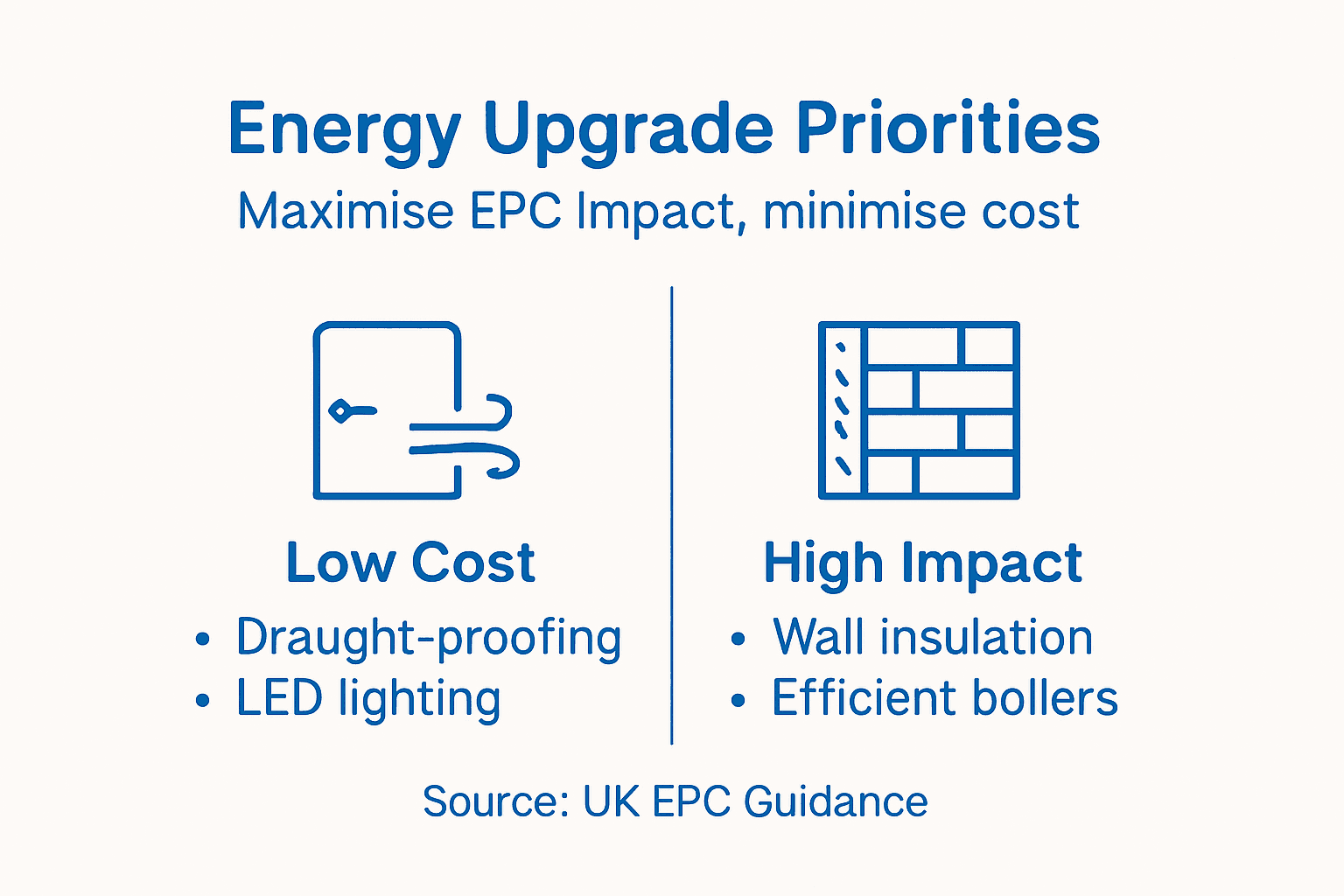
Draught-proofing occupies a unique position in your strategy. These affordable improvements enhance efficiency without major expense, making them ideal for quick wins between larger projects. Similarly, LED lighting upgrades cost little but demonstrate measurable energy savings to tenants. Layering low-cost improvements between expensive works keeps momentum going without draining reserves.
Calculate a cost-benefit ratio for each property. Divide the estimated upgrade cost by the expected EPC rating improvement. Upgrades with lower ratios offer better value. This analysis prevents you from overspending on marginal improvements and ensures available funds target changes that meaningfully shift your compliance position.
Professional tip Begin with loft and cavity wall insulation across your portfolio, as these deliver the highest impact-to-cost ratio, then allocate remaining budgets to boiler replacements and window upgrades based on individual property needs.
Below is a comparison of upgrade types with their typical cost, EPC impact, and strategic priority:
| Upgrade Type | Typical Cost Range | EPC Rating Impact | Strategic Priority |
|---|---|---|---|
| Loft insulation | £1,500–£2,500 | High (1-2 levels) | First priority |
| Cavity wall insulation | £2,500–£4,000 | High (1-2 levels) | First priority |
| High-efficiency boiler | £2,000–£4,000 | Medium-High | Second priority |
| Double glazing | £4,000–£7,000 | Medium | Third priority |
| LED lighting | £200–£600 | Low-Moderate | Complementary |
| Draught-proofing | £150–£350 | Low | Quick win |
Step 4: Plan upgrades in line with new regulation deadlines
Deadlines drive action. Understanding the exact timeline for compliance allows you to schedule upgrades strategically and avoid rushing into expensive decisions at the last minute. The regulatory framework around energy standards creates genuine opportunities for landlords who plan ahead.
The key date you need to mark is 1 October 2030. All private landlords in England and Wales must bring rental properties up to EPC C by this single compliance deadline, with no phased approach or exemptions based on property size. This represents a significant shift from earlier thinking, as all properties now face the same deadline regardless of their current rating. A property at rating F needs the same completion date as one currently at rating D.
Work backwards from October 2030 to create your upgrade timeline. If you have ten properties and half need major work, attempting everything in 2029 and 2030 creates bottlenecks with contractors, inflates costs, and increases risk of non-compliance. Beginning now allows you to spread projects across three to four years, securing better pricing and maintaining quality control. Properties already at EPC C can wait slightly longer, but those at E or F require immediate action.
Understand the spending cap advantage in your planning. Upgrades and associated spending from October 2025 forward count towards the £10,000 spending cap, meaning work you commission now contributes to your allowance. This creates a financial incentive to start projects sooner rather than later. A loft insulation project costing £2,000 completed in 2026 counts toward your cap, reducing pressure for future years.
Consider securing quotes and arranging financing now. Many specialist contractors book months in advance. Getting your name on their schedule early prevents the rush of 2029 and 2030, when demand will spike and prices will follow. You might also explore government grants and low-interest loan schemes available to support landlords meeting these deadlines.
Professional tip Create a staggered implementation schedule spreading upgrades across 2025 to 2029, prioritising your furthest-from-compliance properties first whilst allowing time for contractor availability and cost management.
Step 5: Verify improvements and update EPC ratings
Completing your upgrades is only half the story. You now need to obtain a fresh EPC assessment to verify that your work delivered the expected rating improvements and to demonstrate compliance to tenants and regulators.
Contact a certified Domestic Energy Assessor to arrange a reassessment once your upgrades are complete. The assessor conducts a thorough inspection of your property, examining the new insulation, heating systems, windows, and all other upgraded elements. After completing energy efficiency upgrades, landlords must arrange for a reassessment by a certified Domestic Energy Assessor to verify improvements. This verification process confirms that your contractor completed the work properly and that the property’s energy performance genuinely improved.
Time your reassessment strategically. Request the assessment shortly after your final upgrade completes, whilst all work is recent and documentation is fresh. This timing ensures accurate measurements and creates contemporaneous evidence of your compliance efforts. Waiting months between completion and reassessment creates unnecessary risk and makes it harder to address any issues the assessor identifies.
The new EPC certificate reflects your enhanced energy performance and remains valid for ten years from the assessment date. This updated certificate becomes your primary compliance document, demonstrating to tenants and enforcement authorities that your property meets current standards. Before advertising your property to new tenants, you must provide them with this updated EPC rating certificate, which legally demonstrates your property’s current energy efficiency.
Keep meticulous records of all assessments and improvement documentation. Store copies of both your original EPC and the new one, along with invoices, completion certificates, and photos showing your upgrades. These documents protect you if questions arise about your compliance efforts or if you need to claim exemptions for particular properties.
Professional tip Request the reassessment within four weeks of your final upgrade completion and retain all documentation for at least seven years, creating an audit trail that demonstrates your compliance journey to any regulatory authority.
Take Control of Your Property’s Energy Future Today
Understanding how to prioritise energy upgrades is crucial for UK landlords facing the challenge of meeting evolving EPC regulations and avoiding costly penalties. The article highlights key pain points such as navigating compliance deadlines, selecting cost-effective improvements like loft insulation and efficient boilers, and managing multiple properties without overspending. These concerns demand clear guidance and reliable tools to plan upgrades with confidence.
At homeenergymodel.co.uk, you will find expert insights into the upcoming Home Energy Model that replaces SAP in 2025, a vital advance for anyone seeking to future-proof their portfolio. Our platform offers practical advice on achieving the EPC C target, tracking your energy performance progress, and understanding government initiatives designed to support landlords and property investors. Don’t wait until the 2030 deadline to act. Start planning your compliance journey with strategic knowledge from Home Energy Model, ensuring your upgrades deliver maximum impact and value.
Ready to future-proof your rental properties and avoid penalties? Visit homeenergymodel.co.uk now to unlock essential guidance on energy efficiency solutions tailored for UK landlords and property managers. Take the first step towards sustained compliance and improved tenant satisfaction today.
Frequently Asked Questions
How do I assess the current energy performance of my rental properties?
Start by obtaining an Energy Performance Certificate (EPC) for each property. Once you have the EPC, review its rating and recommendations to identify areas for improvement.
What upgrades should I prioritise to improve my EPC rating?
Focus on cost-effective measures such as loft and cavity wall insulation first, as they offer the highest impact on your rating for a relatively low cost. Implement these upgrades before considering more expensive options like double glazing or high-efficiency boilers to maximise your investment.
How can I identify compliance gaps based on my EPC ratings?
Compare your current EPC ratings to the upcoming compliance targets, specifically the requirement for a minimum rating of C by 2030. Create a gap analysis spreadsheet to visually identify which properties need urgent upgrades.
What is the best timeline for planning energy upgrades?
Plan your upgrades with a target completion date of 1 October 2030 for all properties to meet the new EPC C requirement. Start now by scheduling upgrades gradually over the next few years to avoid last-minute rushes and inflated costs.
How can I verify that my energy improvements are effective?
After completing your upgrades, arrange for a new EPC assessment to confirm that your property’s energy performance has improved. Schedule this assessment shortly after the final upgrade to ensure documentation is recent and accurate.
How should I document my energy upgrade process?
Maintain meticulous records of all EPC assessments, upgrade documentation, and invoices related to your properties. This creates an audit trail that demonstrates your compliance and can protect you from potential inquiries.