
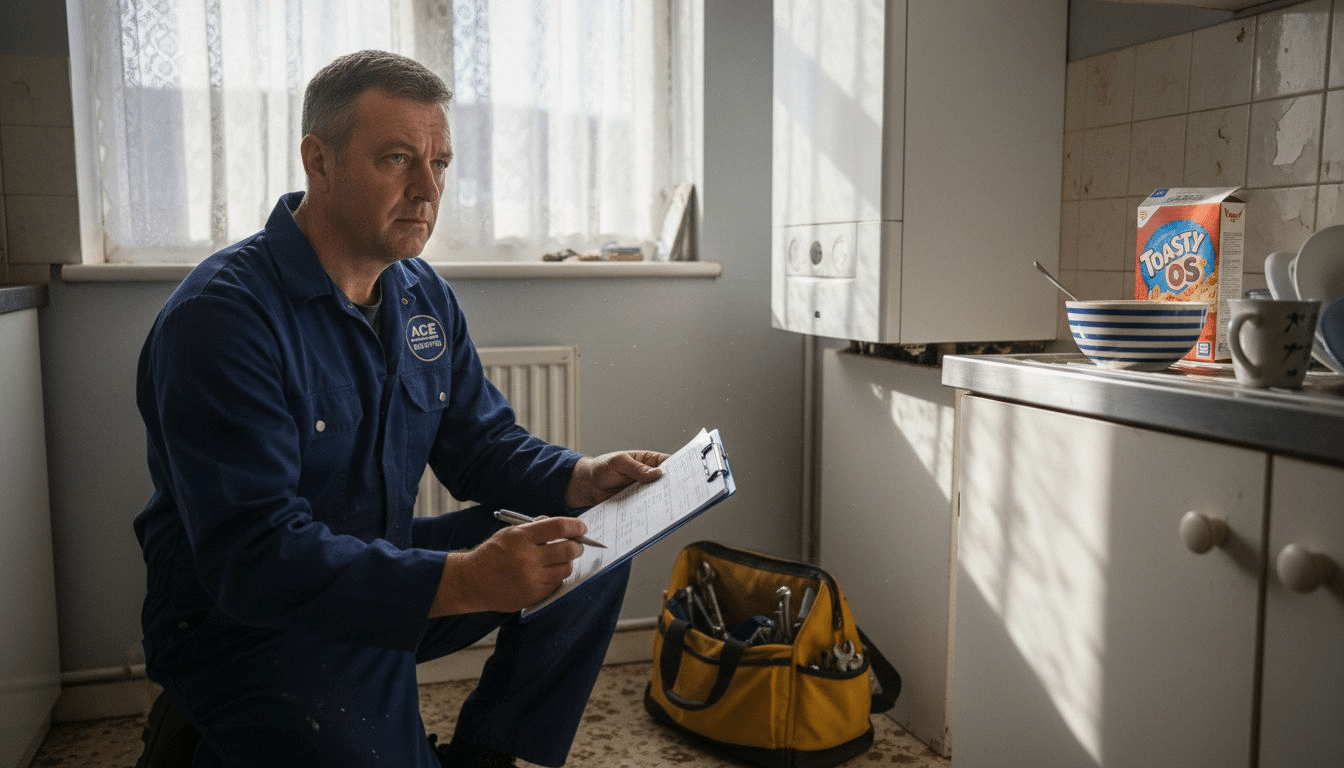
Outdated water heating systems can quietly undermine your property’s efficiency and leave tenants facing higher bills and discomfort. For landlords across England and Wales, the importance of systematic assessment is increasing as new government regulations set higher standards for energy performance in rental homes. With energy costs under scrutiny and the Warm Homes Plan in motion, understanding your current heating setup is now a critical first step to meeting compliance, saving money, and keeping tenants happy.
Table of Contents
- Step 1: Assess Current Water Heating Systems
- Step 2: Identify Areas for Improving Efficiency
- Step 3: Select Suitable Upgrades or Replacements
- Step 4: Implement Efficiency Measures and Settings
- Step 5: Verify Improved System Performance
Quick Summary
| Essential Insight | Clear Explanation |
|---|---|
| 1. Assess your current heating system | Identify the type, age, and condition of your water heating system to understand inefficiencies and potential upgrades. |
| 2. Prioritise efficiency improvements | Systematically examine heating controls, insulation, and usage habits to target upgrades that will yield the most significant energy savings. |
| 3. Choose cost-effective upgrades | Balance upfront costs with long-term energy savings when selecting energy-efficient appliances and systems for your property. |
| 4. Optimise settings post-installation | Configure boiler settings and heating controls properly to maximise efficiency gains and provide clear guidance to tenants on system use. |
| 5. Verify system performance improvements | Monitor energy consumption and collect tenant feedback to ensure that upgrades deliver the expected energy savings and efficiency enhancements. |
Step 1: Assess current water heating systems
Assessing your rental property’s water heating system is the foundation for improving energy efficiency and meeting upcoming regulatory requirements. This step involves identifying what type of heating system you currently have, understanding its age and condition, and recognising any inefficiencies that might be driving up bills or affecting tenant comfort. Taking time to conduct a proper assessment now will help you make informed decisions about upgrades and prioritise any necessary improvements.
Start by locating your boiler or heating system, which is typically found in a kitchen, utility room, or airing cupboard. Check the manufacturer’s label or manual to identify the system type—whether it’s a traditional gas boiler, oil boiler, electric heating, biomass boiler, heat pump, or combination system. Note down the model number, installation date, and any service history you can find. Over half of energy bills in UK homes go towards heating and hot water, so understanding your current setup is critical for identifying savings opportunities. Look for obvious signs of age or wear, including rust on pipework, leaks around connections, unusual noises during operation, or difficulty maintaining consistent temperature. Many landlords find that systems installed before 2005 are significantly less efficient than modern alternatives and may be costing tenants substantial amounts in unnecessary energy charges.
Next, consider scheduling a professional inspection if you haven’t had one recently. A qualified heating engineer can provide a detailed assessment of system efficiency, identify any faults, and recommend improvements aligned with the Warm Homes Plan and future regulatory standards. They’ll also check boiler controls, thermostats, and insulation on pipes and tanks—all factors that affect performance. Document everything you discover about your current system, including efficiency ratings if available. The UK Government’s approach to improving energy performance in privately rented homes emphasises the importance of systematic assessment as the first step toward meaningful upgrades.
Here’s a comparative overview of common water heating systems for UK rentals:
| System Type | Average Efficiency | Typical Lifespan | Suitability for Upgrades |
|---|---|---|---|
| Gas Boiler | 70-92% | 10-15 years | High (with controls) |
| Oil Boiler | 60-88% | 10-15 years | Moderate |
| Electric Heating | 95-100% | 10-20 years | Limited (high running cost) |
| Biomass Boiler | 85-90% | 15-20 years | Good (requires space) |
| Heat Pump | 300% (COP 3+) | 15-20 years | Excellent (well-insulated) |
| Solar Thermal | N/A (supplement) | 20+ years | Strong (needs roof space) |
Pro tip: Request a copy of your boiler’s last service report from your tenant or heating engineer, as it often contains efficiency data and recommendations that can guide your upgrading strategy without needing a fresh inspection.
Step 2: Identify areas for improving efficiency
With your current water heating system assessed, the next step is pinpointing specific areas where improvements will deliver the greatest impact. This involves looking beyond just the boiler itself to examine the entire heating system, including controls, insulation, pipework, and hot water storage. By identifying these problem areas systematically, you can prioritise upgrades that will reduce energy consumption, lower tenant bills, and help you meet the higher energy performance standards required by 2030.
Start by examining your heating controls and thermostat settings. Many older rental properties still have basic on-off controls rather than programmable thermostats, which means the heating runs continuously regardless of actual demand. Check whether your system has a room thermostat, thermostatic radiator valves (TRVs), or time controls. Poor insulation around pipes and hot water tanks is another major culprit for energy waste, as heat escapes rapidly into unheated spaces like lofts, basements, or external walls. Inspect visible pipework for missing or deteriorating lagging, and look at your hot water cylinder or tank to see if it has proper jacket insulation. Targeting poor insulation and outdated heating systems remains essential for meeting efficiency standards, as these are among the most common inefficiency issues in rental properties. Beyond these structural elements, consider how tenants currently use hot water. Inefficient showerheads, leaking taps, and lack of awareness about energy-conscious habits can significantly inflate consumption, so upgrading to water-saving fixtures and providing clear guidance may deliver quick wins without major capital investment.
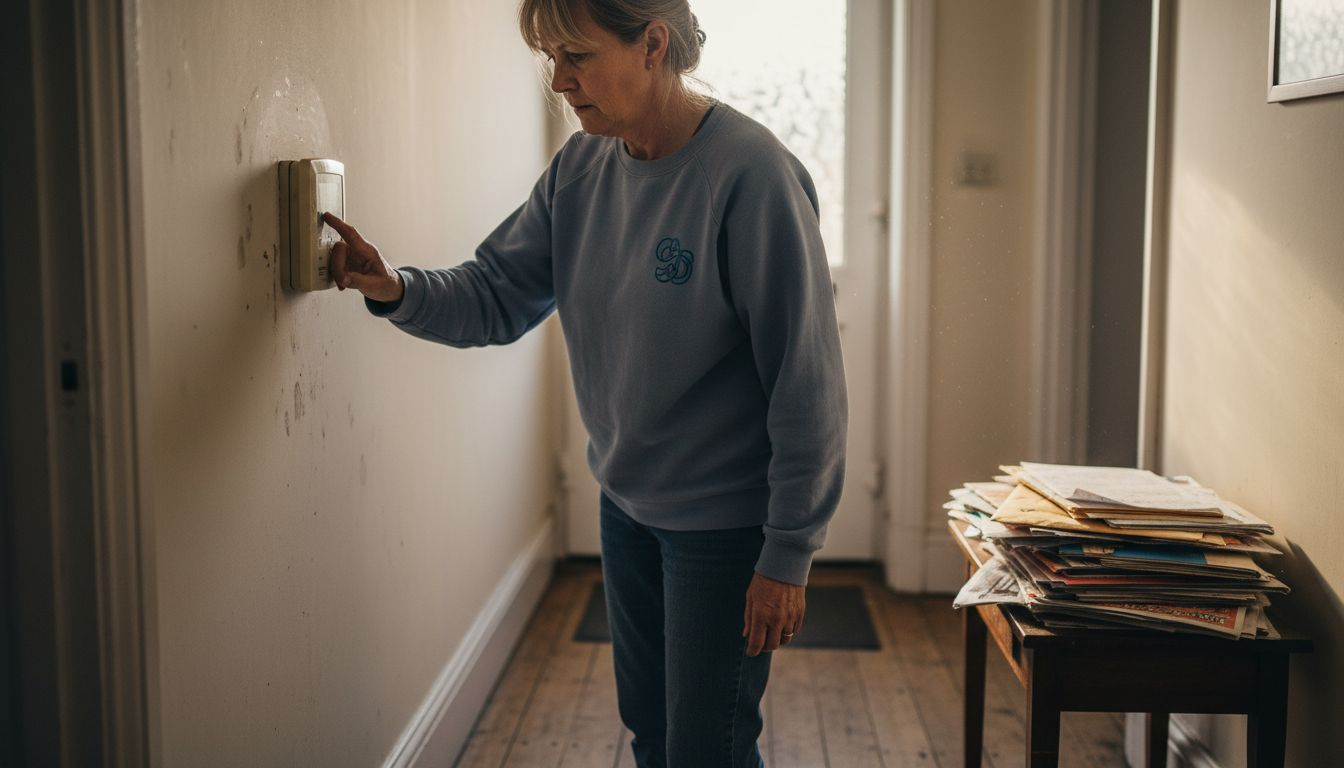
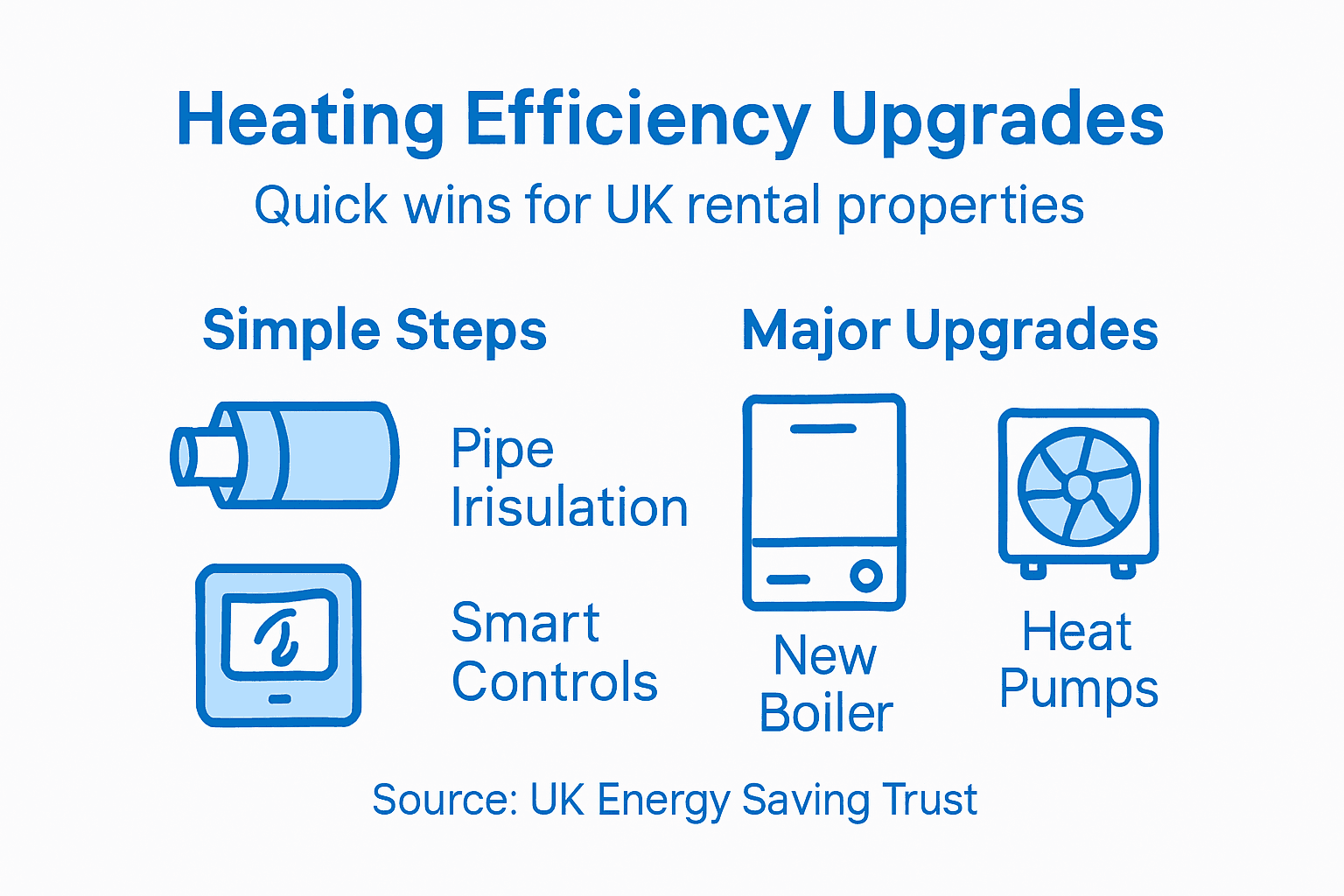
Next, evaluate opportunities for renewable or low carbon heating options. Modern alternatives like heat pumps, biomass boilers, or solar thermal systems can dramatically reduce your property’s carbon footprint and operating costs, though they require upfront investment. The Energy Saving Trust recommends upgrading heating controls and choosing more energy-efficient appliances as core strategies for reducing overall energy use. Create a simple written inventory of your findings, noting which improvements are quick fixes (like adding pipe insulation), which require mid-range investment (such as installing a programmable thermostat), and which are longer-term projects (like replacing the boiler). This categorisation will help you develop a realistic upgrade roadmap that spreads costs appropriately whilst making steady progress towards compliance.
Below is a summary of common efficiency improvement measures and their typical impact:
| Measure | Investment Level | Expected Savings | Regulatory Benefit |
|---|---|---|---|
| Pipe Insulation | Low | Small (~5%) | Required in future |
| Programmable Thermostat | Medium | Moderate (~10%) | Supports EPC targets |
| Boiler Replacement (A-rated) | High | Significant (~20%) | Meets current standards |
| Hot Water Cylinder Jacket | Low | Small | Fast compliance win |
| Low-flow Showerheads/Taps | Low | Small to moderate | Encouraged in guidance |
| Heat Pump Retrofit | High | Major (~30%) | Aligns with net zero |
Pro tip: Ask your tenant if they have noticed cold patches on walls, slow hot water delivery to taps, or condensation issues, as these observations often reveal exactly where heat loss or inefficiency is occurring.
Step 3: Select suitable upgrades or replacements
Choosing the right upgrades for your water heating system requires balancing upfront costs against long-term energy savings, regulatory compliance, and tenant satisfaction. This step involves evaluating different options based on your property’s current setup, your budget constraints, and the performance standards you need to meet. Making informed choices now will ensure you invest in solutions that genuinely improve efficiency rather than spending money on upgrades that offer minimal returns.
Start by understanding what upgrade options exist for your specific situation. If you currently have a G-rated boiler (the least efficient category), replacing it with an A-rated model represents the most straightforward improvement and delivers immediate energy savings. Modern condensing boilers recover heat from flue gases that older models simply waste, translating to efficiency gains of 15 to 20 percent or more. Beyond traditional boiler replacement, consider whether your property could accommodate heat pumps, biomass boilers, or solar water heating systems as part of a broader upgrade strategy. Heat pumps work particularly well in well-insulated properties and offer excellent long-term efficiency, whilst biomass boilers suit properties with suitable storage space. Solar thermal systems can supplement your main heating system and reduce hot water costs substantially, though they require appropriate roof orientation and space. The UK Government’s Warm Homes Plan recognises these energy-efficient upgrades including heat pumps and insulation as central to reducing energy bills and emissions across the rental sector. Compare the total cost of ownership, not just the purchase price. A cheaper boiler might seem attractive initially, but if it carries poor efficiency ratings or higher maintenance costs, you may spend significantly more over its lifetime.
When evaluating specific products, check the efficiency rating labels and compare Energy Performance Certificates or product specifications side by side. Don’t overlook complementary upgrades either. Installing a new A-rated boiler becomes far more effective when paired with improved heating controls, better pipe insulation, or a properly sized hot water cylinder. Consider phasing investments if your budget is limited, starting with quick-win improvements like pipe lagging and thermostat controls before moving to major system replacements. Get quotes from multiple reputable installers and check whether you qualify for any government grants or funding schemes that can offset costs. Document your selections and reasoning, as this information will support your compliance records and demonstrates due diligence to regulators.
Pro tip: Request minimum ten-year warranties on new boilers and ensure installation includes a full commissioning report and efficiency certificate, which you should retain as proof of your upgrade investment.
Step 4: Implement efficiency measures and settings
Once your upgrades are installed, the real impact depends on how well you configure and maintain the system. This step focuses on optimising your heating controls, insulation, and boiler settings to maximise efficiency gains and ensure your tenants can use the system effectively. Even the most advanced new heating equipment delivers disappointing results if settings remain poorly configured or if basic insulation measures are overlooked.
Begin with your boiler settings and heating controls. Modern boilers perform best when flow temperature is reduced from the standard 80 degrees Celsius to around 55 to 60 degrees, which significantly cuts energy waste whilst maintaining adequate hot water supply. If your system has a thermostatic mixing valve, this adjustment becomes even more important for safety and efficiency. Set your room thermostat to a reasonable temperature, typically 18 to 21 degrees Celsius depending on tenant preference and property use, and ensure it has a weekly timer so heating doesn’t run unnecessarily overnight or when the property is unoccupied. If you’ve installed thermostatic radiator valves (TRVs), show your tenant how to adjust them for different rooms, as unused bedrooms or hallways can be set lower than living areas. Insulation work should happen alongside these control improvements. Lag all exposed hot water pipes with foam insulation sleeves, especially those running through unheated spaces, and ensure your hot water cylinder has a proper lagging jacket at least 80 millimetres thick. Optimising heating system controls and insulating hot water tanks and pipes directly reduces energy consumption and lowers monthly bills.
Schedule annual boiler servicing with a qualified Gas Safe registered engineer to maintain efficiency and identify potential problems early. During servicing, technicians check combustion efficiency, clean components, and verify that all safety controls function properly. Provide your tenant with clear written guidance on how to use the heating system, including how to adjust thermostats, when heating turns on and off, and how to troubleshoot common issues. The UK Government’s approach emphasises a fabric-first strategy with insulation and glazing upgrades before pursuing complex technologies, so don’t overlook basic improvements like draught-proofing and window maintenance. Document all work completed, including service records and commissioning reports, as this evidence supports your compliance with energy performance standards.
Pro tip: Install a simple lockable cover on your room thermostat to prevent tenants accidentally altering it, then set it to your intended temperature and leave a laminated instruction sheet explaining how the heating operates and when to contact you for issues.
Step 5: Verify improved system performance
After implementing your efficiency upgrades and optimising settings, it’s essential to verify that your water heating system is genuinely performing as expected. This step involves collecting data on energy consumption, monitoring system operation, and comparing results against baseline figures to confirm your improvements are delivering real benefits. Verification proves that your investment is working and provides evidence of compliance with energy performance standards.
Start by establishing baseline energy consumption figures before making any upgrades, if you haven’t already done so. Review previous utility bills and note the energy usage and costs from the same season in prior years, as this provides a meaningful comparison point. After your upgrades are complete and the system has been running for at least one full billing cycle, compare new bills against the baseline. You should observe measurable reductions in both kilowatt hours consumed and total costs, typically ranging from 10 to 30 percent depending on the improvements made and how much the system was previously undersized or misconfigured. Ask your tenant to report any changes they’ve noticed, such as faster hot water delivery, more consistent temperature control, or reduced noise from the boiler. Collect this feedback regularly, as tenant experience often reveals performance issues that raw consumption data alone might miss.
Conduct a physical inspection of your completed work to ensure everything is functioning correctly. Check that pipe insulation remains intact and hasn’t been disturbed, verify that boiler controls and thermostats are operating as intended, and confirm that no leaks have developed around new installations or connections. Request your engineer provide a detailed commissioning report, which documents system specifications, efficiency ratings, and recommended maintenance schedules. This documentation becomes invaluable if you need to demonstrate compliance with energy standards or resolve disputes with tenants. Verification through performance monitoring and compliance checks under minimum energy efficiency standards ensures your upgrades meet regulatory requirements and maintain standards over time. Schedule a follow-up engineer visit after three to six months to assess whether the system continues operating optimally and to make any minor adjustments that experience reveals as necessary. Keep detailed records of all inspections, servicing, consumption data, and maintenance work completed, as this evidence demonstrates your commitment to energy efficiency and protects you should regulatory authorities conduct future assessments.
Pro tip: Create a simple spreadsheet tracking monthly energy bills, seasonal temperatures, and any maintenance or adjustments made, then share selected information with your tenant to show them the cost benefits of improved efficiency and encourage their cooperation in maintaining good practises.
Unlock Greater Water Heating Efficiency for Your UK Rental Property
Upgrading water heating systems in rental properties is a complex challenge requiring clear understanding and precise action. This guide highlights vital steps like assessing existing boilers, improving controls, and selecting upgrades that balance cost with long-term savings. Many landlords face the pressure of meeting evolving regulations such as the Future Homes Standard while ensuring tenant comfort and reducing bills. If you are looking to confidently navigate these changes and uncover which measures deliver the best energy performance improvements for your property, expert guidance is essential.
Discover how the upcoming Home Energy Model (HEM) will transform energy performance assessments and why it matters for your Energy Performance Certificates (EPCs). The resource platform homeenergymodel.co.uk offers in-depth insights on government initiatives and practical advice that can help landlords and property investors align with new standards. Explore detailed explanations about energy efficiency calculations, EPC importance, and the impact of upgrades on compliance. Get started today to future-proof your rental investments and meet regulatory requirements with confidence. Visit Home Energy Model to learn more and take your first step towards smarter, sustainable property management.
Frequently Asked Questions
How can I assess the efficiency of my rental property’s water heating system?
Assess your water heating system by identifying its type, age, and condition. Look for signs of inefficiency such as rust, leaks, or temperature instability. Document your findings and consider scheduling a professional inspection to gain a comprehensive understanding of its performance.
What are common improvements to enhance water heating efficiency in rental properties?
Common improvements include installing programmable thermostats, adding pipe insulation, or upgrading to an A-rated boiler. For instance, adding insulation can reduce energy loss by a small but significant margin of about 5%. Prioritise these upgrades based on their cost-effectiveness and potential savings.
What should I consider when selecting upgrades for my water heating system?
Consider the initial costs versus long-term savings and compliance with energy performance standards. For example, replacing a G-rated boiler with an A-rated model can improve efficiency by 15-20%. Evaluate options according to your budget and specific property requirements.
How can I make sure my heating controls are optimally set after upgrades?
Set your room thermostat to a comfortable temperature (typically between 18 to 21 degrees Celsius) and ensure it follows a weekly timer. This simple adjustment can prevent unnecessary energy waste by ensuring heating operates only when needed.
How do I verify that the improvements to my water heating system have been effective?
To verify effectiveness, compare your current energy bills to previous ones from the same period before upgrades. Look for reductions in both kilowatt hours consumed and total costs, ideally between 10-30%. Collect feedback from your tenants about any changes they’ve experienced in hot water availability or heating consistency.