
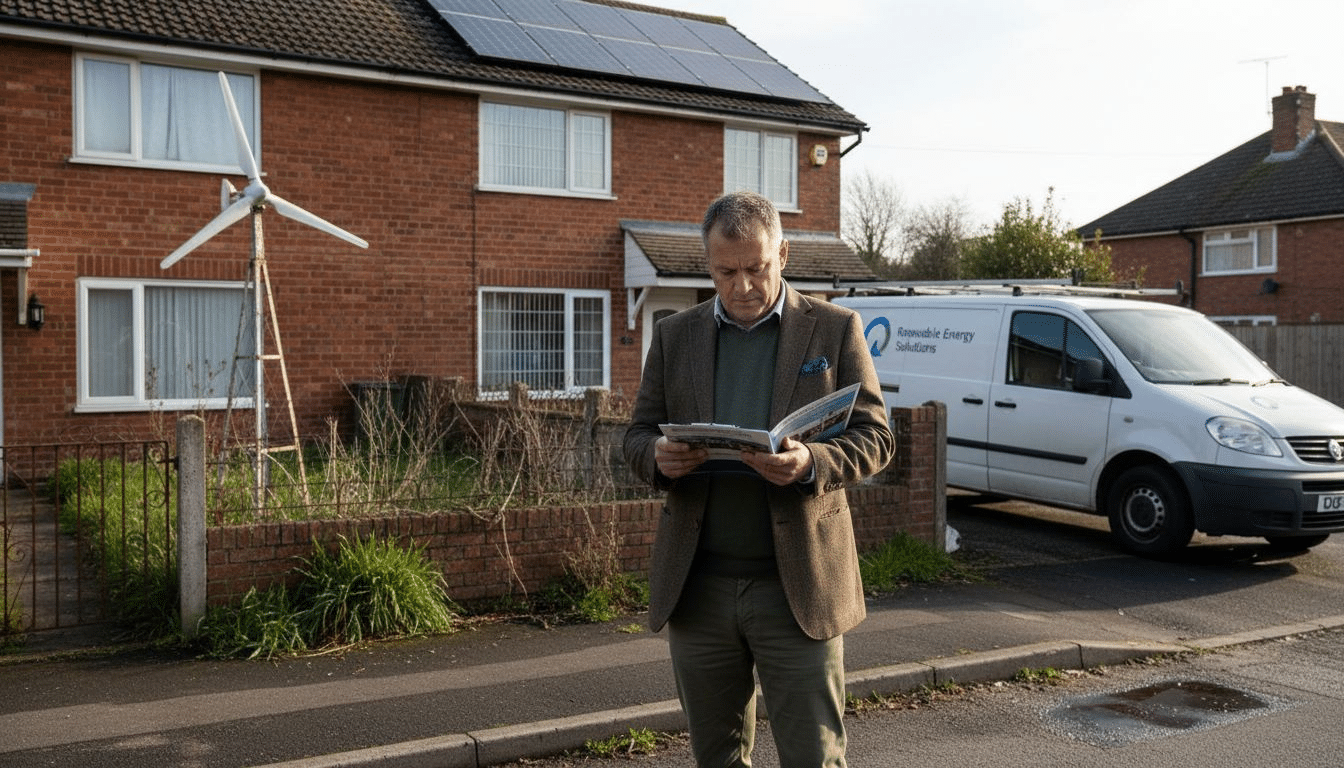
Managing energy costs and making your properties more attractive to tenants can feel overwhelming, especially with so many new renewable technologies on the market. As a UK landlord, you face choices that impact your bills, your property’s value, and your long-term sustainability. The challenge is finding options that actually deliver savings and support greener living without adding unnecessary complexity.
This list reveals practical solutions backed by government strategies and incentives tailored to UK homes. You will discover reliable ways to cut energy bills and improve your property’s appeal, including technologies now required by law for new build homes and financial support schemes that can make adoption easier.
Get ready to tap into specific, actionable advice for everything from rooftop solar panels and heat pumps to advanced battery storage. Each insight is designed to help you take control of your energy future and unlock the real benefits of renewable resources for your rental portfolio.
Table of Contents
- Solar Panels: Generating Clean Roof-Based Power
- Air Source Heat Pumps: Efficient Heating Upgrade
- Ground Source Heat Pumps: Sustainable Home Comfort
- Solar Water Heating: Cutting Down Hot Water Bills
- Wind Turbines: Harnessing Onsite Wind Power
- Biomass Boilers: Renewable Heating for Dwellings
- Battery Storage Systems: Maximising Renewable Use
Quick Summary
| Takeaway | Explanation |
|---|---|
| 1. Install Solar Panels for Savings | Solar panels can significantly reduce energy costs and provide a direct income stream through government tariffs, enhancing property value. |
| 2. Prioritise Property Insulation | Effective insulation is crucial for the optimal performance of air and ground source heat pumps, maximizing energy efficiency and savings. |
| 3. Utilize Government Incentives | Financial support programs like the Boiler Upgrade Scheme greatly reduce installation costs for renewable heating technologies, making them more accessible for landlords. |
| 4. Consider Battery Storage Solutions | Battery systems allow for efficient use of renewable energy, reducing dependence on the grid and enhancing energy savings through stored electricity. |
| 5. Assess Site Conditions Before Installation | Conduct professional assessments for all technologies to ensure compatibility with property characteristics, maximizing effectiveness and efficiency of installations. |
1. Solar Panels: Generating Clean Roof-Based Power
Solar panels represent a powerful renewable energy solution for UK landlords seeking to reduce carbon emissions and generate clean electricity directly from their properties. By installing photovoltaic systems on residential rooftops, property owners can transform unused roof space into a sustainable power generation asset.
The UK government has been actively supporting solar technology deployment, with strategies aimed at accelerating rooftop solar installations. Modern solar panels convert sunlight into electricity through photovoltaic cells, typically made from silicon, which generate direct current electricity when exposed to solar radiation.
For UK landlords, solar panel installations offer multiple strategic advantages. They can significantly reduce electricity costs, provide a steady income through government feed-in tariffs, and enhance property value. A typical residential solar system can generate approximately 3,000 kilowatt-hours annually, potentially offsetting 30% of a property’s electricity consumption.
Implementation requires careful consideration of roof orientation, pitch, and structural integrity. South-facing roofs with a 30-40 degree angle typically provide optimal solar energy generation. Landlords should also factor in potential shading from nearby structures and trees, which can impact panel efficiency.
Financial incentives make solar panels increasingly attractive. The UK government’s initiatives mean new build homes are now mandated to include solar technology, potentially saving residents around £530 annually on energy bills. This regulatory push makes solar investments more compelling for forward-thinking landlords.
Smart Tip: Before installation, commission a professional solar assessment to determine your specific property’s solar potential and optimal panel configuration.
2. Air Source Heat Pumps: Efficient Heating Upgrade
Air source heat pumps represent a cutting edge renewable heating technology transforming how UK landlords approach property energy management. These sophisticated systems extract thermal energy from outdoor air and convert it into usable heating for residential properties.
The UK government has prioritised air source heating technologies as a critical component of national decarbonisation strategies. Air source heat pumps operate by transferring heat from external air into indoor spaces using a refrigeration cycle, functioning efficiently even at low external temperatures down to approximately negative 15 degrees Celsius.
For UK landlords, installing air source heat pumps offers multiple strategic advantages. These systems can reduce carbon emissions by up to 65% compared to traditional gas boilers, simultaneously lowering energy costs and improving property energy performance ratings. A typical domestic air source heat pump can generate three kilowatts of heat energy for every one kilowatt of electricity consumed.
Important considerations include initial installation costs, property insulation levels, and system sizing. Optimal performance requires well-insulated properties with underfloor heating or low temperature radiator systems. Landlords should conduct professional energy assessments to determine precise system requirements and potential efficiency gains.
Government incentive programmes like the Boiler Upgrade Scheme provide financial support, offering £7,500 towards heat pump installation costs. This significantly reduces the economic barrier for landlords considering renewable heating upgrades.
Smart Tip: Prioritise comprehensive property insulation before heat pump installation to maximise system efficiency and performance.
3. Ground Source Heat Pumps: Sustainable Home Comfort
Ground source heat pumps represent an innovative renewable heating solution that harnesses the Earth’s stable underground thermal energy to provide efficient home heating and cooling. These sophisticated systems utilise pipes buried beneath the ground to extract and transfer consistent thermal energy into residential properties.
The UK government has been increasingly focusing on ground source heating technologies as a critical strategy for decarbonising residential heating. Ground source heat pumps operate by circulating a heat transfer fluid through underground pipework, which absorbs consistent ground temperatures ranging between 8 to 12 degrees Celsius throughout the year.
For UK landlords, ground source heat pumps offer significant long term benefits. These systems can reduce carbon emissions by approximately 70% compared to traditional gas heating, while providing remarkably stable and efficient heating performance. Installation typically requires substantial initial investment but delivers substantial energy cost savings over a 20 to 25 year operational lifespan.
Successful implementation depends on several key factors including property size, ground conditions, and existing insulation levels. Ideal installations require properties with sufficient land area for horizontal pipe networks or appropriate geological conditions for vertical bore drilling. Professional geological surveys and energy performance assessments are crucial for determining system feasibility.
Financial incentives such as the Boiler Upgrade Scheme currently offer £7,500 towards ground source heat pump installation, making these systems increasingly attractive for forward thinking property investors seeking sustainable heating solutions.
Smart Tip: Conduct a comprehensive property energy assessment before installation to ensure your specific property is suitable for ground source heat pump technology.
4. Solar Water Heating: Cutting Down Hot Water Bills
Solar water heating represents a strategic renewable energy solution that enables UK landlords to significantly reduce hot water energy consumption and associated utility expenses. These innovative systems capture solar radiation to heat domestic water supplies, offering an environmentally friendly alternative to traditional gas or electric water heating methods.
The Energy Saving Trust’s comprehensive field trial demonstrates the substantial potential of solar thermal technologies in UK residential settings. Solar water heating systems typically comprise roof mounted solar collectors and a specially designed hot water cylinder, which transfer captured solar energy into usable domestic hot water through a heat transfer mechanism.
For UK landlords, solar water heating presents multiple compelling advantages. These systems can reduce hot water energy costs by up to 60%, simultaneously decreasing carbon emissions and improving property energy performance ratings. A well designed solar thermal system can provide approximately 50 to 70% of a property’s annual hot water requirements, dramatically reducing reliance on conventional heating sources.
Successful implementation requires careful consideration of several factors including roof orientation, collector panel positioning, property insulation levels, and hot water usage patterns. South facing roof spaces with minimal shading provide optimal solar collection conditions. Most systems integrate seamlessly with existing hot water infrastructure, utilising a supplementary heating source during periods of low solar radiation.
Initial installation costs typically range between £3,000 to £5,000, with potential payback periods of 7 to 10 years depending on energy consumption and local solar conditions. Government renewable energy incentives and increasing energy prices continue to enhance the financial attractiveness of solar water heating investments.
Smart Tip: Conduct a professional solar assessment to determine your specific property’s solar water heating potential and optimal system configuration.
5. Wind Turbines: Harnessing Onsite Wind Power
Wind turbines offer UK landlords an innovative renewable energy solution capable of generating electricity directly on property premises. These sophisticated machines transform wind energy into electrical power, providing a sustainable alternative to traditional grid electricity consumption.
The UK government has been strategically supporting wind power technology development as a critical pathway towards national renewable energy goals. Small scale wind turbines designed for residential and commercial properties can generate between 5 to 20 kilowatts of electricity, depending on local wind conditions and turbine specifications.
For UK landlords, onsite wind turbines present multiple compelling advantages. These systems can reduce electricity costs by generating clean energy, potentially offsetting 30 to 50% of a property’s annual electricity consumption. Modern wind turbines are engineered to operate quietly and efficiently, with minimal maintenance requirements and lifespans extending up to 25 years.
Successful wind turbine implementation requires thorough site assessment. Key considerations include average wind speeds minimum requirements of 4 to 5 metres per second local wind conditions, property size, planning permissions, and potential visual impact. Urban and suburban locations may face more restrictive planning regulations compared to rural settings.
Financial considerations include initial installation costs ranging from £15,000 to £45,000 for small scale systems. Potential incentives through the Smart Export Guarantee scheme enable landlords to sell excess generated electricity back to the national grid, creating an additional revenue stream.
Smart Tip: Conduct a professional wind resource assessment to accurately determine your specific property’s wind energy generation potential.
6. Biomass Boilers: Renewable Heating for Dwellings
Biomass boilers offer UK landlords an innovative renewable heating solution that utilises organic materials like wood pellets, wood chips, and agricultural waste to generate heat for residential properties. These sophisticated heating systems represent a sustainable alternative to traditional fossil fuel boilers, providing low carbon heating options for modern dwellings.
The UK government has been actively supporting biomass heating technologies as part of its comprehensive net zero strategy. Biomass boilers operate by burning organic materials in a controlled combustion chamber, generating heat that can be distributed through standard radiator systems or underfloor heating networks.
For UK landlords, biomass boilers offer several compelling advantages. These systems can reduce carbon emissions by up to 90% compared to traditional gas boilers, while potentially lowering heating costs through alternative fuel sources. Modern biomass boilers achieve efficiency ratings of 85 to 90%, comparable to high performance condensing gas boilers.
Successful implementation requires careful consideration of fuel availability, storage requirements, and property specific heating demands. Ideal installations include properties with sufficient outdoor space for fuel storage, robust ventilation systems, and access to sustainable biomass fuel sources. Rural and semi rural properties often present optimal conditions for biomass heating technologies.
Financial considerations include initial installation costs ranging from £10,000 to £25,000, with potential savings of £600 to £1,000 annually on heating expenses. Government schemes like the Renewable Heat Incentive have historically supported biomass heating investments, providing financial incentives for renewable energy adoption.
Smart Tip: Conduct a comprehensive property assessment to determine the most suitable biomass boiler configuration for your specific residential heating requirements.
7. Battery Storage Systems: Maximising Renewable Use
Battery storage systems represent a transformative technology enabling UK landlords to optimise renewable energy generation and consumption across residential properties. These sophisticated electrical storage solutions capture excess energy produced by renewable sources like solar panels and wind turbines, allowing property owners to utilise clean energy during periods of low generation.
The UK government recognises battery energy storage systems as a critical component in achieving national decarbonisation objectives. Modern battery storage technologies employ lithium-ion or advanced solid-state batteries capable of storing electricity generated from renewable sources, enabling property owners to reduce grid dependency and lower overall energy expenses.
For UK landlords, battery storage systems offer multiple strategic advantages. These technologies can reduce electricity costs by up to 40%, provide energy independence, and enhance property energy performance ratings. A typical residential battery system can store between 4 to 13.5 kilowatt hours of electricity, sufficient to power essential household appliances during peak demand periods or evening hours.
Successful implementation requires careful system design and integration with existing renewable energy infrastructure. Considerations include battery capacity, property energy consumption patterns, renewable generation potential, and compatibility with solar photovoltaic or wind generation systems. Professional energy assessments can help determine the most appropriate battery storage configuration for specific property requirements.
Financial considerations include initial installation costs ranging from £4,000 to £10,000, with potential energy savings and government incentive programmes offsetting investment expenses over time. Emerging technologies and increasing manufacturing scale continue to drive down battery storage system costs.
Smart Tip: Conduct a comprehensive energy consumption audit before selecting a battery storage system to ensure optimal sizing and performance.
Below is a comprehensive table summarising various renewable energy solutions for UK landlords as discussed in the article.
| Renewable Energy Solution | Description | Advantages |
|---|---|---|
| Solar Panels | Rooftop photovoltaic systems generating clean electricity | Reduced energy costs; improved property value; carbon savings |
| Air Source Heat Pumps | Heating systems utilising outdoor air thermal energy | Reduced emission; efficient heating performance; financial support available |
| Ground Source Heat Pumps | Systems using underground pipes for stable thermal energy | Long-term energy savings; eco-friendly; enhanced comfort |
| Solar Water Heating | Roof-mounted systems converting solar energy into hot water | Significant reductions in water heating costs; decreased reliance on traditional methods |
| Wind Turbines | Machines generating electricity from wind | Sustainable power; reduced dependence on grid electricity; long lifespans |
| Biomass Boilers | Heat systems utilising organic materials | Drastic emission reductions; cost savings; renewable heating alternative |
| Battery Storage Systems | Technologies storing electricity from renewable sources | Energy independence; optimised usage of renewable generation; enhanced performance |
Empower Your Property with Smart Energy Solutions
UK landlords face growing pressure to adopt renewable energy options that not only cut carbon emissions but also reduce rising energy costs. Whether considering solar panels, heat pumps, biomass boilers, or battery storage, the challenge lies in choosing the right technology tailored to each property’s unique characteristics. Understanding advanced terms like Energy Performance Certificates and navigating upcoming regulatory changes can feel overwhelming.
At homeenergymodel.co.uk, we simplify this complexity by offering clear guidance on the forthcoming Home Energy Model launching in 2025. This new government methodology will transform how building energy performance is assessed, helping landlords stay ahead of compliance requirements and maximise investment value. Discover expert advice on efficient energy upgrades, practical calculations, and how these renewable options align with the Future Homes Standard.
Take control today to enhance your property’s sustainability and market appeal. Explore detailed insights at homeenergymodel.co.uk and prepare your portfolio for a greener, more cost-effective future.
Frequently Asked Questions
What are the benefits of installing solar panels on my property?
Installing solar panels can significantly reduce your electricity costs and enhance your property’s value. To maximise these benefits, consider commissioning a professional solar assessment to determine your property’s specific solar potential and optimal panel configuration.
How do air source heat pumps work for heating?
Air source heat pumps extract heat from the outside air and convert it into usable heating for your home. For optimal performance, prioritise comprehensive property insulation before installing, as this will maximise system efficiency and improve energy performance ratings.
What factors should I consider when choosing ground source heat pumps?
When selecting ground source heat pumps, consider the property size, ground conditions, and existing insulation levels. Conduct a thorough energy performance assessment to ensure your property is suitable for this technology and to explore the most effective installation options.
How can I maximise the efficiency of solar water heating systems?
To maximise the efficiency of solar water heating systems, ensure your roof has optimal positioning, is well-insulated, and there is minimal shading. Perform a professional solar assessment to determine the best configuration for your system, potentially covering 50-70% of your annual hot water needs.
What are the initial costs associated with installing biomass boilers?
Initial installation costs for biomass boilers typically range from £10,000 to £25,000. To gain an accurate understanding of your investment, carry out a comprehensive property assessment to identify suitable configurations and potential savings on heating expenses.
How does battery storage benefit renewable energy use?
Battery storage systems allow you to store excess energy generated from renewable sources for use during low generation periods, potentially reducing your electricity costs by up to 40%. Assess your property’s energy consumption to select the optimal battery size and configuration for effective energy management.