

Nearly every British homeowner will soon face a dramatic change in how their property’s energy efficiency is measured. As the United Kingdom prepares to shift from the long-standing Standard Assessment Procedure to the innovative Home Energy Model, understanding the full energy lifecycle of a home matters more than ever. This new approach brings detailed, real-time insights that aim to reduce carbon emissions and operational costs, helping property owners make smarter choices about sustainability and compliance.
Table of Contents
- Defining The Home Energy Lifecycle Model
- Core Stages Of The Energy Lifecycle
- HEM And SAP: Methodologies Compared
- Role Of EPCs In UK Property Assessments
- Financial, Legal, And Compliance Implications
Key Takeaways
| Point | Details |
|---|---|
| Home Energy Model (HEM) Introduction | HEM offers a dynamic, half-hourly simulation of energy use, set to replace the Standard Assessment Procedure (SAP) in 2025. |
| Core Stages of Energy Lifecycle | Each stage from design to decommissioning is crucial for improving energy efficiency and minimising environmental impact. |
| Comparison of HEM and SAP | HEM provides real-time monitoring and detailed insights into energy performance, a significant advancement over SAP’s static evaluations. |
| Importance of Energy Performance Certificates (EPCs) | EPCs are essential for property transactions, providing crucial information on energy efficiency and legal compliance. |
Defining the Home Energy Lifecycle Model
The Home Energy Model (HEM) represents a transformative approach to understanding energy performance in domestic properties. The UK Government’s next-generation methodology is set to revolutionise how we assess and analyse residential energy consumption, moving beyond traditional static evaluations towards a dynamic, precise simulation of real-world energy dynamics.
At its core, HEM provides a half-hourly simulation that captures the intricate details of a home’s energy use, carbon emissions, and operational costs. Unlike previous assessment techniques, this model considers nuanced factors such as occupant behaviour, technological interactions, and environmental conditions. The methodology will replace the Standard Assessment Procedure (SAP) in 2025, signalling a significant leap forward in energy performance evaluation.
Key features of the Home Energy Model include:
- Half-hourly dynamic energy consumption tracking
- Comprehensive carbon emission calculations
- Detailed running cost assessments
- Accommodation of emerging low-carbon technologies
- Reflection of real-world property performance
Modelled energy consumption strategies will enable property owners, developers, and policymakers to make more informed decisions about energy efficiency. By providing granular insights into domestic energy systems, HEM supports the broader national objective of transitioning towards net-zero carbon emissions and creating more sustainable built environments.
Core Stages of the Energy Lifecycle
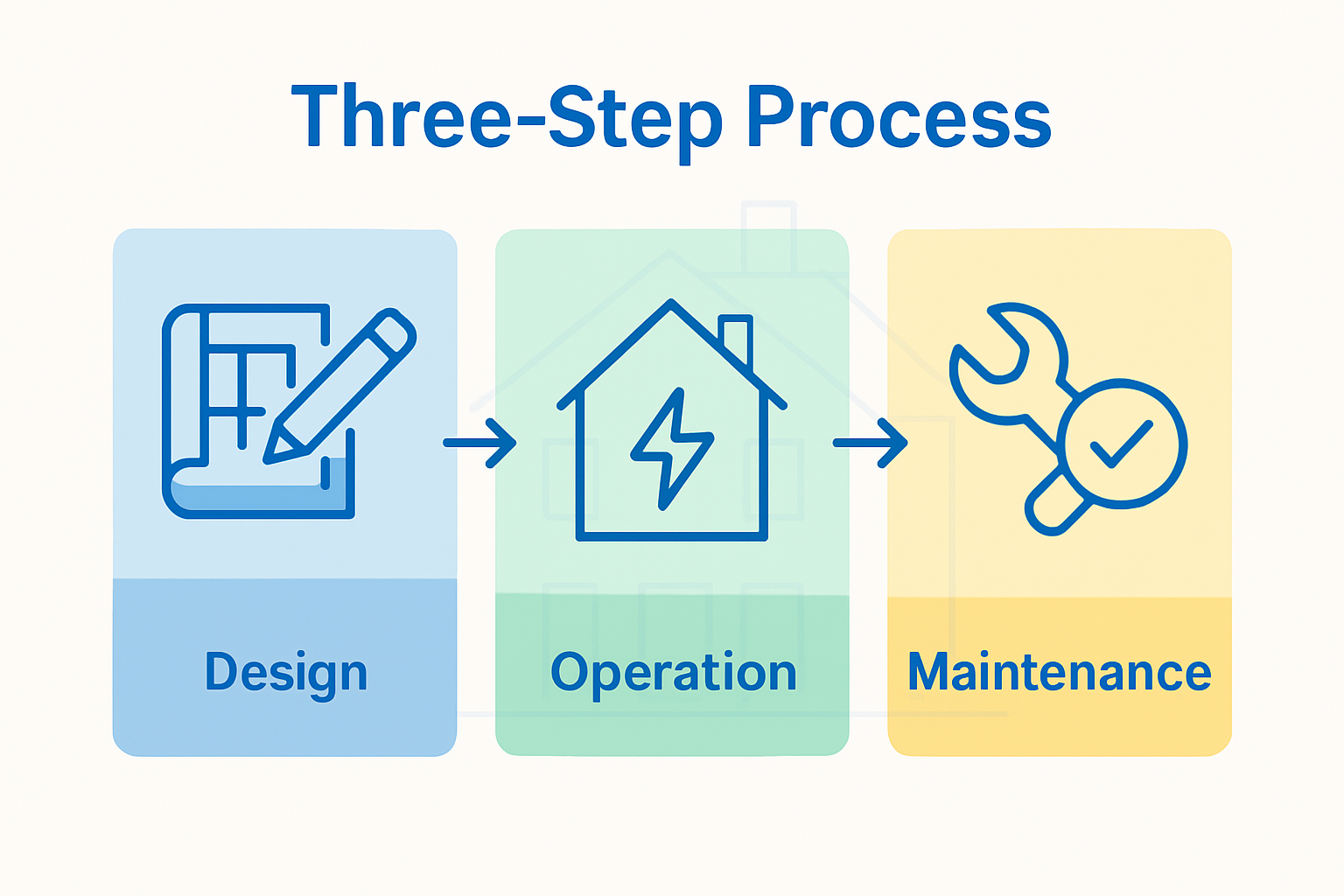
The energy lifecycle of a property encompasses a comprehensive journey from initial design through operational performance to eventual retrofitting or decommissioning. Dynamic energy simulation models reveal the intricate stages that determine a building’s overall energy efficiency and environmental impact.
The primary stages of this lifecycle typically include:
- Design and Construction Stage
- Initial architectural planning
- Material selection for energy efficiency
- Implementing low-carbon technology infrastructure
- Compliance with building energy standards
- Operational Performance Stage
- Monitoring actual energy consumption
- Tracking carbon emissions
- Assessing running costs
- Identifying potential efficiency improvements
- Maintenance and Upgrade Stage
- Regular system performance evaluations
- Retrofitting energy-efficient technologies
- Replacing outdated equipment
- Implementing smart home energy management systems
- End-of-Life Transition Stage
- Evaluating property’s energy performance
- Planning potential retrofit or replacement
- Assessing sustainable demolition strategies
- Recycling and repurposing building materials
Domestic energy use strategies demonstrate that each stage plays a critical role in reducing overall energy consumption. By understanding these interconnected phases, property owners can make informed decisions that minimise environmental impact and optimise long-term energy efficiency.
HEM and SAP: Methodologies Compared
Standard Assessment Procedure (SAP) has been the cornerstone of energy performance evaluation in UK residential properties for nearly three decades. Energy performance methodologies have traditionally relied on SAP’s annual calculation approach, which provides a static snapshot of a dwelling’s energy characteristics.
The key differences between SAP and the emerging Home Energy Model (HEM) represent a significant technological leap in energy assessment:
SAP Characteristics:
- Annual energy cost calculations
- Static performance assessment
- Limited technological adaptability
- Ratings from 1-100
- Basic carbon emission tracking
HEM Characteristics:
- Half-hourly dynamic simulations
- Real-time performance monitoring
- Accommodation of emerging technologies
- Comprehensive carbon emission analysis
- Reflection of actual occupant behaviour
The transition from SAP to HEM marks a pivotal moment in UK energy performance evaluation. SAP calculations in London have traditionally provided a standardised approach, but the Home Energy Model introduces unprecedented granularity and responsiveness.

While SAP has served as a reliable benchmark since 1995, HEM represents a more sophisticated approach to understanding domestic energy consumption. By capturing half-hourly variations in energy use, accounting for complex technological interactions, and providing more nuanced insights into actual property performance, HEM promises to deliver a more accurate representation of a home’s true energy profile.
Role of EPCs in UK Property Assessments
Energy Performance Certificates (EPCs) serve as a critical diagnostic tool for evaluating the energy efficiency and environmental impact of residential and commercial properties across the United Kingdom. Energy performance documentation has evolved significantly, providing property owners and potential buyers with comprehensive insights into a building’s energy consumption characteristics.
Key components of an Energy Performance Certificate include:
Technical Assessment Elements:
- Detailed energy efficiency rating (A-G scale)
- Estimated annual energy costs
- Recommended improvement strategies
- Carbon dioxide emission ratings
- Potential cost savings from energy upgrades
Regulatory Significance:
- Mandatory for property sales and rentals
- Legal requirement for property marketing
- Provides transparent energy performance information
- Supports national energy efficiency objectives
- Enables informed property investment decisions
Understanding EPCs in London highlights the importance of these certificates in driving sustainable property management. Property owners receive a comprehensive assessment that not only meets legal requirements but also offers actionable insights for reducing energy consumption and minimising environmental impact.
The EPC represents more than a bureaucratic document. It is a strategic tool that empowers property stakeholders to make informed decisions about energy efficiency, potential retrofit investments, and long-term sustainability strategies. As the UK continues to push towards net-zero carbon emissions, these certificates will play an increasingly pivotal role in transforming the built environment.
Financial, Legal, and Compliance Implications
Energy efficiency regulations have transformed the landscape of property ownership and management in the United Kingdom, introducing complex financial and legal considerations for property stakeholders. UK energy legislation continues to evolve, driving fundamental changes in how properties are assessed, marketed, and maintained.
Key Financial and Legal Implications:
Property Owner Obligations:
- Mandatory Energy Performance Certificate (EPC) requirements
- Minimum energy efficiency standards for rentals
- Potential financial penalties for non-compliance
- Required energy improvement investments
- Potential property value impacts
Financial Considerations:
- Potential increased property market value
- Energy efficiency upgrade costs
- Potential tax incentives and grants
- Long-term operational cost reductions
- Investment recovery timelines
Green Deal policy initiatives demonstrated an innovative approach to financing energy efficiency improvements, allowing property owners to fund upgrades through anticipated energy bill savings. This principle continues to influence contemporary energy efficiency strategies.
Compliance has become more than a legal requirement—it is a strategic financial decision. Property owners must now view energy efficiency as a critical investment, balancing immediate costs against long-term financial benefits, potential regulatory penalties, and the increasing market demand for sustainable, high-performance buildings.
Understand and Prepare for the Future of UK Home Energy Efficiency
The article highlights the urgent challenge UK property owners face as the Home Energy Model (HEM) replaces SAP in 2025. This new methodology requires a deeper grasp of dynamic energy performance, carbon emissions, and real-world impacts on domestic properties. Key concerns include adapting to half-hourly energy simulations, navigating complex energy lifecycle stages, and meeting stricter regulatory demands to avoid financial penalties and unlock long-term savings.
At homeenergymodel.co.uk, we provide clear, expert guidance on these crucial topics. Our resources explain the shift from SAP to HEM, the significance of updated Energy Performance Certificates, and practical advice for implementing energy-efficient upgrades in every stage of the property lifecycle. Stay ahead of the curve with trusted insights designed to help landlords, homeowners, and investors achieve compliance and enhance property value.
Don’t wait to understand how the Home Energy Model affects your property’s future. Explore our website today at homeenergymodel.co.uk and learn how to optimize energy performance while meeting evolving standards. Take control now by visiting our detailed pages on Energy Performance Certificates and discover actionable strategies that will protect your investment and contribute to a sustainable UK housing market.
Frequently Asked Questions
What is the Home Energy Model (HEM)?
The Home Energy Model (HEM) is a dynamic approach to understanding energy performance in homes, providing a half-hourly simulation of energy use, carbon emissions, and operational costs, making it a more precise alternative to traditional evaluations.
How does HEM differ from the Standard Assessment Procedure (SAP)?
HEM offers half-hourly dynamic simulations and real-time performance monitoring, whereas SAP provides an annual static snapshot of energy characteristics. HEM aligns better with real-world energy usage patterns and emerging technologies.
What are the core stages of the home energy lifecycle?
The core stages of the home energy lifecycle include Design and Construction, Operational Performance, Maintenance and Upgrade, and End-of-Life Transition, each playing a crucial role in determining energy efficiency and environmental impact.
Why are Energy Performance Certificates (EPCs) important for property owners?
Energy Performance Certificates (EPCs) provide property owners with essential insights into energy efficiency, compliance with regulations, and potential cost-saving strategies, serving as a valuable tool in promoting sustainable property management.