
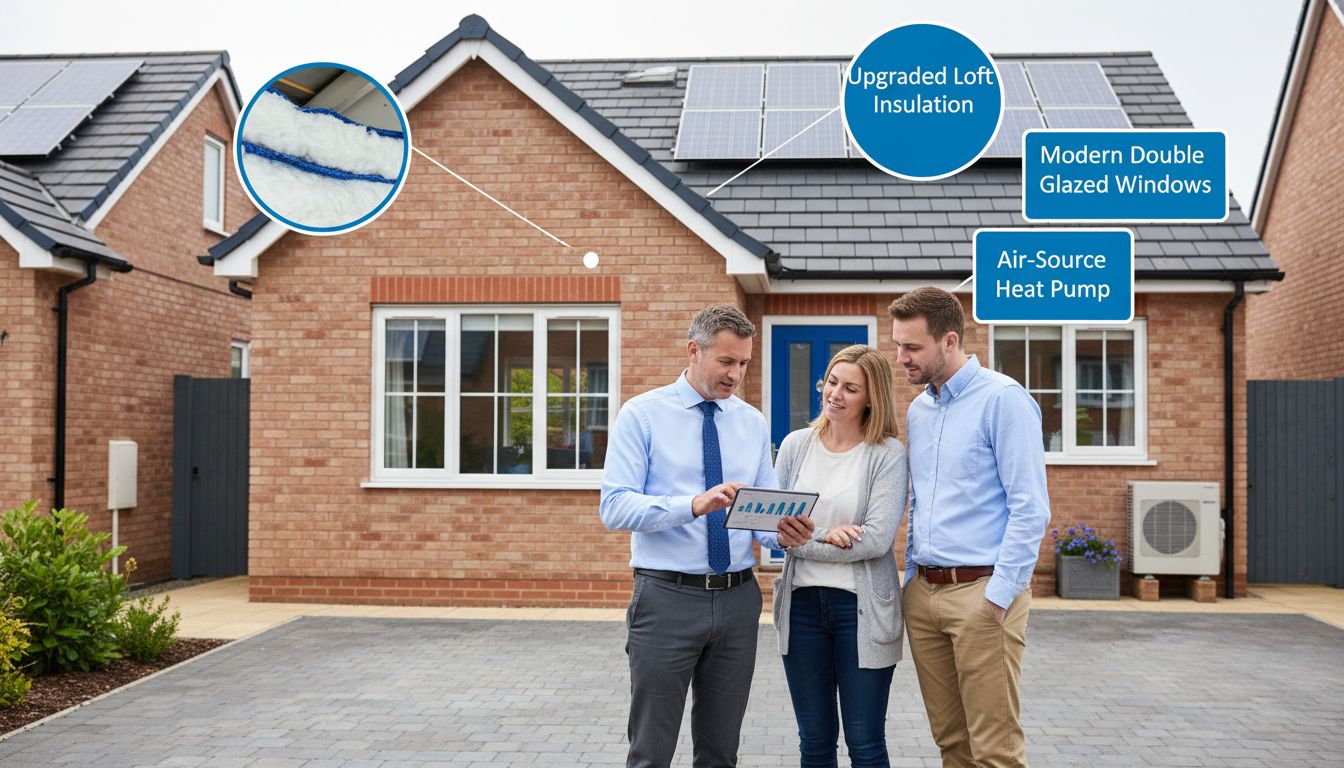
Over 170,000 UK homes are set to receive energy efficiency upgrades this year, highlighting the national focus on smarter energy choices. For property owners, weighing the upfront cost against long-term savings can shape financial stability and environmental impact. This article breaks down the real numbers, key upgrade types, and practical steps that lead to confident decisions and noticeable reductions in energy bills.
Table of Contents
- Understanding Cost vs Benefit of Energy Upgrades
- Types of Energy Efficiency Upgrades Explained
- Calculating Financial Payback and ROI
- Government Incentives and Compliance Requirements
- Common Pitfalls and Optimising Upgrade Value
Key Takeaways
| Point | Details |
|---|---|
| Financial Analysis is Crucial | Evaluate initial costs against potential long-term savings before investing in energy upgrades. |
| Government Incentives Available | Familiarize yourself with funding programs and compliance requirements to maximize financial benefits. |
| Tailored Upgrades Enhance Value | Conduct comprehensive assessments to identify the most effective upgrades for your specific property context. |
| Avoid Common Pitfalls | Ensure professional assessment and correct installation to prevent compromising the effectiveness of energy improvements. |
Understanding Cost vs Benefit of Energy Upgrades
Understanding the financial landscape of energy upgrades requires a strategic approach that balances immediate investment with long-term savings. Property owners navigating this terrain must carefully evaluate the potential returns on their energy efficiency improvements. According to gov.uk, strategic upgrades can help households save up to 300 annually on energy bills, making the initial investment increasingly attractive.
The core principle behind energy upgrades is straightforward: spend money now to reduce ongoing expenses. These improvements typically involve investments in areas like insulation, heating systems, and window replacements that incrementally reduce energy consumption. Gov.uk’s research highlights that some low-income and social housing properties can save between 400 to 700 annually through targeted energy efficiency improvements.
Key Considerations for Cost vs Benefit Analysis:
- Initial investment cost
- Projected annual energy savings
- Property-specific efficiency potential
- Expected lifespan of upgrades
- Potential increase in property value
Successful energy upgrades require a nuanced understanding of your specific property’s characteristics. Factors like building age, current insulation levels, and existing heating systems play crucial roles in determining potential savings. Top Energy Saving Steps for UK Homes: A Complete Guide provides comprehensive insights into making informed decisions about energy efficiency investments.
While the financial benefits are compelling, homeowners should also consider the environmental impact. Reducing energy consumption not only saves money but contributes to broader sustainability goals, creating a win-win scenario for both personal finances and ecological responsibility. Professional energy assessments can provide tailored recommendations that maximize your return on investment, ensuring that every pound spent delivers meaningful long-term benefits.

Types of Energy Efficiency Upgrades Explained
Energy efficiency upgrades represent a strategic approach to reducing both household energy consumption and environmental impact. Gov.uk’s research highlights the UK government’s significant 1.8 billion investment in critical home improvement technologies like loft insulation, double glazing, and heat pumps, demonstrating the national commitment to sustainable living.
Primary Categories of Energy Efficiency Upgrades:
- Insulation Improvements
- Loft insulation
- Wall cavity insulation
- Floor insulation
- Heating System Upgrades
- Modern condensing boilers
- Heat pumps
- Smart thermostats
- Window and Glazing Solutions
- Double glazing
- Triple glazing
- Thermal window treatments
According to Gov.uk’s Warm Homes Plan, approximately 170,000 homes will receive targeted energy efficiency upgrades including solar panels, heat pumps, and comprehensive insulation. These upgrades not only reduce energy bills but also significantly lower carbon emissions, creating a dual benefit for homeowners and the environment.
Successful energy efficiency strategies require a holistic approach tailored to individual property characteristics. 7 Smart Energy Efficient Home Upgrades for Property Owners provides in-depth insights into selecting the most appropriate upgrades for your specific property. Factors such as building age, current infrastructure, and regional climate all play crucial roles in determining the most effective energy efficiency improvements.
Beyond immediate financial savings, these upgrades represent an investment in long-term property value and environmental sustainability. By implementing strategic energy efficiency technologies, homeowners can create more comfortable living spaces, reduce their carbon footprint, and contribute to broader national goals of energy conservation and emissions reduction.
Calculating Financial Payback and ROI
Calculating the financial return on energy efficiency upgrades requires a comprehensive approach that considers multiple factors beyond simple annual savings. Gov.uk’s Home Upgrade Grant research demonstrates that low-income households can potentially save up to 200 annually, providing a tangible starting point for financial analysis.
Key Components in ROI Calculation:
- Initial installation costs
- Annual energy savings
- Expected upgrade lifespan
- Potential property value increase
- Maintenance and replacement expenses
According to Gov.uk’s ‘Help to Heat’ funding analysis, households can potentially save between 400 to 700 annually through targeted energy efficiency improvements. This significant range highlights the importance of conducting a personalized assessment that considers your specific property characteristics and energy consumption patterns.
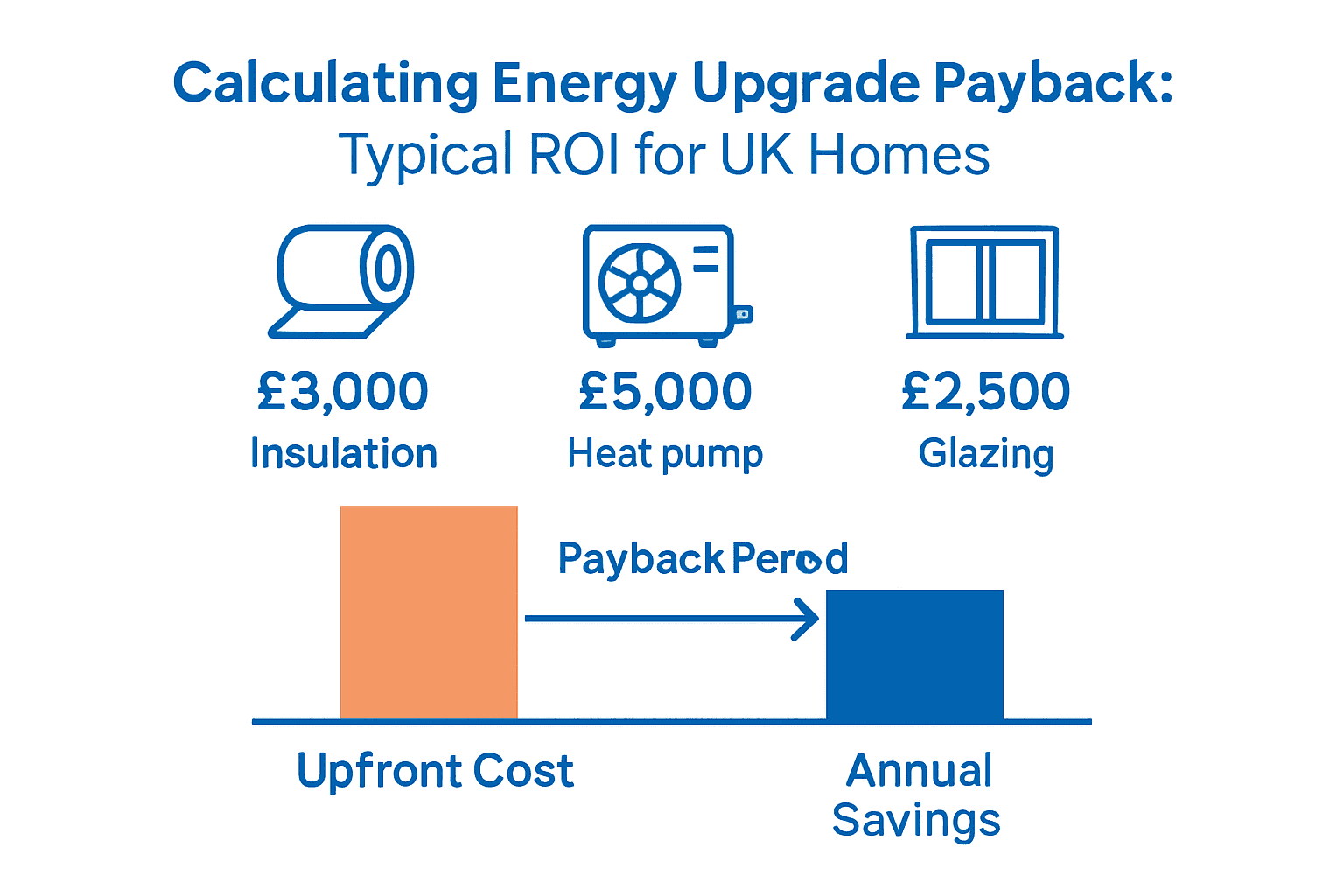
The payback period represents the critical metric in determining an upgrade’s financial viability. This calculation involves dividing the total initial investment by annual energy savings. For instance, a 5,000 insulation upgrade saving 600 annually would have a payback period of approximately 8.3 years.
 Guide to Efficient Appliances for Energy-Smart Homes offers additional insights into making precise financial calculations for different energy efficiency technologies.
Beyond direct financial returns, energy efficiency upgrades provide intangible benefits such as increased property value, reduced carbon footprint, and improved living comfort. Homeowners should approach these investments as comprehensive strategies for long-term financial and environmental sustainability, recognizing that the true value extends far beyond immediate monetary savings.
Government Incentives and Compliance Requirements
Navigating the landscape of government energy efficiency initiatives requires a comprehensive understanding of available incentives and regulatory frameworks. Gov.uk’s ‘Help to Heat’ schemes demonstrate the UK government’s commitment to supporting households through targeted funding programs like the Social Housing Decarbonisation Fund and Home Upgrade Grant, which aim to improve energy efficiency and reduce utility costs.
Key Government Incentive Categories:
- Financial Support
- Home Upgrade Grants
- Social Housing Decarbonisation Fund
- Energy efficiency retrofit funding
- Regulatory Compliance
- Minimum Energy Efficiency Standards (MEES)
- Energy Performance Certificate (EPC) requirements
- Upcoming Future Homes Standard
Gov.uk’s research highlights a substantial 1.8 billion investment in upgrading social homes and public buildings, underscoring the national commitment to reducing carbon emissions and improving energy infrastructure. This significant funding demonstrates the government’s proactive approach to supporting property owners in meeting evolving energy efficiency standards.
Compliance requirements are becoming increasingly stringent, with landlords and property owners needing to stay informed about upcoming regulations. 7 Essential Energy Saving Appliances List for UK Homes provides additional insights into meeting these evolving standards. Property owners should anticipate future requirements, including potential mandatory upgrades and minimum energy performance levels, to avoid potential penalties and maximize potential financial incentives.
Beyond immediate financial benefits, these government initiatives represent a strategic approach to national energy transformation. By aligning individual property improvements with broader environmental goals, homeowners can contribute to the UK’s ambitious carbon reduction targets while simultaneously improving their property’s value, comfort, and energy efficiency.
Common Pitfalls and Optimising Upgrade Value
Gov.uk’s energy efficiency guidance emphasizes the critical importance of strategic planning and precise implementation when considering home energy upgrades. Many homeowners inadvertently compromise their investment by overlooking crucial details that significantly impact overall performance and financial returns.
Top Potential Upgrade Pitfalls:
- Inadequate professional assessment
- Incorrect product selection
- Poor installation techniques
- Overlooking property-specific requirements
- Neglecting long-term maintenance needs
Gov.uk’s consumer protection proposals highlight the emerging standards designed to protect consumers and ensure quality energy upgrades. These recommendations underscore the importance of selecting smart, compatible technologies that genuinely enhance a property’s energy efficiency rather than creating superficial improvements.
Optimization Strategies:
- Conduct comprehensive property energy assessment
- Prioritize upgrades with highest return on investment
- Verify contractor credentials and installation quality
- Consider whole-house energy performance
- Plan for ongoing maintenance and potential future upgrades
Guide to Efficient Appliances for Energy-Smart Homes provides additional insights into selecting the most appropriate technologies. Successful energy upgrades require a holistic approach that considers not just individual components, but how they interact within the broader property ecosystem. Homeowners must look beyond immediate cost savings and evaluate long-term performance, potential property value increase, and compatibility with emerging energy efficiency standards.
Make Your Energy Upgrades Work Harder for You
Understanding the fine balance between the costs and benefits of energy upgrades can feel overwhelming. You want to reduce your energy bills and meet increasingly strict government standards but may struggle to navigate the complex financial calculations and compliance requirements discussed in the guide. The challenge lies in making informed choices that deliver lasting savings, greater property value, and align with upcoming regulations like the Future Homes Standard.
Discover how you can confidently plan your energy efficiency improvements with expert insights and tools at Home Energy Model. Our site is designed to help homeowners, landlords, and property investors understand key concepts like payback periods, ROI, and the new Home Energy Model methodology replacing SAP in 2025. Explore practical guidance on EPCs, compliance essentials, and government initiatives so you never miss out on valuable schemes. Start transforming your property into a more comfortable, eco-friendly, and financially savvy investment today by visiting Home Energy Model and taking the first step towards smarter energy upgrades.
Frequently Asked Questions
What are the main types of energy efficiency upgrades?
The primary categories of energy efficiency upgrades include insulation improvements (e.g., loft insulation, wall cavity insulation, floor insulation), heating system upgrades (e.g., modern condensing boilers, heat pumps, smart thermostats), and window and glazing solutions (e.g., double glazing, triple glazing, thermal window treatments).
How can I calculate the payback period for energy upgrades?
To calculate the payback period, divide the total initial investment by the annual energy savings. For instance, if you spend £5,000 on insulation upgrades that save you £600 annually, the payback period would be approximately 8.3 years.
What factors should I consider before making energy efficiency upgrades?
Key factors include initial investment costs, projected annual energy savings, the expected lifespan of upgrades, the potential increase in property value, and the specific characteristics of your property such as age and current insulation levels.
Are there government incentives for energy efficiency upgrades?
Yes, there are various government incentives available, including Home Upgrade Grants, the Social Housing Decarbonisation Fund, and funding for energy efficiency retrofits, which aim to support property owners in improving energy efficiency and reducing utility costs.
Recommended
- Role of Energy Upgrades: Complete UK Property Guide – Home Energy Model
- Top Energy Saving Steps for UK Homes: A Complete Guide – Home Energy Model
- 7 Smart Home Energy Saving Habits Every Property Owner Needs – Home Energy Model
- Energy Saving Tips 2025: Achieve Maximum Efficiency at Home – Home Energy Model