

Energy bills remain one of the biggest outgoings for UK homeowners and landlords, and the pressure is only growing. From October 2030, EPC C will be required for all private rentals in England and Wales, with fines reaching £30,000 for non-compliance. The good news is that the same upgrades that keep you compliant also slash your bills. This guide walks you through exactly what to do, in the right order, so you spend wisely and see real results.
Table of Contents
- Understanding where your home loses energy
- What you need before starting: checks and assessment
- Step-by-step guide to reducing heat loss
- Should you install heat pumps, solar panels or batteries?
- Easy wins: habits, gadgets and smart technology
- Staying compliant: regulations, EPC changes and deadlines
- Take the next step to lower bills and better ratings
- Frequently asked questions
Key Takeaways
| Point | Details |
|---|---|
| Prioritise insulation first | Sealing draughts and insulating roof, walls, and floors gives the fastest and largest bill savings. |
| Use grants and support | Government schemes can cover most or all costs for insulation and heat pumps for many homes before 2027. |
| Adopt simple energy habits | Turning down heating, using smart devices, and monitoring usage brings reliable savings each month. |
| Plan for upcoming EPC deadlines | Landlords must upgrade to EPC C by 2030; homeowners benefit from early action. |
| Combine tech for lowest bills | Pairing insulation with heat pumps, solar panels, and batteries minimises energy costs year-round. |
Understanding where your home loses energy
Before you spend a penny, it helps to know where your money is actually escaping. Most UK homes are leaking heat in predictable places, and targeting those spots first gives you the best return.
Heat loss in a typical uninsulated UK home breaks down roughly like this:
| Area | Approximate heat loss |
|---|---|
| Walls | 33% |
| Roof | 25% |
| Floor | 10-20% |
| Windows and doors | 15-20% |
| Hot water system | Varies |
The walls are the single biggest culprit, yet many homeowners tackle windows first because they are the most visible. That is often the wrong call. Insulating your hot water cylinder alone saves around £40 per year, and loft insulation can cut roof heat loss dramatically at relatively low cost.
Key fact: In an uninsulated home, up to 33% of heat escapes through the walls and 25% through the roof. Fixing these two areas alone can transform your heating bills.
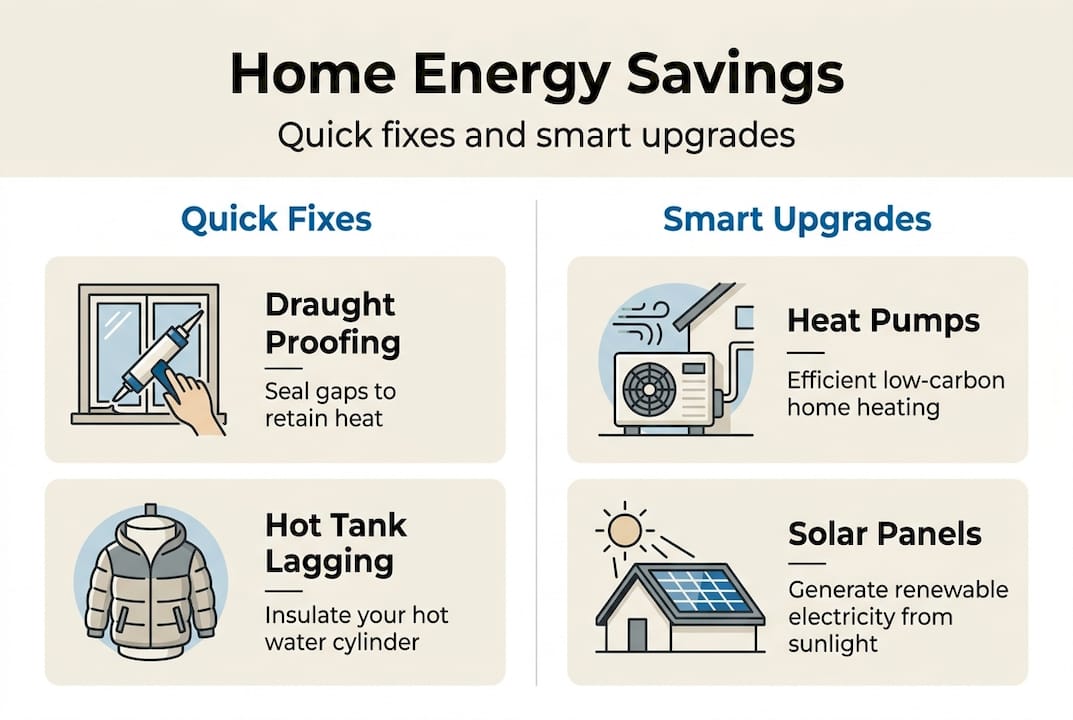
Some quick wins require no tradespeople at all. Draught-proofing a letterbox, fitting a chimney balloon, or adding a jacket to your hot water cylinder are all afternoon jobs. For a broader overview of where to start, the energy saving steps for UK homes guide covers the full priority order in detail.
- Loft insulation: Cheap to install, significant heat loss reduction
- Cavity wall insulation: Effective for post-1920s properties with cavity walls
- Solid wall insulation: More expensive but essential for older solid-wall homes
- Floor insulation: Often overlooked, particularly valuable in ground-floor flats
- Hot water cylinder jacket: One of the cheapest upgrades with fast payback
What you need before starting: checks and assessment
Knowing your property’s current energy rating is the essential first step. Without it, you are guessing which upgrades will move the needle on your EPC score and which will not.
Here is a simple checklist to work through before committing to any work:
- Find your current EPC rating on the government’s EPC register (free to access online).
- Note the recommended improvements listed on the EPC report.
- Check your property type (solid wall, cavity wall, flat, terraced) as this affects which measures apply.
- Identify your heating system and its age.
- Book a professional energy assessment for UK homes if you want a detailed action plan.
For landlords, the timeline is now firm. Getting your EPC now and planning upgrades toward a C rating by 2030 is far cheaper than rushing retrofits in 2029. Exemptions exist but are temporary (five years), must be registered on the PRS Exemptions Register, and require tenant permission for surveys in occupied properties.
| Action | Owner-occupier | Landlord |
|---|---|---|
| Check EPC rating | Recommended | Essential |
| Plan upgrades | Flexible timeline | Must target C by 2030 |
| Register exemption | Not applicable | Required if exempt |
| Tenant permission for survey | Not applicable | Required |
Pro Tip: Commission a draft EPC assessment before you start any work. A qualified assessor can tell you exactly which upgrades will push your rating from D to C, so you avoid spending on measures that score poorly.
For landlords juggling multiple properties, prioritising energy upgrades across a portfolio requires a slightly different approach, balancing cost caps and tenant disruption.
Step-by-step guide to reducing heat loss
Once you know where the energy is wasted and have assessed your home, it is time to act. The golden rule here is fabric first: seal and insulate the building before investing in any new heating technology.
- Draught-proof doors and windows. Use self-adhesive foam strips or brush strips around frames. Do not forget the loft hatch.
- Seal skirting boards and floorboards. Cold air rises through gaps in suspended timber floors. Flexible filler or draught-proofing strips work well.
- Block unused chimneys. A chimney balloon costs around £20 and stops a significant column of warm air escaping.
- Insulate the loft. The recommended depth is 270mm of mineral wool. Many UK homes still have less than 100mm.
- Insulate cavity walls if your property has them. A registered installer can confirm suitability with a borescope inspection.
- Fit a hot water cylinder jacket if you have a tank. A 75mm jacket pays for itself within months.
The fabric-first approach is not just good practice, it is essential if you plan to install a heat pump later. Heat pumps work at lower temperatures and need a well-insulated home to perform efficiently. Skipping insulation and fitting a heat pump first is a costly mistake.
Statistic: Homes with full loft and cavity wall insulation can reduce heating energy use by up to 40% compared to uninsulated equivalents.
Pro Tip: Tackle insulation before upgrading your boiler or installing renewables. Every pound spent on insulation reduces the size and cost of the heating system you will need.
For a wider view of what technologies work best after the fabric is sorted, the energy saving technologies guide and examples of green home upgrades are worth reading before you commit to any contractor.
Should you install heat pumps, solar panels or batteries?
After tackling the basics, you might wonder if going high-tech is worth it. The honest answer is: yes, but only once the fabric is sorted.
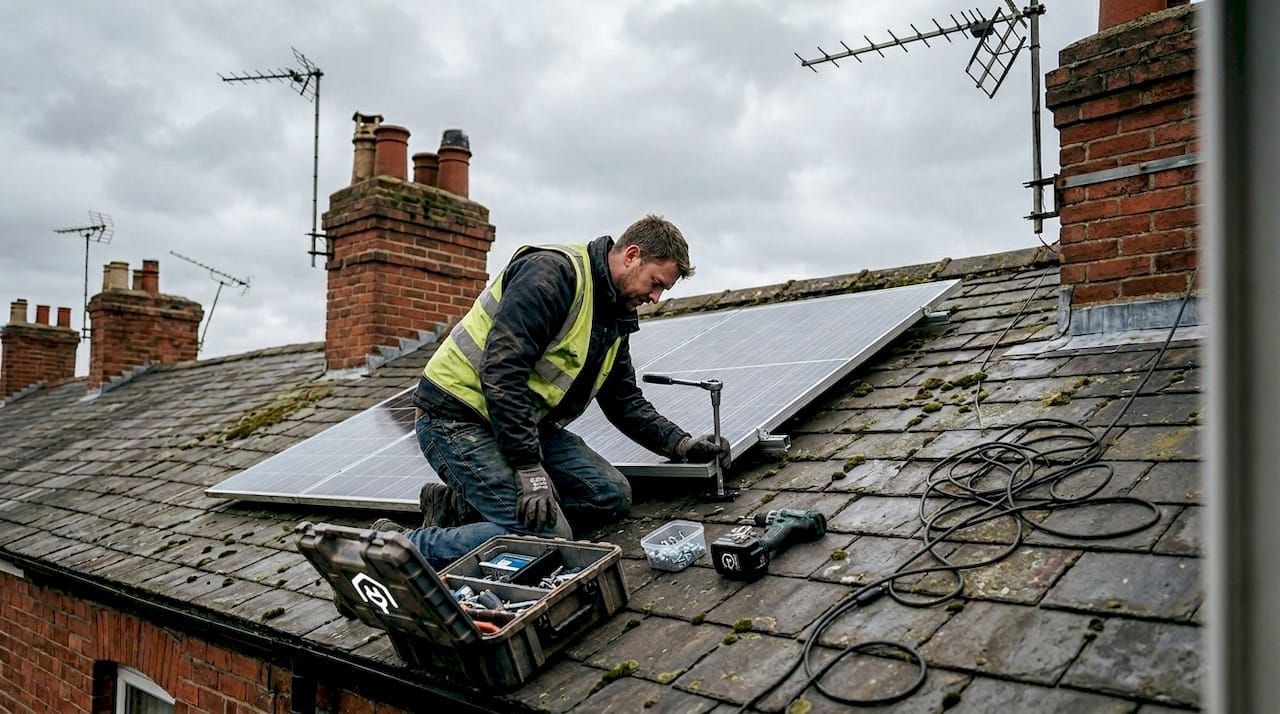
A well-documented real-world example shows what is possible. One household running a heat pump with a SCOP of 4.23 produced 11,559 kWh of heat from just 2,735 kWh of electricity. Combined with solar panels and a battery, heating costs dropped to near-zero between April and October. Total annual electricity costs for the whole house, including an electric vehicle, came to just £1,050.
| Technology | Typical upfront cost | Key benefit | Best suited for |
|---|---|---|---|
| Air source heat pump | £8,000-£15,000 | Low running cost | Well-insulated homes |
| Solar PV panels | £5,000-£9,000 | Free daytime electricity | South-facing roofs |
| Battery storage | £3,000-£6,000 | Store solar, use at night | Homes with solar |
| Loft insulation | £300-£600 | Immediate heat loss reduction | Almost all homes |
Grants make a real difference to the numbers. The Boiler Upgrade Scheme offers £7,500 towards a heat pump for all homeowners. ECO4, running until December 2026, covers insulation, boilers, solar panels, and heat pumps for households on qualifying benefits with an EPC rating of D to G. Where possible, combining both schemes reduces upfront costs significantly.
- Heat pumps need low-temperature emitters (larger radiators or underfloor heating) to work efficiently
- Solar panels paired with a time-of-use tariff can cut effective electricity costs to around 14p/kWh versus the standard 35-40p
- Battery storage is most valuable if you are on a time-of-use tariff or have solar
- Older and listed buildings may need specialist advice before installing insulation or heat pumps
For a full breakdown of available funding, the energy saving grants page covers current schemes and eligibility in detail.
Key fact: The BUS grant of £7,500 is available to all homeowners in England and Wales, not just those on benefits. You do not need to be in fuel poverty to claim it.
Easy wins: habits, gadgets and smart technology
Big investments help, but small daily choices and smart gadgets also make a surprising impact. The cheapest energy is the energy you never use.
Monitoring your usage via a smart meter and app can cut bills by 10-15% simply by making you aware of where energy is going. Most people are genuinely shocked when they see how much a tumble dryer or an old fridge costs to run.
- Turn the thermostat down by 1°C. This alone can save around £100 per year.
- Switch to LED bulbs throughout the home. They use up to 90% less energy than old incandescent bulbs.
- Use smart plugs to eliminate standby power on TVs, games consoles, and chargers.
- Fit a smart thermostat (such as Hive or Nest) to heat rooms only when occupied.
- Wash clothes at 30°C instead of 40°C and use a full load every time.
- Take shorter showers. A four-minute shower uses roughly a third of the water of a bath.
Pro Tip: Pair a smart thermostat with a time-of-use energy tariff. Schedule your heating and hot water to run during cheap-rate hours (typically overnight) and you can cut heating costs noticeably without any loss of comfort.
For a full list of practical actions ranked by savings, the home energy saving tips page is a useful reference to bookmark.
Staying compliant: regulations, EPC changes and deadlines
Beyond saving money, staying compliant with regulations is essential, especially for landlords. The rules are tightening and the penalties for ignoring them are significant.
Here is what you need to know right now:
- Current MEES rules: All private rentals in England and Wales must have a minimum EPC rating of E.
- From 1 October 2030: All private rentals must reach EPC C. The spend cap is £10,000 (or 10% of property value if lower).
- Fines: Up to £30,000 for non-compliance.
- Exemptions: Available but must be registered and are time-limited to five years.
The EPC system itself is also changing. The new Home Energy Model (HEM) is expected to replace the current SAP methodology from around 2029, with transitional arrangements from October 2026. The new system uses multiple metrics covering fabric performance, heating system type, smart technology readiness, and running costs. A property that currently holds a C rating under SAP may be reassessed differently under HEM.
Important: If your property currently holds an EPC C rating, transitional protections are planned under HEM. However, properties rated D or below should not rely on this and should plan upgrades now.
The energy efficiency benefits page explains how improved ratings affect property values and rental demand, which is increasingly relevant as tenants become more energy-cost-conscious.
Acting now rather than in 2029 gives you access to better contractor availability, current grant funding, and the ability to spread costs over time rather than facing a rushed, expensive retrofit.
Take the next step to lower bills and better ratings
Now you know the steps you can take, here is how to put them into practice and go further. At homeenergymodel.co.uk, we have built a library of resources specifically for UK homeowners and landlords navigating these changes. Whether you are trying to understand energy models for landlords or want a plain-English breakdown of the home energy model explained, we cover it all. Our energy performance guide is a practical starting point if you want to understand how your property is assessed and what changes will make the biggest difference to your rating. Use these resources to plan your upgrades with confidence, avoid costly mistakes, and stay ahead of the 2030 deadline.
Frequently asked questions
What is the easiest way to lower home energy bills quickly?
Insulating your hot water cylinder saves around £40 per year and takes under an hour. Draught-proofing doors, windows, and the loft hatch are equally fast and cost very little.
Do I need to upgrade to an EPC C rating by a specific date?
Landlords in England and Wales must reach EPC C for all rental properties by 1 October 2030 or face fines of up to £30,000. Owner-occupiers are encouraged but not yet legally required to meet this standard.
Can I get a grant for insulation or a heat pump in 2026?
Yes. The BUS grant offers £7,500 towards a heat pump for all homeowners, and ECO4 covers insulation and low-carbon heating for qualifying households until December 2026.
How much could I save with smart meters and apps?
Monitoring and optimising usage via a smart meter and energy app typically cuts bills by 10-15% per year, with no upfront investment required.
What if my property is older or listed?
Older and listed buildings may need specialist advice before installing insulation or changing heating systems. Grants and tailored guidance are available, but you may also need planning or listed building consent for certain works.