

Rising energy bills and stricter efficiency regulations mean UK homeowners and landlords must act now to cut consumption and stay compliant. With minimum energy efficiency standards tightening and bills climbing, understanding how to reduce energy use is no longer optional. This guide walks you through assessing your property, implementing quick wins that save hundreds annually, planning major upgrades, and verifying progress to meet 2026 requirements whilst slashing costs.
Table of Contents
- Assess Your Home’s Energy Use And Legal Requirements
- Implement Quick Home Energy Savings For Immediate Impact
- Upgrade Your Home’s Fabric And Heating For Long Term Efficiency
- Plan And Verify Your Energy Reduction Progress Effectively
- Discover Professional Home Energy Modelling And Assessments
Key takeaways
| Point | Details |
|---|---|
| Behavioural changes deliver fast savings | Lowering your thermostat by 1°C and switching to LED bulbs can save over £300 yearly with zero capital outlay |
| Insulation and heating upgrades cut bills long term | Loft insulation, cavity walls, and condensing boilers reduce energy consumption by 30 to 50 per cent over their lifespan |
| Landlords face urgent compliance deadlines | Properties must reach EPC rating C by 2030, requiring audits and phased retrofits starting now to avoid stranded assets |
| Ventilation prevents moisture problems | After draught proofing, adequate airflow is essential to stop condensation and mould in tightly sealed homes |
| Grants and planning maximise impact | Combining free tips with funded retrofits can reduce bills by 70 to 90 per cent when properly tracked and verified |
Assess your home’s energy use and legal requirements
Before you spend a penny on upgrades, you need a clear picture of where your property stands. Energy Performance Certificates reveal your current rating and highlight the biggest energy drains. For landlords, understanding minimum energy efficiency standards is critical because rental properties must achieve at least an EPC rating of C by 2030, and temporary exemptions are ending.
Start by requesting an EPC if yours is outdated or missing. These certificates grade properties from A to G and identify cost effective improvements. Homeowners benefit from knowing which upgrades deliver the best return, whilst landlords must audit entire portfolios now, segment properties by EPC grade, and plan upgrades between 2026 and 2029 to avoid stranded assets that cannot be legally rented.
Professional energy audits go deeper than EPCs, using thermal imaging and air tightness tests to pinpoint heat loss. These assessments reveal hidden issues like missing insulation behind walls or air leaks around windows that standard surveys miss. For landlords managing multiple properties, segmenting your portfolio by rating helps prioritise the worst performers and spread upgrade costs over several years.
Non compliance carries real penalties. Landlords face fines up to £5,000 per property and cannot legally rent substandard homes. Beyond fines, properties with poor ratings become unsellable or unrentable, creating stranded assets that drain value. Acting now gives you time to phase improvements and access grants before deadlines tighten further.
Pro Tip: Schedule your energy audit in autumn or winter when heating is on, making thermal imaging far more effective at spotting heat loss through walls, roofs, and gaps.
Key actions to assess your property:
- Obtain a current EPC from an accredited assessor or check the government register if you have one dated within three years
- Commission a professional energy audit with thermal imaging for properties rated D or below
- Landlords should create a spreadsheet listing every property’s EPC rating, age, and estimated upgrade costs
- Review energy assessment benefits to understand how detailed evaluations guide retrofit planning
- Set a realistic timeline for improvements based on budget and regulatory deadlines
Implement quick home energy savings for immediate impact
You do not need to wait for major retrofits to start cutting bills. Simple changes to daily habits and small upgrades deliver measurable savings within weeks, building momentum and freeing cash for larger projects later. These quick wins also help you understand your property’s energy behaviour before committing to expensive measures.
Lowering your thermostat by just 1°C saves £145 yearly, whilst switching all bulbs to LEDs cuts lighting costs by £180 annually. Draught proofing doors and windows prevents £125 in heat loss, unplugging standby devices saves £147, and reducing shower time by two minutes saves £70 on hot water. Stack these five actions together and you pocket over £650 every year without spending more than £100 upfront.
These figures assume average UK household consumption, so larger homes or families see even bigger savings. The beauty of behavioural changes is they cost nothing and take effect immediately. You can track progress through smart metre readings or monthly bills, adjusting habits as you learn what works best for your household.
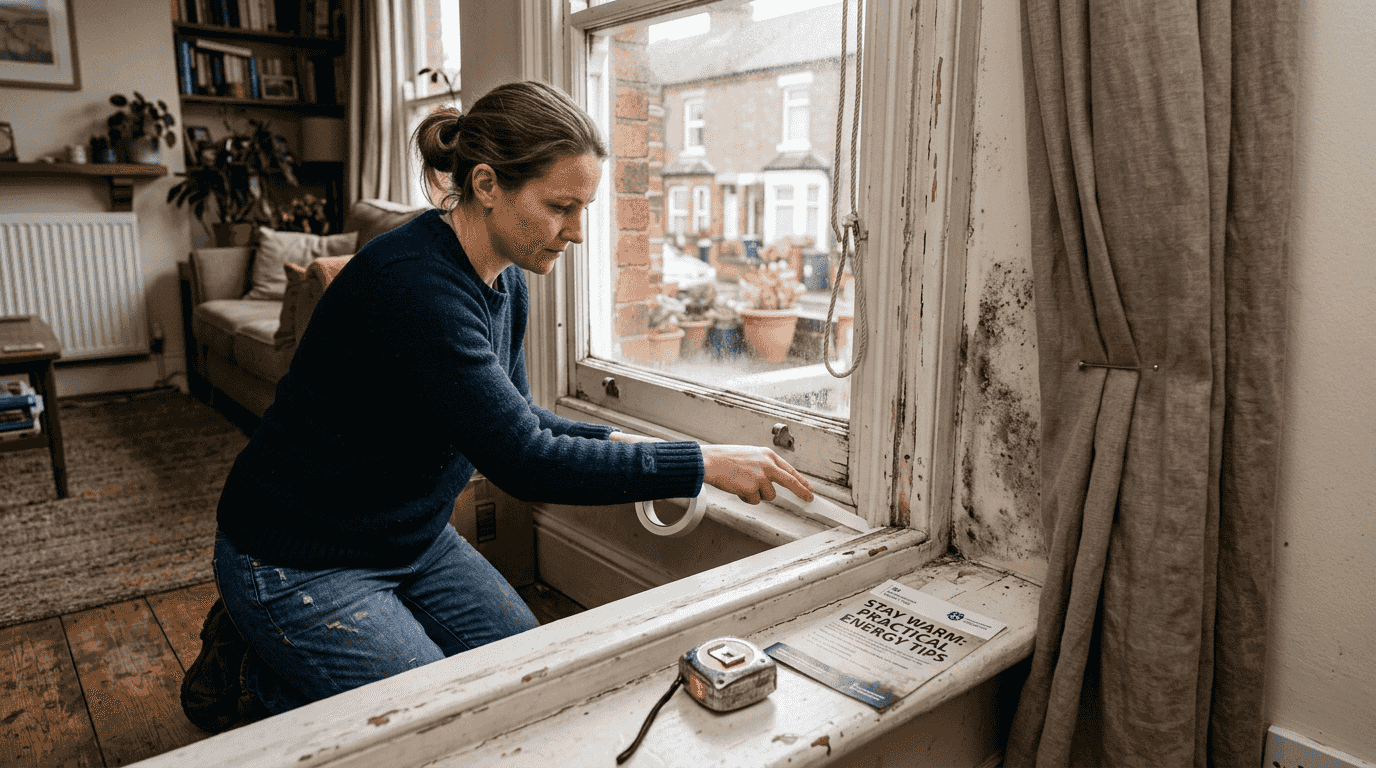
Draught proofing deserves special attention because it is cheap, effective, and often overlooked. Seal gaps around external doors with brush strips, fit foam tape around window frames, and use keyhole covers to stop cold air entering. However, do not seal your home so tightly that you trap moisture. Adequate ventilation through trickle vents or extractor fans prevents condensation and mould, especially in kitchens and bathrooms.
Pro Tip: Install a smart thermostat with scheduling to automatically lower heating when you are out or asleep, saving an additional £75 yearly without any effort once programmed.
Quick energy saving actions ranked by impact:
- Lower thermostat by 1°C and programme heating to match your schedule
- Replace all halogen and incandescent bulbs with LED equivalents
- Draught proof external doors, windows, letterboxes, and keyholes
- Unplug phone chargers, TVs, and computers at the wall when not in use
- Fit water saving shower heads and reduce shower duration by two minutes
- Wash clothes at 30°C and air dry instead of tumble drying whenever possible
Combining free tips with grants and funded retrofits can reduce bills by 70 to 90 per cent, but only if you maintain proper ventilation and track your progress to verify savings.
For more immediate actions, explore our energy saving tips guide and discover 7 ways to use less electricity at home and work.
Upgrade your home’s fabric and heating for long term efficiency
Whilst quick wins deliver fast payback, substantial energy reductions require upgrading your property’s fabric and heating system. Insulation, glazing, and modern boilers or heat pumps transform energy performance, slashing consumption by 30 to 50 per cent over their lifespan and lifting EPC ratings to meet regulatory thresholds.
Loft insulation, cavity and solid wall insulation, and double glazing are essential fabric upgrades that stop heat escaping through your building envelope. Around 25 per cent of heat loss occurs through uninsulated roofs, 35 per cent through walls, and 20 per cent through single glazed windows. Addressing these weak points cuts heating demand dramatically, reducing bills and carbon emissions simultaneously.
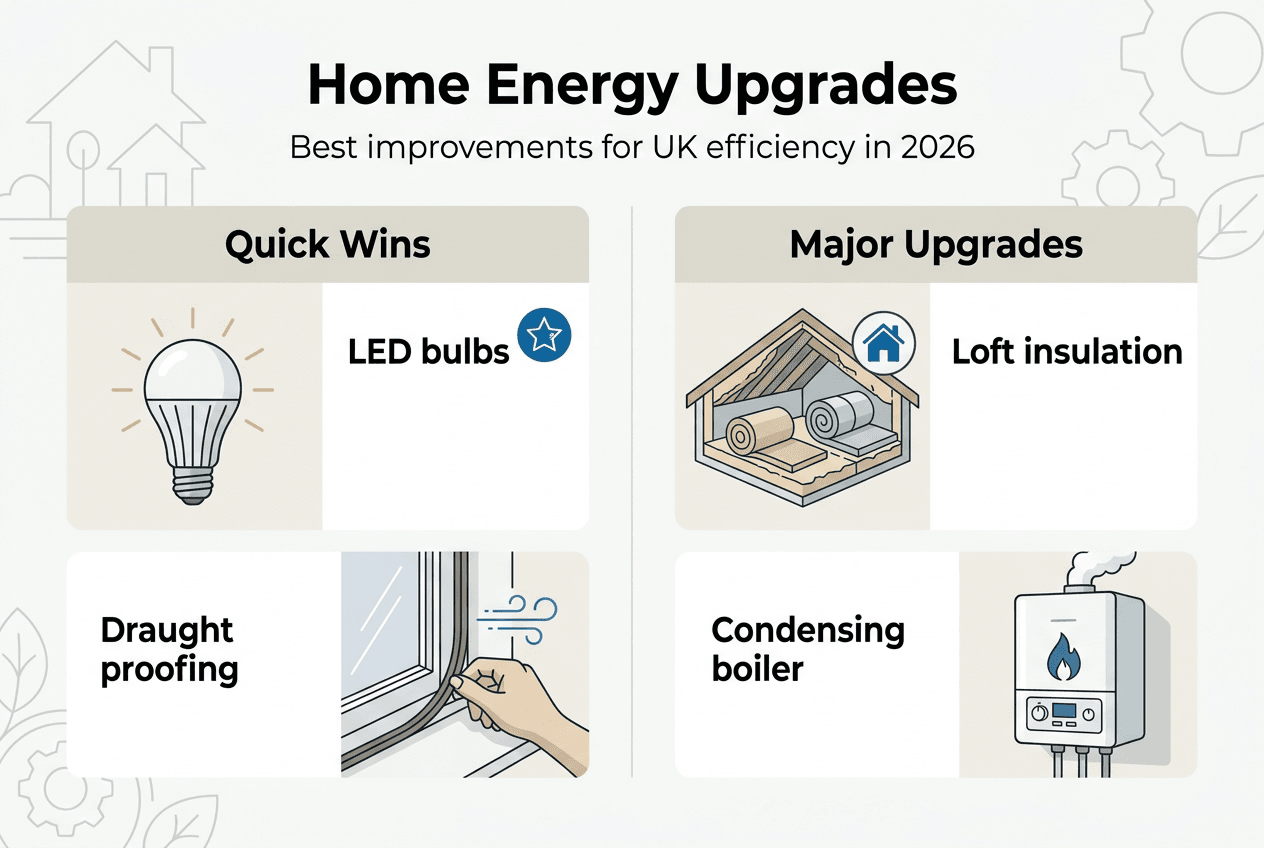
Loft insulation is the easiest and cheapest upgrade, typically costing £300 to £500 for a detached house and saving £200 yearly. Cavity wall insulation suits properties built after 1920 with air gaps between inner and outer walls, costing £500 to £1,500 and saving £160 annually. Solid wall insulation is more expensive at £4,000 to £14,000 but saves £450 yearly and is essential for pre 1920 homes with single skin walls.
Heating upgrades deliver even bigger savings. Replacing an old boiler with a modern condensing combi model cuts gas consumption by 30 per cent, saving £300 yearly. Heat pumps offer the deepest cuts, reducing heating costs by 50 per cent compared to old gas boilers, though upfront costs are higher at £6,000 to £18,000. Government grants cover much of this expense, making heat pumps increasingly viable for UK homes.
| Insulation type | Typical annual saving | Upfront cost | Lifespan |
| — | — | — |
| Loft insulation (270mm) | £200 | £300 to £500 | 40 years |
| Cavity wall insulation | £160 | £500 to £1,500 | 25 years |
| Solid wall insulation (external) | £450 | £8,000 to £14,000 | 30 years |
| Double glazing (full house) | £120 | £4,000 to £8,000 | 20 years |
| Condensing combi boiler | £300 | £2,000 to £3,500 | 15 years |
| Air source heat pump | £500 | £6,000 to £12,000 (after grant) | 20 years |
Pro Tip: Schedule insulation upgrades before replacing your boiler or installing a heat pump, because better insulation reduces heating demand and lets you fit a smaller, cheaper system that runs more efficiently.
After upgrading insulation, review your home energy retrofit guide and learn how to ventilate your home efficiently to prevent moisture problems in newly sealed properties.
Fabric and heating upgrade priorities:
- Insulate your loft to 270mm depth if current insulation is below 100mm
- Add cavity wall insulation if your property was built between 1920 and 1990 and walls are unfilled
- Consider solid wall insulation for pre 1920 homes, prioritising external insulation to avoid losing internal space
- Replace single glazing with double or triple glazed windows, focusing on north facing elevations first
- Upgrade boilers older than 15 years to condensing models or explore heat pump grants for deeper savings
- Maintain adequate ventilation through trickle vents and extractor fans to prevent condensation after sealing your home
Plan and verify your energy reduction progress effectively
Upgrades only deliver value if you plan them strategically and verify savings afterwards. Setting realistic targets, tracking consumption, and adapting your approach based on results ensures you meet regulatory requirements and maximise return on investment.
Start by defining clear goals. Homeowners might target a 30 per cent bill reduction within two years, whilst landlords need to lift properties from EPC rating E to C by 2030. Break these goals into annual milestones, such as completing insulation in year one and upgrading heating in year two. This phased approach spreads costs and lets you access grants as they become available.
Tracking progress requires baseline data. Record your current energy bills, metre readings, and EPC rating before making any changes. After each upgrade, monitor monthly consumption to verify savings match predictions. Smart metres simplify this by providing real time data, helping you spot problems quickly if savings fall short.
Steps to plan and track energy improvements:
- Set a specific energy reduction target and deadline based on your budget and regulatory requirements
- List all potential upgrades from your energy audit, ranking them by cost effectiveness and payback period
- Create a timeline that phases improvements over 12 to 36 months, prioritising fabric upgrades before heating changes
- Apply for available grants and government schemes to reduce upfront costs
- Record baseline energy consumption and costs before starting work
- Monitor monthly bills and metre readings after each upgrade to verify predicted savings
- Reassess your EPC rating annually to track progress towards compliance thresholds
- Adjust your plan if savings fall short, investigating whether additional measures or behaviour changes are needed
| Planning approach | Best for | Advantages | Limitations |
| — | — | — |
| DIY research and tracking | Single property owners with time and interest | Zero cost, full control over decisions | Requires technical knowledge and discipline to maintain records |
| Professional energy consultant | Landlords with multiple properties or complex retrofits | Expert advice, tailored plans, handles grant applications | Costs £500 to £2,000 depending on portfolio size |
| Home energy modelling software | Tech savvy homeowners and investors | Accurate predictions, scenario testing, compliance tracking | Learning curve and subscription fees of £10 to £50 monthly |
Combining free tips with grants and retrofits can reduce bills by 70 to 90 per cent, but only with proper planning and ongoing monitoring. Periodic reassessment is essential because energy prices fluctuate, new grants appear, and technology improves. Review your plan every six months to adapt to changing circumstances and capture new opportunities.
For detailed planning support, explore the home energy model explained and follow our energy saving steps guide to structure your approach.
Discover professional home energy modelling and assessments
Whilst DIY planning works for straightforward properties, professional home energy modelling delivers precision and confidence for complex retrofits or multi property portfolios. Expert assessments help you prioritise upgrades, predict savings accurately, and ensure compliance with minimum energy efficiency standards before deadlines tighten.
Professional services combine detailed site surveys, thermal imaging, and advanced modelling software to create bespoke improvement plans. These plans identify the most cost effective upgrades for your specific property, accounting for construction type, orientation, occupancy patterns, and local climate. For landlords, portfolio level modelling reveals which properties need urgent attention and which can wait, optimising cash flow and avoiding stranded assets.
Key benefits include tailored retrofit advice that maximises return on investment, compliance guidance to meet MEES and EPC requirements, and access to grant application support that secures funding for major upgrades. Professional modelling also provides defensible predictions for planning applications, mortgage assessments, and tenant communications.
Professional home energy services include:
- Comprehensive energy audits with thermal imaging and air tightness testing
- Bespoke retrofit plans prioritising upgrades by cost effectiveness
- EPC rating predictions before and after proposed improvements
- MEES compliance roadmaps for landlords with phased timelines
- Grant application support to maximise government funding
- Ongoing monitoring and verification to track actual savings
Explore types of home energy models for landlords, understand the home energy model methodology, and apply practical energy saving tips to complement professional assessments and maximise your property’s efficiency.
How can I get started on reducing my home’s energy use?
How can I get started on reducing my home’s energy use?
Begin with an energy audit to identify your property’s biggest weaknesses, then implement free behavioural changes like lowering your thermostat by 1°C and switching to LED bulbs. These quick wins save hundreds annually whilst you plan larger upgrades. Check government grant schemes through the Energy Saving Trust or local councils to fund insulation and heating improvements. For landlords, segment your portfolio by EPC rating and prioritise properties below grade C to meet 2030 deadlines. Follow our energy saving steps guide to structure your approach systematically.
What are the most cost effective ways to reduce energy bills quickly?
Lowering your thermostat by 1°C saves £145 yearly, switching to LED bulbs saves £180, draught proofing saves £125, unplugging standby devices saves £147, and reducing shower time saves £70. These five actions cost under £100 combined but deliver over £650 in annual savings. Stack them with grant funded insulation and heating upgrades to cut bills by 70 to 90 per cent over time. The key is combining free behavioural changes with strategic capital investments that deliver long term reductions.
What heating upgrades should I consider for my home?
Modern condensing combi boilers cut gas consumption by 30 per cent compared to older models, saving around £300 yearly for typical upfront costs of £2,000 to £3,500. Air source heat pumps offer deeper savings of 50 per cent but cost £6,000 to £12,000 after government grants. Prioritise insulation first because better fabric efficiency reduces heating demand, letting you install a smaller, cheaper system. Seek professional advice to match heating technology to your property type, insulation levels, and budget. Combining upgraded heating with loft and wall insulation maximises efficiency and comfort.
How do energy efficiency regulations affect landlords in 2026?
Landlords must achieve a minimum EPC rating of C for all rental properties by 2030, with temporary exemptions ending and enforcement tightening. Properties rated D, E, F, or G require urgent upgrades or face fines up to £5,000 per property and cannot be legally rented. Audit your portfolio now, segment properties by EPC grade, and plan upgrades between 2026 and 2029 to spread costs and avoid stranded assets. Non compliance creates unsellable properties that drain value, so starting improvements immediately protects your investment and ensures continued rental income.