

TL;DR:
- Older UK homes lose heat rapidly, requiring targeted DIY improvements to meet EPC C standards by 2030.
- Prioritizing fabric-first measures like insulation and draught-proofing offers cost-effective, significant energy savings.
- Monitoring improvements with simple tools and considering professional modelling can optimize compliance and energy efficiency gains.
Older UK homes lose heat at an alarming rate, and with landlords facing EPC C requirements by 2030 or risk fines and letting bans, the pressure to act has never been greater. Rising energy bills compound the problem for owner-occupiers too. The good news is that targeted DIY energy optimisation, carried out in the right order, can cut heat loss, reduce bills, and move a property up the EPC (Energy Performance Certificate) rating scale without requiring a full professional retrofit. This guide walks through every stage, from understanding the regulations to measuring real results, giving homeowners and landlords a practical, step-by-step path to a more efficient property.
Table of Contents
- Understanding energy optimisation and UK regulations
- What you need: tools, materials and planning essentials
- Step-by-step DIY improvements for maximum energy savings
- Measuring your success: monitor, verify and future-proof
- Why small, fabric-first steps often beat big tech investments
- Get expert support for your energy optimisation journey
- Frequently asked questions
Key Takeaways
| Point | Details |
|---|---|
| Prioritise fabric-first upgrades | Improving insulation and draught-proofing brings the quickest and largest reductions in heat loss. |
| Stay ahead of EPC rules | New legal requirements mean landlords must upgrade homes to EPC C by 2030 to avoid penalties. |
| DIY can deliver real savings | Most meaningful energy upgrades can be tackled by homeowners using basic tools and careful planning. |
| Verify and future-proof | Regular energy checks ensure savings last and homes remain compliant with evolving standards. |
Understanding energy optimisation and UK regulations
DIY home energy optimisation means making deliberate, structured improvements to a property’s fabric and systems to reduce energy consumption and improve thermal comfort. It is not simply swapping a boiler or fitting a smart thermostat. True optimisation addresses the building envelope first, then the systems within it.
The EPC is the key compliance tool in the UK. It rates a property from A (most efficient) to G (least efficient) and is required whenever a home is sold or let. From 2026, EPCs will shift to a multi-metric framework, assessing fabric performance, heating systems, and renewable energy contributions separately. This makes targeted fabric improvements even more valuable than before.
“With 52% of private rented homes not yet at EPC band C, landlords face a significant compliance gap ahead of the October 2030 deadline.”
The triggers for urgent action are clear. Landlords who fail to reach EPC C by 2030 risk being unable to let their properties legally. Owner-occupiers face lower resale values and higher running costs. The energy efficiency benefits of acting early extend well beyond compliance, including lower bills, improved tenant satisfaction, and stronger asset value.
Key regulatory milestones to note:
- 2026: New multi-metric EPC framework introduced
- 2028: EPC C required for all new tenancies
- 2030: EPC C required for all existing tenancies
- Cost cap: £10,000 per property for landlord compliance works
| EPC band | Typical SAP score | Compliance status (landlords, 2030) |
|---|---|---|
| A or B | 81 to 100 | Fully compliant |
| C | 69 to 80 | Minimum required |
| D | 55 to 68 | Non-compliant after 2030 |
| E to G | Below 55 | Urgent action required |
For landlords with commercial properties, the rules differ slightly. Understanding the full picture via commercial EPC certificates guidance is advisable before planning any works.
What you need: tools, materials and planning essentials
Effective DIY energy work starts with a plan, not a purchase. The fabric-first principle, endorsed by PAS 2035 (the UK’s whole-house retrofit standard), states that reducing heat loss through the building envelope must come before any heating system or renewable technology upgrade. This sequencing avoids costly compatibility issues and ensures each measure performs as intended.
The fabric-first methodology can reduce heat loss by 10 to 15% with basic upgrades, making it the most cost-effective starting point for most UK homes.
Essential materials and tools for a DIY energy project:
- Loft insulation rolls (mineral wool, 270mm depth recommended)
- Mastic sealant and draught-proofing strips for doors and windows
- Thermal or honeycomb blinds for single-glazed or older windows
- LED bulbs (replacing all halogen and incandescent fittings)
- A thermal imaging camera (available to hire) for identifying cold spots
- A smart energy monitor for tracking consumption before and after works
| Upgrade type | Approx. cost | Skill level | Tools required |
|---|---|---|---|
| Draught-proofing strips | £20 to £80 | Beginner | Scissors, adhesive |
| Loft insulation (DIY) | £150 to £400 | Beginner to intermediate | Gloves, mask, boards |
| Thermal blinds | £50 to £200 | Beginner | Drill, spirit level |
| Cavity wall insulation | £400 to £1,200 | Professional recommended | Specialist equipment |
| LED lighting upgrade | £50 to £150 | Beginner | Screwdriver |
Pro Tip: Always address insulation and draught-proofing before upgrading heating controls or installing renewables. Fitting a heat pump into a poorly insulated home wastes money and reduces system efficiency significantly.
A whole-house plan, even a basic one, helps avoid damp risks. For instance, sealing a property too tightly without adequate ventilation can cause condensation. Guidance on prioritising energy upgrades helps landlords sequence works correctly. The energy upgrades guide for owner-occupiers covers similar ground in practical detail.
Step-by-step DIY improvements for maximum energy savings
With planning complete, the following steps deliver the greatest impact in the most logical order. Start with the measures that address the largest sources of heat loss first.
1. Loft insulation
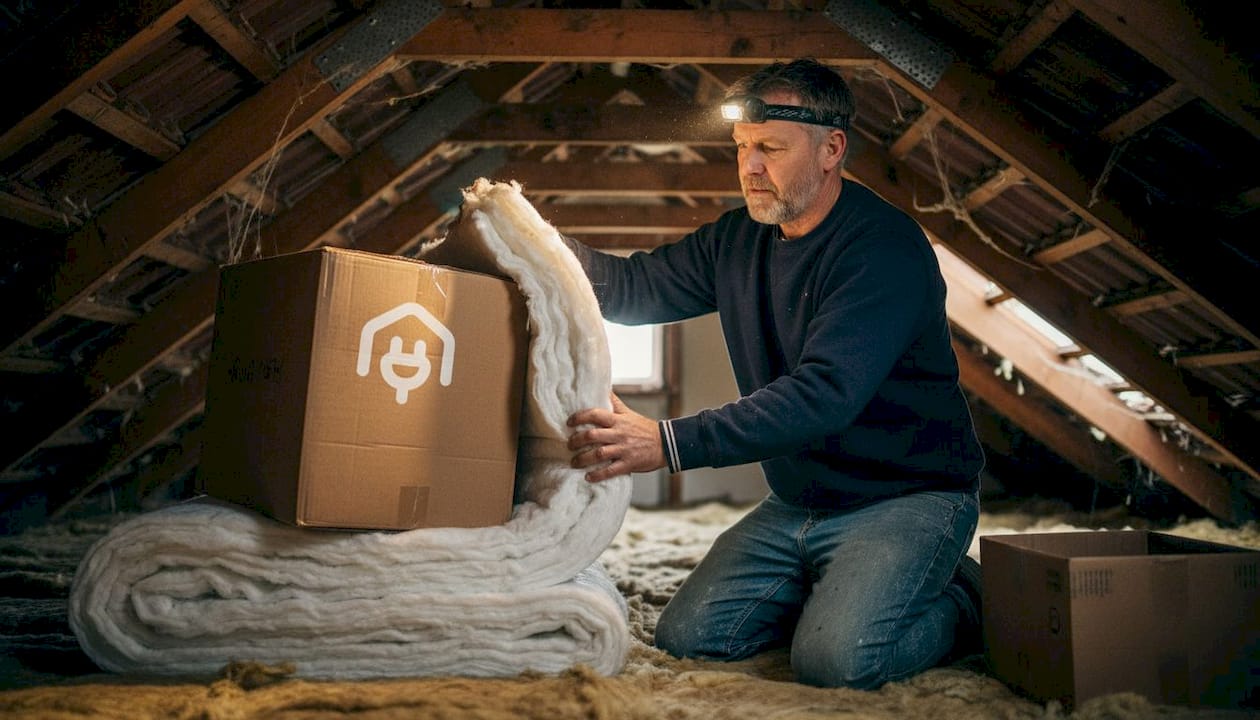
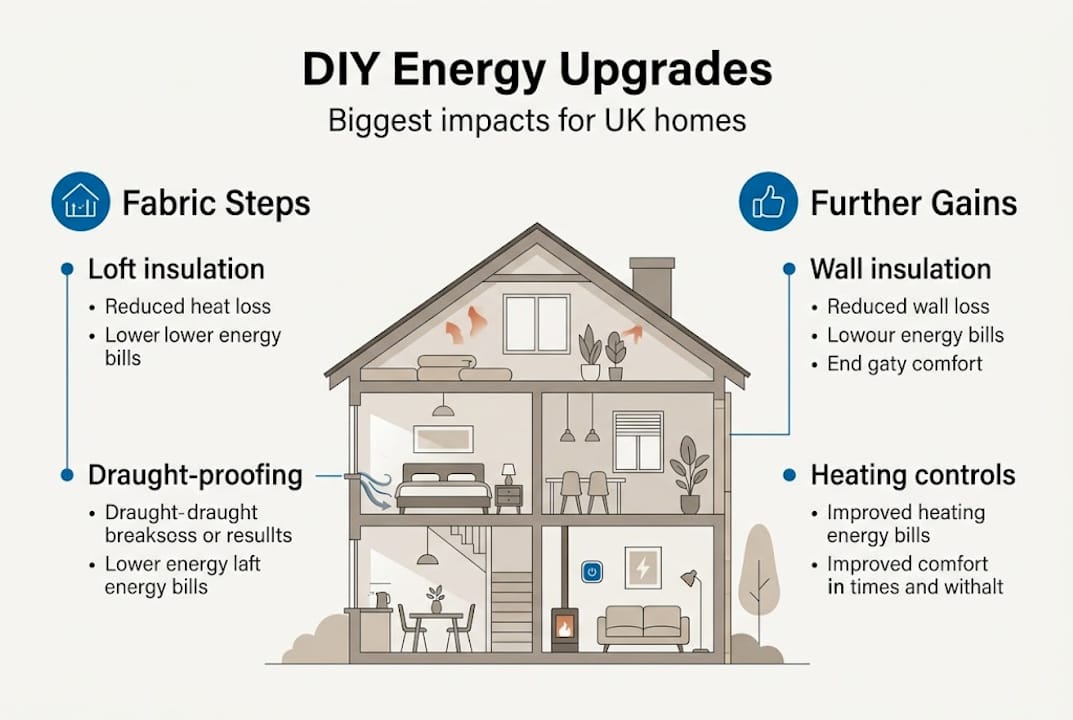
Clear the loft space and lay mineral wool between and across the joists to a depth of 270mm. Ensure eaves are not blocked to maintain ventilation. Wear a dust mask and gloves throughout. This is one of the highest-return DIY tasks available.
2. Draught-proofing doors and windows
Apply self-adhesive foam or rubber strips around door and window frames. Use mastic sealant around skirting boards, floorboards, and pipe entry points. Check letterboxes and keyholes with a dedicated cover or brush seal.
3. Cavity wall insulation
This typically requires a professional installer, but homeowners can confirm eligibility by checking whether their property has a cavity wall (most homes built after 1920 do). Cavity wall insulation can save an average of £295 per year, making it one of the strongest financial cases for any single upgrade.
4. Floor insulation
For suspended timber floors, lift boards and fit rigid insulation or mineral wool between joists. Seal gaps around the perimeter with mastic. Solid concrete floors can be insulated with rigid boards under new flooring.
5. LED lighting upgrade
Replace all halogen downlighters and incandescent bulbs with LED equivalents. A typical three-bedroom home can save £40 to £60 per year on lighting alone. This is a beginner task requiring only a screwdriver and the correct bulb fitting. More detail on lighting energy savings is available for landlords managing multiple properties.
Pro Tip: Tackle lighting last among the fabric measures. It is quick and cheap, but the savings are modest compared to insulation. Use it as a confidence-building first step if motivation is needed before the larger tasks.
Savings callout: Combining loft insulation, draught-proofing, and LED lighting in a typical semi-detached home can reduce annual energy bills by £350 to £500, depending on the property’s current EPC rating and energy tariff. Explore low-cost energy tips for further quick wins.
Common mistakes to avoid include compressing loft insulation (which reduces its thermal resistance), using the wrong mastic for external use (it will degrade quickly), and fitting draught-proofing strips that are too thick, causing doors to bind.
Measuring your success: monitor, verify and future-proof
Once improvements are in place, measuring their impact confirms what has worked and identifies where further effort is needed. Simple monitoring requires no specialist equipment.
Take weekly meter readings before and after each upgrade phase. A smart energy monitor provides real-time data and makes it easy to spot the effect of each change. A smart thermostat with room-by-room controls adds further precision. For draught-proofing, a stick of incense held near skirting boards, window frames, and loft hatches on a windy day reveals remaining gaps clearly.
“Incremental fabric upgrades in a 1930s semi reduced heat loss by 350W, representing a 10 to 15% improvement, demonstrating that consistent, phased improvements deliver measurable results.”
EPC improvement options by effort and cost:
| Measure | Effort level | Estimated EPC impact | Approx. cost |
|---|---|---|---|
| Draught-proofing | Low | 1 to 3 points | £20 to £80 |
| LED lighting | Low | 1 to 2 points | £50 to £150 |
| Loft insulation (DIY) | Medium | 5 to 10 points | £150 to £400 |
| Cavity wall insulation | Medium/Pro | 10 to 20 points | £400 to £1,200 |
| Solar PV panels | High | 10 to 25 points | £5,000 to £9,000 |
To verify compliance ahead of the 2026 EPC reform and the 2030 landlord deadline, commission a new EPC assessment after completing fabric improvements. Certificates issued under the new multi-metric system from 2026 will reflect fabric performance more accurately than older ratings.
Future-proofing steps to consider:
- Install a mechanical ventilation system if the property has been significantly sealed
- Prepare electrical circuits for a future heat pump or EV charger installation
- Check eligibility for government grants such as the Boiler Upgrade Scheme or ECO4
- Review ongoing energy saving tips annually as technology and tariffs evolve
Incremental progress counts. Each upgrade completed brings the property closer to compliance and reduces running costs in the meantime.
Why small, fabric-first steps often beat big tech investments
There is a persistent assumption in the property sector that meaningful energy improvement requires significant technology investment. Heat pumps, solar panels, and smart home systems attract most of the attention and most of the grant funding conversations. Yet the evidence consistently points in a different direction.
Fabric-first upgrades result in significant heat loss reduction for common UK homes, often at a fraction of the cost of renewable installations. A landlord who spends £600 on loft insulation and draught-proofing may achieve a larger EPC band jump than one who spends £8,000 on solar panels, particularly in older properties where the baseline heat loss is high.
The logic is straightforward. Technology added to a leaky building works harder and delivers less. Addressing the fabric first means any subsequent technology investment performs better and costs less to run. Landlords focused on cost-effective solutions consistently find that fabric measures move the compliance needle faster than gadgets. The 2030 deadline is real. Starting with the basics is not a compromise. It is the most rational strategy available.
Get expert support for your energy optimisation journey
Completing DIY improvements is a strong first step, but maximising EPC gains and ensuring full compliance with the 2026 and 2030 regulations often benefits from professional modelling and assessment. homeenergymodel.co.uk offers detailed resources on home energy models for landlords, helping property owners understand exactly which upgrades will move their EPC rating most efficiently. Guides covering how energy models work explain the new Home Energy Model (HEM) methodology replacing SAP from 2025. For those planning larger projects, the energy simulation guide provides a practical framework for modelling improvements before committing to expenditure, reducing the risk of costly errors.
Frequently asked questions
What is a fabric-first approach in home energy optimisation?
A fabric-first approach means prioritising insulation and reducing heat loss before installing renewable technologies or heating controls. It is the most cost-effective sequence for improving a property’s energy performance.
What is the EPC target for UK landlords by 2030?
By October 2030, landlords must ensure rental properties reach at least EPC band C, with a cost cap of £10,000 per property applied to compliance works.
Which DIY changes have the biggest impact on home energy efficiency?
Upgrading loft insulation and draught-proofing doors and windows deliver the biggest savings for most UK homes. Fabric upgrades reduced heat loss by 10 to 15% in a 1930s semi, confirming their effectiveness.
How can landlords check if their property meets the latest EPC standards?
Landlords should commission a new EPC assessment, as new EPCs from 2026 use updated multi-metric criteria covering fabric, heating, and renewables separately.