
TL;DR:
- Understanding and improving home insulation is key to reducing UK household energy costs.
- Simple quick wins like lowering thermostats and sealing draughts can save hundreds annually.
- Investing in fabric-first measures ensures longer-term savings and better performance from smart upgrades.
Energy bills remain stubbornly high across the UK, and new government regulations are adding urgency to a challenge most families already feel every month. The good news is that practical, evidence-based steps can reduce household costs significantly while positioning your home for compliance with upcoming rules. Whether you own or rent, live in a Victorian terrace or a modern flat, the strategies covered here are grounded in current UK policy and real-world savings data. This article sets out a clear, staged approach: assess your home, act on quick wins, invest in smart upgrades, and access available funding.
Table of Contents
- Understand your home’s energy profile and set priorities
- Quick wins: Easy changes to start saving today
- Smart upgrades and monitoring: Maximise your savings
- Take advantage of grants and stay ahead of UK regulations
- Why thinking ‘fabric first’ really matters for families
- Get expert help to take your next step
- Frequently asked questions
Key Takeaways
| Point | Details |
|---|---|
| Insulate first | Draught-proofing and insulation are the most effective starting points for comfort and savings. |
| Small changes pay off | Turning your thermostat down by 1°C or using smart plugs can cut energy bills immediately. |
| Grants and schemes exist | Families can access grants for upgrades such as insulation and heat pumps—check your eligibility now. |
| Prepare for EPC C | Upgrading your home now helps you meet legal standards and avoids future rushed, costly changes. |
Understand your home’s energy profile and set priorities
Before spending a single pound on upgrades, it pays to understand where your home is losing energy. The four main culprits are walls, loft, floors, and windows or doors. In a typical uninsulated UK home, around 25% of heat escapes through the roof, 35% through walls, and the remainder through floors, windows, and draughts. Knowing which areas are worst in your specific property helps you spend wisely rather than guessing.
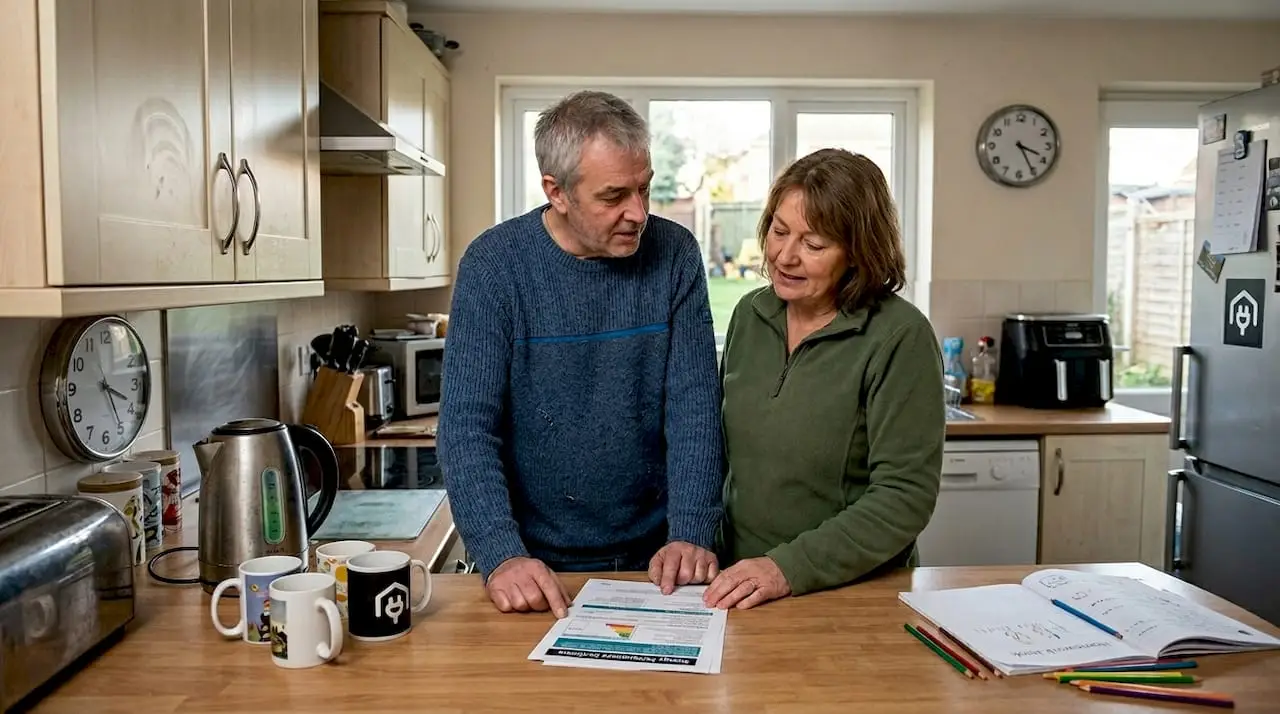
The most reliable starting point is your Energy Performance Certificate (EPC). This document rates your home from A (most efficient) to G (least efficient) and lists recommended improvements in order of cost-effectiveness. If your property does not have a current EPC, or if it is more than ten years old, commissioning a new assessment gives you an accurate benchmark to work from.
Once you have your EPC, prioritise improvements using the fabric-first principle. This means addressing insulation and draught-proofing before investing in heating system upgrades or renewable technology. The logic is straightforward: a well-insulated, draught-proof home retains heat far more effectively, so any heating system you install or upgrade will perform better and cost less to run.
Key areas to assess and prioritise:
- Loft insulation: If your loft has less than 270mm of insulation, topping it up is one of the highest-return investments available.
- Cavity or solid wall insulation: Older homes with uninsulated cavity walls lose heat rapidly. Solid wall insulation is more expensive but delivers substantial savings.
- Floor insulation: Suspended timber floors are a common source of draughts and heat loss, particularly in pre-1919 properties.
- Windows and doors: Double glazing and well-fitted door seals make a measurable difference, especially in older properties with single-glazed windows.
- Draught-proofing: Sealing gaps around skirting boards, letterboxes, and loft hatches is low-cost and immediately effective.
Families with young children or elderly relatives should prioritise measures that maintain consistent warmth, as cold homes carry genuine health risks. Renters should note that fabric-first improvements are central to upcoming landlord obligations: private rented homes must meet EPC C equivalent by 2030, with a £10,000 cost cap per property.
Pro Tip: Use the energy saving steps for UK homes guide to cross-reference your EPC recommendations with the most cost-effective measures for your property type before committing to any works.
Quick wins: Easy changes to start saving today
Not every energy-saving action requires a contractor or a significant outlay. Several changes can be made immediately, with no tools and minimal cost, and the cumulative effect on annual bills is substantial.
Here are the most impactful quick wins, in order of ease and impact:
- Lower your thermostat by 1°C. This single adjustment can save £80 to £145 per year on heating bills, representing a 6 to 8% reduction in heating costs. Most households will not notice the difference in comfort.
- Turn radiators down in unused rooms. Thermostatic Radiator Valves (TRVs) allow you to reduce heat in rooms that are not regularly occupied. Turning them down, rather than off entirely, prevents pipes from getting too cold and avoids condensation.
- Adjust your boiler flow temperature. Many modern combi boilers are factory-set at 80°C, but running them at 55 to 60°C improves efficiency considerably. Check your boiler manual or consult a Gas Safe engineer before making this change.
- Seal draughts around doors and windows. Self-adhesive foam strips and brush seals for letterboxes are inexpensive and available at any hardware shop. A draughty home can lose a surprising amount of heat through gaps that are easy to overlook.
- Switch to LED lighting throughout. LED bulbs use up to 90% less energy than traditional incandescent bulbs and last significantly longer. Replacing all bulbs in a typical home costs under £50 and pays back within months.
Statistic: Lowering your thermostat by just 1°C cuts heating costs by 6 to 8%, saving most UK families between £80 and £145 annually.
These steps alone can help families cut bills by £1,200 yearly when combined with other measures. For a broader action plan covering appliances, water use, and behaviour changes, the maximum efficiency at home guide provides a structured approach.
Pro Tip: Programme your heating to come on 30 minutes before you need warmth rather than leaving it running all day. A well-insulated home will retain heat for longer, so shorter, targeted heating periods are more efficient than continuous low-level heat.
Smart upgrades and monitoring: Maximise your savings
Once the basics are in place, technology can help families squeeze further savings from their homes without major disruption.
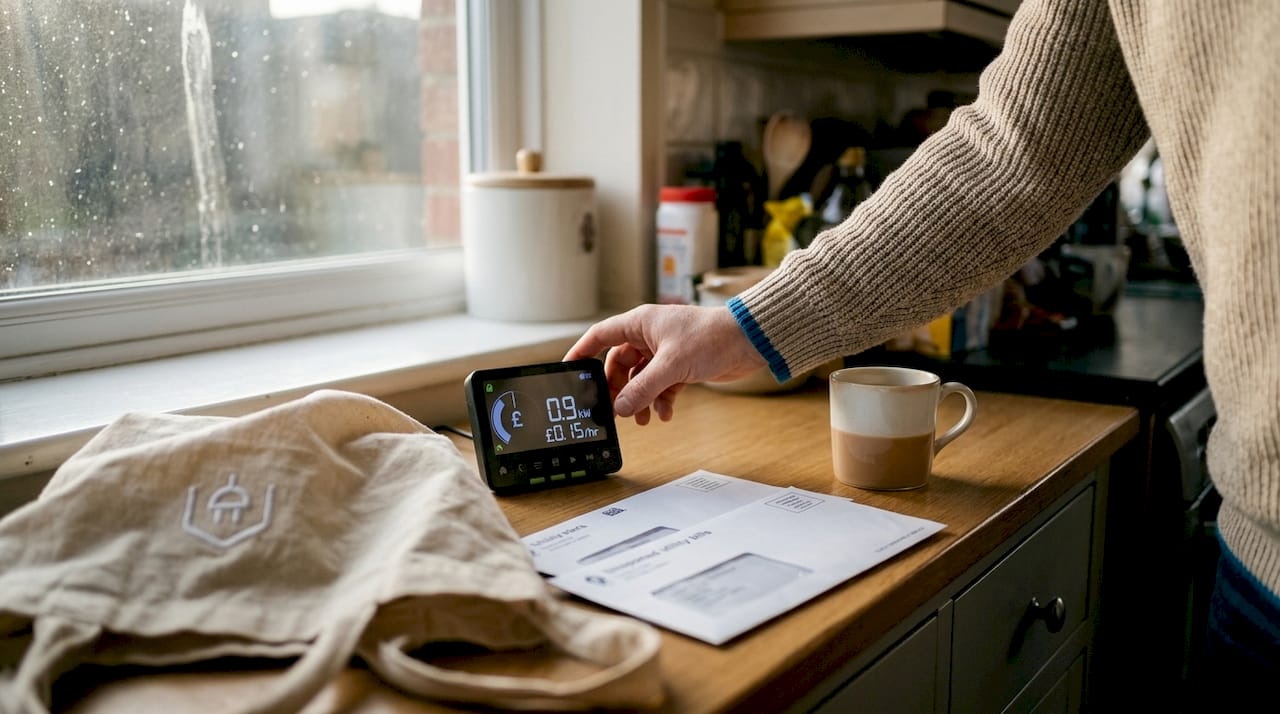
Smart meters are the logical first step. Installation is free through your energy supplier, and the in-home display shows exactly how much energy you are using and what it costs in real time. Smart meters enable real-time monitoring and open access to time-of-use tariffs, where electricity is cheaper during off-peak hours. Families with electric vehicles or storage heaters benefit most from these off-peak energy tariffs. For a full explanation of how these devices work, the how smart meters work guide covers the detail.
Appliance upgrades deliver long-term savings. When replacing white goods, always choose A-rated appliances. An A-rated fridge freezer uses roughly half the energy of a D-rated equivalent over its lifetime.
Smart plugs and timers eliminate standby losses. Many households waste £55 to £80 per year on appliances left on standby. Smart plugs allow you to schedule off periods automatically.
| Upgrade | Approximate cost | Estimated annual saving |
|---|---|---|
| Smart meter (free) | £0 | £50 to £100 via tariff switching |
| LED lighting (whole home) | £30 to £60 | £60 to £90 |
| Smart thermostat | £100 to £250 | £75 to £150 |
| A-rated fridge freezer | £400 to £700 | £50 to £100 |
| Smart plugs (set of 4) | £30 to £60 | £40 to £80 |
For families considering larger investments, the energy efficient home upgrades resource outlines which technologies deliver the best returns. The energy saving technologies guide is also useful for understanding how solar panels, heat pumps, and battery storage interact with your home’s existing systems.
- Request your free smart meter installation directly through your energy supplier’s website or app.
- Use your smart meter data to identify high-consumption periods and shift usage where possible.
- Consider a smart thermostat with room-by-room control for homes with multiple occupants.
Take advantage of grants and stay ahead of UK regulations
Government funding is available now, and acting early means accessing support before schemes close or change. Here is a summary of the key programmes families should know about in 2026.
| Scheme | Status | What it covers | Who qualifies |
|---|---|---|---|
| ECO4 | Ends 2026 | Insulation, heating upgrades | Low income, EPC D to G |
| Great British Insulation Scheme | Ends March 2026 | Loft and cavity wall insulation | EPC D to G, council tax bands A to D |
| Boiler Upgrade Scheme | Ongoing | £7,500 towards heat pumps | Owner-occupiers replacing fossil fuel boilers |
| Warm Homes Plan | From 2027 | Insulation, heat pumps, solar | Low-income households, £15bn total fund |
The Warm Homes Plan represents the largest single commitment to household energy efficiency in UK history. Backed by £15 billion, it targets low-income families and will fund insulation, heat pumps, and solar installations from 2027. Families who act now under ECO4 or the Great British Insulation Scheme may find they are better positioned to benefit from Warm Homes Plan funding when it launches.
“ECO4 ends in 2026 and the Great British Insulation Scheme closes in March 2026. Families who qualify should apply without delay.”
Key actions to take now:
- Check your EPC rating. Schemes like ECO4 require a rating of D to G for eligibility.
- Contact your local council for area-based grant schemes, which sometimes cover households that do not qualify for national programmes.
- Explore energy saving grants to find a consolidated view of what is available in England.
- Note the 2030 EPC C deadline for private rented properties and plan improvements in stages to spread costs.
The regulatory direction is clear. Homes that reach EPC C or above will be cheaper to run, easier to let, and more attractive to buyers. Getting there ahead of the deadline avoids the rush and often means better access to qualified installers.
Why thinking ‘fabric first’ really matters for families
There is a persistent tendency for households to focus on headline-grabbing technology, such as solar panels or heat pumps, before addressing the basics of how their home is built. This is understandable. New technology feels exciting and tangible. But it is also a costly mistake.
A heat pump installed in a poorly insulated home will run constantly, fail to reach target temperatures, and deliver disappointing savings. Solar panels on a draughty property will generate electricity that is largely wasted heating a leaky building. The insulation before heating upgrades principle is not just government guidance; it is the approach that consistently delivers the best outcomes in practice.
The fabric-first approach also has year-round benefits that are easy to overlook. A well-insulated, draught-proof home stays cooler in summer as well as warmer in winter, reducing the temptation to use fans or portable air conditioning units. For families with young children or elderly relatives, this consistency of indoor temperature carries real health benefits, not just financial ones. Prioritising fabric means every subsequent investment in technology or renewable energy performs better, costs less, and lasts longer.
Get expert help to take your next step
Taking action on energy efficiency is straightforward when you have the right information and support. At homeenergymodel.co.uk, families and property owners can access clear guidance on everything from understanding energy model types to navigating the home energy model explained methodology that will replace SAP from 2025. A professional energy assessment can identify savings that are not visible from an EPC alone, and it provides a clear compliance roadmap for the 2030 regulations. For a practical starting point, the energy saving tips 2025 guide offers actionable steps tailored to UK homes. Whether you are planning a single upgrade or a whole-house retrofit, expert guidance ensures every pound spent delivers maximum return.
Frequently asked questions
What is the cheapest way to improve my home’s energy rating?
Simple draught-proofing, installing loft insulation, and lowering your thermostat can raise your EPC and deliver immediate savings. Lowering your thermostat by 1°C alone saves between £80 and £145 per year.
Which energy-saving grants are best for families in 2026?
ECO4, the Great British Insulation Scheme, the Boiler Upgrade Scheme, and the upcoming Warm Homes Plan are the main options. The Warm Homes Plan will provide £15 billion from 2027 for low-income households covering insulation, heat pumps, and solar.
How do smart meters help families save energy?
Smart meters display real-time energy use and costs, helping households identify waste and shift consumption to cheaper periods. Real-time monitoring also enables access to off-peak tariffs that reduce electricity bills further.
What is the EPC C regulation and why does it matter for families?
From 2030, private rented homes must meet an EPC C equivalent standard, with a £10,000 cost cap per property. Acting early gives landlords and tenants more time to plan improvements and access available funding before deadlines arrive.
Recommended
- Home energy saving tips UK: cut bills by £1,200 yearly
- Top Energy Saving Steps for UK Homes: A Complete Guide – Home Energy Model
- Low-cost energy-saving tips for UK homes in 2026
- 7 Home Energy Quick Wins Every UK Property Owner Should Know
- Smart home energy tips: cut costs and save power
- Cut energy bill Archives – Alpha Solar Solutions, LLC