

UK rental properties must achieve EPC band C by October 2030, and the clock is already ticking for landlords and homeowners who have not yet started planning. Beyond compliance, energy efficient upgrades deliver real financial rewards: lower running costs, stronger rental yields, and measurable increases in property value. This guide sets out a clear, practical roadmap covering assessments, materials, costs, and the right sequence of improvements to help you meet the new standards and protect your investment for the long term.
Table of Contents
- Understanding the UK’s new energy efficiency standards
- The essential toolkit: Assessments, materials and costs
- Step-by-step: Energy efficient home upgrades that work
- Special cases and troubleshooting: Old, complex and listed homes
- How energy upgrades boost home value, comfort and the environment
- Take your next step towards an energy efficient home
- Frequently asked questions
Key Takeaways
| Point | Details |
|---|---|
| Focus on fabric-first | Start with insulation, draught-proofing, and efficient lighting for the best compliance and savings. |
| Plan upgrades by steps | Sequencing upgrades correctly prevents wasted investment and ensures new heating systems work efficiently. |
| Grants reduce costs | Check for government schemes like ECO4 or the Boiler Upgrade Scheme to lower your spend. |
| Home value rises | Enhancing your EPC rating can boost value, lower mortgage rates, and speed up sales or rentals. |
| Expert help matters | Professional assessments are crucial, especially for complex or listed properties, and minimise risk. |
Understanding the UK’s new energy efficiency standards
The EPC band C requirement is the most significant shift in UK property energy regulation in a generation. From October 2030, all rental properties in England and Wales must meet this standard, and owner-occupiers face growing pressure from mortgage lenders and buyers who increasingly prioritise energy performance.
From 2026, new EPCs use multi-metrics covering fabric efficiency, heating systems, and smart controls rather than a single score. This dual-metric approach means a property must perform well across all three dimensions, not just achieve a headline rating. A well-insulated home with an outdated boiler may still fall short under the new framework.
Current performance data reveals a mixed picture. The median EPC score in England is 69 (band C), while Wales sits at 68 (band D), and new dwellings reach a median of 84 (band B). Over 65% of local areas in England already reach band C or above, but a significant proportion of older stock still falls short. For landlords with pre-1980s properties, the gap between current performance and the 2030 target can be substantial.
Landlords should also note that spend caps and exemptions apply. Where the cost of reaching band C exceeds the permitted cap, a valid exemption can be registered. However, exemptions are time-limited and do not remove the obligation permanently. Understanding your energy upgrade priorities early is essential to avoid last-minute costs.
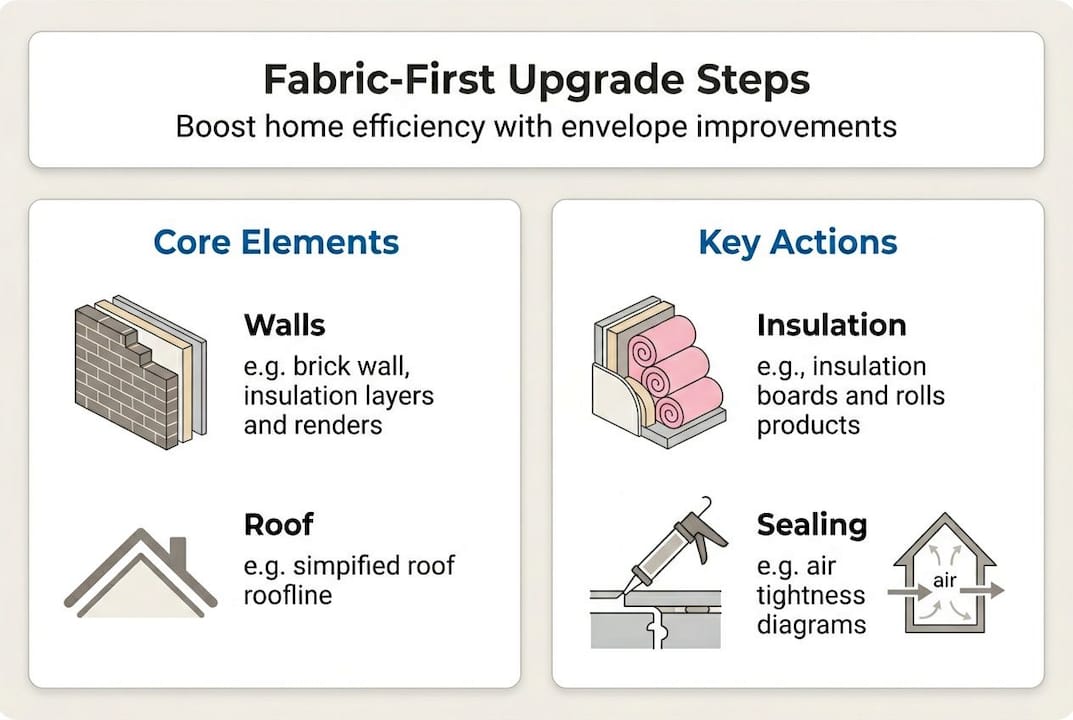
The fabric-first principle sits at the heart of the new standards. Improving the building envelope, walls, roof, floors, and windows, reduces heat loss before any heating system upgrade is considered. This approach is both more cost-effective and more durable, and it underpins the role of energy upgrades in achieving lasting compliance.
| EPC band | SAP score range | Typical property type |
|---|---|---|
| A | 92 to 100 | New build, Passivhaus |
| B | 81 to 91 | Post-2010 new build |
| C | 69 to 80 | Well-upgraded older stock |
| D | 55 to 68 | Average older property |
| E or below | Below 55 | Pre-1970s unimproved stock |
The essential toolkit: Assessments, materials and costs
Before any work begins, a valid EPC is the starting point. If your current certificate is more than a few years old, or if significant changes have been made to the property, commissioning a new assessment is strongly advisable. From 2026, the updated multi-metric format provides far more actionable data for upgrade planning.
For more complex properties, a full retrofit assessment by a PAS 2035 certified assessor is the gold standard. PAS 2035 is the British standard for domestic retrofit, and it requires a whole-house assessment before any significant energy improvement work begins. This prevents the common mistake of installing measures in the wrong order, which can cause damp, poor ventilation, or wasted expenditure.
The average cost to reach EPC C is around £7,480, with fabric improvements accounting for the majority of that spend. Eligible households can reduce this by 60 to 80% through available grants, making early action significantly more affordable.

| Upgrade measure | Typical cost | Average ROI |
|---|---|---|
| Loft insulation | £300 to £600 | 3 to 5 years |
| Cavity wall insulation | £500 to £1,500 | 3 to 8 years |
| Draught-proofing | £100 to £300 | Under 2 years |
| LED lighting | £50 to £200 | Under 1 year |
| Smart thermostat | £150 to £300 | 2 to 4 years |
| Air source heat pump | £7,000 to £13,000 | 8 to 15 years |
| Solar PV (3kW system) | £5,000 to £7,000 | 7 to 12 years |
Available government grants include:
- ECO4 (Energy Company Obligation): Targets low-income and fuel-poor households; covers insulation, heating, and ventilation upgrades at little or no cost to eligible applicants.
- Boiler Upgrade Scheme: Provides grants of up to £7,500 towards air source heat pumps and up to £7,500 for ground source heat pumps.
- Great British Insulation Scheme: Focuses on single insulation measures for a broader range of households, including those in bands D to G.
- Local authority flex funding: Some councils offer additional top-up grants for hard-to-treat properties.
Pro Tip: If you are already planning a roof replacement, loft conversion, or extension, schedule your insulation and airtightness upgrades at the same time. Combining works reduces labour costs considerably and minimises disruption to tenants or occupants. Explore the full range of energy efficient upgrades available to property owners before committing to a single measure.
Step-by-step: Energy efficient home upgrades that work
A structured, sequenced approach delivers the best results. Rushing to install a heat pump in a poorly insulated property wastes money and may not achieve the EPC rating required. Follow this order for maximum impact.
- Commission a current EPC and retrofit assessment. Establish your baseline rating and identify the specific measures needed. A PAS 2035 assessor will produce a medium-term improvement plan tailored to your property.
- Insulate first. Loft and cavity wall insulation deliver 15 to 25% energy savings, with payback periods of 3 to 8 years and costs from £500 to £1,500. Each measure can add approximately one EPC band on its own.
- Seal draughts and upgrade lighting. Draught-proofing doors, windows, and floorboards is low-cost and high-impact. Replacing all remaining halogen or fluorescent fittings with LED reduces lighting energy use by up to 80%. See the full lighting upgrades guide for a room-by-room breakdown.
- Install thermostatic radiator valves and smart controls. Thermostatic radiator valves (TRVs) allow room-by-room temperature control, cutting waste in unused spaces. A smart thermostat adds scheduling and remote control, typically saving 10 to 15% on heating bills.
- Upgrade the heating system. Only after fabric improvements are complete should you consider a new boiler or low-carbon heating. Heat pumps are suitable for 93 to 99% of homes, but they perform best in well-insulated properties. Review the key heat pump considerations before specifying a system.
- Add solar PV and battery storage. Solar panels reduce grid electricity consumption and, combined with a battery, can shift usage to off-peak periods. This is particularly valuable for heat pump owners, as it offsets running costs.
“Poorly sequenced retrofits are one of the most common and costly mistakes in domestic energy improvement. Always complete fabric upgrades before installing low-carbon heating, and always use a PAS 2035 certified installer to protect both the building and your investment.”
Pro Tip: When upgrading a property between tenancies, combine as many measures as possible in a single mobilisation. This reduces the number of contractor visits, cuts overall costs, and avoids repeated disruption. A coordinated step-by-step home upgrades plan makes this straightforward.
Special cases and troubleshooting: Old, complex and listed homes
Not every property follows a straightforward upgrade path. Solid wall homes, listed buildings, and off-gas properties each present specific challenges that require careful handling.
Solid wall homes need internal or external insulation, both of which are more expensive and disruptive than cavity wall insulation. Internal insulation reduces room dimensions slightly, while external insulation changes the appearance of the building. Listed buildings require professional advice before any insulation or airtightness work, as unauthorised alterations can breach planning conditions and cause irreversible damage to historic fabric.
Off-gas properties, those not connected to the mains gas network, may qualify for exemptions under certain grant schemes and face different upgrade pathways. Heat pumps are often the most practical low-carbon heating solution for these homes, but fabric upgrades must come first.
Common mistakes to avoid include:
- Installing insulation without adequate ventilation, which leads to condensation and mould growth.
- Using inappropriate products on historic masonry, which can trap moisture and cause structural decay.
- Skipping a professional assessment and relying solely on a basic EPC recommendation.
- Failing to notify building control for notifiable works, which can affect insurance and resale.
“Poorly executed retrofits risk damp and structural issues. Always use a PAS 2035 certified installer and commission a RICS retrofit assessor for complex or historic properties.”
For properties with unusual construction or heritage constraints, the efficient upgrade strategies available will differ from standard approaches. Professional guidance is not optional in these cases; it is essential.
How energy upgrades boost home value, comfort and the environment
The financial case for energy upgrades extends well beyond compliance. Upgrading by two EPC bands adds approximately £4,000 to a property’s market value on average. Properties rated A or B also attract green mortgage products from major lenders, which offer lower interest rates and can improve affordability for buyers.
Energy efficient homes rent and sell faster. Tenants increasingly factor running costs into their rental decisions, and buyers are more aware than ever of the long-term cost of an inefficient property. A strong EPC rating is now a genuine competitive advantage in both the sales and lettings markets.
The measurable benefits of a fully upgraded home include:
- Annual bill savings of £500 to £1,500 depending on the measures installed and the property’s starting point.
- CO2 emissions reductions of 1 to 3 tonnes per year for a typical semi-detached home.
- Improved thermal comfort year-round, reducing cold spots, draughts, and overheating in summer.
- Reduced maintenance costs as modern heating systems and well-sealed envelopes require less reactive repair.
The long-term vision is compelling. A fully upgraded home with solar, battery, heat pump, and full insulation can achieve annual energy bills of just £430 and save 3.7 tonnes of CO2 compared to a typical property. That is not a distant aspiration; it is an achievable outcome for most UK homes with the right sequenced investment. Practical guidance on lowering bills with upgrades can help property owners map out the financial journey.
Take your next step towards an energy efficient home
Planning energy efficient upgrades is far more straightforward with the right resources and expert support. At homeenergymodel.co.uk, you will find detailed guides covering everything from the energy saving technologies available to UK property owners, to a full explanation of home energy models for landlords and how they inform upgrade decisions. Whether you are starting with a single measure or planning a whole-house retrofit, the home energy model explained resource provides the technical grounding needed to make informed choices. Use the site’s checklists and assessment tools to identify your property’s current position and map the most cost-effective route to band C and beyond.
Frequently asked questions
What are the most cost-effective upgrades for EPC band C?
Insulation, draught-proofing, and LED lighting offer the highest return on investment and the fastest payback periods, and they should always be completed before any heating system upgrade is considered.
Are there grants available for energy efficient upgrades in the UK?
Yes. Schemes such as ECO4 and the Boiler Upgrade Scheme can reduce upgrade costs by 60 to 80% for eligible households, making early action significantly more affordable.
Do I need a new EPC for upgrade planning in 2026?
It is strongly recommended. New EPCs from 2026 use multi-metrics covering fabric, heating, and smart controls, which are essential for accurate compliance planning even if your existing certificate is still valid.
What if my property is listed or has solid walls?
Listed buildings require professional advice before any retrofit work, and solid wall homes need bespoke insulation solutions. Some properties may qualify for legal exemptions where standard measures are not feasible.
Will energy efficient upgrades really add value to my home?
Upgrading by two EPC bands adds around £4,000 in value on average and makes the property more attractive to both buyers and renters, particularly as energy costs remain a key concern for occupants.