

Nearly 19 million British homes receive new energy performance ratings each year, yet many still rely on outdated assessment methods. With the United Kingdom shifting toward more advanced energy models, understanding these changes matters for every homeowner and property stakeholder. This overview breaks down how modern computational frameworks are set to transform energy analysis in British households, giving you the knowledge to interpret and act on your next energy certificate with confidence.
Table of Contents
- Defining Energy Models in UK Homes
- Comparing SAP and the Home Energy Model
- How Energy Models Shape EPC Ratings
- Legal and Regulatory Standards for Energy Assessment
- Implications for Homeowners, Landlords, and Investors
Key Takeaways
| Point | Details |
|---|---|
| Transition to Home Energy Model (HEM) | HEM will replace the Standard Assessment Procedure (SAP) in 2025, providing dynamic half-hourly simulations for better analysis of energy consumption. |
| Enhanced Energy Performance Certificates (EPCs) | HEM will result in more accurate EPCs, reflecting real-world energy performance and influencing property values and investment potential. |
| Regulatory Compliance Changes | The introduction of HEM necessitates more rigorous energy performance assessments, impacting property developers and requiring adaptation to new methodologies. |
| Strategic Value for Stakeholders | Homeowners, landlords, and investors must proactively adapt energy strategies to enhance property value and meet net zero targets effectively. |
Defining Energy Models in UK Homes
Energy models represent sophisticated computational frameworks designed to simulate and analyse energy consumption patterns within residential properties. The United Kingdom is currently transitioning towards a more advanced methodology known as the Home Energy Model (HEM), which represents a significant leap forward in understanding domestic energy performance. Modelled energy consumption in housing provides detailed insights into how these computational systems work.
The Home Energy Model, scheduled to replace the Standard Assessment Procedure (SAP) in 2025, delivers a half-hourly dynamic simulation that tracks energy use, carbon emissions, and running costs with unprecedented precision. Energy simulation in housing reveals that this approach allows for more granular analysis of residential energy consumption, enabling property owners and policymakers to make more informed decisions about energy efficiency.
Key characteristics of modern energy models include their ability to account for complex variables such as building fabric, heating systems, occupant behaviour, and environmental conditions. These models use advanced algorithms to predict energy performance, helping stakeholders understand potential improvements and carbon reduction strategies. The UK government’s commitment to developing the Home Energy Model demonstrates a strategic approach to supporting the national transition towards net zero emissions.
Pro Tip: Research your property’s specific energy characteristics before implementing efficiency measures, as individual building performance can vary significantly from general models.
Comparing SAP and the Home Energy Model
The Standard Assessment Procedure (SAP) has long been the primary methodology for assessing residential energy performance in the United Kingdom. However, the upcoming Home Energy Model (HEM) represents a significant technological advancement that addresses many limitations of the traditional SAP approach. SAP calculations in London demonstrate the evolving landscape of energy performance assessment.
While SAP provides a static annual assessment of energy efficiency, the Home Energy Model introduces a half-hourly dynamic simulation that captures more nuanced energy consumption patterns. This approach allows for a more granular understanding of how properties consume energy, accounting for variables such as occupant behaviour, detailed heating system performance, and intermittent energy usage that SAP traditionally overlooked. The transition reflects a more sophisticated approach to understanding domestic energy consumption, moving from a simplified annual calculation to a comprehensive, time-resolved analysis.
Key differences between SAP and the Home Energy Model include the depth of analysis, temporal resolution, and predictive capabilities. The HEM offers more precise carbon emission calculations, considers more complex interactions between building systems, and provides a more realistic representation of actual energy performance. This shift is particularly crucial as the United Kingdom moves towards its net zero emissions targets, requiring more accurate and detailed energy performance assessments that can inform both policy-making and individual home improvement strategies.
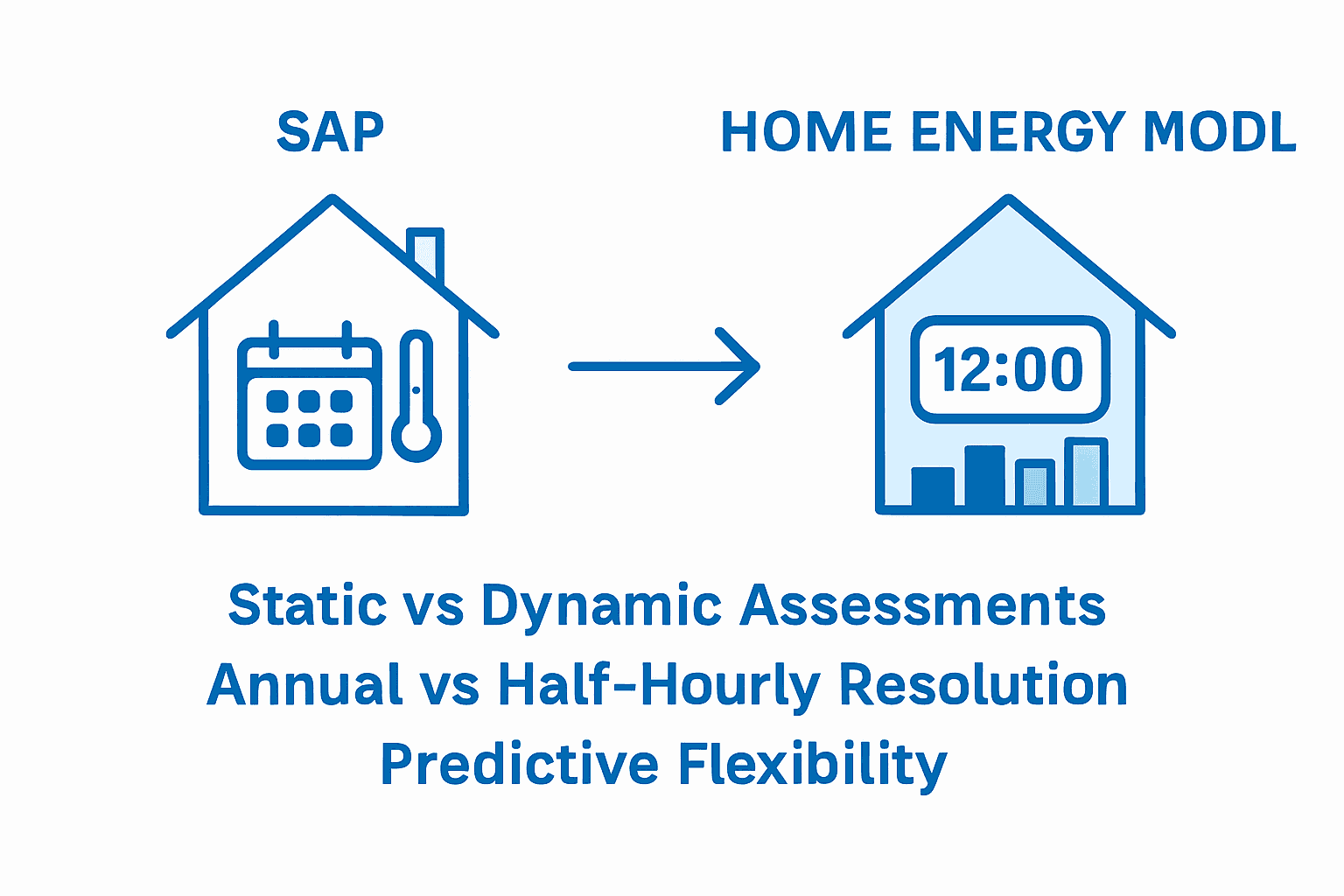
To better understand the evolution in home energy assessment, see how the SAP and Home Energy Model differ across key aspects:
| Aspect | SAP (Standard Assessment Procedure) | Home Energy Model (HEM) |
|---|---|---|
| Simulation Frequency | Annual, static calculation | Half-hourly, dynamic simulation |
| Variables Considered | Limited to standard assumptions | Includes occupant behaviour and system interactions |
| Output Detail | Broad, generalised estimates | Granular, time-specific insights |
| Predictive Capability | Basic scenario modelling | Advanced, data-driven forecasts |
| Reflects Real Usage | Simplified, not time-resolved | Closely mirrors real-world patterns |
Pro Tip: When comparing energy performance methodologies, focus on the granularity and comprehensiveness of the assessment rather than just the final numerical rating.
How Energy Models Shape EPC Ratings
Energy Performance Certificates (EPCs) are about to undergo a significant transformation with the introduction of the Home Energy Model (HEM). UK home energy labelling reveals the critical changes ahead, highlighting how advanced computational models will reshape energy efficiency assessments for residential properties. The HEM represents a more sophisticated approach to understanding and rating a property’s energy performance, moving beyond traditional static calculations.

The new energy modelling methodology introduces half-hourly dynamic simulations that capture intricate energy consumption patterns with unprecedented precision. Unlike previous assessment methods, the Home Energy Model considers complex variables such as occupant behaviour, heating system interactions, and intermittent energy usage. These detailed insights mean EPC ratings will become more reflective of real-world energy performance, providing homeowners and potential buyers with a more accurate representation of a property’s true energy efficiency.
Key innovations in the Home Energy Model will fundamentally alter how EPC ratings are determined. The model integrates advanced algorithms that account for emerging low-carbon technologies, building fabric characteristics, and detailed system interactions. This approach supports the United Kingdom’s net zero emissions targets by creating a more comprehensive framework for understanding residential energy consumption. Property owners can expect more nuanced and actionable ratings that not only indicate current performance but also suggest potential improvements and technological interventions.
Pro Tip: Request a comprehensive energy assessment that goes beyond traditional EPC ratings, focusing on detailed performance insights and potential efficiency improvements.
Legal and Regulatory Standards for Energy Assessment
The United Kingdom’s energy assessment landscape is experiencing significant regulatory transformation with the introduction of the Home Energy Model (HEM). UK building regulations energy demonstrates the comprehensive approach to standardising energy performance evaluations across residential properties. The new regulatory framework aims to provide a more robust and precise methodology for assessing building energy efficiency, directly supporting the nation’s ambitious net zero emissions targets.
The Home Energy Model will replace the existing Standard Assessment Procedure (SAP) version 10.2, introducing a more dynamic and comprehensive approach to energy performance assessment. This regulatory shift means that new dwellings will be required to demonstrate compliance through more sophisticated half-hourly simulations that capture intricate energy consumption patterns. The approach goes beyond traditional static calculations, considering complex variables such as occupant behaviour, heating system interactions, and technological innovations in low-carbon building design.
Legal compliance under the new standards will involve more rigorous documentation and more nuanced energy performance evaluations. Property developers, architects, and homeowners will need to adapt to a more detailed assessment process that provides deeper insights into energy efficiency. The regulatory changes align with the Future Homes Standard, creating a comprehensive framework that supports sustainable building practices and helps track progress towards national environmental commitments. This represents a significant step in transforming how the United Kingdom approaches residential energy performance and carbon reduction strategies.
Pro Tip: Stay proactively informed about changing energy assessment regulations by regularly consulting official government resources and professional energy compliance networks.
Implications for Homeowners, Landlords, and Investors
The introduction of the Home Energy Model (HEM) represents a transformative moment for property stakeholders across the United Kingdom. Energy efficiency benefits for UK property owners highlight the profound impact these changes will have on residential property management and investment strategies. The new methodology will fundamentally reshape how energy performance is evaluated, offering more sophisticated insights that directly influence property valuations, rental potential, and long-term investment decisions.
For homeowners and landlords, the HEM introduces a more granular assessment of energy consumption that goes beyond traditional static ratings. This means property owners will receive more comprehensive information about their building’s energy performance, including detailed half-hourly simulations that capture complex variables like occupant behaviour and heating system interactions. The implications are significant: more accurate Energy Performance Certificates (EPCs) could potentially impact property market values, with more energy-efficient properties likely to command premium prices and attract environmentally conscious tenants.
Investors and property developers will need to adapt their strategies to align with the new regulatory landscape. The Home Energy Model supports the United Kingdom’s net zero emissions targets by providing a more robust framework for understanding and improving residential energy performance. This shift will likely accelerate the market for energy-efficient retrofitting, create new opportunities for sustainable property development, and potentially introduce more nuanced financial products that reward energy-efficient building practices. Property portfolios will increasingly be evaluated not just on their current performance, but on their potential for future energy optimisation.
The following table clarifies how the new Home Energy Model impacts various UK property stakeholders:
| Stakeholder | Impact of HEM | Strategic Consideration |
|---|---|---|
| Homeowners | More accurate EPCs; better-targeted upgrades | Assess property needs proactively |
| Landlords | Potential for higher rental premiums | Improve energy ratings early |
| Investors | Enhanced property valuation accuracy | Focus on future-proof developments |
| Developers | More rigorous compliance requirements | Integrate advanced technologies in plans |
Pro Tip: Proactively invest in energy efficiency improvements before mandatory regulations take effect, as early adopters are likely to benefit from increased property values and reduced long-term operational costs.
Prepare Your Property for the Future of Energy Assessment
The transition from SAP to the Home Energy Model presents a challenge for homeowners, landlords, and investors striving to understand their property’s true energy performance. This shift demands a deeper grasp of dynamic energy simulations, occupant behaviour, and interactions within heating systems — complexities that can feel overwhelming. If you want to stay ahead and make confident decisions about improving energy efficiency, it is essential to access reliable information and practical guidance.
homeenergymodel.co.uk is your dedicated resource designed to help you navigate this evolving landscape. From understanding how the new methodology impacts EPC ratings to comprehending regulatory changes with the Future Homes Standard, the website offers clear insights and actionable advice to empower you. Don’t wait until the new standards take effect — discover how you can optimise your energy performance and increase property value today.
Explore key changes in SAP calculations in London and learn about UK home energy labelling to get detailed knowledge that will give you a competitive advantage.
Seize the opportunity to prepare your property for 2025 and beyond. Visit homeenergymodel.co.uk now for expert guidance and start transforming your approach to energy assessment.
Frequently Asked Questions
What is the Home Energy Model (HEM)?
The Home Energy Model (HEM) is an advanced energy assessment framework that will replace the Standard Assessment Procedure (SAP) in 2025, providing half-hourly dynamic simulations to analyse energy consumption patterns more accurately in residential properties.
How does the Home Energy Model differ from the Standard Assessment Procedure (SAP)?
The HEM offers a dynamic half-hourly simulation capturing nuanced energy consumption, while SAP provides a static annual assessment. This allows HEM to consider complex variables like occupant behaviour and heating system performance for a more realistic energy performance evaluation.
What impact will the Home Energy Model have on Energy Performance Certificates (EPCs)?
The introduction of the HEM will lead to more accurate EPC ratings by reflecting real-world energy performance through detailed simulations, considering factors such as occupant behaviour and low-carbon technologies, ultimately supporting better-informed property evaluations.
How should homeowners prepare for the transition to the Home Energy Model?
Homeowners should research their property’s specific energy characteristics and consider potential energy efficiency improvements prior to the transition, as more accurate assessments may influence property values and compliance with new regulations.