

Many landlords assume fuel switching is optional or overly expensive. In reality, oil and solid fuel heating systems will be banned in rental properties from 2026 unless exceptions apply. This guide explains what fuel switching is, how it supports compliance with tightening regulations, and why it delivers both cost savings and environmental benefits.
Table of Contents
- Introduction To Fuel Switching In UK Properties
- Fuel Switching’s Role In Energy Performance And EPC Ratings
- Regulatory Framework And Compliance Requirements
- Economic And Environmental Impacts Of Fuel Switching
- Comparison Of Fuel Types For Switching
- Common Misconceptions And Practical Challenges
- Practical Steps For Landlords To Implement Fuel Switching
- Discover Expert Resources On Home Energy Models For Landlords
- Frequently Asked Questions
Key takeaways
| Point | Details |
|---|---|
| Legal requirement | Fuel switching is mandatory for most UK rental properties by 2028 under MEES regulations. |
| Emissions reduction | Switching to heat pumps can reduce carbon emissions by up to 80% compared to oil heating. |
| Financial support | The Boiler Upgrade Scheme and other grants help offset high installation costs. |
| EPC impact | Fuel type significantly affects EPC ratings under the Home Energy Model, with heat pumps improving bands. |
| Planning challenges | Building insulation quality and upfront costs require careful evaluation before switching. |
Introduction to fuel switching in UK properties
Fuel switching means replacing high-carbon heating fuels with cleaner, lower-carbon alternatives. For UK landlords, this involves transitioning from traditional systems like oil or coal boilers to modern options such as heat pumps or natural gas.
Common fuel types include:
- Oil boilers (high emissions, widely used in rural areas)
- Natural gas (moderate emissions, common in urban properties)
- Heat pumps powered by electricity (lowest emissions, requires good insulation)
- Biomass systems (renewable but complex installation)
The UK government prioritises fuel switching to achieve net zero targets and raise energy performance standards. Tightening Minimum Energy Efficiency Standards (MEES) and the Future Homes Standard make fuel switching essential for rental compliance.
Understanding the mechanics and benefits of fuel switching helps you manage regulatory risks whilst improving property performance. The shift affects not only heating costs but also your EPC rating, tenant satisfaction, and long-term property value.
Fuel switching’s role in energy performance and EPC ratings
Your heating fuel directly influences Energy Performance Certificate (EPC) ratings under the Home Energy Model (HEM). Different fuels carry distinct carbon factors and efficiency profiles that energy models in UK homes use to calculate performance scores.
- Switching from oil or coal to heat pumps can raise EPC ratings by at least one band, often moving properties from band D to C.
- Heat pumps reduce both energy consumption and carbon emissions substantially compared to fossil fuel systems.
- Improved EPC ratings help you meet the 2028 MEES requirement for band C in rental properties.
- Higher EPC bands boost property marketability and can support premium rental rates.
- Understanding fuel impact on EPCs allows you to prioritise upgrades strategically and budget effectively.
The home energy model explained shows how fuel type interacts with building fabric, insulation, and system efficiency. Properties with poor insulation may see smaller EPC improvements from fuel switching alone. Combining fuel changes with fabric upgrades delivers the strongest performance gains.
Pro Tip: Request a detailed EPC assessment before committing to fuel switching to identify which combination of upgrades delivers the best rating improvement for your budget.
Regulatory framework and compliance requirements
UK rental properties face strict legal obligations around heating fuel choices. MEES requires private rented properties to reach EPC band C by 2028, and fuel type plays a major role in achieving this standard.
Key regulatory points include:
- New installations of oil and solid fuel heating systems are banned from 2026 in rental properties unless specific exemptions apply
- Properties failing to meet MEES face financial penalties and cannot legally be rented
- The Future Homes Standard will require new builds to install low-carbon heating from 2025 onwards
- Enforcement includes fines up to £5,000 and publication on public registers
Landlords who fail to upgrade heating systems by regulatory deadlines risk losing rental income and facing enforcement action that damages their professional reputation.
You must plan fuel switching timelines carefully to meet compliance deadlines. The 2026 ban on new fossil fuel installations means replacement heating systems must be low-carbon. Properties currently using oil or coal should begin transition planning now to avoid last-minute disruption and higher costs.
Economic and environmental impacts of fuel switching
Fuel switching involves significant upfront investment but delivers long-term savings and environmental benefits. Understanding the full cost-benefit picture helps you make informed decisions.

| Fuel Type | Installation Cost | Carbon Reduction vs Oil | Operating Cost |
|---|---|---|---|
| Heat pump | £8,000-£14,000 | 75-80% lower | Variable, depends on electricity prices |
| Natural gas | £2,000-£3,500 | 44% lower | Generally lower than oil |
| Biomass | £9,000-£21,000 | 80-90% lower (if sustainable) | Moderate, fuel costs vary |
Heat pumps reduce carbon emissions by up to 80% compared to oil heating, with natural gas offering around 44% reduction. Operational savings depend heavily on energy prices, property insulation, and system efficiency.
Government grants such as the Boiler Upgrade Scheme provide £5,000-£6,000 towards heat pump installations, significantly reducing financial barriers. These incentives improve return on investment and accelerate payback periods.
Environmental benefits align directly with the UK’s net zero carbon targets. Properties with lower emissions contribute to national climate goals whilst potentially attracting environmentally conscious tenants.
Pro Tip: Apply for government grants early in your planning process to secure funding before budget allocations run out, reducing your upfront costs substantially.
Comparison of fuel types for switching
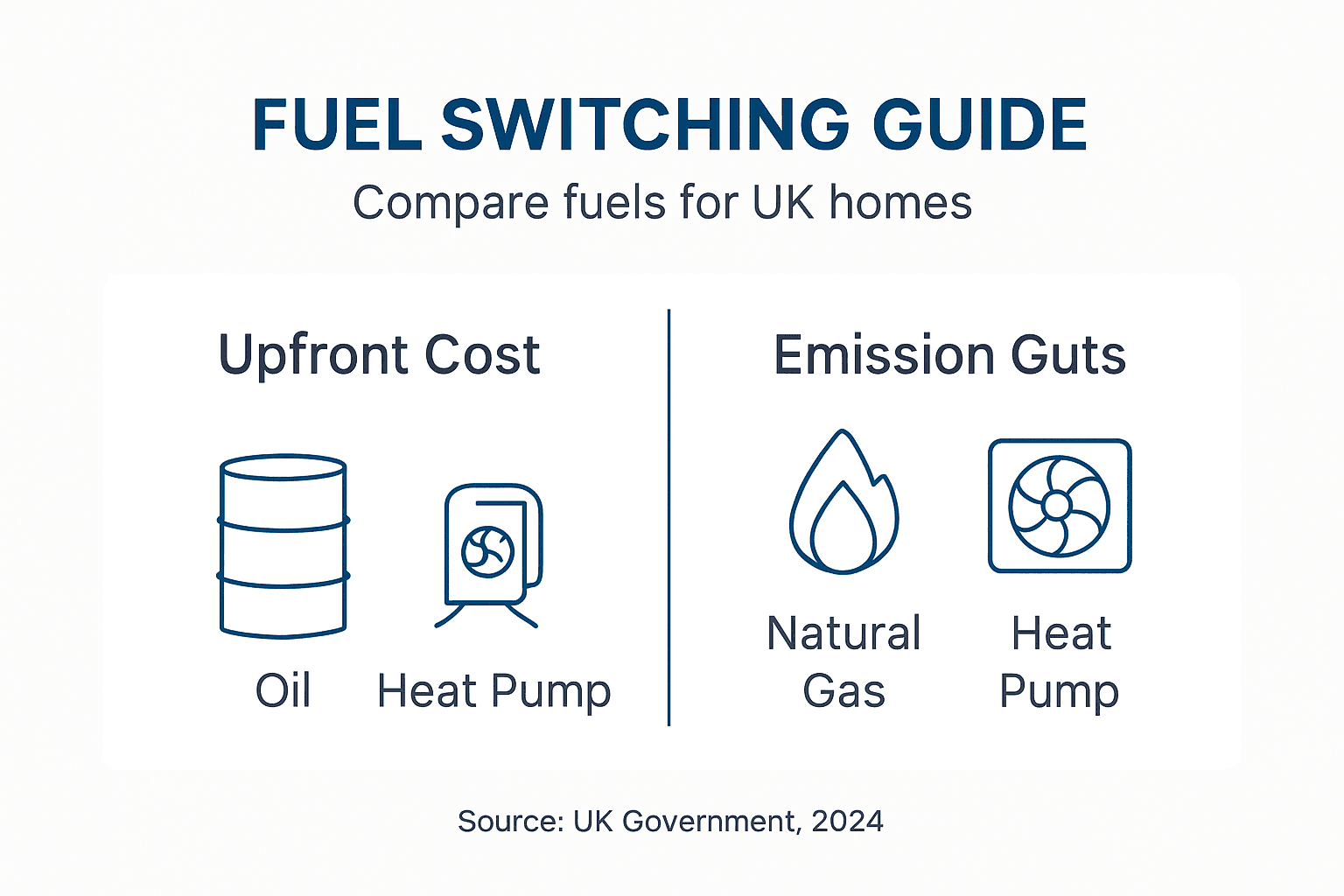
Choosing the right fuel requires balancing emissions, costs, compliance status, and property suitability. Each option presents distinct advantages and limitations.
| Fuel Type | Carbon Emissions | Compliance Status | Best For |
|---|---|---|---|
| Oil | Highest (280g CO2/kWh) | Non-compliant for new installs post-2026 | Properties awaiting switch |
| Natural gas | Moderate (210g CO2/kWh) | Currently compliant but less futureproof | Urban properties with gas connection |
| Heat pump | Lowest (30-90g CO2/kWh) | Fully compliant, preferred option | Well-insulated properties |
| Biomass | Variable (20-80g CO2/kWh) | Compliant if sustainable fuel used | Rural properties, space available |
Key considerations:
- Oil heating faces the strictest regulatory phase-out and highest emissions
- Natural gas offers easier transition but may face future restrictions
- Heat pumps require good building fabric and insulation to operate efficiently
- Biomass needs storage space and regular fuel deliveries
Your property’s insulation quality, available space, and existing infrastructure determine which fuel works best. Properties with poor insulation should prioritise fabric improvements before installing heat pumps to ensure efficient operation.
Common misconceptions and practical challenges
Several myths about fuel switching create confusion for landlords. Addressing these misconceptions helps you plan transitions realistically.
Common misconceptions include:
- Fuel switching always reduces bills immediately (reality: savings depend on energy prices and system efficiency)
- Natural gas is the lowest carbon option (reality: heat pumps produce significantly fewer emissions)
- Fuel switching is optional for rental properties (reality: mandatory for properties using oil or coal from 2026)
- All properties suit heat pumps equally (reality: building fabric quality critically affects performance)
Practical barriers you may face:
- High upfront installation costs, especially for heat pumps
- Complex grant application processes requiring documentation and waiting periods
- Need for building fabric improvements before heat pump installation
- Limited installer availability in some regions
- Disruption to tenants during installation work
Pro Tip: Commission a full property survey including insulation assessment before selecting your replacement fuel to avoid choosing a system unsuitable for your building’s current condition.
Practical steps for landlords to implement fuel switching
Successful fuel switching requires methodical planning and execution. Following these steps helps you manage the transition smoothly whilst meeting compliance deadlines.
- Assess your current heating system and fuel type to understand baseline performance and regulatory status.
- Evaluate building fabric and insulation levels to determine heating system suitability, especially for heat pumps.
- Research low-carbon fuel options considering installation costs, operating expenses, and compliance requirements.
- Explore government incentives including the Boiler Upgrade Scheme and local authority grants to reduce financial burden.
- Schedule installation with MCS-certified professionals who meet industry standards and warranty requirements.
- Plan timelines to complete work before the 2028 MEES deadline, allowing buffer time for unexpected issues.
Early planning gives you negotiating power with installers and better access to grant funding. Properties requiring multiple upgrades should prioritise energy upgrades strategically, often starting with insulation before heating system replacement.
Document all work thoroughly for EPC reassessment and compliance records. Proper planning transforms fuel switching from a regulatory burden into an opportunity to enhance property performance and value.
Discover expert resources on home energy models for landlords
Navigating fuel switching and energy performance requirements becomes easier with specialist guidance. Our website offers comprehensive resources designed specifically for UK landlords facing these challenges.
Explore detailed guides on types of home energy models to understand how different assessment methodologies affect your compliance strategy. Learn how the home energy model explained impacts UK property standards and shapes regulatory requirements.
Access expert advice on home heating system options to support informed fuel switching decisions. Our resources combine technical accuracy with practical implementation guidance, helping you meet obligations whilst maximising property performance and investment returns.
Frequently asked questions
What is fuel switching and why is it important for UK landlords?
Fuel switching involves replacing high-carbon heating fuels like oil or coal with lower-carbon alternatives such as heat pumps or natural gas. It’s legally required for rental properties under MEES regulations and significantly improves EPC ratings, helping you meet the 2028 compliance deadline whilst reducing environmental impact.
How does fuel switching affect my property’s EPC rating?
Switching to low-carbon fuels like heat pumps typically improves EPC ratings by at least one band, often moving properties from D to C. High-carbon fuels like oil lower energy performance scores substantially, making compliance with MEES band C requirements difficult without fuel changes.
Are there financial supports available for switching fuels?
Yes, the Boiler Upgrade Scheme provides grants of £5,000-£6,000 for heat pump installations, substantially reducing upfront costs. Local authorities may offer additional support programmes, and early applications improve your chances of securing funding before budget allocations are exhausted.
What are the common challenges in implementing fuel switching?
Major challenges include high installation costs for heat pumps, ensuring adequate building insulation for system efficiency, and navigating complex grant applications. Rural properties may face limited installer availability, whilst tenant coordination during installation requires careful planning to minimise disruption.
When must I complete fuel switching to comply with regulations?
New installations of oil and solid fuel heating are banned from 2026 in rental properties. All private rentals must achieve EPC band C by 2028 under MEES, making fuel switching essential for properties currently rated below this threshold and using high-carbon heating systems.
Recommended
- Top Energy Saving Steps for UK Homes: A Complete Guide – Home Energy Model
- Energy Use Reduction Explained: UK Strategies and Impact
- How to Switch Energy Supplier UK for Maximum Savings
- 7 Eco-Friendly Home Heating Alternatives for UK Homes
- Energy Saving for Homes: Step-by-Step Guide to Slash Costs | ReVroom
- 7 Smart Energy-Efficient Home Improvements for Homeowners – Astrotech Construction