

Many UK landlords mistakenly believe energy modelling is optional paperwork rather than a critical tool for compliance and profitability. With MEES requiring EPC Band C by October 2030 and the Home Energy Model replacing SAP from 2027, understanding energy modelling has become essential for every property owner. Energy modelling helps you meet regulations, reduce energy costs, and increase property value through targeted upgrades. This guide explains why energy modelling matters and how it transforms your property management strategy.
Table of Contents
- Key takeaways
- Understanding energy modelling and upcoming UK regulations
- How the home energy model improves accuracy and practical benefits
- Limitations and special considerations in energy modelling
- Applying energy modelling for cost savings and regulatory readiness
- Explore expert energy modelling solutions for your property
- What is energy modelling and why is it important for UK landlords?
Key Takeaways
| Point | Details |
|---|---|
| MEES deadline | Energy modelling becomes mandatory by October 2030 to avoid penalties and secure legal lets. |
| HEM replaces SAP | From 2027 the Home Energy Model will replace SAP for EPC assessments, delivering more sophisticated analysis. |
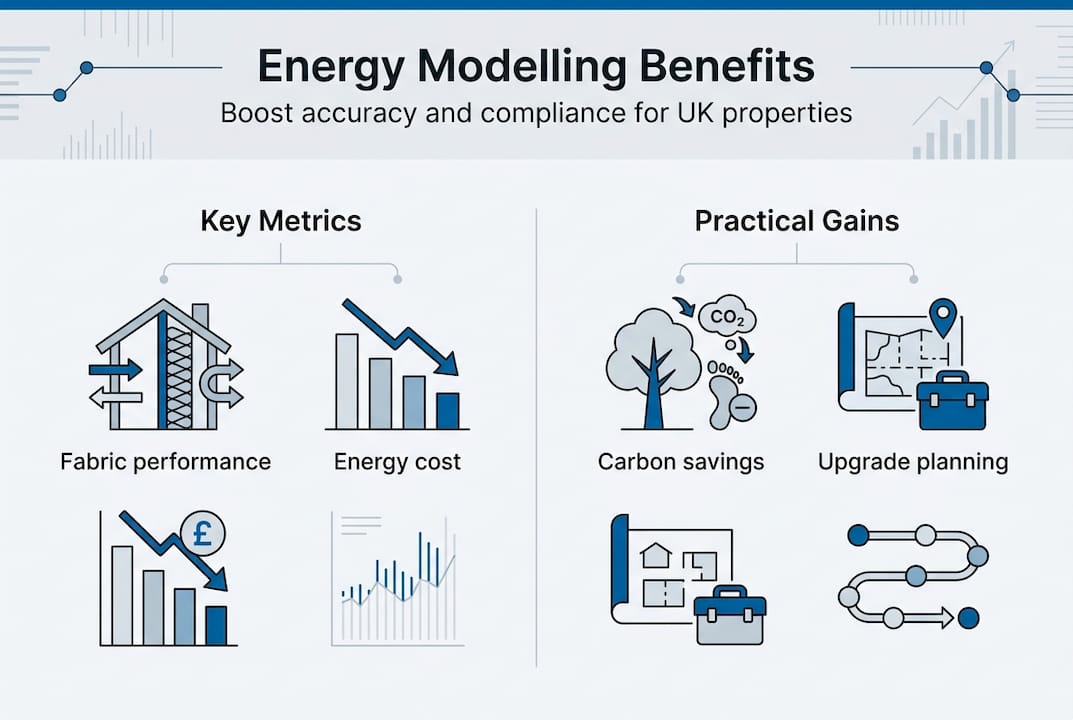
| Four core metrics | HEM uses four metrics, energy cost, fabric performance, heating system efficiency and smart technology, to target upgrades effectively. |
| Heritage data limits | For older properties and some heating systems measured data may be required to meet accuracy expectations. |
Understanding energy modelling and upcoming UK regulations
Energy modelling assesses how your property uses energy by simulating heat loss, ventilation, heating systems, and renewable technology. It produces an Energy Performance Certificate rating that determines whether your property meets legal standards. From 2027, the Home Energy Model will replace SAP for official EPC assessments, bringing more sophisticated analysis to property energy performance.
The Minimum Energy Efficiency Standards regulation demands EPC Band C for rental properties by October 2030, with a £10,000 cap on required improvements per property. Properties failing to meet this standard cannot be legally let, creating significant financial and operational consequences for landlords. Understanding energy performance explained UK standards helps you prepare effectively.
HEM introduces four crucial metrics that reshape how we assess properties:
- Energy cost rating reflecting actual household bills
- Fabric performance measuring insulation and air tightness
- Heating system efficiency rating
- Smart technology integration assessment
These metrics provide granular insight into where your property loses energy and which upgrades deliver maximum impact. Unlike previous methods, HEM accounts for modern heating technologies, renewable systems, and smart controls that many landlords have already installed. The energy performance reforms UK framework recognises that properties with heat pumps, solar panels, and battery storage require more nuanced assessment than older methodologies offered.
“HEM’s four metrics create a comprehensive picture of property performance, enabling landlords to target upgrades strategically rather than guessing which improvements matter most.”
Landlords who understand and adopt energy modelling now gain competitive advantage. You can plan upgrades systematically, budget accurately, and avoid last-minute panic as the 2030 deadline approaches. Properties with better energy ratings command higher rents, attract quality tenants faster, and sell at premium prices. Energy modelling transforms regulatory compliance from a burden into a strategic asset.
How the home energy model improves accuracy and practical benefits
HEM operates fundamentally differently from SAP by simulating energy use at half-hour intervals throughout the year, creating 17,520 timesteps annually. This dynamic approach captures how properties respond to changing weather, occupancy patterns, and technology operation. SAP’s monthly steady-state calculations miss these variations, often overestimating or underestimating actual performance.

The technical sophistication extends to thermal mass modelling, which recognises that solid walls store and release heat differently than cavity walls. HEM tracks infiltration rates, mechanical ventilation performance, and solar gains through windows with unprecedented precision. This matters because properties with large south-facing windows behave very differently from north-facing flats, yet older methods treated them similarly.
| Feature | SAP | HEM |
|---|---|---|
| Calculation frequency | Monthly | Half-hourly |
| Thermal mass | Simplified | Detailed |
| Technology recognition | Limited | Comprehensive |
| Solar gain accuracy | Basic | Advanced |
| Smart control credit | Minimal | Significant |
The four key metrics work together to predict energy costs and carbon emissions accurately. Fabric performance reveals whether your walls, roof, and windows retain heat effectively. Heating system ratings assess boiler efficiency, heat pump performance, or renewable heating technology. Smart technology metrics credit thermostats, zone controls, and energy management systems that reduce consumption. These predictions align closely with actual bills, helping you forecast operating costs reliably.
Practical benefits extend beyond compliance. Improved energy simulation housing UK guide methods enable retrofit prioritisation based on return on investment. You can model different upgrade scenarios, comparing costs against energy savings and EPC rating improvements. Properties achieving Band C through strategic upgrades see rental yields increase by 3% to 7% as tenants prioritise lower running costs.
HEM supports net zero alignment by accurately crediting renewable technology and low-carbon heating. Properties with air source heat pumps, solar photovoltaic panels, and battery storage receive appropriate recognition, unlike SAP which penalised some efficient technologies. This encourages investment in future-proof systems that reduce both emissions and bills. Exploring benefits home energy modelling UK shows how strategic upgrades pay dividends.
Pro Tip: Invest time gathering detailed property data including wall construction, window specifications, and heating system details. Accurate inputs produce reliable HEM outputs, ensuring your upgrade decisions rest on solid evidence rather than assumptions.
The improved accuracy translates directly to better financial decisions. When you know precisely which upgrades move your property from Band D to Band C, you avoid wasting money on improvements that barely shift the rating. HEM’s granular analysis identifies the most cost-effective path to compliance, often saving thousands compared to trial and error approaches.
Limitations and special considerations in energy modelling
Energy modelling faces challenges that landlords must understand to interpret results correctly. Historic buildings present particular difficulties because in-situ U-values measure 12% to 47% better than model defaults suggest. Solid stone walls, lime mortar, and traditional construction methods perform differently from modern materials, yet standard assumptions underestimate their thermal properties.
Specific technical and data limitations affect accuracy:
- Solar water heating combined with instantaneous hot water systems creates modelling conflicts
- Gas heating systems receive penalties in carbon calculations that may not reflect actual performance
- Assessor interpretation of construction details varies, causing rating inconsistencies
- Some renewable technologies lack established modelling protocols
- Complex heating zones and mixed fuel systems challenge standard inputs
Assessor variability causes significant EPC inconsistencies, with studies showing predicted energy use spreading by up to 150% for identical properties assessed by different professionals. This occurs because assessors make judgement calls about wall construction, insulation presence, and system efficiency when direct evidence is unavailable. Two assessors visiting the same Victorian terrace might produce ratings differing by two bands based on their assumptions.
“Heritage properties show measured performance 12% to 47% better than modelling predicts, highlighting the gap between theoretical calculations and real-world thermal behaviour in traditional construction.”
The performance gap UK property sector experiences stems partly from modelling limitations and partly from occupant behaviour differences. Models assume standard heating patterns and thermostat settings, but actual residents use homes in diverse ways. Some keep properties at 21°C constantly whilst others heat only occupied rooms, creating vastly different energy consumption despite identical building fabric.
Calls for complementary measured data through systems like SMETER aim to address these limitations. Actual consumption data from smart metres provides reality checks against modelled predictions, highlighting where assumptions diverge from practice. Combining modelling with measurement creates a more complete picture, especially for properties with unusual construction or occupancy patterns. Understanding energy models homes UK standards helps contextualise these challenges.
Scottish research on energy performance buildings Scotland demonstrates regional variations in modelling accuracy, with rural properties and off-grid homes presenting additional complexity. Properties using oil, LPG, or biomass heating require careful assessment as fuel costs and carbon factors vary significantly from mains gas assumptions.
Despite limitations, energy modelling remains the most practical method for assessing millions of properties systematically. Awareness of its constraints helps you interpret results intelligently, seeking measured data where significant investment decisions depend on accuracy. For most properties, HEM provides sufficiently reliable guidance for compliance and upgrade planning.
Applying energy modelling for cost savings and regulatory readiness
Landlords can leverage energy modelling strategically to meet MEES requirements efficiently whilst maximising property value. Follow this prioritised approach:
- Obtain current EPC and identify your property’s rating and specific improvement recommendations
- Model upgrade scenarios focusing on fabric improvements like insulation and glazing
- Assess heating system replacements or efficiency improvements for maximum rating impact
- Evaluate renewable technology additions such as solar panels or heat pumps
- Calculate return on investment for each upgrade based on energy savings and rental premium
- Implement highest impact, lowest cost improvements first to reach Band C efficiently
| EPC band | Average annual energy use (kWh) | Typical upgrade cost to Band C |
|---|---|---|
| Band D | 13,500 | £7,320 |
| Band E | 16,200 | £12,400 |
| Band F | 19,800 | £18,600 |
| Band G | 24,000 | £25,000+ |
The average cost to improve to EPC C sits around £7,320 for Band D properties, with many dwellings improvable through focused upgrades like cavity wall insulation, loft insulation top-ups, and boiler replacements. Approximately 46% of properties can reach Band C within the £10,000 MEES cap through strategic interventions identified by energy modelling.
Financial and compliance benefits compound over time. Lower energy bills reduce void periods as tenants prioritise efficient properties. Higher EPC ratings justify rent increases of £50 to £150 monthly in competitive markets. Properties meeting MEES remain lettable whilst non-compliant competitors face penalties reaching £30,000 for continued breaches. Learning to prioritise energy upgrades UK landlords need ensures optimal resource allocation.
Pro Tip: Focus first on heating system upgrades and fabric performance improvements. Replacing an old boiler with a modern condensing model typically costs £2,000 to £3,500 and can lift ratings by one band. Cavity wall insulation at £1,500 to £2,500 delivers similar impact with 15 to 20 year payback through energy savings.
Energy modelling reveals synergies between improvements. Installing a heat pump works best after improving insulation, as lower heat demand allows smaller, cheaper pumps. Solar panels generate maximum value when paired with battery storage and smart controls that optimise self-consumption. Modelling these combinations prevents costly mistakes and ensures each pound spent delivers maximum rating improvement.
Early adoption smooths the transition before the October 2030 deadline. Supply chains for installers, materials, and assessors will face enormous pressure as millions of landlords scramble to comply simultaneously. Acting now secures better prices, faster installation, and choice of contractors. Properties upgraded early benefit from years of lower bills and higher rents before compliance becomes mandatory.
Exploring energy efficiency benefits UK property owners achieve demonstrates how proactive investment pays dividends. Properties with Band B or A ratings command significant premiums, attracting environmentally conscious tenants willing to pay more for lower carbon footprints. These tenants often stay longer, reducing turnover costs and void periods.
Calculating precise savings requires understanding your property’s specific characteristics, but modelling provides reliable estimates. A Band D property using £1,800 annually on energy might drop to £1,200 after upgrades to Band C, saving £600 yearly. Over a typical mortgage term, these savings compound to £15,000 or more, far exceeding upgrade costs. Tools to calculate energy savings UK properties experience help justify investments to lenders and investors.
Explore expert energy modelling solutions for your property
Navigating energy modelling requirements and opportunities demands reliable, specialised guidance tailored to UK landlords and property investors. Our comprehensive resources explain home energy model explained UK methodology in practical terms, helping you understand what HEM means for your portfolio. We provide detailed guides on complying with MEES, selecting cost-effective upgrades, and interpreting EPC assessments accurately.
Whether you manage a single rental or an extensive portfolio, our platform offers actionable strategies to maximise property value whilst meeting regulatory requirements. Explore our expert advice on prioritise energy upgrades UK landlords can implement immediately, plus energy saving tips 2025 guide resources that reduce costs and improve tenant satisfaction. Take control of your property’s energy performance with trusted, evidence-based guidance.
What is energy modelling and why is it important for UK landlords?
Energy modelling simulates how buildings use energy for heating, hot water, lighting, and ventilation, producing EPC ratings that determine legal lettability. It calculates heat loss through walls, roofs, and windows, assesses heating system efficiency, and credits renewable technology to predict annual energy costs and carbon emissions. For landlords, energy modelling is essential because MEES regulations require Band C ratings by October 2030, making non-compliant properties unlettable.
Beyond compliance, energy modelling identifies cost-effective upgrade pathways that reduce bills and increase rental income. Properties with better ratings attract tenants faster, command higher rents, and sell at premium prices. Understanding energy performance explained UK standards empowers you to make strategic investment decisions rather than reactive compliance efforts.
How does the home energy model improve property energy assessments?
HEM models energy use at half-hour intervals throughout the year, capturing how properties respond to weather changes, occupancy patterns, and technology operation. This dynamic simulation accounts for thermal mass, solar gains, and smart controls with far greater accuracy than SAP’s monthly calculations. The result is actionable data showing precisely which upgrades deliver maximum rating improvements and energy savings.
This sophistication supports smarter retrofit decisions aligned with net zero goals whilst ensuring compliance with updated standards. HEM properly credits modern technologies like heat pumps and solar panels, encouraging investment in efficient systems. Exploring energy simulation housing UK guide resources reveals how advanced modelling transforms property management.
What are the challenges of energy modelling for heritage properties?
Historic homes often demonstrate better actual energy performance than models predict because traditional construction materials like solid stone walls and lime mortar behave differently from modern equivalents. Measured U-values for heritage fabric typically show 12% to 47% better thermal performance than standard modelling assumptions suggest. Models may also underestimate ceiling heights and room volumes in period properties, skewing heat loss calculations.
For accurate assessment of heritage properties, measured data should complement modelling. In-situ U-value testing, thermographic surveys, and air tightness measurements provide evidence-based inputs that improve prediction accuracy. Understanding the performance gap UK property sector experiences helps interpret results appropriately for older buildings.
How can landlords use energy modelling to reduce costs and improve rental returns?
Energy modelling highlights which upgrades deliver the best return on investment by showing rating improvements and energy savings for different scenarios. By targeting high-impact, cost-effective improvements like insulation and heating system upgrades, landlords reach Band C efficiently without overspending. Properties meeting MEES requirements remain lettable whilst commanding rental premiums of £50 to £150 monthly as tenants prioritise lower running costs.
This optimises investment returns by reducing void periods, attracting quality tenants, and increasing property values. Energy-efficient properties also benefit from lower maintenance costs as modern systems require less frequent repairs. Learning to prioritise energy upgrades UK landlords implement ensures every pound spent maximises both compliance and profitability.