

TL;DR:
- Weather compensation adjusts heating system flow temperature based on outdoor conditions, improving energy efficiency and comfort. Properly commissioned, it reduces cycling, lowers energy bills, and enhances future EPC ratings under the new Home Energy Model. Its widespread adoption is crucial for UK property owners aiming for cost savings, regulatory compliance, and climate resilience.
Most property owners assume that setting a room thermostat is all it takes to manage heating efficiently. That assumption is costing them money. Weather compensation is a fundamentally different approach: instead of reacting to indoor temperature after a room has already cooled, it adjusts the heating system continuously based on outdoor conditions. For UK landlords and property owners navigating the shift toward the Home Energy Model, understanding this technology is no longer optional. It directly influences energy bills, system longevity, and increasingly, EPC outcomes.
Table of Contents
- Understanding weather compensation in heating systems
- How weather compensation optimises energy efficiency
- Weather compensation in UK energy regulations: EPCs and the Home Energy Model
- Weather compensation vs. load compensation: key distinctions
- Applying weather compensation in your property: practical guidance
- Beyond compliance: the real value of weather compensation for UK property owners
- Boost your property’s efficiency and stay compliant
- Frequently asked questions
Key Takeaways
| Point | Details |
|---|---|
| Adaptive heating for efficiency | Weather compensation automatically adjusts heating based on outdoor temperatures, saving energy and costs for property owners. |
| Supports regulatory compliance | Weather compensation can positively impact EPC assessments with the new Home Energy Model for UK homes. |
| Reduces system wear | By avoiding unnecessary cycling, weather compensation helps heating systems operate efficiently and last longer. |
| Weather vs. load compensation | Weather compensation adapts to outdoor changes, while load compensation reacts to indoor conditions—both combined offer optimal comfort. |
| Practical integration matters | Correctly commissioning and integrating weather compensation is essential for real-world benefits and accurate energy performance ratings. |
Understanding weather compensation in heating systems
Weather compensation is a control strategy that modulates the flow temperature of a heating system in response to changes in outdoor temperature. It is not the same as a standard room thermostat, which only monitors indoor air temperature and switches the boiler on or off. Weather compensation is proactive rather than reactive.
The core mechanism is the heating curve. This is a programmed relationship between the outside temperature and the required flow temperature of water circulating through the heating system. When it is cold outside, the system raises the flow temperature to deliver more heat. When outdoor conditions are milder, the flow temperature drops accordingly. As the Energy Saving Trust confirms, weather compensation works by using a heating curve and then continuously applying it so flow temperature rises in cold conditions and falls in milder conditions.
Most weather compensation controls offer a range of adjustment options. These include maximum and minimum flow temperature set-points, and numeric curve gradients that engineers adjust during commissioning. A steeper curve means larger flow temperature swings; a shallower curve suits well-insulated buildings where smaller adjustments are sufficient.
“Weather compensation continuously adjusts flow temperature in response to real outdoor conditions, meaning the heating system is always operating in proportion to actual demand rather than responding to temperature swings inside the property.”
This distinction matters enormously for energy performance. A basic thermostat creates a binary situation: heating on or off. Weather compensation creates a spectrum, allowing the system to operate at lower, steadier temperatures for much of the year. For those seeking practical EPC energy saving tips or exploring broader energy-saving technologies, weather compensation is among the most impactful system-level improvements available.
| Feature | Standard thermostat | Weather compensation |
|---|---|---|
| Temperature input | Indoor air temperature | Outdoor air temperature |
| Response type | Reactive (on/off) | Proactive (continuous) |
| Flow temperature | Fixed (typically high) | Variable (matched to demand) |
| System cycling | Frequent | Reduced |
| Comfort consistency | Variable | Steady |
How weather compensation optimises energy efficiency
The efficiency gains from weather compensation are most pronounced in heat pump systems, though they also benefit condensing boilers. The reason is straightforward: lower flow temperatures mean the system operates closer to its rated efficiency point for a greater portion of the year.
For heat pumps, this is critical. The coefficient of performance (COP) of a heat pump, which measures how much heat energy is produced per unit of electricity consumed, is significantly higher when flow temperatures are low. A heat pump running at 35°C flow temperature will typically achieve a far better COP than one running at 55°C. Weather compensation holds flow temperatures as low as conditions allow, maximising efficiency throughout the heating season.
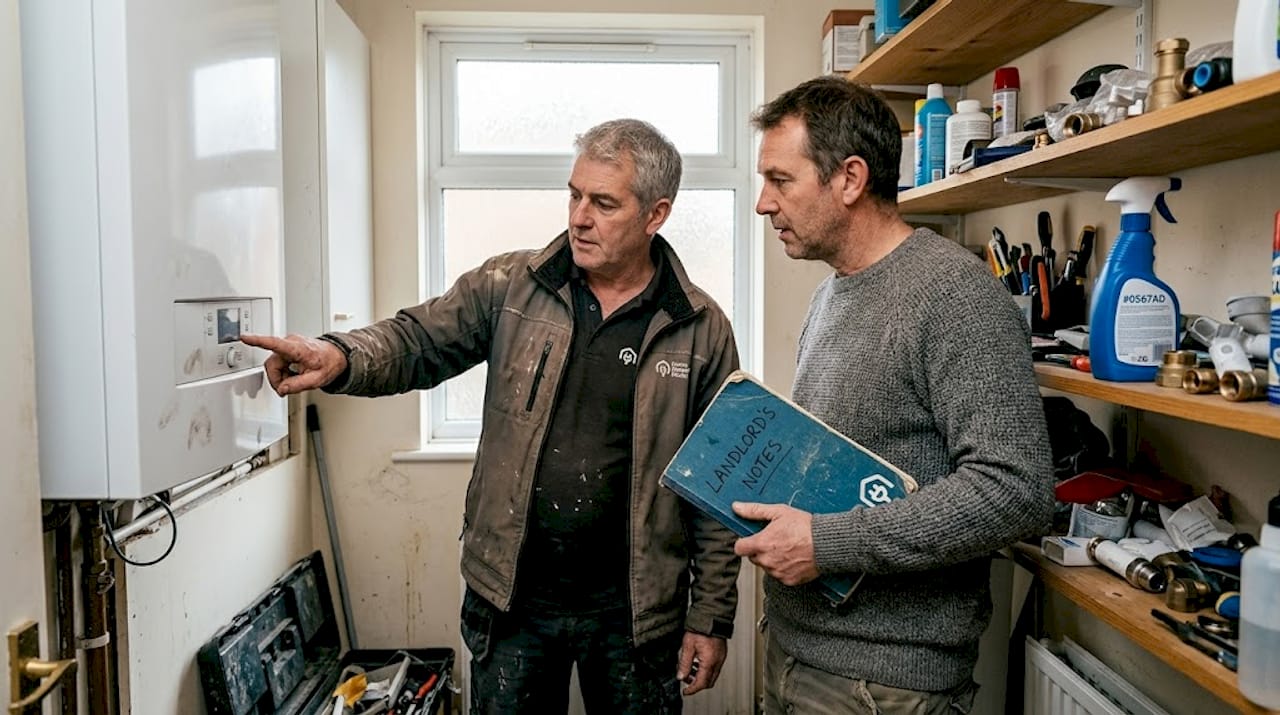
The Energy Saving Trust notes that for heat pumps in particular, weather compensation helps avoid inefficient cycling by lowering flow temperature when it is warmer outside, keeping the heat pump closer to steady efficient operation.
What is cycling and why does it matter?
Cycling refers to the repeated start-stop behaviour of a heating system. Every time a heat pump or boiler fires up from cold, it consumes a disproportionate burst of energy. The system also operates inefficiently during the warm-up phase. Frequent cycling therefore pushes up energy consumption while simultaneously increasing mechanical wear on components.
Here is why cycling is particularly damaging:
- Start-up sequences generate stress on compressors, pumps, and heat exchangers
- Short cycles mean the system rarely reaches its optimal operating temperature
- Incomplete heating cycles leave residual heat that is wasted, not delivered to rooms
- Increased component wear leads to earlier servicing requirements and higher maintenance costs
Weather compensation addresses all of these problems by keeping the system running continuously at low temperatures rather than switching on and off. This is a fundamentally different operating philosophy, and it delivers measurable results.
Pro Tip: If your heating system starts and stops more than three or four times per hour during mild weather, that is a strong indicator of inefficient cycling. A calibrated weather compensation curve will almost always reduce this and bring operating costs down.
Landlords seeking energy-saving tips for homes should treat weather compensation not as an add-on but as a core component of any serious efficiency strategy, particularly where heat pumps are installed or planned.
Weather compensation in UK energy regulations: EPCs and the Home Energy Model
The regulatory landscape for UK property energy performance is changing significantly. The Standard Assessment Procedure (SAP), which has underpinned EPC calculations for decades, is being replaced by the Home Energy Model (HEM). This transition carries direct implications for how heating controls, including weather compensation, are represented in official energy assessments.
SAP uses a simplified, monthly steady-state methodology. It averages out conditions and calculates energy use based on fixed assumptions about heating patterns and system performance. HEM takes a fundamentally different approach. According to GOV.UK consultation materials, HEM models dwelling energy using half-hourly weather inputs, which is directly relevant to how heating controls that respond to weather may be represented in assessments.
This is a significant shift. Under SAP, a weather-compensated system might not have been meaningfully differentiated from a basic thermostat-controlled system. Under HEM, the dynamic nature of the control strategy can influence the modelled outcome because the simulation is sensitive to how the heating system responds to varying outdoor conditions across thousands of half-hourly intervals.
Key regulatory milestones for property owners:
- HEM is expected to replace SAP as the basis for EPC calculations, aligning with the Future Homes Standard
- EPCs issued under HEM will reflect more granular modelling of heating system behaviour
- Properties with weather-compensated systems may demonstrate lower modelled energy consumption
- Landlords will need to ensure heating systems are properly commissioned to reflect real-world performance
- EPC ratings under HEM could differ materially from ratings under SAP for the same property
Understanding the EPC cost breakdown and familiarising yourself with the types of energy models now in use are important steps for landlords planning ahead. For those managing properties in the capital, the EPC guide for London provides relevant local context.
The proportion of UK landlords who will need to upgrade heating systems to meet incoming EPC requirements is substantial. Estimates suggest that a significant majority of privately rented properties in England and Wales currently fall below an EPC band C, which is the target standard under proposed Minimum Energy Efficiency Standards (MEES) reforms. Weather compensation is one of the tools that can help close that gap.
Weather compensation vs. load compensation: key distinctions
Property owners researching heating controls often encounter the term “load compensation” alongside weather compensation. The two are related but serve different purposes, and selecting the right approach depends on the property type and heating system.
Weather compensation, as described above, responds exclusively to outdoor temperature. The system has no direct awareness of what is happening inside the building. It operates on the assumption that if it is cold outside, the building is losing heat and requires higher flow temperatures to maintain comfort.
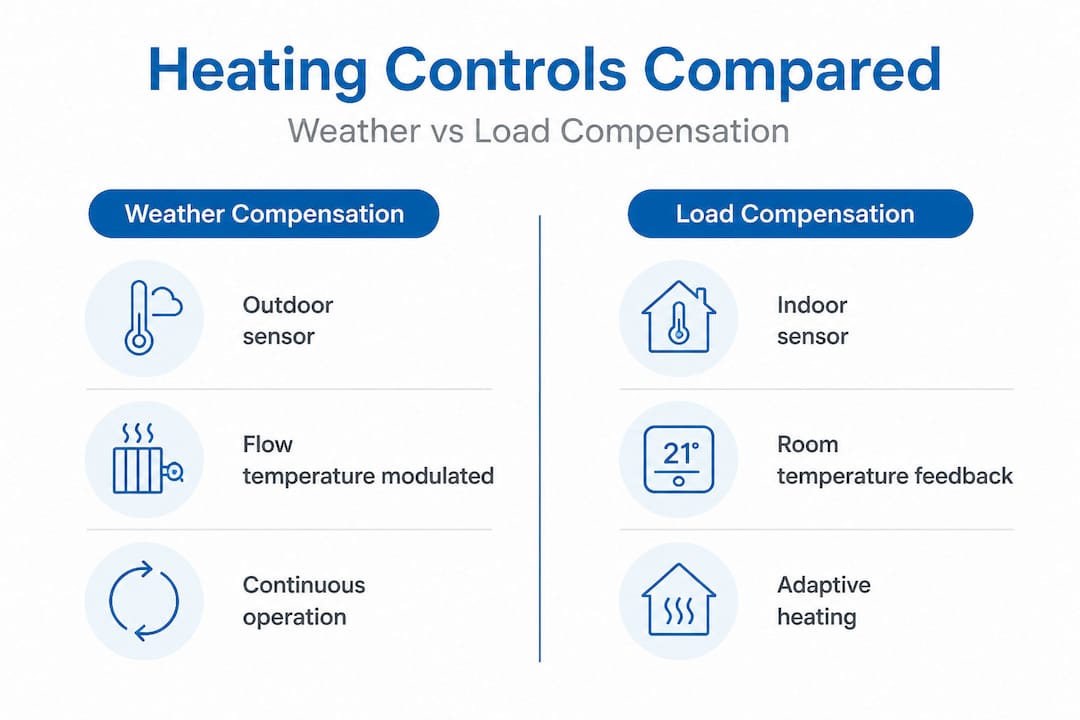
Load compensation, by contrast, adjusts flow temperature based on indoor temperature. A sensor measures the actual room temperature and signals the heating system to increase or decrease output accordingly. As the Energy Saving Trust explains, load compensation adjusts flow temperature based on internal temperature, whereas heat pumps always include weather compensation and load compensation may be an additional feature, sometimes described as “weather compensation with room influence.”
When both systems work together, the result is a more responsive and efficient heating strategy. The weather compensation curve sets the baseline, and the load compensation layer fine-tunes output based on what is actually happening inside.
Practical tips for selecting the right control system:
- For heat pumps, weather compensation is standard and should always be active
- Load compensation adds value in properties with significant internal heat gains (south-facing glazing, high occupancy)
- Properties with mixed-use rooms or variable occupancy benefit from combined systems
- Always commission curves with a qualified installer who understands the specific heat emitters in place
- Consult your energy-saving technologies guide before specifying controls for a refurbishment project
“Weather compensation with room influence combines outdoor sensing with indoor feedback, giving the system a more complete picture of actual thermal demand and enabling finer control over comfort and efficiency.”
The interaction between these controls and the Home Energy Model’s assessment methodology is an area where professional advice pays dividends. Correctly specified and commissioned systems can achieve better modelled outcomes, which in turn translates to stronger EPC ratings.
Applying weather compensation in your property: practical guidance
Integrating weather compensation into a property’s heating system requires careful assessment of system compatibility, followed by proper commissioning. Simply installing a weather sensor without calibrating the heating curve to the building’s characteristics will not deliver the expected results.
The first step is assessing whether the existing heating system can support weather compensation. Modern heat pumps almost universally include this functionality as standard. Many condensing boilers manufactured after 2010 also support weather compensation controls, though the external sensor must be correctly positioned (shaded from direct sunlight, away from heat sources, on a north or east-facing wall).
Step-by-step integration checklist:
- Confirm the heating system (boiler or heat pump) supports variable flow temperature control
- Assess the heat emitters: radiators sized for lower flow temperatures or underfloor heating are ideal
- Install an external temperature sensor in a suitable location, correctly shaded and positioned
- Commission the heating curve with a qualified engineer, setting gradient and minimum/maximum flow temperatures appropriate to the building’s insulation level
- Monitor system performance over several weeks, adjusting the curve gradient if rooms are consistently overheating or underheating
- Document the commissioned settings for future reference and EPC assessments
Pro Tip: One of the most common commissioning errors is setting the heating curve too steep for a well-insulated property. This results in the system delivering excessive heat during mild weather, negating the efficiency benefits. Start with a conservative (shallow) curve and adjust upward if needed.
The HEM technical approach uses dynamic, half-hourly modelling rather than SAP’s monthly steady-state calculations. This means that how heating systems operate across changing weather conditions can directly affect modelled outcomes. A properly commissioned weather compensation system will therefore perform better in HEM assessments than one that operates at fixed high flow temperatures throughout the year.
For landlords planning retrofits or new installations, the energy simulation housing guide provides detailed context on how energy modelling works and what it means for property investment decisions.
Beyond compliance: the real value of weather compensation for UK property owners
Here is an uncomfortable truth that the compliance conversation tends to obscure: most UK heating systems are performing significantly below their potential, and regulation alone will not fix that. Weather compensation is a prime example of technology that exists, is widely available, and is frequently either absent or poorly commissioned in properties that theoretically have it installed.
The focus on EPC ratings and MEES compliance creates a box-ticking mindset. A property might have a heat pump with weather compensation enabled, but if the heating curve has never been calibrated to the building’s actual fabric and heat emitters, the system may be cycling inefficiently and delivering mediocre performance despite nominally meeting the regulatory threshold. This is one of the most under-discussed problems in the UK’s transition to low-carbon heating.
The real opportunity for property owners is not just compliance. It is the gap between what a system is theoretically capable of and what it actually delivers. Well-commissioned weather compensation has been shown to produce measurable reductions in energy consumption, and in rental properties, lower energy bills directly support tenant retention and reduce void periods.
Climate change also adds a dimension that is rarely factored into heating system design. UK winters are becoming more variable, with sharper swings between cold spells and mild periods. A fixed-temperature heating system handles this poorly. Weather compensation, by its nature, adapts continuously, making it intrinsically more resilient to the kind of weather variability that is becoming more common.
Property owners who want to see how this plays out in practice should explore energy efficiency examples from comparable UK properties. The data consistently shows that system-level controls, rather than insulation alone, are often the fastest route to meaningful efficiency improvement.
The shift to HEM is an opportunity, not just a burden. Owners who invest in properly commissioned weather compensation now will be better positioned for future EPC assessments, better placed to attract quality tenants, and better protected against energy price volatility.
Boost your property’s efficiency and stay compliant
Understanding weather compensation is a strong first step, but applying it correctly across a portfolio requires reliable, up-to-date guidance. homeenergymodel.co.uk offers practical resources specifically designed for UK landlords and property owners navigating the shift from SAP to HEM. Explore the types of energy models relevant to your properties, get a clear overview with the Home Energy Model explained, and deepen your knowledge with the energy simulation housing guide. Acting now, before HEM becomes mandatory, gives owners the time to commission systems correctly and maximise EPC outcomes.
Frequently asked questions
How does weather compensation actually save money?
By lowering flow temperature when outdoor temperatures rise, weather compensation reduces energy consumption while maintaining comfort, directly cutting fuel and electricity bills throughout the heating season.
Will weather compensation be required for EPC compliance under the Home Energy Model?
Weather compensation is not mandated, but the HEM’s half-hourly modelling is sensitive to how heating controls respond to outdoor conditions, meaning systems with weather compensation may achieve stronger EPC ratings.
Can weather compensation be retrofitted to older heating systems?
Many modern weather compensation controls can be retrofitted, but compatibility with the existing boiler or heat pump must be confirmed and professional commissioning is essential to calibrate the heating curve correctly.
What is the difference between weather compensation and load compensation?
Weather compensation responds to outdoor temperature, while load compensation adjusts flow temperature based on indoor temperature. Both combined, sometimes called “weather compensation with room influence,” offer the most precise efficiency and comfort management.
How does weather compensation affect heating system maintenance?
By reducing inefficient cycling, weather compensation lowers mechanical stress on pumps, compressors, and heat exchangers, which can extend system lifespan and reduce the frequency of servicing requirements.