

TL;DR:
- Modern air-source heat pumps are highly efficient, delivering three to five units of heat per unit of electricity. Proper insulation and correct operation significantly improve their performance and reduce household energy bills.
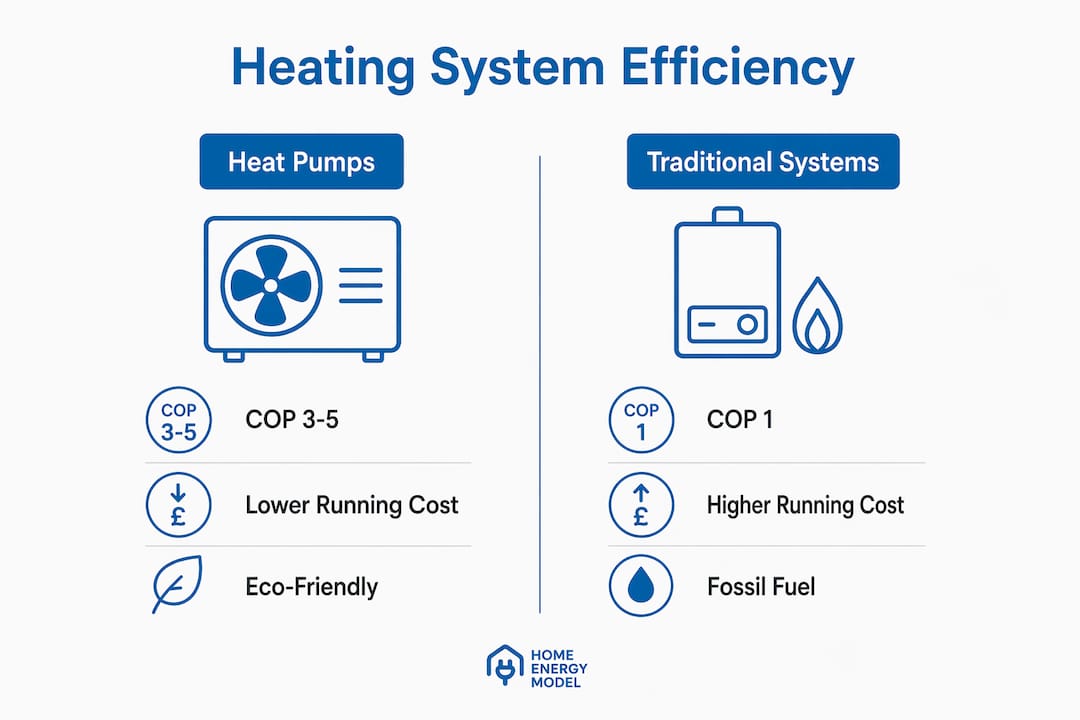
Modern electric air-source heat pumps are the most efficient way to heat a house, delivering 300% to 500% efficiency by moving existing heat rather than generating it through combustion. The industry standard measure for this is the Coefficient of Performance (COP), which expresses how many units of heat a system produces per unit of electricity consumed. A COP of 3.0 to 5.0 means three to five units of heat for every one unit of electricity used. By comparison, even the best condensing gas boilers reach around 90% efficiency. Switching to a heat pump can reduce annual heating bills by 20% to over 60%, depending on insulation quality and energy prices.
How do air-source heat pumps work and why are they more efficient?
Air-source heat pumps extract heat from outdoor air and transfer it indoors using a refrigerant cycle. This process requires far less energy than burning gas or oil to generate heat from scratch. A gas boiler converts fuel into heat at roughly 90p of heat per £1 of fuel. A heat pump with a COP of 3.0 delivers £3 of heat per £1 of electricity.
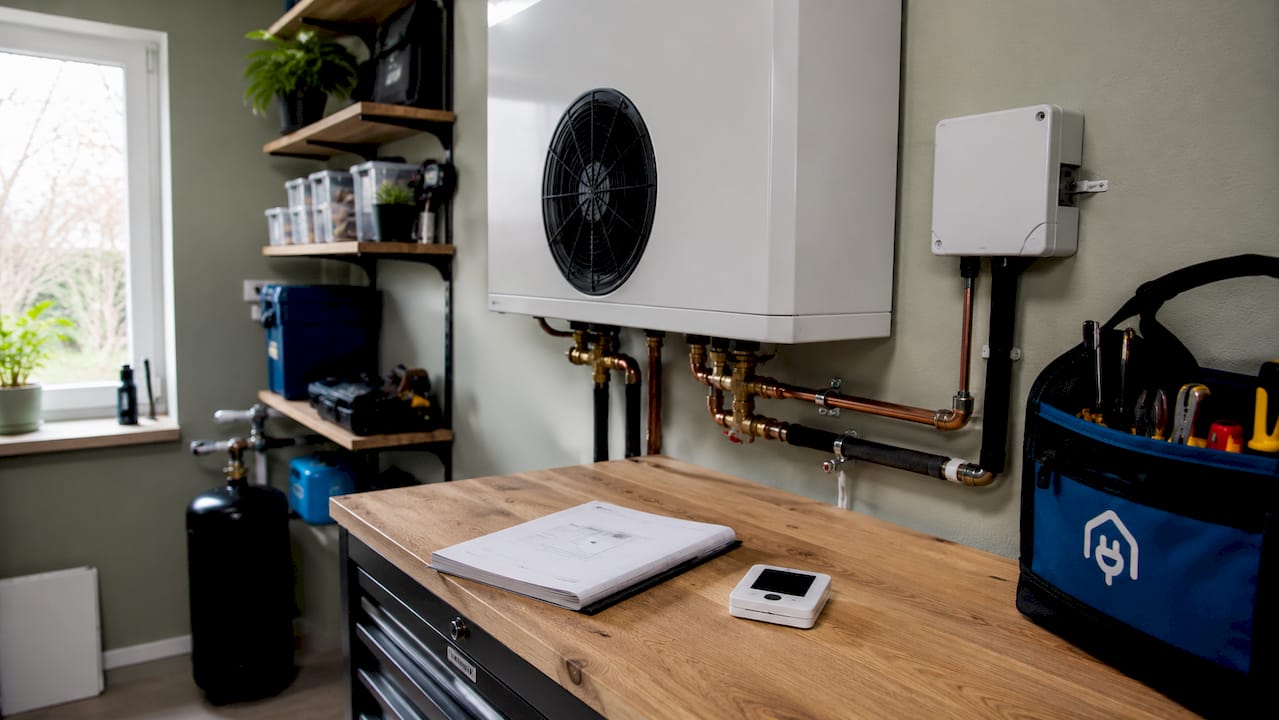
The COP is not fixed. It varies with outdoor temperature, system design, and how the home retains heat. In mild UK winters, a well-installed unit can reach COP 4.0 or higher. In very cold snaps, performance drops closer to COP 2.5, which is still significantly better than combustion heating.
Three main types of heat pump suit different properties:
- Air-source heat pumps (ASHP): Extract heat from outdoor air. Most practical for the majority of UK homes. Lower upfront cost and simpler installation than alternatives.
- Ground-source heat pumps (GSHP): Extract heat from the ground via buried pipes. Higher efficiency than air-source but require excavation or drilling, making them less accessible for most homeowners.
- Hybrid heat pumps: Pair a heat pump with a high-efficiency gas boiler. Useful in older homes or very cold regions where a standalone heat pump may struggle during extreme cold periods.
Pro Tip: If a full ground-source installation is not feasible, an air-source unit installed on a south-facing wall will perform better in winter due to slightly warmer ambient temperatures on that elevation.
For a detailed comparison of air-source and ground-source options, Homeenergymodel’s guide to air source heating efficiency covers UK-specific performance data and installation considerations.
What home factors affect heating efficiency?
The heating system is only half the equation. A high-efficiency heat pump installed in a poorly insulated home will underperform and cost more to run than a modest boiler in a well-sealed property. The fabric-first approach addresses this directly: improve the building envelope before upgrading the heating system.
Research confirms that combining insulation, air sealing, and thermostat optimisation with regular maintenance can reduce total energy bills by approximately 30%. That figure reflects the compounding effect of reducing heat loss while also improving system performance. Heating accounts for a significant share of the average utility bill, so even modest fabric improvements produce measurable savings.
Key fabric improvements to prioritise:
- Loft insulation: Heat rises. An uninsulated loft can account for a substantial proportion of total heat loss in a typical UK semi-detached home.
- Cavity or solid wall insulation: Walls are the largest surface area in most homes. Insulating them reduces the heating load on any system.
- Draught-proofing: Sealing gaps around windows, doors, and floorboards prevents cold air infiltration. This is one of the lowest-cost, highest-return improvements available.
- Double or triple glazing: Reduces heat loss through windows and eliminates cold draughts near glass surfaces.
Thermostat behaviour also matters. Setting the thermostat 1°C lower than usual can reduce heating energy use noticeably over a full winter. Programmable or smart thermostats allow homeowners to schedule heating around occupancy patterns rather than heating an empty property.
Pro Tip: Before investing in a new heating system, commission a home energy assessment. It will identify where heat is escaping and rank improvements by cost-effectiveness. Homeenergymodel’s guide on energy efficient home upgrades outlines the fabric improvements that deliver the strongest returns.
A fabric-first approach also reduces the required capacity of any new heating system. A smaller, correctly sized heat pump costs less to install and runs more efficiently than an oversized unit cycling on and off. This is a point many installers underemphasise.
How should homeowners operate heat pumps for maximum efficiency?
Operating a heat pump correctly is as important as choosing the right model. Heat pumps perform most efficiently when running continuously at a low temperature setpoint rather than being switched on and off like a gas boiler. The recommended setpoint range is 18–21°C for both comfort and efficiency.
Many homeowners make the mistake of operating heat pumps the same way they used gas boilers: turning them off during the day and cranking them up in the evening. This forces the system to work harder to recover lost heat, reducing the COP and increasing running costs. The correct approach is:
- Set a constant low temperature. Keep the thermostat at a steady 18–21°C throughout the day rather than allowing the home to cool significantly.
- Use scheduled boosts. Periodic temperature boosts in the morning and evening align with the system’s optimal performance curve and match household comfort needs.
- Bleed radiators seasonally. Air trapped in radiators reduces heat output. Bleeding radiators and keeping heat registers clear of furniture or curtains maintains even heat distribution.
- Schedule annual servicing. A qualified engineer should check refrigerant levels, electrical connections, and heat emitter performance each year. Neglected systems lose efficiency gradually and without obvious warning signs.
- Use smart controls. Integrating a heat pump with a programmable thermostat or a smart home energy management system allows precise scheduling and remote adjustment, reducing unnecessary energy use.
Pro Tip: If the home has underfloor heating rather than radiators, heat pumps perform even better. Underfloor systems operate at lower flow temperatures, which is precisely where heat pumps achieve their highest COP.
How do heating methods compare in efficiency and cost?
Choosing the most cost-effective heating solution requires comparing systems across efficiency, running costs, upfront investment, and suitability for the property type. The table below summarises the key metrics for the main options available to UK homeowners in 2026.
| Heating system | Efficiency (COP or %) | Typical daily running cost | Upfront cost | Best suited to |
|---|---|---|---|---|
| Air-source heat pump | COP 3.0–5.0 | From £1.19 per day in well-insulated homes | Moderate to high | Most UK homes with adequate insulation |
| Ground-source heat pump | COP 4.0–6.0 | Lower than ASHP at scale | High (excavation required) | Larger properties with outdoor space |
| Condensing gas boiler | ~90% | Varies with gas price | Low to moderate | Homes without heat pump infrastructure |
| Electric resistance heating | 100% (no COP gain) | High | Low | Small spaces or supplementary heating only |
| Biomass boiler | ~80–90% | Moderate (fuel dependent) | High | Rural properties with fuel storage space |
| Hybrid heat pump | COP 2.5–4.0 (heat pump mode) | Moderate | Moderate | Older homes or cold climate regions |
Electric resistance heating converts electricity to heat at 100% efficiency, which sounds appealing but misses the point. It produces only one unit of heat per unit of electricity. A heat pump with COP 3.0 produces three units for the same electricity cost. At current UK electricity prices, electric resistance heating is the most expensive way to heat a home at scale.
Hybrid systems balance the efficiency of heat pumps with the reliability of gas boilers during extreme cold. They suit older properties where full electrification is not yet practical. As the UK grid becomes greener, the gas element of a hybrid system will account for a shrinking share of total carbon output.
The right choice depends on the building, climate, and user needs rather than a single universal answer. A professional energy assessment removes the guesswork and identifies the system that will deliver the best return for a specific property.
Key takeaways
Air-source heat pumps are the most energy-efficient heating method for UK homes, achieving COP 3.0–5.0, but their performance depends equally on insulation quality and correct operation.
| Point | Details |
|---|---|
| Heat pump efficiency | Air-source heat pumps deliver 3–5 units of heat per unit of electricity, far exceeding gas boilers. |
| Fabric-first approach | Combining insulation and air sealing with a new heating system can cut total energy bills by around 30%. |
| Correct operation | Running heat pumps at a constant 18–21°C setpoint is more efficient than switching them on and off. |
| System maintenance | Bleeding radiators and annual servicing prevent gradual efficiency losses that are easy to overlook. |
| No universal solution | The best heating system depends on building age, insulation level, climate, and existing infrastructure. |
The case for patience when switching to heat pumps
The most common mistake I see homeowners make is treating a heat pump like a direct swap for a gas boiler. They install the unit, keep the same heating habits, and then wonder why their bills have not dropped as expected. The technology works differently, and the results follow when the behaviour changes too.
The fabric-first principle is not just theory. A well-insulated home reduces the heating load to the point where a smaller, cheaper heat pump can do the job. That changes the economics of the whole project. Skipping insulation to save money upfront often means paying more in running costs for years.
Integrating renewables adds another layer of value. Pairing a heat pump with solar panels, for instance, can further reduce the electricity cost of running the system. Homeenergymodel’s guide on smart homes energy efficiency covers how smart controls and renewable integration work together in practice.
The honest reality is that no single article can tell every homeowner which system is right for their property. Building age, local climate, existing pipework, and budget all shape the answer. What I can say with confidence is that the combination of good insulation, a correctly sized heat pump, and disciplined operation habits will outperform any other approach for the vast majority of UK homes in 2026.
— Danny
How Homeenergymodel can help with home heating decisions
Understanding which heating system suits a specific property requires more than general guidance. Homeenergymodel provides detailed resources on energy performance assessment, including how the Home Energy Model (HEM) methodology evaluates heating systems as part of a property’s overall energy rating. For homeowners and landlords preparing for upcoming regulatory changes, understanding home energy model impact on property ratings is a practical starting point. Homeenergymodel also offers guidance on energy simulation for housing, which helps identify the most cost-effective heating and insulation upgrades for individual properties before any investment is made.
FAQ
What is the most efficient heating system for a UK home?
Air-source heat pumps are the most energy-efficient option for most UK homes, operating at COP 3.0–5.0 and delivering up to five units of heat per unit of electricity consumed.
How much can a heat pump reduce heating bills?
Switching from a gas boiler to a heat pump can reduce annual heating bills by 20% to over 60%, depending on insulation quality and prevailing energy prices.
Does insulation affect heat pump performance?
Good insulation directly improves heat pump performance by reducing the heating load, allowing the system to run at lower temperatures where it achieves its highest COP.
Should a heat pump be left on all day?
Heat pumps perform best when running continuously at a low temperature setpoint of 18–21°C rather than being switched on and off, which forces the system to work harder and reduces efficiency.
What is the cheapest way to heat a house in the UK?
A well-insulated home heated by an air-source heat pump, operated at a constant low temperature, currently offers the lowest running costs for most UK properties, with recorded daily costs as low as £1.19 in optimal conditions.