
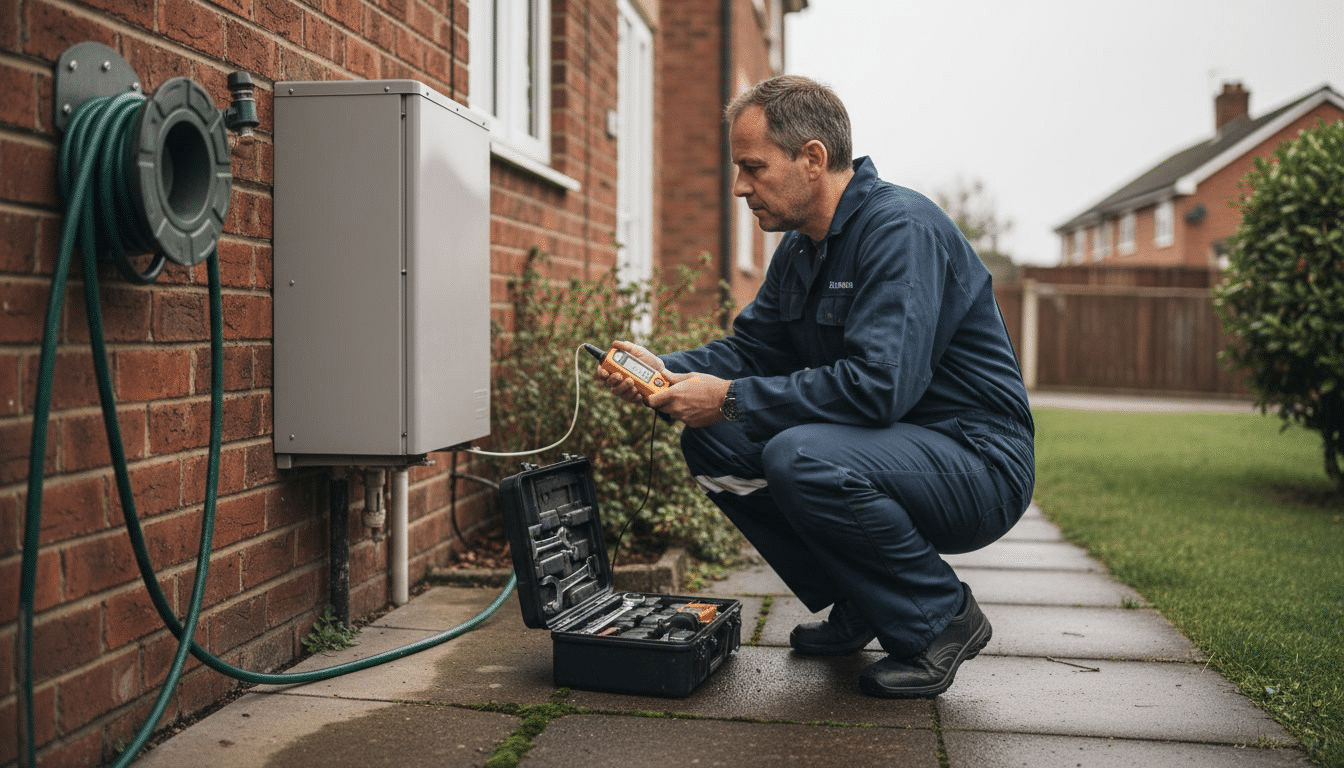
British homeowners and landlords are facing the reality that heating accounts for over 60% of a typical UK household’s energy use. With government targets tightening and energy costs rising, understanding air source heating technology has never mattered more. This guide cuts through the jargon, offering clear insight into how air source systems help British properties reduce running costs, improve comfort, and stay ahead of new efficiency regulations.
Table of Contents
- What Is Air Source Heating Technology
- Types Of Air Source Heat Pump Systems
- How Air Source Heating Works In Homes
- Costs, Savings And Financial Implications
- Comparing Air Source With Gas Boilers
- Meeting Future UK Energy Regulations
Key Takeaways
| Point | Details |
|---|---|
| Energy Efficiency | Air source heat pumps provide significant efficiency, generating 3-4 units of heat for every unit of electricity consumed. |
| Financial Benefits | Initial installation costs range from £7,000 to £14,000, but homeowners can save up to £700 annually on energy bills. |
| Regulatory Changes | Future UK regulations aim for 600,000 annual heat pump installations by 2028, emphasising the need for energy-efficient systems. |
| System Types | Choose between split systems for versatility or monobloc systems for easier installation based on property needs. |
What Is Air Source Heating Technology
Air source heating represents an innovative technological solution for efficiently warming homes by extracting thermal energy directly from outdoor ambient air. This advanced system functions like a reverse refrigerator, capturing heat from external environments and transferring it inside residential spaces using sophisticated thermodynamic principles.
At its core, an air source heat pump (ASHP) operates through a sophisticated refrigeration cycle. The system uses a specialised refrigerant that absorbs heat from outside air temperatures, even when conditions seem cold. This refrigerant is then compressed, which significantly increases its temperature before being transferred into a home’s central heating network. Unlike traditional fossil fuel systems, air source heating can generate approximately three units of heat for every single unit of electricity consumed, making it substantially more energy efficient.
The technological components of an air source heating system include several critical elements:
- Heat Exchanger: Captures external air temperature
- Compressor: Increases refrigerant temperature through mechanical compression
- Heat Distribution Network: Transfers warmth through radiators or underfloor heating
- Hot Water Cylinder: Stores heated water for domestic use
Practical Tip: Consider consulting a professional energy assessor to determine whether your property’s insulation and architectural design are suitable for optimal air source heat pump performance.
Types Of Air Source Heat Pump Systems
Air source heat pump systems in the United Kingdom are predominantly categorised into two primary configurations: split system and monobloc system. These configurations offer distinct installation approaches and performance characteristics tailored to different residential requirements. Professional training programmes cover the technical nuances of these systems to ensure optimal design and implementation.
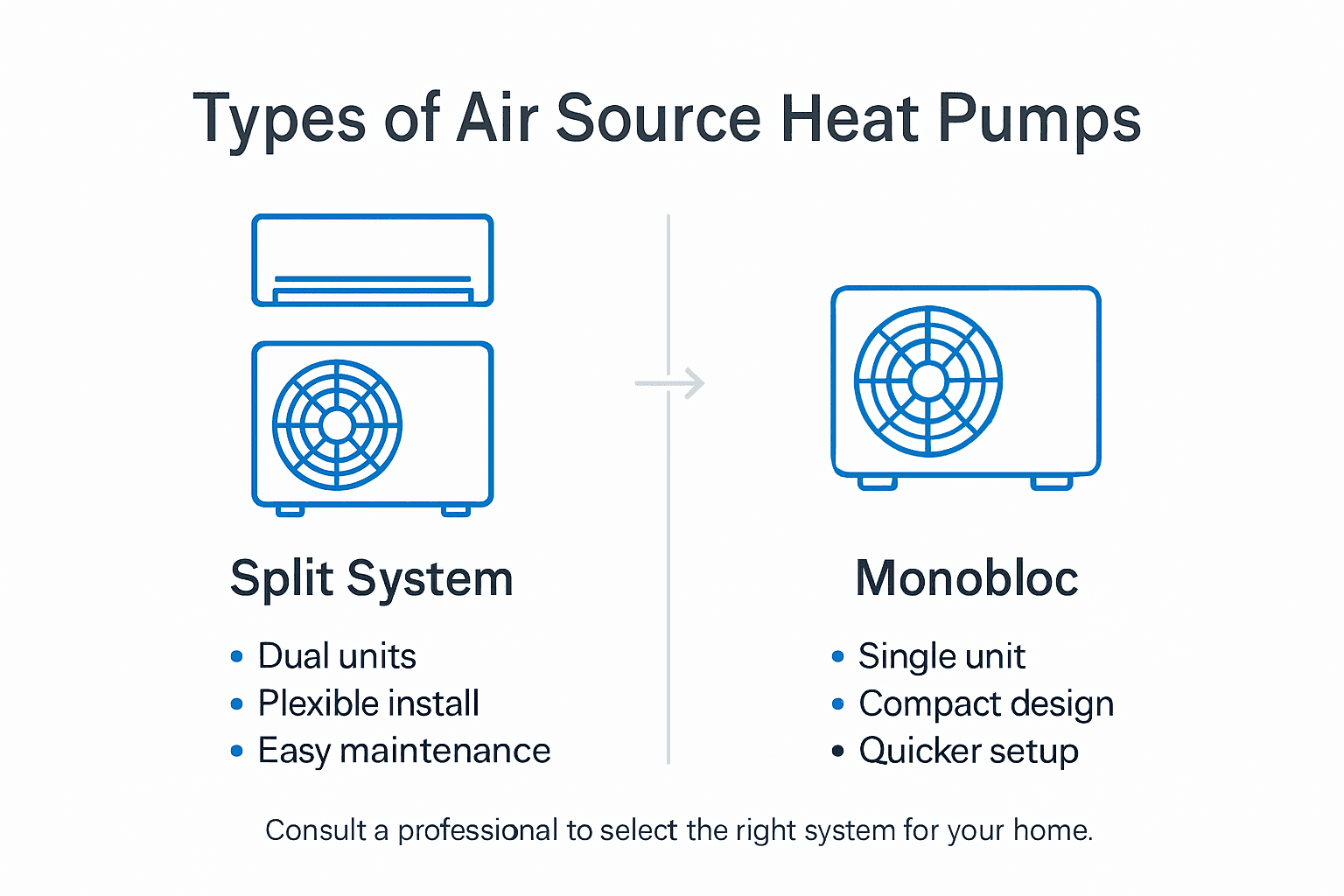
In a split system, the heat pump is divided into two primary components: an outdoor unit that extracts heat from ambient air and an indoor unit responsible for heat distribution. This configuration provides greater flexibility in installation, allowing homeowners to position components strategically based on their property’s architectural constraints. The indoor unit typically contains the compressor and heat exchanger, enabling more precise temperature management and potentially reducing noise levels compared to alternative designs.
Conversely, a monobloc system integrates all components within a single external unit, which is mounted outside the property. This design offers several advantages:
- Simplified installation process
- Reduced indoor space requirements
- Potentially lower initial equipment costs
- Easier maintenance access
Each system type presents unique benefits, and the selection depends on factors such as property size, existing infrastructure, insulation quality, and specific heating requirements. Professional energy assessors can provide tailored recommendations based on a comprehensive evaluation of individual property characteristics.
To help clarify the distinctions, the table below compares split and monobloc air source heat pump systems:
| Aspect | Split System | Monobloc System |
|---|---|---|
| Installation | Indoor and outdoor units both needed | All-in-one outdoor unit |
| Space Requirement | Requires indoor space for equipment | Minimal indoor space required |
| Noise Management | Indoor installations allow quieter use | Slightly higher external noise |
| Maintenance Access | Some components inside, less ease | All parts easily accessible |
| Typical Use Case | Complex/large homes | Simpler retrofits and upgrades |
Practical Tip: Consult a certified heating engineer to conduct a detailed assessment of your property’s thermal efficiency before selecting an air source heat pump system type.
How Air Source Heating Works In Homes
Air source heating technology transforms ambient outdoor air into a reliable home heating solution through an ingenious thermodynamic process. The system absorbs heat from external air using a sophisticated heat exchanger, converting low-temperature atmospheric heat into usable warmth for residential spaces.

The core mechanism involves a specialised refrigeration cycle that operates with remarkable efficiency. A refrigerant fluid circulates through the system, absorbing heat from outside air even during colder temperatures. When this refrigerant passes through a compressor, its temperature is dramatically increased. This heated refrigerant then transfers thermal energy to water circulating through radiators or underfloor heating systems, effectively warming the entire home without direct combustion.
Key components involved in this heating process include:
- Heat Exchanger: Captures external air temperature
- Compressor: Increases refrigerant temperature
- Circulation Pump: Distributes heated water through home heating network
- Hot Water Cylinder: Stores heated water for domestic use
Modern air source heating systems can integrate seamlessly with existing home infrastructure, offering homeowners a flexible and environmentally friendly heating solution. These systems can potentially reduce carbon emissions and provide consistent indoor temperatures with minimal energy consumption.
Practical Tip: Ensure your property has adequate insulation to maximise the efficiency of your air source heating system and minimise heat loss.
Costs, Savings And Financial Implications
Air source heat pumps represent a significant investment for UK homeowners, with initial installation costs ranging between £7,000 and £14,000 depending on property size and system complexity. Economic studies highlight the potential for substantial long-term financial benefits through reduced energy consumption, making these systems an increasingly attractive energy solution.
The financial implications extend beyond initial installation expenses. Homeowners can expect lower ongoing energy costs compared to traditional gas heating systems, with potential annual savings ranging from £300 to £700. These savings are particularly pronounced when the heat pump is paired with robust home insulation and energy efficiency upgrades. Government incentive programmes like the Boiler Upgrade Scheme offer grants up to £5,000, which can significantly offset initial installation expenses and improve overall financial attractiveness.
Key financial considerations for air source heat pump installation include:
- Initial Installation Cost: £7,000 – £14,000
- Annual Energy Bill Savings: £300 – £700
- Government Grant Potential: Up to £5,000
- Estimated Payback Period: 7-10 years
- Carbon Emission Reduction: Approximately 50% compared to gas boilers
The economic viability of air source heating depends on multiple factors, including property insulation, electricity rates, and existing heating infrastructure. Professional energy assessments can provide tailored financial projections specific to individual home characteristics.
The following table summarises key financial factors for homeowners considering air source heat pumps:
| Financial Factor | Typical Range / Outcome | Notes |
|---|---|---|
| Upfront Installation | £7,000 – £14,000 | Varies by property size and system type |
| Annual Energy Savings | £300 – £700 | Depends on insulation and usage |
| Government Grants | Up to £5,000 | Via Boiler Upgrade Scheme |
| Estimated Payback Period | 7–10 years | Shorter with high energy savings |
| Carbon Reduction | Approximately 50% lower than gas | Supports decarbonisation targets |
Practical Tip: Request multiple quotes from certified installers and investigate available government grants to maximise your financial investment in air source heating technology.
Comparing Air Source With Gas Boilers
Air source heat pumps and traditional gas boilers represent fundamentally different approaches to home heating, each with distinct operational characteristics and environmental implications. The technological comparison reveals significant advantages for air source systems in terms of energy efficiency, carbon emissions, and long-term sustainability.
The primary differences emerge in their energy conversion mechanisms. Gas boilers generate heat through direct combustion, which typically operates at approximately 90% efficiency and produces substantial carbon dioxide emissions. Air source heat pumps, conversely, transfer existing heat energy using electricity, achieving efficiency levels of 300-400%, meaning they generate three to four units of heat for every unit of electrical energy consumed. This remarkable efficiency translates into substantially lower carbon footprints and reduced environmental impact.
Key comparative aspects include:
-
Energy Efficiency:
- Gas Boilers: 90% efficiency
- Air Source Heat Pumps: 300-400% efficiency
-
Carbon Emissions:
- Gas Boilers: High direct carbon output
- Air Source Heat Pumps: Significantly reduced emissions
-
Operating Costs:
- Gas Boilers: Lower initial installation, higher ongoing fuel costs
- Air Source Heat Pumps: Higher initial investment, lower operational expenses
-
Environmental Impact:
- Gas Boilers: Contributes to greenhouse gas emissions
- Air Source Heat Pumps: Supports decarbonisation goals
While gas boilers remain prevalent in UK households, the transition towards air source heating represents a critical step in achieving national carbon reduction targets and improving residential energy performance.
Practical Tip: Consider your property’s specific thermal characteristics and consult an energy specialist to determine the most suitable heating technology for your home.
Meeting Future UK Energy Regulations
The United Kingdom is undergoing a transformative energy transition, with ambitious targets designed to revolutionise residential heating technologies. Government strategies aim to dramatically accelerate heat pump installations nationwide, targeting 600,000 annual heat pump deployments by 2028 and eight million total installations by 2035 to achieve comprehensive net zero objectives.
These regulatory shifts are driven by the urgent need to decarbonise Britain’s residential heating sector, which currently relies heavily on inefficient and carbon-intensive gas infrastructure. The Climate Change Committee is advocating for stringent new building regulations that will progressively mandate higher energy performance standards, with a particular emphasis on transitioning existing housing stock towards more sustainable heating technologies. Key regulatory developments will likely include mandatory energy efficiency improvements, enhanced building performance standards, and potentially more restrictive planning permissions for fossil fuel-based heating systems.
Critical regulatory focus areas include:
-
Emission Reduction Targets:
- Comprehensive net zero pathway
- Phased reduction of carbon-intensive heating technologies
-
Installation Mandates:
- 600,000 heat pumps annually by 2028
- Eight million heat pumps by 2035
-
Building Performance Standards:
- Stricter energy efficiency requirements
- Enhanced thermal performance metrics
-
Financial Incentives:
- Government grants for renewable heating
- Potential tax benefits for energy-efficient upgrades
Homeowners and property developers must proactively prepare for these impending regulatory changes by investing in energy-efficient technologies and understanding the evolving compliance landscape.
Practical Tip: Stay informed about upcoming energy regulations by regularly consulting official government publications and engaging with local energy efficiency consultants.
Enhance Your Home’s Energy Efficiency with Expert Guidance
The article highlights the challenge many UK homeowners face when upgrading to air source heating systems such as heat pumps. Key pain points include understanding the correct system type, maximising energy savings, ensuring property insulation meets optimal standards and navigating complex government policies and financial incentives. The terminology around air source heat pumps, energy performance certificates and new regulations emphasise the need for clear, reliable information.
At homeenergymodel.co.uk, we provide precisely that support. Our platform offers comprehensive insights into the upcoming Home Energy Model which will transform how energy efficiency is assessed in UK properties. Whether you want to understand how air source heating impacts your property’s energy rating or need practical advice on meeting the Future Homes Standard, we help you stay ahead of changing rules. Now is the perfect time to prepare your home for these improvements by leveraging expert resources and guidance.
Explore detailed guidance on energy performance certificates and gain a clear understanding of what upgrades will drive significant savings. Don’t wait until regulations become mandatory. Visit homeenergymodel.co.uk today to unlock essential information and future-proof your home’s heating efficiency while reducing costs and emissions.
Frequently Asked Questions
What is air source heating technology?
Air source heating technology involves extracting thermal energy from outdoor ambient air to efficiently warm homes. It uses a system called an air source heat pump, which operates like a reverse refrigerator, transforming low-temperature air into usable warmth through thermodynamic processes.
How do air source heat pumps work in residential properties?
Air source heat pumps work by absorbing heat from ambient outdoor air even at lower temperatures. The system circulates a refrigerant that captures heat, which is then compressed to increase its temperature before transferring thermal energy to circulating water in radiators or underfloor heating systems, effectively heating the home.
What are the types of air source heat pump systems available?
There are mainly two types of air source heat pump systems: split systems, which have separate indoor and outdoor units, and monobloc systems, which are all-in-one outdoor units. The choice between the systems depends on factors like property size, insulation quality, and installation preferences.
What are the cost implications of installing an air source heat pump?
The installation cost of an air source heat pump typically ranges from £7,000 to £14,000, with potential annual energy savings ranging from £300 to £700. Homeowners may also benefit from government grants up to £5,000, which can help offset installation costs.