

Most UK homeowners believe their Energy Performance Certificate accurately reflects their property’s energy use. In reality, traditional SAP assessments rely on averaged monthly data that can misrepresent actual performance by significant margins. Home energy models introduce dynamic simulations that capture real-world behaviour with precision, transforming how you plan retrofits, meet regulatory requirements, and maximise property value. This article explores how transitioning to home energy models delivers measurable energy savings, supports compliance with tightening standards, and provides a competitive edge in the property market.
Table of Contents
- Key takeaways
- What are home energy models and why do they matter
- Top benefits of home energy models for UK homeowners and landlords
- Comparison between home energy models and traditional SAP assessments
- How to use home energy models for retrofit planning and compliance
- Explore expert resources and services on home energy modelling
- Frequently asked questions about home energy models
Key Takeaways
| Point | Details |
|---|---|
| Higher accuracy over SAP | Home energy models deliver half hourly dynamic simulations that more accurately reflect real world performance than traditional SAP assessments. |
| Data driven retrofit decisions | They enable data driven retrofit decision making by modelling the interactions of heat pumps, solar PV and storage with occupant behaviour. |
| Regulatory compliance made straightforward | They simplify regulatory compliance by identifying cost effective pathways to meet standards such as the 2030 EPC C target. |
| Market value uplift | They enhance property valuations by demonstrating lower running costs and potential rent premiums. |
| Training and funding required | Transitioning to home energy models requires assessor training and funding support to implement effectively within the market. |
What are home energy models and why do they matter
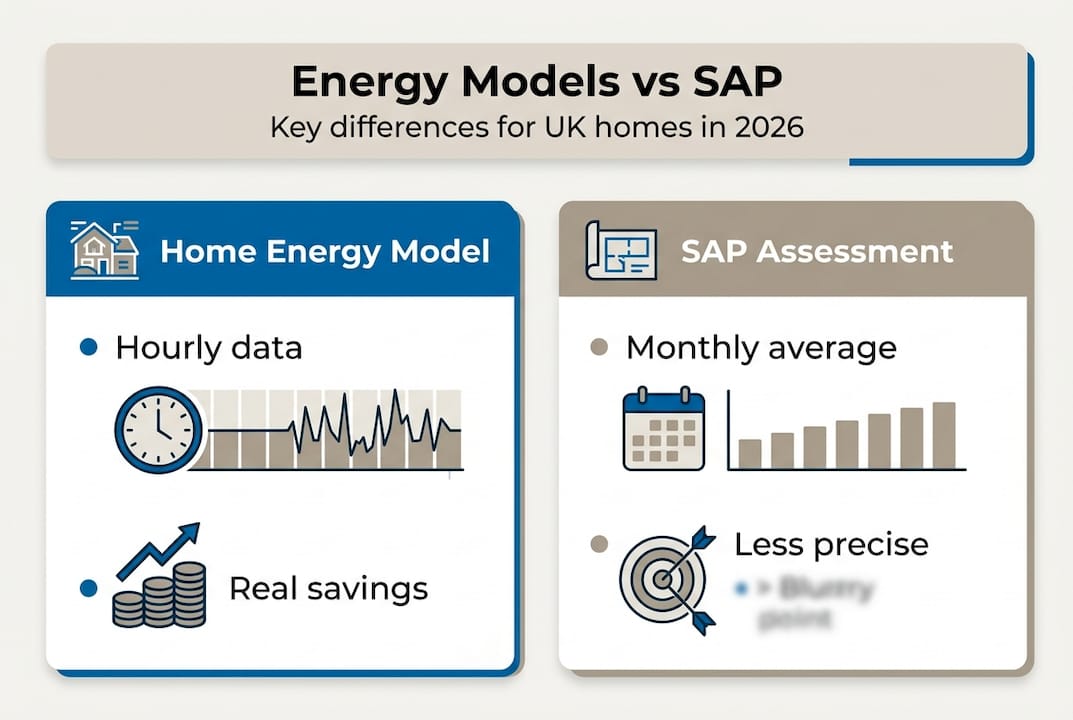
Home energy models represent a fundamental shift in how we assess building performance. Unlike traditional SAP assessments that calculate energy use with monthly averages, home energy models use 17,520 timesteps per year for half-hourly dynamic simulations. This granular approach complies with BS EN ISO 52016-1:2017, capturing how your property actually behaves throughout different seasons and weather conditions.
The technical distinction matters because modern energy technologies operate dynamically. Heat pumps adjust output based on external temperature. Solar panels generate variable electricity throughout the day. Battery storage systems charge and discharge according to demand patterns. Traditional SAP calculations struggle to model these interactions accurately, often underestimating potential savings or overestimating costs.
Home energy models solve this problem through sophisticated simulation:
- Accurate modelling of smart technologies including heat pumps, solar PV arrays, and battery storage
- Precise calculation of thermal bridging and air leakage impacts on fabric performance
- Detailed analysis of ventilation strategies and their effect on indoor air quality
- Real-world representation of occupant behaviour patterns and their energy implications
This precision translates directly to more reliable Energy Performance Certificates. Where SAP might suggest a heat pump offers modest savings, home energy models can demonstrate the full financial benefit when paired with fabric improvements and time-of-use tariffs. Understanding the impact of energy models on UK standards helps you appreciate why government policy is shifting toward this methodology.
Pro Tip: Request a detailed breakdown of your home energy model results showing hourly heating demand profiles. This reveals optimal times for running high-consumption appliances and helps you choose the most cost-effective energy tariff.
The transition from SAP calculation methodology to home energy models reflects broader recognition that net-zero targets require assessment tools matching the complexity of modern building systems. Properties with multiple renewable technologies particularly benefit from this enhanced accuracy.
Top benefits of home energy models for UK homeowners and landlords
Home energy models deliver tangible advantages that directly affect your property’s financial performance and regulatory standing. The precision of half-hourly simulations produces EPC metrics you can trust when making investment decisions or marketing your property.

Regulatory compliance becomes straightforward with accurate modelling. The Minimum Energy Efficiency Standards require rental properties achieve EPC rating C by 2030, and home energy models identify the most cost-effective pathway to meet this threshold. Traditional SAP assessments might recommend expensive measures that deliver minimal improvement, whilst home energy models pinpoint interventions offering genuine returns.
Financial benefits extend beyond compliance:
- Verified energy efficiency justifies premium rents, with tenants willing to pay more for lower utility bills
- Enhanced EPC ratings increase property valuations by demonstrating reduced running costs
- Accurate retrofit roadmaps prevent wasted spending on ineffective upgrades
- Detailed cost projections help secure green mortgages and retrofit financing
Retrofit planning transforms when you base decisions on reliable data. Home energy models simulate different improvement scenarios, showing exactly how wall insulation, window upgrades, or heat pump installation affect annual energy costs. You can test combinations of measures to find the optimal sequence that maximises savings whilst managing upfront investment.
Understanding your property’s specific thermal performance through detailed modelling reveals opportunities traditional assessments miss entirely.
Landlords facing pressure over fossil fuel heating systems gain particular value from home energy models. Simulations demonstrate how electrification through heat pumps, combined with fabric improvements, reduces carbon emissions and operating costs. This evidence supports planning applications and helps justify capital expenditure to stakeholders.
The retrofit guide for efficient properties explains how to interpret home energy model outputs for practical decision-making. Smart readiness indicators within the assessment identify where adding controls, sensors, or automation would enhance performance further.
Pro Tip: Use home energy model scenarios to negotiate better terms with contractors by demonstrating exactly what performance improvement you expect from proposed works.
Market positioning improves when you can substantiate efficiency claims with rigorous modelling. Properties marketed with detailed energy analysis attract environmentally conscious buyers and tenants who value transparency. Understanding UK energy performance standards helps you communicate these advantages effectively.
Comparison between home energy models and traditional SAP assessments
The differences between home energy models and SAP assessments extend beyond calculation frequency. Validation studies show home energy models align closely with Passive House Planning Package and ESP-r simulations, whilst traditional SAP can deviate significantly from measured performance.
| Assessment aspect | Home energy model | Traditional SAP |
|---|---|---|
| Calculation timesteps | 17,520 per year | 12 monthly averages |
| Assessment duration | 1-2 hours | 20 minutes |
| Smart technology accuracy | High precision for heat pumps, PV, storage | Limited dynamic modelling |
| Retrofit scenario testing | Multiple detailed simulations | Basic upgrade comparisons |
| Assessor training requirement | Extensive new certification | Established qualifications |
The extended assessment time reflects thorough data gathering requirements. Assessors measure thermal bridging at junctions, test air permeability with blower door equipment, and document heating system controls in detail. This effort produces models that accurately predict actual energy consumption rather than theoretical performance.
Smart technology modelling particularly benefits from the home energy model approach. Heat pump coefficient of performance varies with outdoor temperature, and half-hourly simulations capture this relationship precisely. Solar PV generation follows weather patterns that monthly averages cannot represent. Battery storage optimisation depends on understanding hourly demand profiles.
Industry feedback acknowledges these accuracy improvements whilst highlighting implementation challenges:
- Assessors require comprehensive retraining to gather detailed inputs and operate simulation software
- Initial assessments take longer, potentially increasing costs for property owners
- Verification protocols remain under development to ensure consistent quality
- Transitional period creates uncertainty about which methodology applies
The benefits of home energy modelling justify these challenges through superior decision support. Properties with complex renewable systems particularly gain from accurate performance predictions that traditional SAP cannot provide.
Validation against real-world monitoring data demonstrates home energy models predict annual energy use within 5-10% for most properties. Traditional SAP assessments can vary by 20-30% when buildings include modern technologies or non-standard construction. This precision matters when calculating return on investment for expensive retrofit measures.
Cost implications vary by property complexity. Simple homes with conventional heating might see modest assessment fee increases, whilst properties with heat pumps, solar panels, and battery storage benefit from detailed analysis that traditional SAP cannot deliver at any price.
How to use home energy models for retrofit planning and compliance
Applying home energy model results effectively requires a structured approach that aligns technical insights with your property goals. Start by reviewing the fabric performance metrics to identify thermal weaknesses before considering heating system upgrades.
A proven retrofit workflow follows this sequence:
- Address air leakage through draught-proofing and sealing penetrations to reduce uncontrolled ventilation losses
- Improve insulation in walls, roof, and floors based on thermal imaging and U-value calculations from your model
- Upgrade windows and doors where heat loss modelling shows significant impact relative to cost
- Install mechanical ventilation with heat recovery to maintain air quality whilst minimising heat loss
- Replace heating systems with heat pumps or other low-carbon technologies once fabric improvements reduce demand
- Add renewable generation and storage where modelling demonstrates financial viability
This sequence ensures heating system sizing matches reduced demand, preventing oversized equipment that cycles inefficiently. Home energy models simulate each stage, showing cumulative savings and identifying the point where additional measures deliver diminishing returns.
Government support programmes including the Warm Homes Plan provide funding for qualifying improvements. Home energy model results strengthen grant applications by demonstrating projected energy savings and carbon reduction with technical rigour. The transitional dual-running period until 2029 allows properties to use either SAP or home energy model EPCs, giving you time to plan upgrades strategically.
Compliance with Minimum Energy Efficiency Standards becomes manageable when you understand exactly what improvements move your rating from D to C. Home energy models eliminate guesswork by showing precise EPC impacts for each measure. This prevents costly mistakes like installing expensive solar panels when basic insulation would deliver better rating improvement per pound spent.
Pro Tip: Schedule your home energy model assessment in winter when heating system operation and thermal performance are most apparent. This timing produces more accurate baseline data for retrofit planning.
Monitoring actual performance after improvements validates your home energy model and identifies optimisation opportunities. Smart meters provide half-hourly consumption data you can compare against predictions. Significant deviations indicate installation issues or opportunities to adjust heating controls and occupant behaviour.
The home energy compliance workflow integrates assessment, planning, implementation, and verification into a continuous improvement cycle. Properties approaching the 2030 MEES deadline benefit from starting this process early, allowing phased improvements that spread costs whilst maintaining compliance.
Futureproofing extends beyond current regulations. Home energy models help you anticipate likely policy directions by simulating performance under scenarios like higher carbon intensity factors or tighter EPC thresholds. Understanding energy saving technologies available today positions your property to meet tomorrow’s standards.
Explore expert resources and services on home energy modelling
Navigating the transition to home energy models becomes simpler with access to specialised knowledge and professional support. Our comprehensive guides explain different model types for landlords, helping you choose the right assessment level for your property portfolio. Whether you manage a single rental or multiple commercial buildings, understanding how home energy models work in practice enables informed decisions about compliance timelines and retrofit investments. The detailed retrofit planning guide translates technical assessment outputs into actionable improvement strategies. Professional consultation services connect you with certified assessors who deliver accurate modelling and practical recommendations tailored to your specific property characteristics and financial objectives.
Frequently asked questions about home energy models
What makes home energy models more accurate than SAP?
Home energy models use 17,520 half-hourly timesteps per year instead of 12 monthly averages, capturing dynamic behaviour of heat pumps, solar panels, and storage systems. This granular simulation aligns closely with measured performance, typically predicting annual energy use within 5-10% compared to SAP’s 20-30% variance for properties with modern technologies.
How do home energy models help landlords meet MEES regulations?
Home energy models identify the most cost-effective pathway to achieve EPC rating C required by 2030 for rental properties. Detailed simulations show exactly which improvements deliver rating increases, preventing wasted spending on measures that offer minimal benefit. The home energy model methodology ensures compliance strategies rest on accurate performance predictions.
What support is available for properties upgrading with HEM insights?
The Warm Homes Plan and other government schemes provide funding for qualifying retrofit measures identified through home energy modelling. Assessor training programmes ensure professionals can deliver accurate assessments. The dual-running period until 2029 allows properties to transition gradually, using either SAP or home energy model EPCs whilst planning strategic upgrades.
How long does it take to complete a home energy model assessment?
Typical home energy model assessments require 1-2 hours for data gathering and site inspection, compared to 20 minutes for traditional SAP. This extended duration reflects thorough measurement of thermal bridging, air permeability testing, and detailed documentation of heating controls. The additional time investment produces significantly more accurate performance predictions.
Can HEM show savings from solar panels and heat pumps?
Home energy models excel at quantifying renewable technology benefits through half-hourly simulations. They calculate heat pump coefficient of performance variations with outdoor temperature, model solar generation patterns throughout the year, and optimise battery storage dispatch. This precision reveals savings that monthly SAP averages significantly underestimate, often showing 20-40% higher returns on investment.