
The best ways to save energy at home start with the cheapest changes: use less hot water, stop drying clothes in a tumble dryer, switch off standby, draught proof and fix the heating settings. Bigger savings come from insulation and low-carbon heating, but only once the building fabric is dealt with. This guide ranks the options by effort and cost, shows where the money is, and flags the safety checks that must go with a tighter, warmer home.
TL;DR
- Start with no-cost habits. The Energy Saving Trust says its ten quick tips could save up to £313 a year in Great Britain.
- Heating and hot water are the largest share of most bills, so the heating system settings, hot water use and draught proofing deserve attention first.
- Fabric comes before technology. Walls, loft and windows should be improved before a heat pump is sized.
- Tighter homes need ventilation and working carbon monoxide alarms.
- Landlords face new minimum standards for private rented homes by 1 October 2030, with a spending cap of £10,000 per property.
Table of Contents
- Where household energy actually goes
- No-cost ways to cut energy use today
- Low-cost fixes that pay back quickly
- Get the heating right before replacing it
- Fabric first: insulation and glazing
- Low-carbon heating and generation
- What the savings mean for landlords
- A simple order of action
- Our view on where to start
- Get a baseline for your property
- FAQ
- Sources
Where household energy actually goes
Space heating and hot water make up the bulk of domestic energy use in a typical British home. That is why the highest-value advice is about how a home is heated and how much hot water is used, not about phone chargers. Lighting and appliances matter, but they are the second tier.
This shapes the order of the guide:
- Habits and settings that cost nothing.
- Low-cost fixes that pay back quickly.
- Heating system adjustments.
- Fabric improvements.
- Low-carbon heating and generation.
The order also reflects risk. The cheapest steps cannot go wrong. The most expensive ones can, if they are done in the wrong sequence.
No-cost ways to cut energy use today
The Energy Saving Trust’s quick tips list is built around everyday wins. The main ones are below.
Avoid the tumble dryer
Line drying in warm weather, or using racks indoors, can save around £50 a year in Great Britain according to the same source. Indoor drying adds moisture to the air, so a window should be opened a little or an extractor fan used in the room.
Spend less time in the shower
Hot water is heated by gas, electricity or another fuel, so every minute counts. A shorter shower costs nothing. Swapping a bath for a shower is another step on the Energy Saving Trust list.
Switch appliances off standby
Televisions, set-top boxes, games consoles and chargers draw power while idle. A switched multi-socket adaptor in the living room or home office makes this a one-click habit rather than a daily chore.
Wash colder and fuller
Using fewer, colder washes for laundry and filling the dishwasher before running it both appear in the Energy Saving Trust’s top ten. The point is to cut the number of heated cycles, not to run machines half empty.
Switch off lights and use LEDs
Switching off lights when leaving a room is a small saving. One ranking guide puts it at around £8 a year for a household, so it is worth doing but not worth obsessing over. Replacing remaining old bulbs with LEDs is a one-off job with lasting effect.
Do not overfill the kettle
Boil only what is needed. Fitting a tap aerator, a cheap device that mixes air into the water flow, is listed in the same Energy Saving Trust advice as a way to use less hot water without noticing.
Low-cost fixes that pay back quickly
Some jobs need a trip to a DIY shop and an hour or two, but they keep working every winter.
Draught proofing
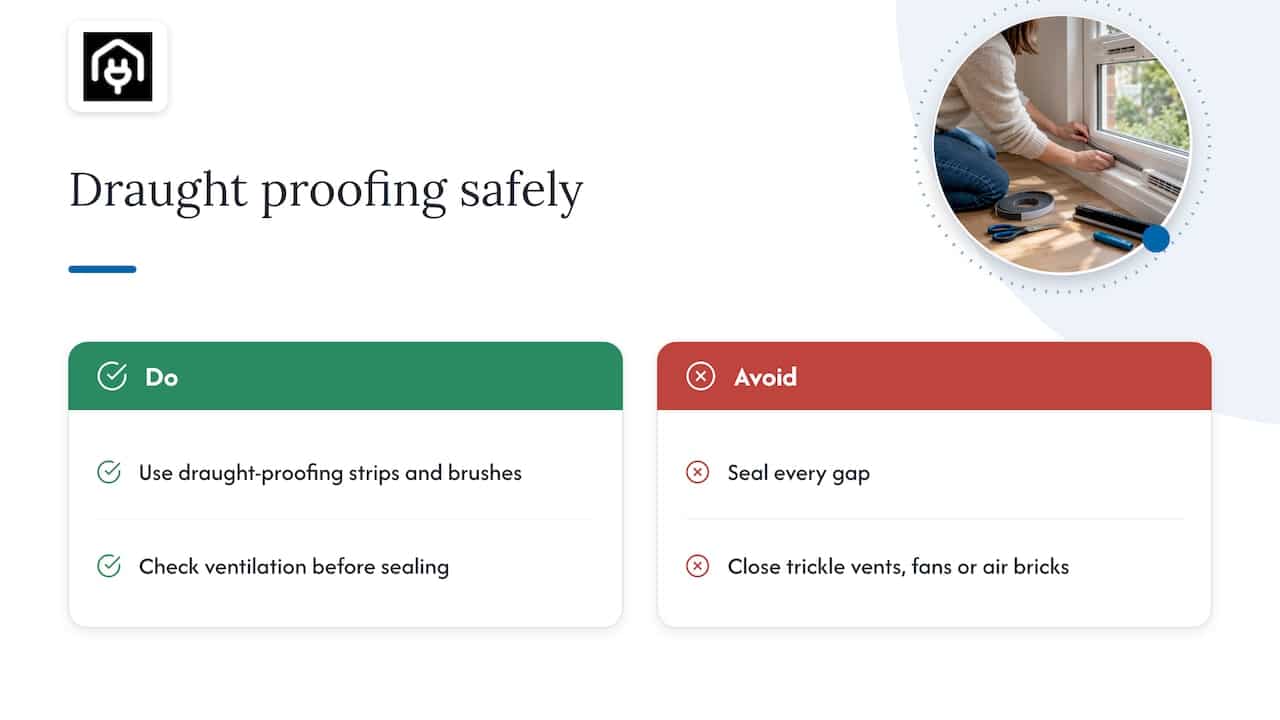
Gaps around doors, windows, letterboxes, loft hatches and floorboards let warm air out and cold air in. Draught proofing strips and brushes are cheap and the Energy Saving Trust includes draught proofing among its top ten.
Do not seal every gap. Intentional ventilation, such as trickle vents, extractor fans and air bricks for open-flued appliances, must stay open. The UK Health Security Agency explains in its guidance on energy efficiency and air quality that sealing a home to reduce heat loss should always come with a check of ventilation, to avoid poor air quality, damp and mould.
Hot water cylinder insulation
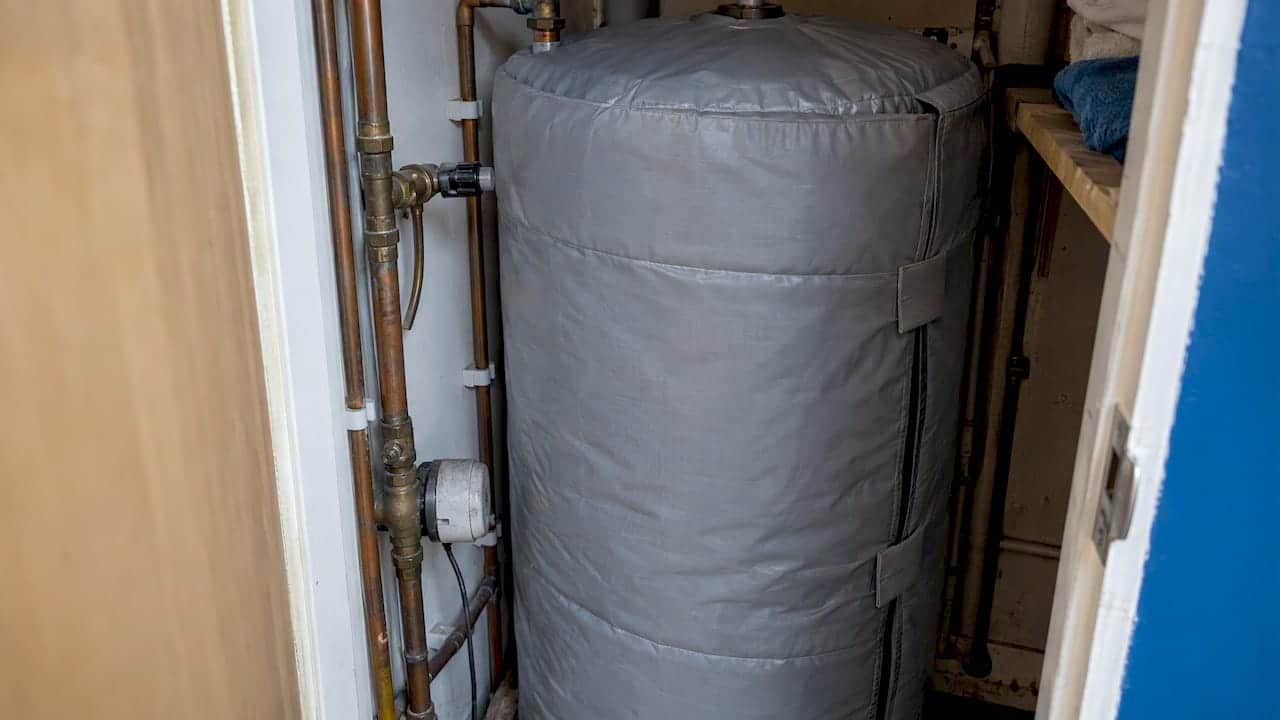
Homes with a hot water cylinder can top up the insulation with a jacket. The Energy Saving Trust lists this among its quick tips. National Grid notes that British Standard tank jackets are usually at least 75mm thick.
Radiator reflectors and shelves
Reflector panels behind radiators on external walls push heat back into the room. They are most useful on solid walls with no insulation. They are a modest measure and do not replace wall insulation.
Heating controls
Timers, room thermostats and thermostatic radiator valves let the heating match how the home is used. The government’s smart energy tips page covers timers, tariffs and apps as ways to run a warmer home more cheaply. A programmer set to start shortly before waking and stop shortly before leaving beats manual switching in most households.
Get the heating right before replacing it
Many households can cut waste from a boiler they already own.
Lower the combi boiler flow temperature
Government guidance on the energy efficient home campaign site says setting a combi boiler flow temperature to 60°C or lower can let the boiler run in condensing mode, which is more efficient, without replacing it. For vulnerable households, a slightly higher 65°C is suggested so the home heats up faster. Boiler settings differ by model, so the manual or a Gas Safe registered engineer should be the guide if the dial is unfamiliar.
Do not cut heating at the cost of health
Saving energy should never mean living in a cold home. The UK Health Security Agency advises heating homes to at least 18°C, while noting that there is no single threshold for everyone. Older people and those with health conditions may need more warmth, and fit, younger people may be comfortable with layers. A GP or local council advice service is the right contact for anyone who cannot afford to heat a home to a safe temperature.
Fabric first: insulation and glazing
The Carbon Trust’s heat pump retrofit research stresses a fabric-first approach. Improving the building envelope (walls, windows and loft) is a prerequisite to low-carbon heating. Without it, a system may need to be oversized and could cost occupants more to run than an efficient gas system.
Its building fabric guide describes two routes: whole-building refurbishment, which offers the chance to make significant savings and improve cost-effectiveness, or a single-measure approach, one improvement at a time.
A sensible sequence for most homes:
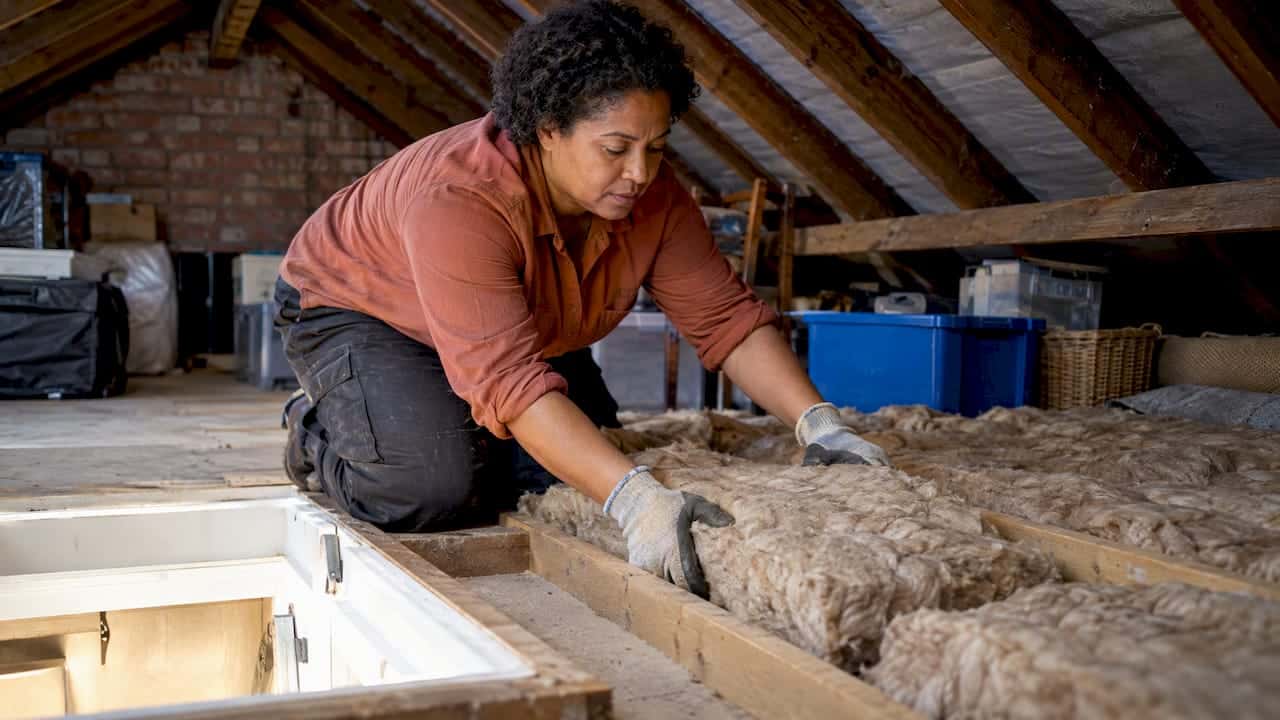
- Loft insulation. Usually the simplest and most cost-effective fabric job.
- Cavity wall insulation, where the walls are suitable, or solid wall insulation where they are not. A surveyor should confirm suitability first.
- Floors. Insulating under suspended timber floors helps with cold feet and heat loss.
- Windows and doors. Replace after the cheaper measures, unless the frames are failing. Secondary glazing is an option for period homes.
Ventilation after insulation
Every step above makes a home more airtight. The UKHSA guidance on air quality and energy efficiency is explicit that trickle vents and extractor fans must stay unblocked after work is done. A retrofit assessor or installer should specify ventilation as part of the job, not as an afterthought.
Carbon monoxide alarms
A tighter home also raises the importance of carbon monoxide safety. The UKHSA’s carbon monoxide guidance calls installing CO alarms the single most important action and notes that only 46% of English homes had one. Landlords must provide alarms in any room with a combustion appliance. Extractor fans should be used while cooking to stop gas build-up.
Low-carbon heating and generation
Heat pumps and solar panels are the big-ticket items. They cut carbon and, in the right house, running costs, but they suit homes that have already been through the fabric stage.
Heat pumps and the Boiler Upgrade Scheme
The Carbon Trust says heat pumps are a highly efficient form of electric heating and have the potential to deliver CO2 savings of 60-70% compared with conventional electric heating. Government help is available. According to Ofgem’s Boiler Upgrade Scheme installer guidance summary, the scheme has been extended to 2030. From April 2026 it offers:
| Technology | Grant |
|---|---|
| Hydronic heat pump | £7,500 |
| Biomass boiler | £5,000 |
| Air-to-air heat pump | £2,500 |
The heat pump system must be able to provide 100% of the space heating needs of the eligible property. Eligibility rules, installer certification and the application route are set by Ofgem, so they should be checked before signing a quote.
Pairing a heat pump with solar
The Energy Saving Trust notes in its heat pump Q&A that whatever the size of the system, a heat pump will use grid electricity when solar panels are not generating. Solar helps, but it does not cover every hour, so the sums should assume a mix.
What the savings mean for landlords
Landlords have a regulatory reason to act as well as a financial one. The government’s response to its consultation on private rented homes (published January 2026) sets out:
- A primary standard on the fabric performance metric, plus a secondary standard on either the smart readiness metric or the heating system metric, as shown on new EPCs.
- Compliance by 1 October 2030.
- A maximum spend of £10,000 per property, with an impact assessment average of £5,400.
Two points often misunderstood. Landlords are not forced to replace a working heating system, because the dual-metric design lets them invest in fabric and smart technology such as solar panels instead. And Boiler Upgrade Scheme grants do not count towards the £10,000 cap, so a heat pump grant does not use up the budget for fabric work.
A current EPC shows where a property stands on these metrics. For help understanding ratings, see the EPC exemption and regulations guide and the guide on understanding EPCs.
A simple order of action
| Stage | Typical measures | Effort |
|---|---|---|
| 1. Habits | Shorter showers, colder washes, no tumble dryer, standby off | None |
| 2. Quick fixes | Draught proofing, cylinder jacket, tap aerator, LEDs | Low |
| 3. Settings | Boiler flow temperature, timers, thermostat | Low |
| 4. Fabric | Loft, wall and floor insulation, glazing | Medium to high |
| 5. Systems | Heat pump, solar, smart controls | High |
Moving down the table spends more money for each step but should be done only once the stage above is finished. A home with a leaky loft and a new heat pump is a poor investment.
For longer walkthroughs on the first stages, the site has guides to low-cost energy-saving tips for UK homes and practical ways to reduce home energy use. The wider energy saving steps guide covers the whole path.
Our view on where to start
We see the same pattern in the questions property owners send in. Most people begin with gadgets and tariffs, when the largest and most lasting gains sit in the fabric and the heating. A measured approach beats a rushed one.
Our advice:
- Measure before spending. An EPC gives a recognised baseline and a list of recommended measures for a specific property. It turns guesses into a plan.
- Sequence the work. Fabric first, then heating, then generation. Skipping steps can leave a system oversized or a house damp.
- Treat ventilation and safety as part of the job. Alarms, trickle vents and extractor fans are not extras.
- Landlords should plan to 2030 now. The cap and the dual-metric design give flexibility, but only for those who know their starting point.
Small habits are worth keeping up, but no habit replaces a well-insulated roof.
— Danny
Get a baseline for your property
An accurate picture of how a building performs is the first step toward choosing the right upgrades. Homeowners and landlords can request a quote for a domestic Energy Performance Certificate online, and owners of offices, shops and other premises can use the commercial EPC service. Those with air conditioning systems should also look at TM44 inspections.
FAQ
What is the single best way to save energy at home?
There is no single answer, but the combination that works for most homes is cutting hot water use, draught proofing and insulating the loft. These tackle heating and hot water, the biggest part of a typical bill. Which job saves most depends on the property, and an EPC lists the measures recommended for it.
How much can simple changes save?
The Energy Saving Trust says its ten quick tips could save up to £313 a year in Great Britain. That is a ceiling, not a promise, and it assumes all ten are adopted. Households that already do many of them will save less.
Is it safe to draught proof my whole home?
It is safe to seal unwanted gaps, but not to block planned ventilation. Keep trickle vents, extractor fans and air bricks clear, and fit carbon monoxide alarms where there is a combustion appliance. The UKHSA advises that ventilation should be reviewed whenever heat loss is reduced.
Do I need a new boiler to save energy?
Not necessarily. Lowering the flow temperature on a combi boiler can let it condense more often, and better controls and insulation reduce demand. Replacement becomes worthwhile when the boiler is at the end of its life or when a heat pump is a good fit after fabric improvements.
Do landlords have to replace working heating systems?
No. Under the government’s response, landlords can meet the dual-metric standard through fabric work and smart technology instead, within the £10,000 per property cap. The government response sets the details and the 2030 deadline.
Sources
- Quick tips to save energy at home from the experts, Energy Saving Trust
- 10 tips for saving energy in your home, National Grid
- Energy efficient home campaign
- How to improve air quality in your home while making it more energy efficient, UKHSA
- Preventing avoidable deaths this winter, UKHSA
- How to protect your home and family from carbon monoxide, UKHSA
- Heat pump retrofit in London, Carbon Trust
- Building fabric, Carbon Trust
- Summary of updates in the BUS installer guidance V5, Ofgem
- Your heat pump questions answered, Energy Saving Trust
- Improving the energy performance of privately rented homes: government response, GOV.UK