
TL;DR:
- The most effective home energy upgrades follow a fabric-first sequence involving audits, sealing, and insulation. These steps improve efficiency faster and cost less than installing new systems first. Proper sequencing ensures better compliance and maximizes long-term savings for UK homeowners.
Increasing energy efficiency in your home is defined as reducing the amount of energy needed to maintain comfortable living conditions without sacrificing quality. For UK homeowners and property managers, this means targeting insulation, air sealing, heating systems, and smart controls in a deliberate sequence. The stakes are rising: Energy Performance Certificates (EPCs) are becoming a compliance requirement for landlords, and the upcoming Home Energy Model (HEM) will replace SAP as the standard assessment methodology. Getting the order of upgrades right determines whether investment delivers real savings or simply adds cost.
What foundational steps must be taken before upgrading home energy systems?
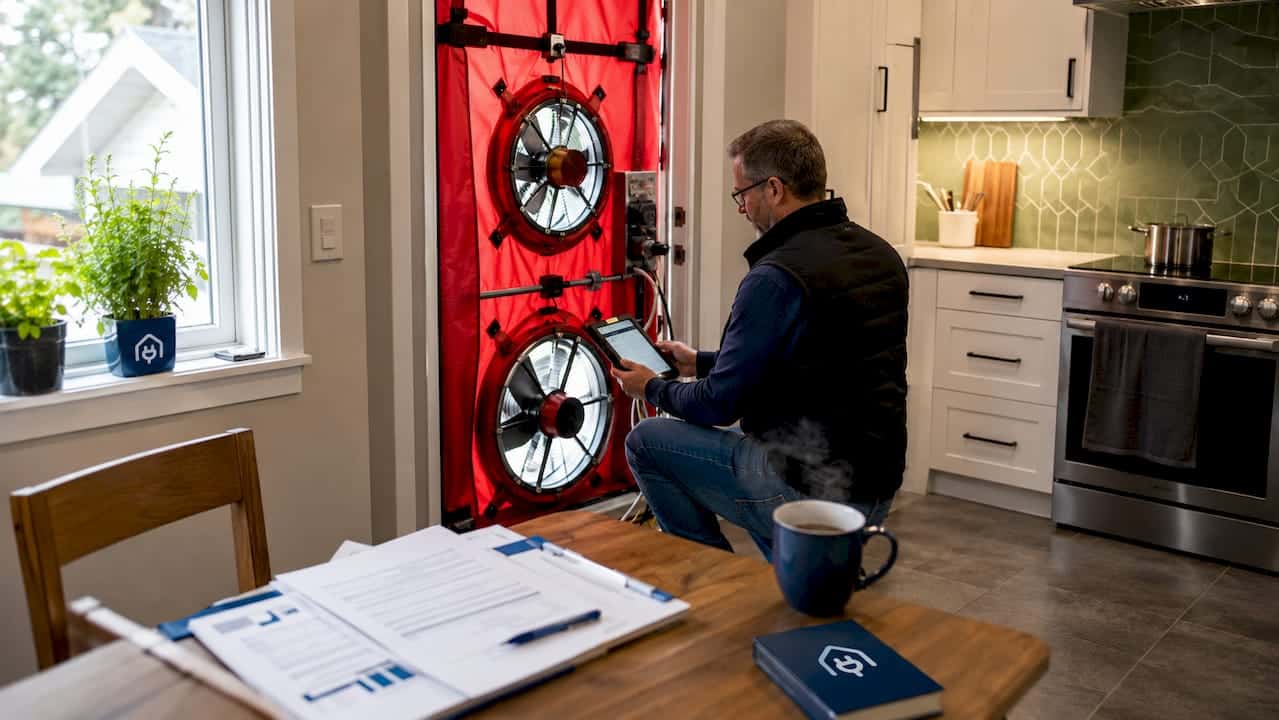
The single most important step before any upgrade is a professional energy audit. A blower-door test, which pressurises the home to measure air leakage, can reveal over 30% air loss through gaps that no amount of new equipment will fix. Without this baseline, property owners risk installing oversized boilers or heat pumps into a leaky shell, wasting both money and energy.
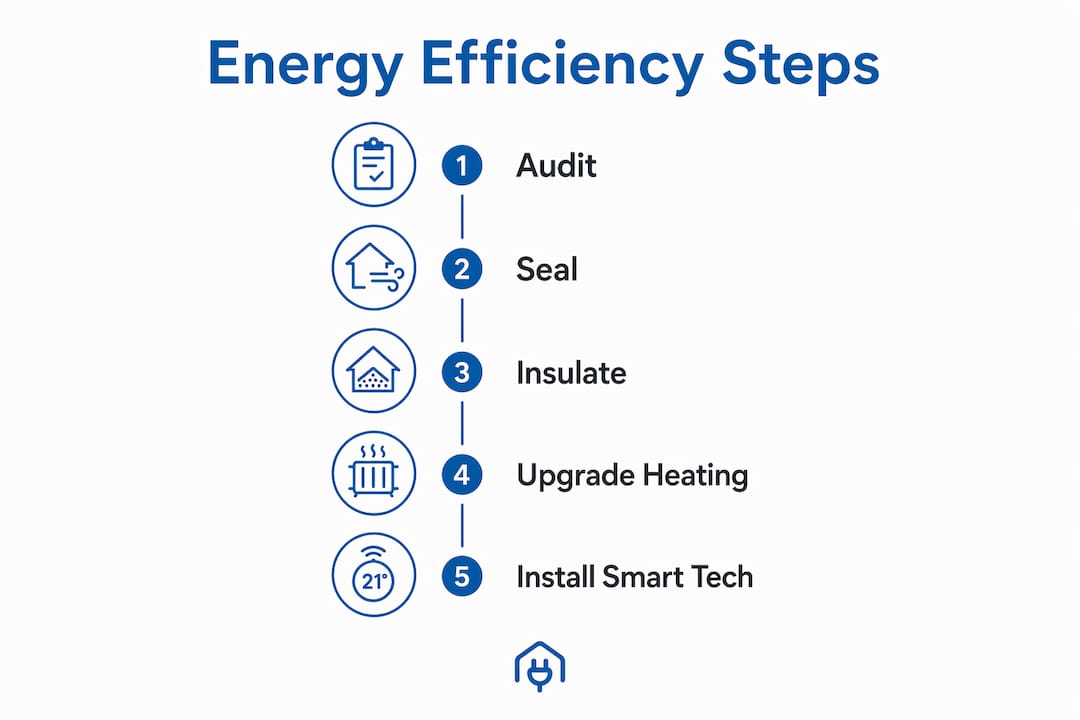
The fabric-first principle follows directly from audit findings. This means sealing air leaks and improving insulation before replacing any heating, ventilation, or air conditioning equipment. Right-sizing heating and cooling units after shell upgrades delivers greater cost-effectiveness than simply swapping systems in an unchanged building. A well-sealed home needs a smaller, cheaper heating unit to maintain the same temperature.
Common pitfalls at this stage include skipping the audit to save money upfront, then spending far more on oversized equipment. Another frequent mistake is treating draught-proofing as optional. Gaps around skirting boards, loft hatches, and pipework penetrations collectively account for significant heat loss in older UK properties.
- Commission a professional energy audit with blower-door testing.
- Review the audit report to identify the highest-priority air leakage points.
- Seal identified gaps before ordering any new heating equipment.
- Reassess heating load requirements based on the improved building shell.
- Proceed with system upgrades sized to the improved fabric, not the original one.
Pro Tip: Ask your assessor to provide a ranked list of improvements by payback period. Fabric upgrades almost always appear at the top, ahead of smart gadgets or new boilers.
How to improve insulation and air sealing effectively?
Insulation is the most reliable way to retain heat in winter and keep properties cool in summer. Adding insulation in attics, crawl spaces, and basements can reduce heating and cooling energy consumption by approximately 10%. That figure compounds over time, making insulation one of the highest-return upgrades available to UK property owners.
Key insulation areas and priorities
- Loft and roof space: Heat rises, so loft insulation delivers the fastest payback. UK Building Regulations Part L recommends a minimum depth of 270mm for mineral wool in loft spaces.
- Cavity walls: Properties built after the 1920s typically have cavity walls that can be filled with mineral wool, polystyrene beads, or foam. Solid wall properties require external or internal insulation boards.
- Ground floors: Suspended timber floors lose significant heat through draughts beneath floorboards. Rigid insulation boards fitted between joists address this directly.
- Basements and cellars: These are often overlooked but contribute to cold floors and damp conditions that reduce overall thermal performance.
Air sealing works alongside insulation to close the gaps that insulation alone cannot address. Draught-proofing windows and doors with compression seals or brush strips is the lowest-cost intervention available. Sealing rim joists, where the floor structure meets the external wall, stops cold air from entering the building at ground level. Appropriate materials include expanding foam for larger gaps and acoustic sealant for smaller cracks around pipes and cables.
Savings from sealing air leaks can exceed the cost of a home energy management system within three years. That payback speed makes air sealing the most financially compelling starting point for any home energy savings workflow.

Pro Tip: Sequence upgrades from the outside in. Complete external wall insulation before internal draught-proofing, otherwise you trap moisture between layers and risk condensation damage.
What heating and cooling system upgrades can maximise efficiency?
Heating accounts for the largest share of domestic energy use in UK homes. Once the building fabric is improved, the heating system can be right-sized to match the reduced load. Cold-climate air-source heat pumps with smart thermostats cut heat load by 20–30% compared with conventional boilers in appropriately insulated properties. That reduction translates directly into lower running costs and a smaller carbon footprint.
Key upgrades to consider after fabric improvements:
- Air-source heat pumps: Designed for UK climates, modern units operate efficiently even at temperatures below freezing. They work best in well-insulated homes where the reduced heat demand matches the pump’s output range.
- Smart thermostats: Devices that learn occupancy patterns and adjust heating schedules accordingly reduce wasted heat in unoccupied rooms. The average saving with a smart thermostat is 8% on utility bills.
- Zoned heating controls: Thermostatic radiator valves (TRVs) combined with a programmable room thermostat allow different temperatures in different zones, cutting energy use in rooms that are rarely occupied.
- Water heating: Insulating the hot water cylinder with a British Standard jacket, setting the thermostat to 60°C to prevent Legionella, and fitting low-flow shower heads reduces water heating energy without affecting comfort.
- HVAC servicing: Annual boiler servicing maintains combustion efficiency. A poorly maintained boiler can lose significant efficiency through incomplete combustion and heat exchanger fouling.
The home energy retrofit guide published by Homeenergymodel provides detailed guidance on sequencing these upgrades for UK property types, including solid-wall Victorian terraces and post-war semi-detached houses.
How can smart technology and automation reduce home energy consumption?
Smart technology delivers its greatest savings when installed in a home that already has a tight thermal envelope. Whole-home energy management systems combine audit data, smart controls, and automation to reduce heating and cooling costs by 15–30%, with a typical payback period of 3–7 years. That range narrows considerably when the building fabric is already well-sealed.
- Install a smart thermostat. Occupancy-based scheduling prevents heating empty rooms. Most units integrate with smartphone apps for remote control and usage reporting.
- Fit an energy monitor. Whole-home monitors display real-time consumption by circuit, identifying which appliances draw the most power and when.
- Automate high-load appliances. Dishwashers, washing machines, and electric vehicle chargers can be scheduled to run during off-peak tariff periods. Running appliances during off-peak hours via automated load controllers can save £300–£600 per year in applicable markets.
- Control lighting automatically. Occupancy sensors in hallways, bathrooms, and utility rooms eliminate the energy wasted by lights left on in empty spaces.
| Smart technology | Primary benefit | Typical payback |
|---|---|---|
| Smart thermostat | 8% average bill reduction | 1–2 years |
| Energy monitor | Identifies waste by circuit | Under 1 year |
| Automated load controller | £300–£600 annual saving | 1–3 years |
| Whole-home energy management system | 15–30% heating and cooling reduction | 3–7 years |
Pro Tip: Check whether your energy supplier offers a time-of-use tariff before investing in load automation. Without a tariff that prices off-peak electricity lower, the financial case for automated scheduling weakens significantly.
What ongoing behaviours and maintenance practices sustain energy efficiency?
Upgrades alone do not sustain efficiency gains. Routine maintenance and consistent habits determine whether a property retains its improved performance over years rather than months.
- Replace HVAC filters every three months. A clogged filter forces the system to work harder, increasing energy consumption and reducing equipment lifespan.
- Switch to LED lighting throughout. Replacing incandescent bulbs with LEDs cuts electricity use for lighting significantly. Pair LEDs with occupancy sensors or timers for outdoor fittings to eliminate unnecessary overnight consumption.
- Adjust window treatments seasonally. Closing heavy curtains at dusk in winter retains heat. In summer, external shading or reflective blinds reduce solar gain and cut cooling demand.
- Monitor energy bills monthly. A sudden increase in consumption often signals a maintenance issue, such as a failing heat pump, a draughty door seal, or an appliance left in standby mode. Catching these early prevents larger losses.
- Ventilate correctly. Trickle vents and mechanical ventilation with heat recovery (MVHR) systems maintain air quality without the heat loss associated with opening windows. Blocking trickle vents to reduce draughts is a common mistake that leads to condensation and mould.
The energy saving checklist from Homeenergymodel provides a structured annual review framework for property owners and managers to track these habits systematically.
Key takeaways
The most effective way to increase energy efficiency in a home is to follow a fabric-first sequence: audit, seal, insulate, then upgrade systems and add smart controls.
| Point | Details |
|---|---|
| Audit before investing | A blower-door test reveals air leakage and prevents costly oversizing of heating equipment. |
| Fabric-first saves most | Sealing and insulation deliver faster payback than smart technology installed in a leaky home. |
| Right-size heating systems | Size heat pumps and boilers to the improved building shell, not the original heat load. |
| Smart controls amplify savings | Whole-home energy management systems cut heating and cooling costs by 15–30% in well-sealed properties. |
| Maintenance sustains gains | Regular filter changes, LED lighting, and monthly bill monitoring prevent efficiency from degrading over time. |
Why I think most homeowners invest in the wrong order
The most consistent mistake I see is property owners buying a new boiler or heat pump before addressing the building fabric. The logic seems sound: replace the old, inefficient system with a modern one. The problem is that a leaky, poorly insulated home simply burns through energy faster than any heating system can compensate for efficiently.
The audit-first approach feels slow. It adds a step before the visible work begins. But the data is unambiguous: neglecting air sealing and insulation before upgrading heating leads to wasted investment. A heat pump installed in a draughty Victorian terrace will run almost continuously in winter, delivering poor efficiency and a high electricity bill.
The regulatory dimension adds urgency that many property managers underestimate. The Home Energy Model will replace SAP as the standard assessment tool, and EPC requirements for rental properties are tightening. Properties that have followed the fabric-first sequence will score better under HEM and face fewer compliance costs. Those that have only swapped systems may find their EPC rating improves less than expected. Understanding how energy efficiency ratings work before committing to upgrades is not optional for landlords. It is the difference between an investment that pays back and one that simply costs money.
— Danny
Homeenergymodel: resources for UK property owners
Homeenergymodel publishes detailed guidance for homeowners and property managers navigating the shift from SAP to the Home Energy Model. The 2026 smart homes energy efficiency guide covers how to integrate smart controls with a well-sealed building fabric to achieve maximum savings under current and forthcoming UK standards. For those starting with the basics, the energy saving tips guide provides a practical starting point covering insulation, heating, and behavioural changes. Both resources are written for UK property types and reference current Building Regulations and EPC requirements, making them directly applicable to compliance planning for 2026 and beyond.
FAQ
What is the fabric-first approach to home energy efficiency?
The fabric-first approach means sealing air leaks and improving insulation before upgrading heating or installing smart technology. It delivers faster payback and prevents oversizing of replacement equipment.
How much can insulation reduce energy bills?
Adding insulation to attics, crawl spaces, and basements can reduce heating and cooling energy consumption by approximately 10%, with additional savings from air sealing compounding that figure over time.
Do smart thermostats make a meaningful difference?
Smart thermostats reduce utility bills by an average of 8% by adjusting settings based on occupancy and schedules. Savings increase further when combined with a time-of-use energy tariff.
How does the Home Energy Model affect EPC ratings?
The Home Energy Model will replace SAP as the standard methodology for assessing residential energy performance in the UK. Properties with strong fabric performance, efficient heating, and smart controls are expected to score more favourably under HEM than under the current SAP framework.
What is the best first step for a property manager with multiple properties?
Commission professional energy audits across the portfolio to establish baseline EPC ratings and identify the highest-priority fabric improvements. Prioritise properties at risk of falling below minimum EPC thresholds under forthcoming rental regulations.