
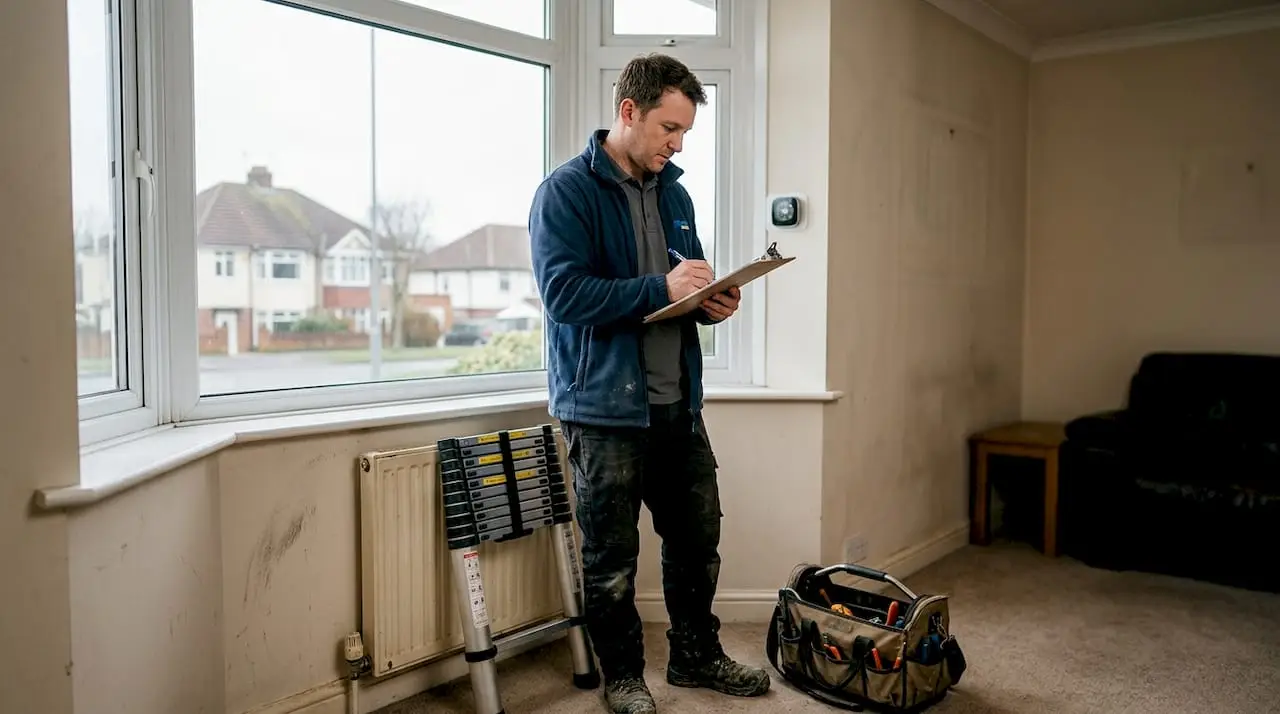
Many homeowners and landlords mistakenly view home energy assessments as mere bureaucratic paperwork, a checkbox exercise for property sales or lettings. In reality, these assessments serve as powerful diagnostic tools that reveal exactly how your property uses energy, where it wastes heat, and which improvements deliver the greatest savings. With new regulatory standards taking effect by 2030 requiring rental properties to meet Energy Performance Certificate Band C, understanding home energy assessments has never been more critical. This guide explains what a home energy assessment truly involves, how the process works, and practical steps you can take to enhance your property’s efficiency and comply with evolving UK energy regulations.
Table of Contents
- What Is A Home Energy Assessment In The UK?
- Understanding UK Regulatory Requirements And Deadlines For Landlords
- How The Home Energy Assessment Is Carried Out: Practical Steps And Technologies
- Navigating Edge Cases, Exemptions And Accuracy Nuances
- How To Apply Home Energy Assessment Results To Improve Your Property
- Discover Expert Home Energy Model Resources And Tools
Key takeaways
| Point | Details |
|---|---|
| Core assessment method | Home energy assessments produce Energy Performance Certificates using RdSAP methodology, rating properties from A to G based on insulation, heating, ventilation and renewables. |
| Landlord compliance | Current MEES requires EPC Band E minimum, with proposed Band C target by October 2030 for all tenancies, including mandatory fabric energy performance standards. |
| Practical audit process | Site visits typically last 30 minutes to 2 hours, involving thermal imaging, insulation checks, heating system evaluation and data input into standardised software. |
| Common exemptions | Listed buildings, certain rural properties and solid wall constructions may qualify for exemptions, particularly when cost caps of £10,000 to £15,000 are exceeded. |
| Improvement priorities | Fabric-first approach focusing on loft and wall insulation delivers up to 40% heating savings, with LED lighting reducing electricity consumption by 75%. |
What is a home energy assessment in the UK?
A home energy assessment in the UK primarily involves producing an Energy Performance Certificate using methodologies like RdSAP for existing homes, assessing factors such as insulation, heating systems, ventilation and renewables to rate energy efficiency from A (best) to G (worst). This standardised evaluation provides property owners with a clear picture of current energy performance and identifies specific improvements that could enhance efficiency and reduce running costs.
The assessment focuses on the building fabric and installed systems rather than occupant behaviour. An accredited assessor collects data on construction materials, wall types, window specifications, heating equipment, hot water systems and renewable installations. This information feeds into RdSAP software, which calculates theoretical energy consumption and carbon emissions based on standardised usage patterns.
Key components evaluated during a home energy assessment include:
- Insulation levels in lofts, walls, floors and around pipes
- Heating system type, age, efficiency rating and controls
- Ventilation arrangements and air tightness characteristics
- Window glazing specifications and door construction
- Renewable energy installations such as solar panels or heat pumps
- Lighting efficiency and hot water system performance
The resulting EPC displays two ratings: one for current energy efficiency and another for environmental impact measured in carbon dioxide emissions. Both use the A to G scale, where Band A represents the most efficient properties with lowest running costs and Band G indicates poor performance with high energy bills. The certificate also includes tailored recommendations for improvements, each showing potential rating gains and estimated costs.
A typical site visit lasts between 30 minutes and two hours depending on property size and complexity. Assessors measure rooms, photograph key features, inspect accessible areas like lofts and boiler cupboards, and record details about construction and systems. They cannot conduct invasive investigations or remove fixtures, so some assumptions may be necessary based on property age and typical construction methods for that era. Understanding assessing home energy loss helps property owners appreciate the thoroughness required for accurate evaluations.
Understanding UK regulatory requirements and deadlines for landlords
For landlords, MEES requires EPC Band E now, with proposed Band C by 2030 for all tenancies from October 2030 onwards, using new metrics where Fabric C becomes mandatory plus either Heating or Smart C must be achieved. These Minimum Energy Efficiency Standards represent the most significant shift in private rental sector regulations for decades, affecting approximately 1.2 million properties currently below Band C.
The current framework prohibits landlords from granting new tenancies or renewing existing ones if the property holds an EPC rating below Band E, unless a valid exemption applies. This baseline requirement has been in force since April 2020 for existing tenancies, catching properties that previously escaped scrutiny. Penalties for non-compliance reach £5,000 per property per breach, with local authorities empowered to investigate and enforce standards.
Proposed 2030 regulations introduce a more sophisticated approach:
- Overall EPC rating must reach Band C
- Fabric energy efficiency must independently achieve Band C
- Either heating system efficiency or smart controls must reach Band C
- Cost caps of £10,000 to £15,000 per property limit mandatory spending
- Properties meeting cost cap thresholds without achieving Band C can claim exemptions
The fabric-first requirement ensures landlords cannot simply install renewable technologies to mask poor building performance. Properties must demonstrate genuine thermal efficiency through adequate insulation and draught-proofing before heating system upgrades count towards compliance.
Exemptions recognise practical limitations for certain property types. Listed buildings protected for architectural or historical significance may claim exemptions where alterations would damage heritage features. Properties with solid wall construction in conservation areas face similar challenges, as external insulation often requires planning permission that may be refused. Rural properties relying on non-mains heating systems encounter additional complications with renewable technology installations.
The cost cap mechanism provides crucial protection for landlords facing disproportionate improvement expenses. When quoted costs for reaching Band C exceed the cap, landlords can register exemptions valid for five years. However, they must obtain quotes from approved installers and demonstrate genuine attempts to improve performance within budget constraints. Understanding UK retrofit assessment standards helps landlords navigate these complex requirements effectively.
How the home energy assessment is carried out: practical steps and technologies
Practical audit steps check loft and wall insulation, draughts, boiler efficiency, lighting, appliances and water efficiency, with thermal imaging identifying heat loss areas that standard visual inspections might miss. Accredited assessors follow standardised protocols to ensure consistency across evaluations, though individual properties present unique challenges requiring professional judgement.
The comprehensive site inspection follows seven key stages:
- External survey recording wall construction, window types, roof configuration and any visible renewable installations
- Loft inspection measuring insulation depth, checking ventilation and identifying thermal bridging at eaves
- Heating system evaluation noting boiler type, age, efficiency rating, fuel source and control sophistication
- Internal room measurements calculating floor areas, ceiling heights and window-to-wall ratios
- Draught assessment checking seals around doors, windows, letterboxes and service penetrations
- Lighting and appliance audit documenting bulb types, fixed fittings and permanently installed equipment
- Hot water system review examining cylinder insulation, pipework lagging and shower flow rates
Thermal imaging cameras have revolutionised energy assessments by revealing hidden defects invisible to the naked eye. These devices detect temperature variations across surfaces, highlighting missing insulation, air leakage paths and thermal bridges where heat escapes through structural elements. Cold spots around window frames indicate poor installation, whilst warm patches on external walls during winter suggest inadequate cavity insulation.
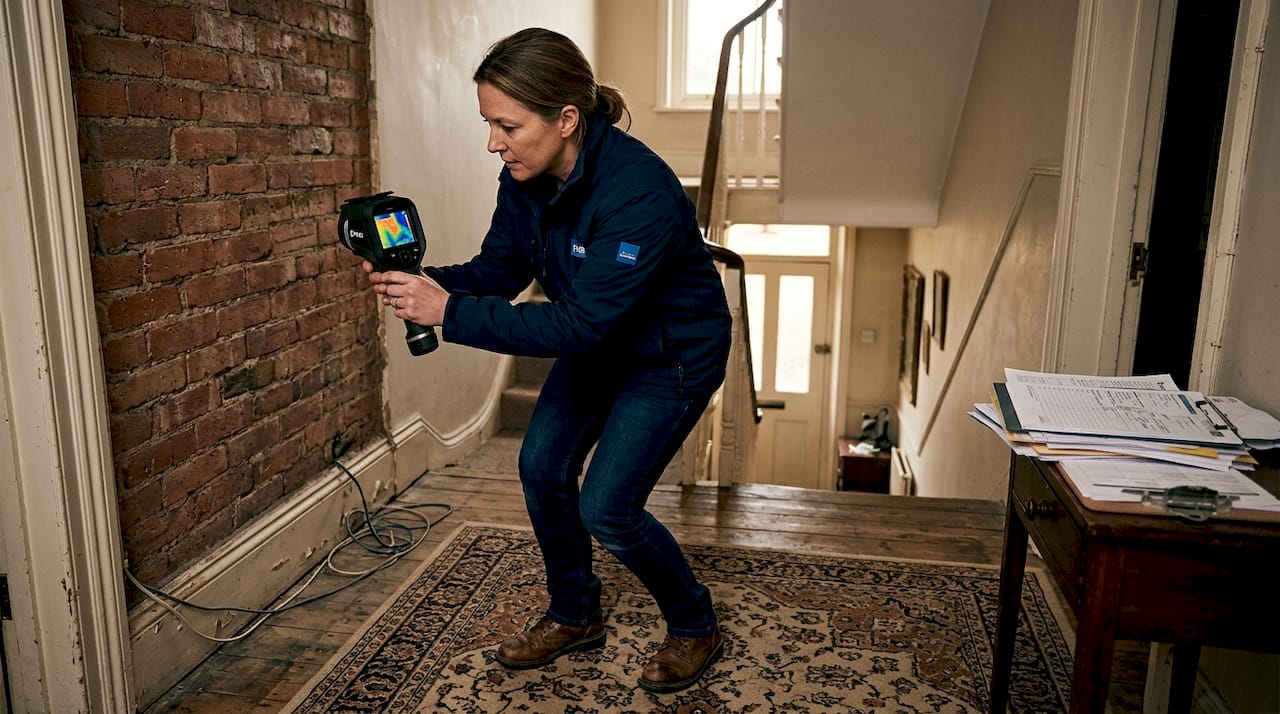
Data collected during the site visit feeds into RdSAP software, which applies standardised calculations to determine the property’s energy rating. The software accounts for regional climate variations, typical occupancy patterns and standard heating schedules to produce comparable results across different locations and property types. This standardisation means EPCs reflect building performance rather than how current occupants actually use the property.
| Assessment stage | Typical duration | Key outputs |
|---|---|---|
| Initial site visit | 30-120 minutes | Measurements, photographs, system details |
| Data input and calculations | 2-4 hours | Draft EPC rating and recommendations |
| Quality assurance checks | 1-2 hours | Verified certificate and lodgement |
| Total turnaround time | 3-5 working days | Final EPC valid for 10 years |
Pro Tip: Request your assessor inspect hard-to-reach areas like loft hatches in built-in wardrobes or boiler cupboards behind stored items, as these often reveal insulation gaps that significantly impact ratings and can be easily addressed.
The home energy audit checklist provides landlords with detailed preparation guidance to ensure assessors can access all necessary areas and gather complete information during the initial visit, avoiding delays from follow-up inspections.
Navigating edge cases, exemptions and accuracy nuances
Hard-to-treat properties with solid walls, listed status or rural locations may qualify for exemptions, particularly when cost caps are exceeded or necessary consent is denied by planning authorities. The modular Home Energy Model improves assessment accuracy but some ratings may drop without physical changes as the new methodology better reflects actual performance.
Common exemption scenarios include properties where:
- External wall insulation requires planning permission subsequently refused
- Internal wall insulation would reduce room sizes below acceptable standards
- Listed building consent is denied for alterations affecting character
- Installation costs exceed the £10,000 to £15,000 cap despite obtaining multiple quotes
- Technical constraints prevent renewable technology installations in conservation areas
The performance gap between EPC ratings and actual energy consumption has long frustrated property owners. The Home Energy Model addresses this by incorporating more sophisticated calculations for modern technologies like heat pumps, solar photovoltaic systems and battery storage. Traditional RdSAP methodology struggled to accurately model these systems, often undervaluing their contribution to property efficiency.
| Property type | RdSAP accuracy | HEM accuracy | Key differences |
| — | — | — |
| Standard gas heating | High | High | Minimal methodology change |
| Heat pump systems | Moderate | High | Better seasonal performance modelling |
| Solar PV installations | Low | High | Improved generation and self-consumption calculations |
| Battery storage | Not assessed | Moderate | New capability to model stored energy use |
Fabric-first principles remain crucial regardless of assessment methodology. Properties with poor insulation waste energy regardless of heating system efficiency or renewable installations. A well-insulated home with an older boiler typically outperforms a poorly insulated property with a new heat pump, as the fundamental heat loss through walls, roofs and windows dominates overall consumption.
Pro Tip: When planning improvements, address fabric deficiencies before upgrading heating systems, as reduced heat demand allows installation of smaller, less expensive equipment whilst maximising efficiency gains and comfort improvements.
The transition to HEM methodology may see some property ratings change without physical alterations. Properties with renewable technologies might improve as the new model better recognises their contribution. Conversely, properties that previously benefited from RdSAP’s simplified assumptions might see ratings drop as more accurate modelling reveals actual performance characteristics. Understanding the performance gap in UK properties helps owners interpret these changes and prioritise genuine improvements over gaming the assessment system.
How to apply home energy assessment results to improve your property
Your EPC recommendations section lists specific improvements ranked by cost-effectiveness, showing potential rating gains and payback periods for each measure. Insulation saves up to 40% on heating costs whilst LED lighting reduces electricity consumption by 75%, making these priorities for most properties regardless of current rating.
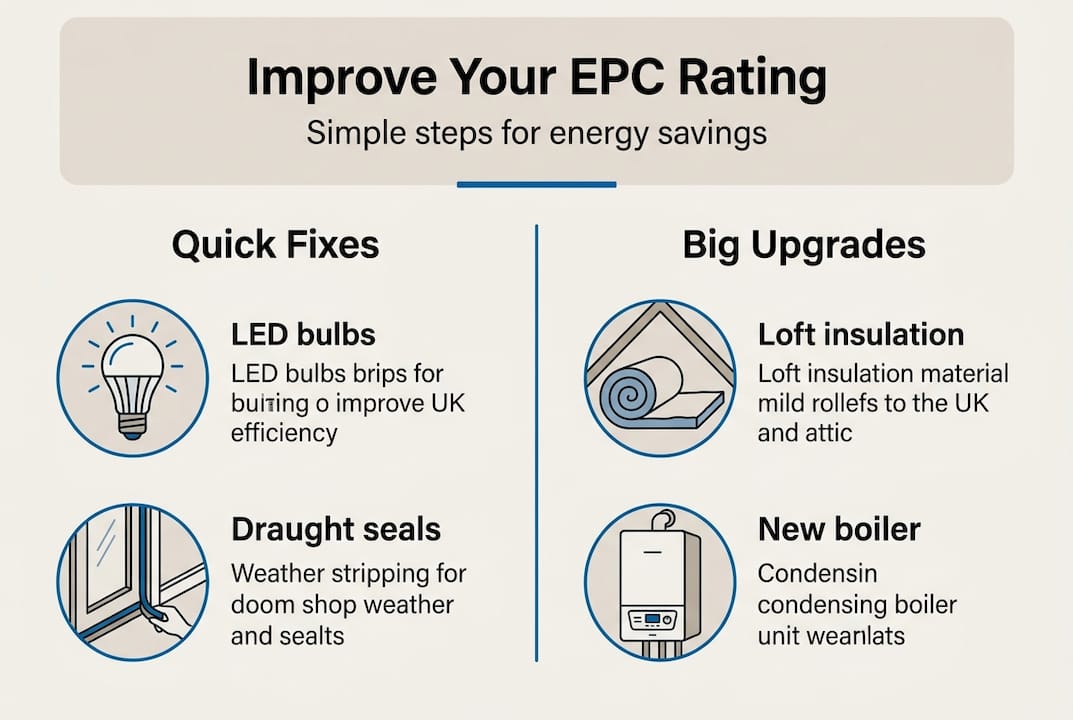
Interpreting your EPC requires understanding the difference between quick wins and major investments. The certificate categorises recommendations into low-cost, medium-cost and high-cost improvements, though these bands provide only rough guidance. A recommendation listed as low-cost might still require several hundred pounds, whilst high-cost measures can range from £3,000 to £30,000 depending on property size and specification.
Fabric-first improvement priorities typically include:
- Loft insulation to 270mm depth, delivering fastest payback for uninsulated or under-insulated roofs
- Cavity wall insulation where applicable, saving £200 to £400 annually on typical properties
- Draught-proofing around doors, windows and other openings, often achievable as DIY projects
- Hot water cylinder jackets and pipe lagging, providing immediate savings for minimal investment
Simple energy-saving measures complement major improvements and deliver cumulative benefits. Replacing all lighting with LED bulbs costs £50 to £150 for an average home but reduces lighting energy consumption by three-quarters. Fitting thermostatic radiator valves allows room-by-room temperature control, preventing waste from heating unused spaces. Upgrading to a smart thermostat with weather compensation and learning algorithms can trim 10% to 15% from heating bills through optimised scheduling.
Budgeting for improvements requires balancing compliance deadlines against available funds. Landlords facing the 2030 Band C requirement have four years to plan and implement changes, allowing phased approaches that spread costs. Prioritise measures offering greatest rating improvements per pound spent, typically insulation and heating controls before expensive boiler replacements or renewable installations.
Pro Tip: Combining multiple small improvements often proves more cost-effective than single large measures, as LED lighting, draught-proofing, cylinder insulation and radiator valves together might lift a property from Band E to Band D for under £1,000, deferring major investments until necessary.
Scheduling improvements strategically maximises benefits and minimises disruption. Plan loft insulation and external works during dry summer months. Time boiler replacements for autumn before heating season begins. Coordinate multiple trades to reduce site visits and temporary accommodation needs for extensive retrofits. Understanding improving building energy efficiency helps property owners develop realistic timelines that balance regulatory compliance with practical constraints and budget availability.
Discover expert home energy model resources and tools
Navigating the evolving landscape of UK energy performance standards requires access to reliable, up-to-date information and practical guidance. Our comprehensive resources explain how the new Home Energy Model methodology affects property assessments and what changes landlords and homeowners should anticipate as the 2030 compliance deadline approaches.
Explore our detailed analysis of types of home energy models for landlords, comparing traditional RdSAP assessments with emerging HEM methodology to understand which approach applies to your property and how ratings might change under new standards. Our energy performance guide provides actionable strategies for improving building efficiency through cost-effective measures that deliver genuine savings alongside compliance benefits.
For those seeking deeper understanding of the technical framework underpinning modern energy assessments, our resource on home energy model explained UK breaks down complex methodology into accessible explanations that help property professionals and homeowners make informed decisions about improvements and investments.
FAQ
What is included in a home energy assessment?
A home energy assessment inspects insulation levels in lofts, walls and floors, evaluates heating system efficiency and controls, checks window glazing and door specifications, and records any renewable installations like solar panels. The assessor produces an Energy Performance Certificate rating the property from A to G with tailored recommendations for improvements.
How long does a home energy assessment take?
Site visits typically range from 30 minutes for small flats to two hours for larger detached properties with complex systems and multiple outbuildings. The assessor then requires two to four hours for data input, calculations and quality checks before producing the final certificate, with total turnaround usually within three to five working days.
Are there exemptions to EPC requirements for landlords?
Exemptions apply when improvements would damage listed building character, when planning permission for necessary works is refused, or when costs exceed the £10,000 to £15,000 cap despite obtaining multiple quotes. Rural properties and those with solid wall construction in conservation areas often qualify for exemptions due to technical constraints or consent limitations.
How can I improve my home’s EPC rating after assessment?
Focus on fabric improvements starting with loft insulation to 270mm depth and cavity wall insulation where applicable, as these deliver greatest savings per pound invested. Upgrade to LED lighting throughout, fit thermostatic radiator valves for room-by-room control, and ensure hot water cylinders have adequate jackets with lagged pipes to minimise heat loss.