
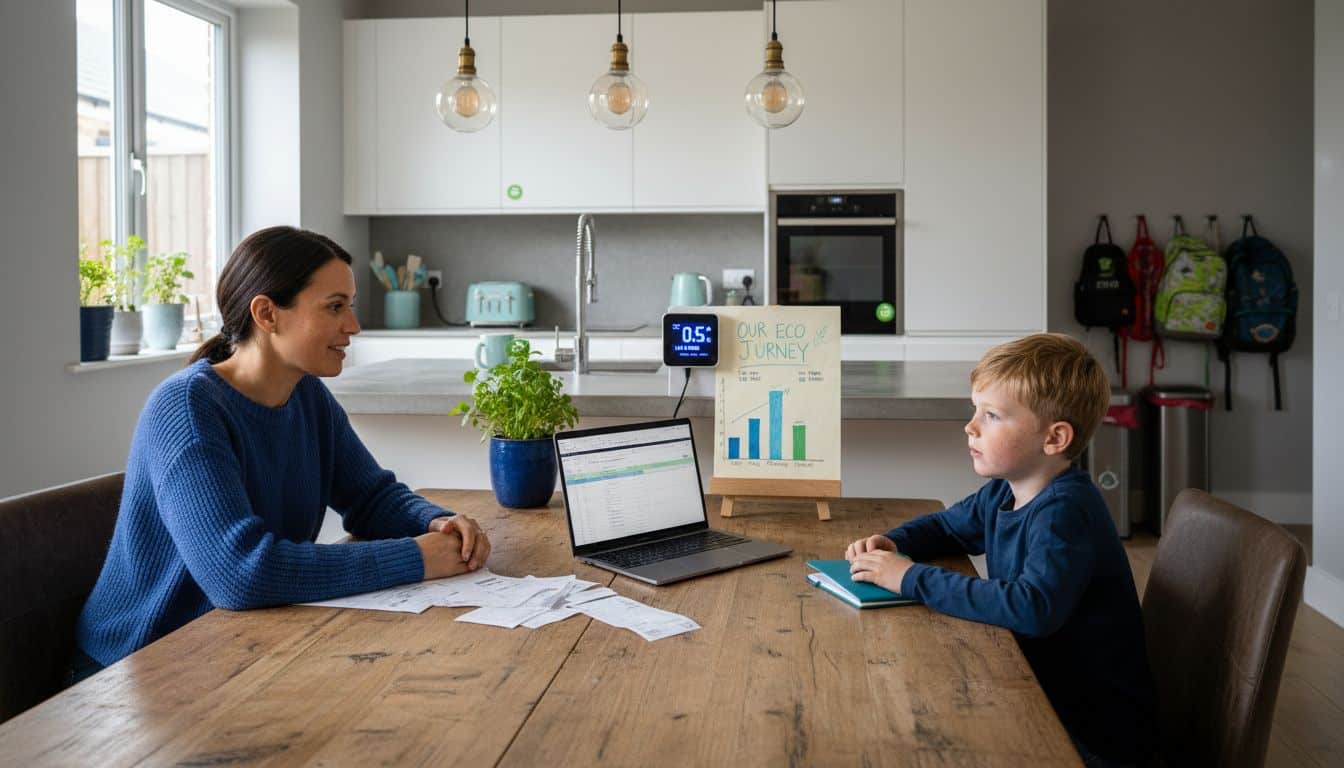
UK households account for nearly a quarter of national carbon emissions each year. With energy bills on the rise and climate concerns growing, making your home more efficient has never mattered more. Simple changes to how you use energy and water can save money and make a real difference for the planet. This guide offers practical steps to help you measure, improve, and track your home’s resource use for a smaller carbon footprint.
Table of Contents
- Step 1: Evaluate Current Home Energy And Water Use
- Step 2: Upgrade Insulation And Eliminate Draughts
- Step 3: Switch To Low-Carbon Heating And Appliances
- Step 4: Adopt Renewable Energy Sources
- Step 5: Track Improvements And Verify Carbon Reductions
Quick Summary
| Key Point | Explanation |
|---|---|
| 1. Evaluate energy and water use | Begin by analyzing utility bills to identify patterns in energy and water consumption. This baseline is critical for improvement. |
| 2. Upgrade insulation and seal draughts | Implement measures such as weatherstripping and thermal curtains to minimize heat loss and reduce energy bills. |
| 3. Invest in low-carbon heating | Consider switching to heat pumps and energy-efficient appliances to lower your carbon footprint significantly. |
| 4. Adopt renewable energy solutions | Explore installing solar panels and other renewable technologies to generate clean energy for your home. |
| 5. Monitor and track improvements | Use tracking tools to measure energy usage and verify reductions in carbon emissions for ongoing energy efficiency efforts. |
Step 1: Evaluate current home energy and water use
Understanding your home’s current energy and water usage is the critical first step in reducing your carbon footprint. This evaluation will help you pinpoint exactly where and how you can make meaningful improvements to your household’s resource consumption.
According to the UK government’s Standard Assessment Procedure (SAP), a comprehensive assessment involves calculating annual energy costs for space heating, water heating, lighting, and total CO₂ emissions gov.uk. To begin, gather your utility bills from the past 12 months to establish a baseline. Review electricity, gas, and water statements to track your consumption patterns. Look for trends such as seasonal variations or unexpected spikes in usage.
Start by creating a detailed spreadsheet documenting your monthly energy and water consumption. Include kilowatt hours for electricity, cubic metres for gas, and water usage in litres. Compare these figures against the UK average household consumption to understand where you might be using more resources than necessary. Energy Saving Tips 2025: Achieve Maximum Efficiency at Home can provide additional guidance on interpreting these numbers.
Pro tip: Consider using a smart energy monitor to track real-time consumption. These devices can help you understand exactly which appliances and activities are driving your energy use, providing insights that utility bills alone cannot reveal. This granular data will be invaluable as you develop strategies to reduce your carbon footprint and improve home efficiency.
Step 2: Upgrade insulation and eliminate draughts
Reducing heat loss through proper insulation and draught prevention is a powerful strategy for minimising your home’s carbon footprint and cutting energy expenses. By creating a more airtight and well-insulated living environment, you can significantly improve your home’s energy efficiency.
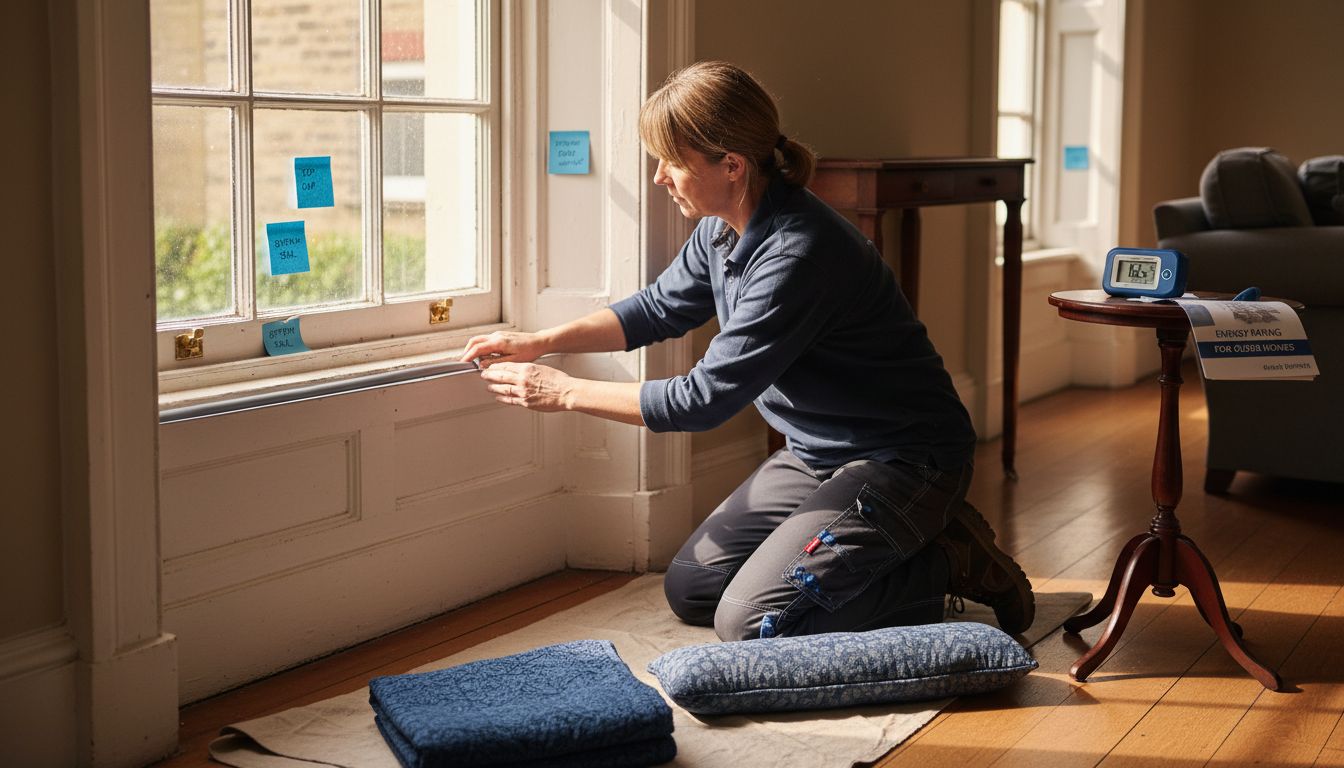
According to Islington Council, tackling draught issues involves systematically sealing gaps around windows, doors, and other potential air leakage points. Start by conducting a comprehensive draught audit of your home. Use a candle or incense stick to detect air movement near window frames, door edges, electrical outlets, and anywhere external walls meet interior spaces. Mark areas where you notice air movement for targeted treatment.
Focus on key draught elimination techniques such as applying weatherstripping to window and door frames, installing draught excluders at door bottoms, and using thermal curtains or window films. Pay special attention to older properties with more potential air leakage points.
 For comprehensive insulation upgrades, 7 Smart Energy Efficient Home Upgrades for Property Owners can provide additional insights into whole-home thermal performance improvements.
Pro tip: Prioritise draught sealing in rooms with the most significant temperature variations and highest energy consumption. Even small improvements can lead to noticeable reductions in heating costs and carbon emissions.
Step 3: Switch to low-carbon heating and appliances
Transitioning to low-carbon heating and energy-efficient appliances represents a significant opportunity to reduce your household’s carbon footprint and long-term energy expenses. This strategic upgrade can dramatically improve your home’s environmental performance while potentially lowering utility costs.
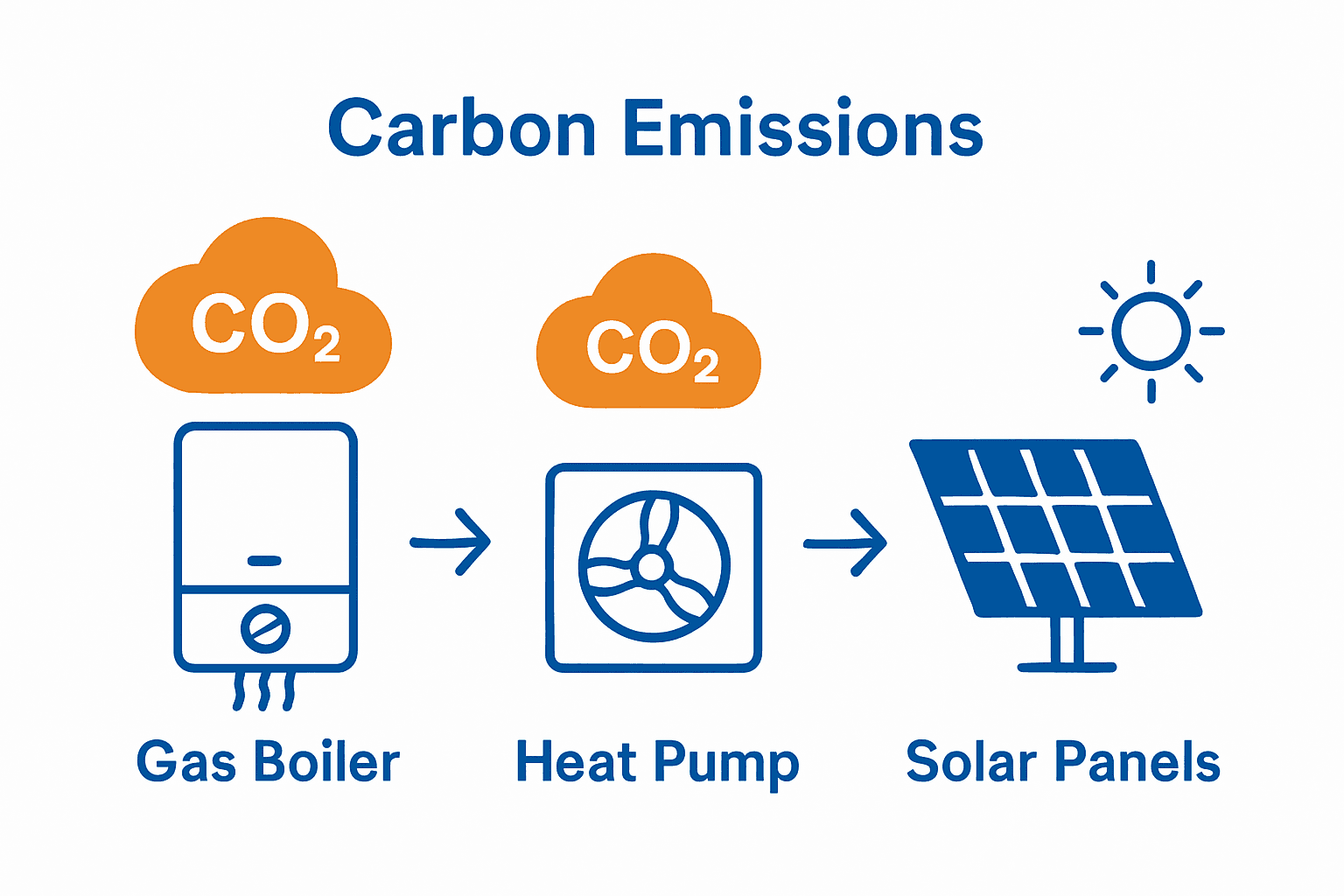
MoneyWeek reports that the UK government is set to relax heat pump installation rules from May 29, 2025, with the Boiler Upgrade Scheme offering a generous £7,500 grant towards installation costs. When considering low-carbon heating solutions, heat pumps emerge as a leading technology. Air source and ground source heat pumps extract renewable energy from the environment, providing efficient heating with significantly reduced carbon emissions compared to traditional gas boilers.
Prioritise replacing older, inefficient appliances with modern low-carbon alternatives. Guide to Efficient Appliances for Energy-Smart Homes can help you identify the most energy-efficient options. Focus on major energy consumers like refrigerators, washing machines, and heating systems.
 Look for appliances with the highest energy rating A+++ or A++ to ensure maximum efficiency.
Pro tip: Check current government incentives before making purchases. Many low-carbon technologies qualify for grants or tax rebates, which can significantly offset initial investment costs.
Step 4: Adopt renewable energy sources
Transitioning to renewable energy sources is a powerful way to dramatically reduce your home’s carbon footprint and contribute to a more sustainable future. By generating your own clean energy, you can significantly decrease reliance on fossil fuel based electricity and potentially save money on long-term energy costs.
Gov.uk reports that the UK government’s Warm Homes Plan includes provisions for installing solar panels in up to 170,000 homes, enabling households to generate renewable energy and reduce fossil fuel dependence. When considering renewable energy options, solar panels represent an excellent starting point for most homeowners. Assess your property’s solar potential by evaluating roof orientation, shade coverage, and available installation space.
Beyond solar, explore additional renewable energy technologies such as wind turbines for rural properties, ground source heat pumps, and battery storage systems that can help manage and store your generated energy. Renewable Energy Explained: UK Guide for 2025 Compliance can provide comprehensive insights into the latest renewable energy technologies suitable for UK homes.
Pro tip: Check local and national government incentive schemes before installation. Many renewable energy projects qualify for grants, tax rebates, or feed-in tariffs that can significantly offset initial investment costs.
Step 5: Track improvements and verify carbon reductions
Monitoring and verifying your home’s carbon reduction efforts is crucial to understanding the real impact of your energy efficiency initiatives. By systematically tracking your progress, you can identify which strategies are most effective and continue making informed improvements to your household’s environmental performance.
Gov.uk highlights the upcoming Home Energy Model as a robust new methodology for estimating home energy performance. Begin by establishing a baseline measurement of your current carbon emissions and energy consumption. Collect utility bills from the past 12 months and calculate your total annual energy usage and associated carbon footprint.
Create a detailed tracking spreadsheet that records monthly energy consumption, comparing current data against your initial baseline. Similar to Display Energy Certificates, develop a personal rating system that grades your home’s energy efficiency on a scale from A to G. Track key metrics such as electricity usage, heating efficiency, and total carbon emissions. Regularly update this document to visualise your progress and identify areas requiring further improvement.
Pro tip: Use digital energy monitoring tools and smart metres to obtain real-time data on your energy consumption. These technologies provide precise insights that can help you make more targeted reductions in your carbon footprint.
Take Control of Your Home’s Carbon Footprint Today
Reducing your carbon footprint at home can feel overwhelming when facing complex energy assessments and evolving regulations. This article reveals practical steps like evaluating energy use, upgrading insulation, and switching to low-carbon heating that are essential but can raise many questions. You want to ensure your improvements truly count while staying ahead of new UK standards such as the upcoming Home Energy Model (HEM), designed to replace SAP in 2025.
Discover how homeenergymodel.co.uk supports you in navigating these challenges with clear guidance on the HEM and its impact on energy performance and carbon tracking. Whether you are a homeowner, landlord, or property investor, our resources empower you to make smart choices that align with the Future Homes Standard. Do not wait until changes take effect—start improving your home’s energy efficiency now by exploring essential tools like energy and water efficiency calculations and understanding what the new Energy Performance Certificates mean for you. Your journey to a low-carbon home begins here.
Frequently Asked Questions
How can I evaluate my current home energy and water use to reduce my carbon footprint?
To evaluate your home’s energy and water use, gather your utility bills from the last 12 months and create a detailed spreadsheet of your monthly consumption. This will help you identify patterns and areas for improvement.
What simple steps can I take to upgrade my home insulation and eliminate draughts?
Focus on sealing gaps around windows and doors with weatherstripping and adding draught excluders. Conduct a draught audit to pinpoint air leakage areas, and aim to seal these gaps to improve your home’s energy efficiency significantly.
What are some low-carbon heating options I should consider for my home?
Consider replacing your traditional gas boiler with a heat pump, as it draws renewable energy from the environment for efficient heating. Research and prioritize installing this technology to lower your carbon emissions and energy costs over time.
How can I start adopting renewable energy sources in my home?
Begin by assessing your property’s suitability for solar panel installation to generate your own clean energy. Explore other options like wind turbines and battery storage systems to enhance your renewable energy use further.
How do I track improvements in my home’s carbon footprint reduction efforts?
Create a tracking spreadsheet to log your monthly energy usage and carbon emissions, comparing it to your initial baseline. Regularly update this document to visualize progress and identify areas requiring more focus for further improvements.
What tools can help me monitor my home energy consumption effectively?
Use digital energy monitoring tools or smart meters to receive real-time insights into your energy consumption patterns. Implementing these tools will allow you to make more informed decisions on reducing your carbon footprint.
Recommended
- 7 Essential Home Appliance Efficiency Tips for UK Properties – Home Energy Model
- 7 Smart Home Energy Saving Habits Every Property Owner Needs – Home Energy Model
- Guide to Efficient Appliances for Energy-Smart Homes – Home Energy Model
- Energy Saving Tips 2025: Achieve Maximum Efficiency at Home – Home Energy Model