

Understanding peak demand can save UK property owners up to 20% on electricity bills. Peak demand refers to the highest short-term electricity consumption your property experiences, typically measured in kilowatts over 15 to 30-minute intervals. This matters because energy suppliers charge more during these high-use periods, and the new Home Energy Model (HEM) starting in 2025 incorporates peak demand into energy performance assessments, making it essential for compliance and cost control.
Table of Contents
- Understanding Peak Demand: Definition And Importance
- Understanding Peak Demand: Timing And Causes
- Financial Impact Of Peak Demand On Properties
- Regulatory Context: Peak Demand In UK Energy Efficiency Policies
- Role Of HEM In Assessing Peak Demand And Energy Use
- Energy Management Strategies To Reduce Peak Demand
- Common Misconceptions About Peak Demand
- Summary And Next Steps For Property Owners
- Why Use Homeenergymodel.co.uk To Manage Peak Demand
Key takeaways
| Point | Details |
|——-|———||
| Peak demand definition | Highest short-term electricity use measured in kilowatts, directly impacting tariff costs and charges |
| Financial impact | Peak demand pricing can increase property energy bills by up to 20% through demand charges and premium rates |
| Regulatory requirements | UK’s Home Energy Model and Future Homes Standard mandate peak demand management for compliance |
| Management strategies | Load shifting, smart meters, and energy-efficient appliances effectively reduce peak demand and costs |
| HEM assessment role | Replacing SAP, HEM incorporates dynamic peak demand data into EPCs for more accurate property ratings |
Understanding peak demand: definition and importance
Peak demand represents the highest level of electricity consumption your property uses during a specific short period, typically measured in kilowatts (kW) over intervals of 15 to 30 minutes. Unlike total energy consumption measured in kilowatt-hours (kWh), which tracks overall usage, peak demand captures the maximum power draw at any single point.
This distinction matters enormously for your costs. Energy suppliers structure tariffs around peak demand because generating electricity during high-usage periods requires activating expensive backup power plants. Properties with high peak demand pay premium rates, even if their total monthly consumption remains modest.
For landlords and property owners, understanding peak demand allows you to:
- Predict and control electricity costs more accurately
- Identify opportunities to reduce expensive demand charges
- Comply with emerging UK energy efficiency regulations
- Improve property energy performance ratings
- Make informed decisions about heating, lighting, and appliance upgrades
Pro Tip: Check your electricity bill for demand charges, often listed separately from consumption charges, to see how much peak demand costs your property each month.
Understanding peak demand: timing and causes
In UK properties, peak demand typically occurs between 4pm and 7pm on cold winter weekdays. This window coincides with occupants returning home, activating heating systems, preparing meals, and using lighting and appliances simultaneously. The combination creates a sharp spike in electricity draw.
Several factors drive these peaks:
- Heating systems activating during cold weather creates the largest single demand contributor
- Cooking appliances including electric ovens, hobs, and kettles running simultaneously
- Lighting loads increasing as daylight fades during winter months
- Hot water systems heating or reheating tanks for evening use
- Electronic devices charging and entertainment systems operating concurrently
Property characteristics significantly influence peak timing and magnitude. Poorly insulated buildings experience higher heating demand. Properties with electric heating face more severe peaks than those using gas. Multi-occupancy buildings with synchronized tenant behaviour see pronounced spikes.

Weather conditions amplify these patterns. Cold snaps drive heating demand higher, whilst extended dark periods increase lighting loads. Understanding your property’s specific energy usage patterns helps identify targeted reduction opportunities and predict when peaks will occur throughout the year.
Financial impact of peak demand on properties
Peak demand directly affects your bottom line through specialized tariff structures. Standard residential tariffs incorporate time-of-use pricing, charging more during peak hours. Commercial tariffs often include demand charges, which bill based on your highest 15 or 30-minute power draw during the billing period, regardless of total consumption.
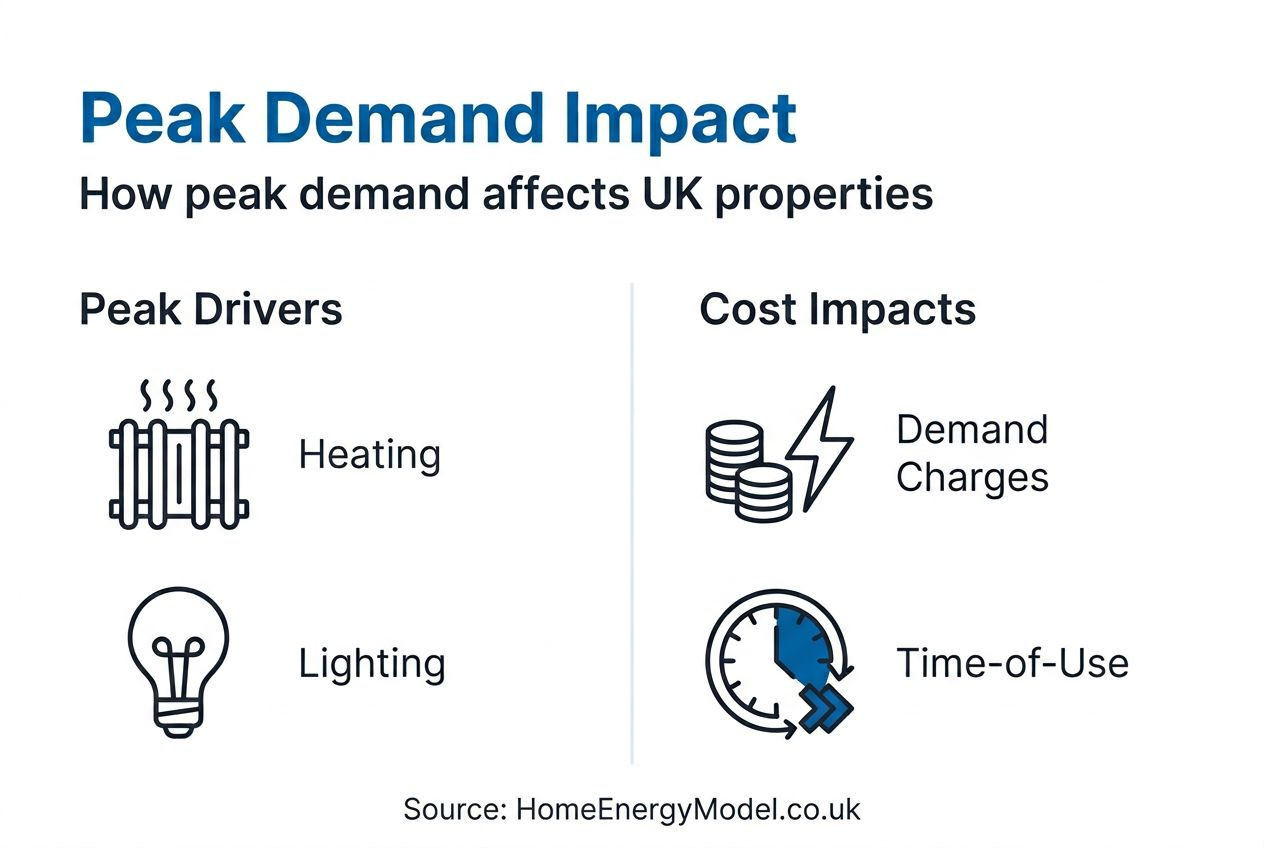
These demand charges can be punishing. Demand charges penalise spikes as small as a few minutes, making continuous monitoring critical. A single brief spike from simultaneously running multiple high-power devices can set your demand charge for the entire month.
The financial consequences include:
- Premium rates during peak hours typically 50% to 100% higher than off-peak
- Demand charges calculated on peak kW, not total kWh consumed
- Unpredictable bill increases when unexpected usage spikes occur
- Compounding costs over time if peak patterns remain unmanaged
- Reduced property profitability for landlords with inclusive utility arrangements
Managing peak demand isn’t just about saving money today. It’s about protecting your property investment from escalating energy costs and ensuring compliance with stricter regulations coming into force.
Smart meters provide the real-time visibility needed to track peak demand as it happens. Understanding different electricity tariffs for landlords helps you select billing structures that match your property’s usage profile and minimize peak-related penalties.
Regulatory context: peak demand in UK energy efficiency policies
UK energy policy increasingly emphasises peak demand management as central to achieving carbon reduction targets and grid stability. The Future Homes Standard, implemented in 2025, requires new residential buildings to demonstrate reduced peak demand through design features and smart energy systems.
The Home Energy Model (HEM), also introduced in 2025, replaces the older Standard Assessment Procedure (SAP) by incorporating dynamic peak demand calculations into energy performance assessments. This marks a fundamental shift in how properties are rated and regulated.
Key regulatory developments include:
- Future Homes Standard mandating peak demand reduction in all new builds from 2025
- HEM methodology requiring peak demand data for Energy Performance Certificate calculations
- Minimum Energy Efficiency Standards (MEES) potentially incorporating peak demand thresholds
- Building Regulations Part L updates emphasising load flexibility and demand response
- National Grid incentives for properties participating in demand-side response programmes
Property owners must prepare for these stricter standards. Existing buildings will face pressure to retrofit with smart controls and efficient systems. Landlords need to demonstrate compliance during property transactions and tenancy agreements.
Understanding the evolving UK energy efficiency regulations landscape helps you stay ahead of requirements, avoid penalties, and position properties competitively in an increasingly efficiency-focused market.
Role of HEM in assessing peak demand and energy use
The Home Energy Model revolutionises how UK properties are assessed by incorporating real-time demand patterns and occupant behaviour into calculations. Unlike SAP, which used static monthly averages, HEM operates on half-hourly intervals, capturing peak demand fluctuations throughout the day.
HEM enhances Energy Performance Certificates by:
- Providing dynamic modelling of electricity consumption patterns across 24-hour cycles
- Identifying specific peak demand periods and their cost implications
- Calculating realistic energy bills based on actual usage timing, not just volume
- Highlighting opportunities for load shifting and demand management
- Assessing the impact of smart technologies and battery storage on peak reduction
| Feature | SAP (Old Model) | HEM (New Model) |
|---|---|---|
| Time resolution | Monthly averages | Half-hourly intervals |
| Peak demand data | Not included | Explicitly modelled |
| Tariff accuracy | Basic flat rates | Time-of-use and demand charges |
| Load flexibility | Not assessed | Quantified benefits |
| Smart tech impact | Limited recognition | Detailed performance credit |
For property owners, HEM assessments reveal where peak demand occurs and quantify potential savings from targeted interventions. The model credits investments in smart heating controls, battery storage, and demand response systems, making upgrade decisions clearer.
Pro Tip: Request a detailed HEM assessment before planning energy efficiency upgrades to identify which improvements deliver the best return on investment through peak demand reduction.
Exploring different types of home energy models helps you understand which assessment approach best suits your property portfolio. Comparing available energy assessment software ensures you select tools that provide actionable peak demand insights.
Energy management strategies to reduce peak demand
Reducing peak demand requires targeted actions that shift high-power activities away from peak hours or reduce simultaneous equipment operation. These strategies deliver immediate cost savings and improve regulatory compliance.
- Install smart meters and monitoring systems to track real-time consumption and identify peak patterns specific to your property.
- Implement load shifting by programming dishwashers, washing machines, and water heaters to operate during off-peak hours, typically after 8pm or before 4pm.
- Upgrade to energy-efficient heating systems with smart thermostats that pre-heat properties before peak periods and reduce output during expensive hours.
- Replace high-wattage appliances with efficient models that deliver the same performance using less power during operation.
- Install battery storage systems to charge during off-peak periods and discharge during peak hours, flattening your demand profile.
- Participate in demand response programmes where grid operators pay you to reduce consumption during system-wide peak events.
- Educate tenants about peak periods and provide incentives for shifting discretionary energy use to off-peak times.
Combining multiple approaches yields the best results. A property with smart heating controls, efficient appliances, and battery storage can cut peak demand by 30% to 40% compared to unmanaged buildings.
Pro Tip: Start with the biggest peak contributors first, typically heating systems in winter, rather than trying to optimise everything simultaneously.
Using specialized energy tracking tools helps monitor the effectiveness of your peak reduction strategies and identify new opportunities for improvement as tenant behaviour and weather patterns change.
Common misconceptions about peak demand
Many property owners misunderstand peak demand, leading to ineffective management strategies and continued high costs. Clearing up these misconceptions ensures your efforts target the right areas.
Key myths include:
- Reducing total energy consumption automatically lowers peak demand charges, but you can use less total energy whilst maintaining high peaks if usage concentrates in short periods
- Peak demand occurs at fixed times every day, when actually timing varies by property type, occupancy, weather, and season
- All tariffs treat peak demand identically, but some use time-of-use rates, others apply demand charges, and residential tariffs differ significantly from commercial structures
- Switching off a few lights during peak hours meaningfully reduces demand, whilst heating and cooking loads typically dwarf lighting contributions
- Peak demand management requires expensive upgrades, when often simple scheduling changes and occupant behaviour modifications deliver substantial savings
Effective peak demand control focuses on timing and load distribution, not just reducing total consumption. You need to understand when your property peaks and what drives those spikes. A building using modest total energy can still face high demand charges if all consumption concentrates between 5pm and 6pm.
Different properties require different strategies. Residential buildings need tenant engagement and smart controls. Commercial properties benefit from staggered equipment operation and demand response participation. Understanding your specific usage profile prevents wasted effort on generic solutions.
Summary and next steps for property owners
Mastering peak demand management delivers immediate financial benefits whilst positioning your property for upcoming regulatory requirements. The strategies outlined provide a clear path from understanding to action.
Start with these practical steps:
- Review your current electricity bills to identify existing demand charges and peak-period costs
- Install smart meters if not already present to gain visibility into consumption patterns
- Identify your property’s typical peak demand periods through monitoring data or supplier reports
- Understand how the Home Energy Model will affect your Energy Performance Certificate ratings
- Implement simple load shifting for controllable appliances like water heaters and washing machines
- Assess whether your property would benefit from battery storage or demand response participation
- Seek professional energy assessments to quantify potential savings from targeted upgrades
Peak demand management isn’t a one-time fix. It requires ongoing monitoring and adjustment as occupancy, weather, and regulations change. Properties that establish effective demand management now will enjoy sustained cost advantages and smoother compliance with tightening efficiency standards.
The transition to HEM in 2025 makes peak demand awareness essential for all UK property owners. Those who act early gain competitive advantages through lower operating costs, better EPC ratings, and future-proofed buildings ready for stricter requirements.
Why use homeenergymodel.co.uk to manage peak demand
HomeEnergyModel.co.uk provides the specialised guidance UK landlords and property owners need to understand and manage peak demand effectively. Our comprehensive resources explain how the Home Energy Model works, what it means for your properties, and how to optimise performance under the new assessment methodology.
Explore our detailed guides on types of home energy models designed specifically for UK landlords. Learn how HEM transforms energy assessments and what changes mean for your compliance obligations. Our energy performance guides provide actionable strategies to improve building efficiency, reduce peak demand, and lower operating costs whilst meeting regulatory standards.
Frequently asked questions
What is peak demand in energy use?
Peak demand is the highest level of electricity consumption in a short period, usually measured in kilowatts over 15 to 30-minute intervals. It directly influences energy costs through demand charges and premium tariff rates during high-usage periods.
How does peak demand affect my energy bill as a landlord?
Peak demand can increase energy bills by up to 20% through specialized demand charges and time-of-use pricing that penalises high consumption during expensive periods. Understanding and managing peak demand significantly reduces these costs and improves property profitability. Review available electricity tariffs to find structures that match your usage patterns.
When do peak demand periods usually occur in the UK?
Peak demand typically occurs between 4pm and 7pm on cold winter weekdays in UK properties. Timing varies based on occupant behaviour, property type, heating systems, and weather conditions, making property-specific monitoring essential for accurate management.
What is the Home Energy Model’s role in peak demand management?
HEM replaces older assessment models by including dynamic peak demand data calculated on half-hourly intervals in Energy Performance Certificates. It provides clearer insights into consumption patterns, informs upgrade decisions, and credits investments in demand management technologies. Understanding HEM features helps property owners optimise their energy performance ratings.