

Many UK homeowners believe MVHR systems excessively dry indoor air, when in fact these systems maintain healthy humidity levels whilst recovering up to 90% of heat energy. This guide explains what Mechanical Ventilation with Heat Recovery (MVHR) truly is, how it works, its energy and environmental benefits, UK regulatory requirements, costs, maintenance needs, and how it compares to other ventilation methods. You’ll gain the clarity needed to make informed decisions about MVHR for your property.
Table of Contents
- Introduction To MVHR
- How MVHR Works: The Heat Recovery Process
- Energy Efficiency And Environmental Benefits
- Meeting UK Regulatory Requirements
- Common Misconceptions About MVHR Systems
- Installation, Costs, And Maintenance Considerations
- Comparing MVHR To Other Ventilation Options
- Conclusion And Next Steps For UK Homeowners And Investors
- Explore Home Energy Solutions For UK Properties
- Frequently Asked Questions
Key takeaways
| Point | Details |
|---|---|
| Heat recovery efficiency | MVHR systems recover 70 to 90% of heat from outgoing air whilst providing continuous fresh air. |
| Energy and carbon savings | Typical heating energy reductions range from 10 to 30%, cutting carbon emissions significantly. |
| UK regulatory alignment | Future Homes Standard and Home Energy Model increasingly require or favour MVHR for compliance. |
| Installation and upkeep | Professional installation ensures performance; filter changes every 3 to 6 months maintain efficiency. |
| Superior ventilation option | MVHR outperforms passive and extract-only systems in comfort, energy savings, and air quality. |
Introduction to MVHR
Mechanical Ventilation with Heat Recovery (MVHR) is a ventilation system that simultaneously extracts stale indoor air and supplies fresh outdoor air whilst recovering heat from the outgoing airstream. Unlike traditional methods that waste warmth, MVHR captures thermal energy and transfers it to incoming fresh air, reducing heating demand and energy costs.
An MVHR system comprises several key components working together. Dual fans manage airflow: one extracts stale air from wet rooms like kitchens and bathrooms, whilst another supplies fresh filtered air to living spaces and bedrooms. At the system’s heart sits a heat exchanger, where outgoing and incoming air streams pass close without mixing, allowing heat transfer. A ductwork network distributes air throughout the property, and filters remove pollutants and allergens from incoming air.
MVHR serves a dual purpose: ensuring continuous ventilation for healthy indoor air quality whilst retaining warmth that would otherwise escape. This combination supports heat recovery ventilation value by reducing energy waste and improving occupant comfort. Understanding ventilation systems work for efficiency helps homeowners recognise how MVHR complements other energy measures.
MVHR proves most beneficial in:
- Airtight new builds or retrofitted properties meeting modern standards
- Homes with open-plan layouts requiring balanced airflow
- Properties where occupants suffer from allergies or respiratory conditions
- Dwellings combining MVHR with air source heating efficiency technologies
- UK homes seeking compliance with 2026 energy regulations
Proper MVHR installation creates healthier living environments by controlling humidity, preventing condensation, and eliminating mould risks. The system operates quietly when correctly commissioned, delivering fresh air without occupants needing to open windows and lose heat.
How MVHR works: the heat recovery process
The heat exchanger forms MVHR’s core technology, enabling thermal energy transfer between air streams. Stale warm air extracted from bathrooms and kitchens passes through one side of the exchanger whilst cold fresh air from outside flows through the other side. The two streams never mix, yet heat transfers across thin metal or polymer plates separating them. This process warms incoming air to near room temperature before delivery to living spaces.
Continuous balanced airflow prevents the stale air accumulation and moisture build-up that cause mould and poor air quality. The supply fan pushes filtered fresh air into bedrooms and living rooms whilst the extract fan simultaneously removes humid air from wet rooms. This constant exchange maintains indoor air freshness without manual intervention.
MVHR systems recover between 70% and 90% of heat from outgoing air, significantly reducing heating demand. A system operating at 85% efficiency transfers 85% of heat energy from extracted air to incoming air, cutting the energy needed to warm fresh outdoor air. This efficiency directly lowers heating bills and carbon emissions.
MVHR also manages humidity effectively by removing moisture-laden air from bathrooms and kitchens before condensation forms. The balanced airflow prevents pressure imbalances that create drafts or allow outdoor pollutants to infiltrate through gaps. Improved indoor air quality results from continuous filtration removing dust, pollen, and particulates.
Pro Tip: Proper system balancing by certified installers ensures optimal performance and prevents drafts or noise issues that compromise comfort.
Key operational features include:
- Year-round operation providing fresh air during heating and cooling seasons
- Adjustable fan speeds matching ventilation needs to occupancy levels
- Bypass modes allowing direct cooling in summer without heat recovery
- Integration with building management systems for automated control
Understanding ventilation systems efficiency helps property owners maximise MVHR benefits through correct operation and maintenance.
Energy efficiency and environmental benefits
MVHR delivers measurable energy savings by reducing heating loads. Typical UK homes installing MVHR experience heating energy reductions between 10% and 30%, depending on property airtightness, system efficiency, and occupancy patterns. A well-insulated home with 90% efficient MVHR may achieve savings at the higher end, whilst older properties with air leakage see more modest reductions.

Carbon footprint reductions follow directly from decreased heating energy consumption. Lower gas or electricity use for heating translates to fewer carbon emissions, supporting UK climate targets. Properties combining MVHR with renewable heating systems multiply environmental benefits.
Compared to passive ventilation relying on trickle vents and natural airflow, MVHR provides controlled fresh air supply without heat loss. Standard extract fans remove stale air but offer no heat recovery, wasting thermal energy. MVHR surpasses both methods by maintaining comfort whilst conserving energy.
Additional comfort improvements include:
- Stable indoor temperatures without cold drafts from open windows
- Reduced condensation on windows and walls preventing damp damage
- Elimination of external noise pollution when windows remain closed
- Consistent air quality regardless of outdoor weather conditions
Energy savings insight: UK studies show MVHR systems typically reduce heating energy use by 10 to 30%, with higher savings in airtight properties where heat recovery efficiency maximises impact on overall energy performance.
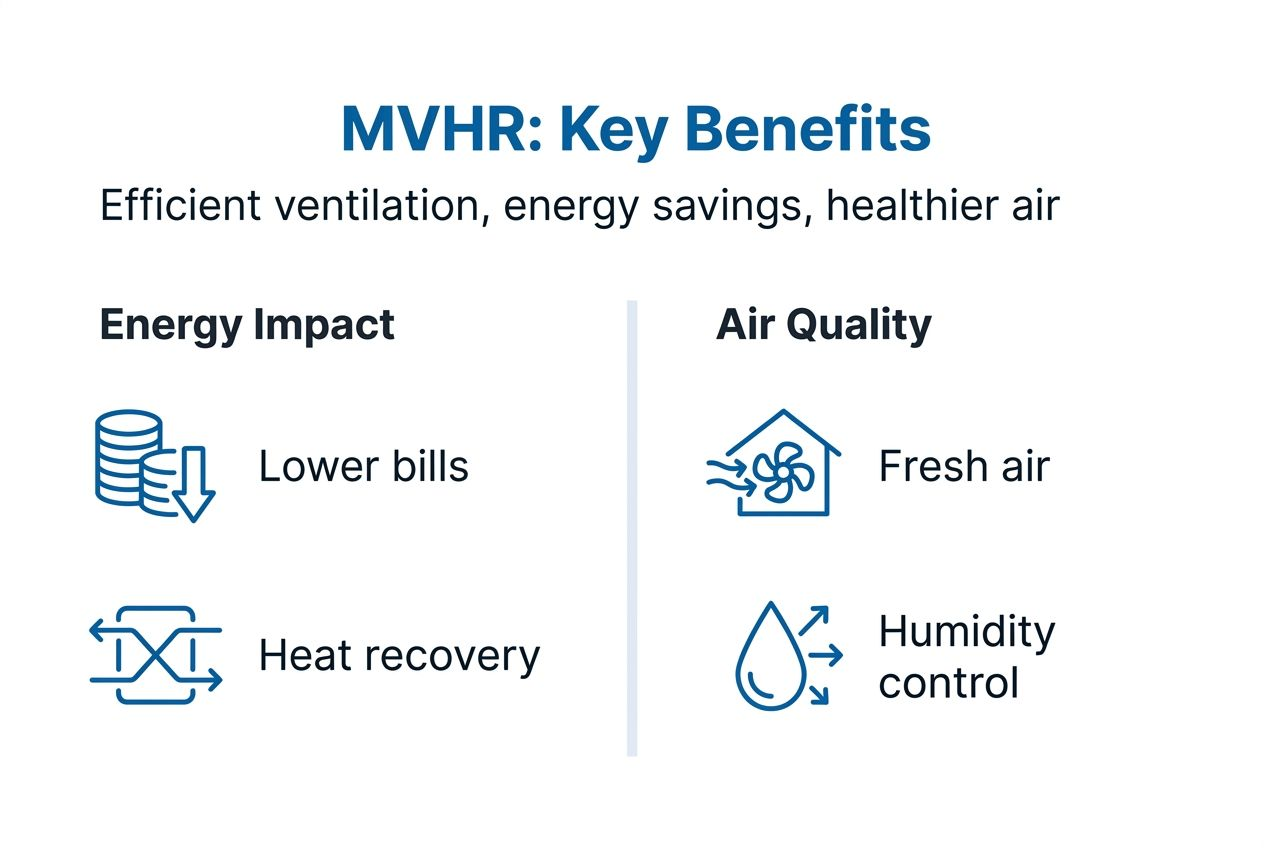
These energy efficiency benefits UK property owners gain make MVHR an increasingly attractive investment as energy costs rise and regulations tighten. The combination of lower bills, improved comfort, and environmental responsibility creates compelling value.
Meeting UK regulatory requirements
The Future Homes Standard, effective from 2025, mandates that new homes produce 75% to 80% lower carbon emissions than current building regulations allow. Achieving this requires high-performance ventilation alongside other energy measures. MVHR’s heat recovery capability makes it a preferred solution for meeting these stringent targets.
The Home Energy Model (HEM), replacing SAP assessments from 2025, introduces more sophisticated ventilation modelling. HEM evaluates MVHR performance more accurately, crediting heat recovery efficiency in Energy Performance Certificate (EPC) calculations. Properties with MVHR typically achieve higher EPC ratings, benefiting landlords and investors.
Regulatory incentives and requirements include:
- Building regulations Approved Document F specifying ventilation rates MVHR must meet
- Energy efficiency mandates favouring MVHR in new builds and major renovations
- EPC rating improvements from MVHR installation supporting property values
- Compliance pathways under UK housing energy standards 2025 often requiring MVHR
Understanding energy models UK standards helps property professionals navigate compliance requirements and optimise MVHR specifications.
| Regulation/Standard | Effective Date | MVHR Relevance |
|---|---|---|
| Future Homes Standard | 2025 | Strongly favoured to meet 75-80% carbon reduction targets |
| Home Energy Model (HEM) | 2025 | Credits MVHR efficiency in EPC assessments |
| Building Regulations Part F | Current | Sets minimum ventilation rates MVHR must deliver |
| EPC Rating Requirements | Ongoing | MVHR improves ratings for landlords and sellers |
For landlords, MVHR installation may become essential to maintain rental property compliance as Minimum Energy Efficiency Standards (MEES) tighten. Investors upgrading properties benefit from improved marketability and reduced void periods when energy performance exceeds regulatory minimums.
Common misconceptions about MVHR systems
One prevalent myth claims MVHR excessively dries indoor air, creating uncomfortable living conditions. In reality, MVHR maintains indoor humidity within the comfortable 30% to 60% range by removing excess moisture from wet rooms whilst supplying fresh air. The system prevents both excessive humidity causing mould and over-drying that irritates respiratory systems.
Noise concerns often stem from poor installation rather than inherent system limitations. Properly designed ductwork with adequate sizing, smooth bends, and acoustic insulation produces minimal sound. Certified installers position units away from bedrooms and use vibration damping to ensure quiet operation. When occupants hear excessive noise, installation quality rather than MVHR technology typically deserves scrutiny.
Maintenance myths exaggerate MVHR upkeep complexity and cost. Whilst regular filter changes and occasional professional servicing prove necessary, these tasks remain straightforward and manageable. Filter replacement every three to six months takes minutes, and annual servicing by qualified technicians ensures continued efficiency. Neglecting maintenance reduces performance, but required tasks neither burden homeowners excessively nor demand specialist skills.
Some believe MVHR systems prove unreliable or complicated to operate. Modern MVHR units feature simple controls, automated sensors adjusting fan speeds to air quality, and robust components lasting 15 to 20 years with proper care. User interfaces require minimal interaction, making day-to-day operation effortless.
Pro Tip: Selecting certified installers registered with industry bodies ensures professional installation meeting manufacturer specifications, preventing noise issues and optimising performance from the start.
Key misconception corrections:
- MVHR does not create overly dry air; it balances humidity naturally
- Noise indicates poor installation, not inherent system characteristics
- Maintenance involves simple filter changes and annual professional checks
- Modern systems operate reliably with minimal user intervention
- Properly specified MVHR suits UK climates and housing types effectively
Addressing these misconceptions helps property owners make informed decisions based on MVHR’s actual capabilities rather than unfounded concerns.
Installation, costs, and maintenance considerations
Typical MVHR installation costs range from £3,500 to £6,000 for average UK homes, varying with property size, ductwork complexity, and retrofit challenges. New builds accommodate MVHR more easily during construction, reducing labour costs. Retrofitting existing properties requires careful planning to route ducts through walls, floors, or lofts, potentially increasing expenses.
Ongoing electricity costs for running MVHR fans average £50 to £150 annually, depending on system size and usage patterns. Energy-efficient EC fans minimise consumption whilst delivering required airflow. These running costs prove modest compared to heating energy savings MVHR generates.
Filter replacement represents the primary maintenance expense. Standard filters cost £20 to £50 and require changing every three to six months depending on air quality and manufacturer recommendations. Higher-grade filters capturing finer particles cost more but protect respiratory health and prolong system component life.
Professional commissioning after installation ensures correct airflow balancing across all rooms. Technicians measure air volumes, adjust dampers, and verify heat recovery efficiency meets specifications. This critical step prevents drafts, noise, and underperformance that plague poorly commissioned systems.
Essential maintenance tasks include:
- Filter inspection and replacement every three to six months
- Annual professional servicing checking fans, heat exchanger, and controls
- Duct cleaning every three to five years removing accumulated dust
- Heat exchanger cleaning maintaining thermal transfer efficiency
- System rebalancing if property layouts change or performance declines
Budgeting for annual servicing costs of £100 to £200 ensures long-term reliability. Skipping maintenance reduces efficiency, increases energy consumption, and shortens system lifespan. Well-maintained MVHR units operate efficiently for 15 to 20 years before requiring replacement.
Installation quality dramatically affects performance and satisfaction. Choosing experienced installers familiar with MVHR-specific requirements prevents common pitfalls. Requesting references, verifying certifications, and obtaining detailed quotes help identify reputable professionals.
Comparing MVHR to other ventilation options
UK homes traditionally relied on passive ventilation through trickle vents, gaps, and occasional window opening. This uncontrolled method wastes heat, permits drafts, and fails to guarantee adequate air changes. MVHR systems offer up to three times energy savings compared to passive ventilation whilst providing superior humidity control.
Standard extract fans remove stale air from bathrooms and kitchens but supply no fresh air and recover no heat. They create negative pressure drawing cold outdoor air through building gaps, increasing heating loads. MVHR’s balanced approach supplies and extracts air simultaneously whilst recovering thermal energy.
Continuous balanced airflow distinguishes MVHR from alternatives. Natural infiltration varies with wind and temperature, creating inconsistent ventilation. Extract-only systems remove air without controlled fresh air supply. MVHR maintains steady air changes regardless of external conditions, ensuring predictable performance.
| Ventilation Type | Heat Recovery | Airflow Control | Energy Impact | Installation Complexity | Best Use Case |
|---|---|---|---|---|---|
| MVHR | 70-90% efficiency | Balanced supply and extract | 10-30% heating reduction | High (ductwork required) | Airtight homes, new builds, high performance retrofits |
| Passive (trickle vents) | None | Uncontrolled, weather dependent | Heat loss through ventilation | Low (vents only) | Older properties, minimal budgets |
| Extract fans | None | Extract only, negative pressure | Moderate heat loss | Low to moderate | Wet rooms in standard homes |
| Natural ventilation | None | Manual window opening | Significant heat loss | None | Traditional buildings, mild climates |
MVHR excels in airtight properties where controlled ventilation prevents stuffiness without heat penalty. Passive ventilation suits older leaky buildings where investing in MVHR yields limited returns. Extract fans provide basic moisture control in standard homes but offer no energy benefits.
User comfort considerations favour MVHR. Constant fresh filtered air improves health outcomes for allergy sufferers. Eliminating drafts and cold spots enhances thermal comfort. Reduced external noise when windows remain closed benefits urban properties.
Installation complexity represents MVHR’s primary disadvantage compared to simpler alternatives. Ductwork routing, space for the unit, and professional commissioning increase upfront costs and planning requirements. However, long-term energy savings and comfort improvements justify initial investment in suitable properties.
Conclusion and next steps for UK homeowners and investors
MVHR delivers proven energy savings of 10% to 30%, improves indoor air quality, and supports compliance with UK energy regulations becoming mandatory from 2025. The technology recovers up to 90% of heat whilst providing continuous fresh air, reducing carbon emissions and heating costs simultaneously. These benefits make MVHR increasingly essential for new builds and worthwhile for suitable retrofits.
Before installing MVHR, assess your property’s airtightness and ventilation needs. Leaky buildings lose heat through gaps, reducing MVHR effectiveness. Consider MVHR alongside insulation upgrades, draught-proofing, and efficient heating systems for maximum impact. Consulting qualified MVHR professionals ensures system sizing matches property requirements and installation quality meets performance expectations.
Practical next steps:
- Evaluate your property’s airtightness through professional testing or visual inspection
- Research certified MVHR installers with proven experience in similar properties
- Obtain multiple quotes specifying system efficiency, warranty, and commissioning services
- Consider MVHR within broader energy efficiency upgrade plans for optimal results
- Budget for ongoing filter replacement and annual servicing maintaining long-term performance
MVHR represents a significant component of future-proof UK housing. As regulations tighten and energy costs rise, the technology transitions from optional upgrade to essential feature. Property owners investing now position themselves ahead of regulatory requirements whilst enjoying immediate comfort and savings benefits.
Explore home energy solutions for UK properties
Home Energy Model resources help property owners understand how MVHR fits within broader energy performance assessments. The platform offers insights into HEM calculations, EPC ratings, and compliance pathways under evolving UK standards. Landlords and investors discover how ventilation systems affect property values and rental marketability.
Expert guidance supports informed MVHR decisions:
- Types of home energy models for landlords clarifying regulatory requirements and investment priorities
- Home energy model explained UK detailing assessment methodologies and MVHR credit mechanisms
- Energy simulation UK housing guide demonstrating how MVHR integration improves predicted energy performance
Pro Tip: Using Home Energy Model tools before specifying MVHR systems helps optimise specifications, predict EPC improvements, and justify investments through accurate energy and cost projections.
These resources simplify complex regulatory landscapes, enabling property professionals to make evidence-based decisions about MVHR adoption. Understanding how ventilation systems interact with other energy measures within HEM assessments ensures compliance whilst maximising return on efficiency investments.
Frequently asked questions
What is the typical maintenance required for MVHR systems?
MVHR maintenance involves changing filters every three to six months to maintain air quality and system efficiency. Annual professional servicing ensures fans, heat exchangers, and controls operate correctly. These straightforward tasks keep systems running reliably for 15 to 20 years.
How much can MVHR reduce heating bills in UK homes?
Heating energy savings typically range from 10% to 30% depending on property airtightness, system efficiency, and usage patterns. Well-insulated homes with high-efficiency MVHR units achieve the greatest reductions. Actual savings vary with heating costs, occupancy, and existing ventilation performance.
Are MVHR systems noisy?
Properly installed MVHR systems operate quietly, producing minimal sound in living spaces. Noise usually indicates poor installation, undersized ducts, or inadequate acoustic treatment. Certified installers prevent these issues through correct specification and commissioning.
Does installing MVHR affect indoor humidity?
MVHR maintains indoor humidity within the comfortable 30% to 60% range by removing excess moisture from wet rooms whilst supplying balanced fresh air. This controlled approach reduces condensation and mould risks without creating overly dry conditions. The system naturally balances humidity through continuous air exchange.