
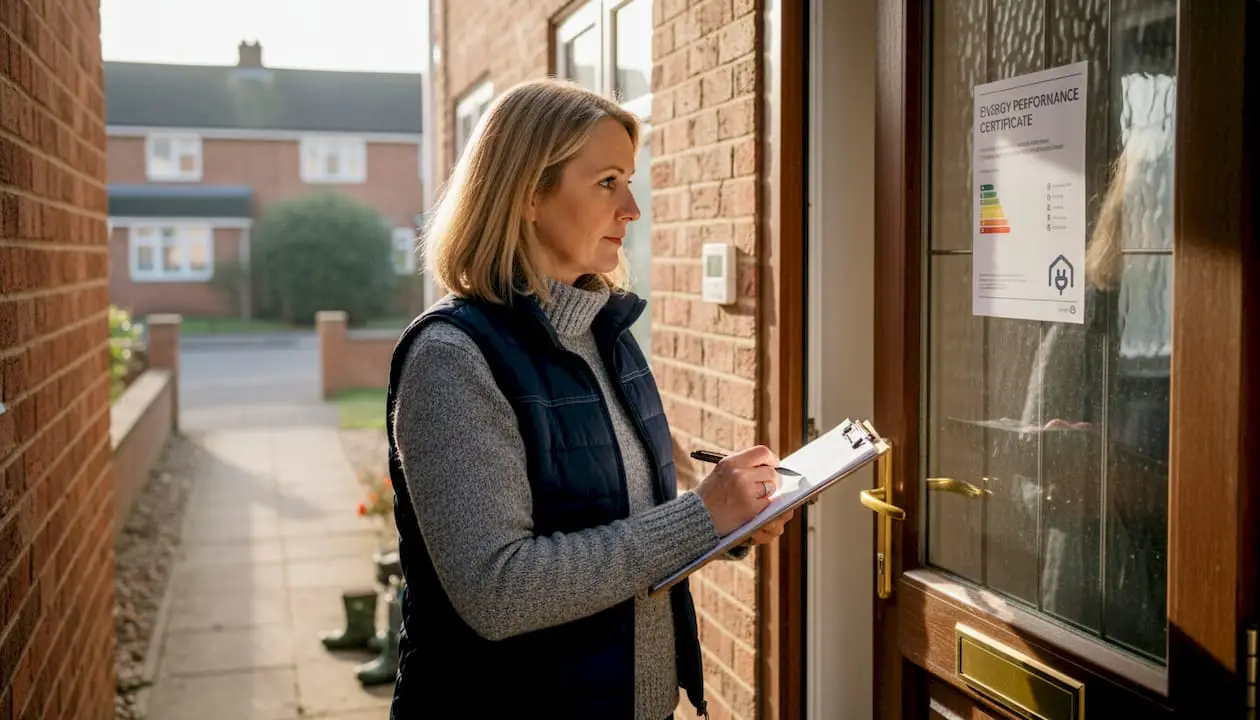
Many UK properties show strong energy ratings on paper, yet actual energy bills frequently exceed expectations. The average SAP rating for English dwellings is 67, with EPCs and SAP often overestimating energy usage, especially in lower bands. This difference between predicted and true performance is critical for legal compliance and cost control. This guide explains what the energy performance gap is, why it matters, and practical steps to address it.
Table of Contents
- What is the energy performance gap?
- Why does the energy performance gap occur?
- How is the energy performance gap measured?
- What does the energy performance gap mean for UK property owners?
- How can you reduce the energy performance gap?
- Summary: Key lessons for property owners and investors
- Next steps: Close the gap with better models and expert guidance
- Frequently asked questions
Key Takeaways
| Point | Details |
|---|---|
| Definition matters | The energy performance gap is the difference between expected and actual energy use in UK homes. |
| Measurement reveals risks | EPCs and SAP ratings often overestimate efficiency, risking compliance and extra costs for owners. |
| Actions can close the gap | Investing in quality assessments, continuous monitoring, and advanced models helps reduce the gap. |
| Compliance is evolving | Upcoming regulations make understanding and addressing the energy gap essential for landlords and investors. |
What is the energy performance gap?
The energy performance gap is the difference between the energy use predicted by models like EPC or SAP and the actual energy consumed in a home. This gap affects property owners, investors, and landlords across the UK, often resulting in higher bills and compliance challenges.
Several factors drive this discrepancy:
- Design assumptions that do not reflect real-world conditions
- Construction practices that deviate from specifications
- Occupant behaviour that differs from modelled scenarios
- Poor installation of heating and insulation systems
- Lack of proper commissioning after building work
EPCs and SAP scores overestimate energy use by 8-48%, particularly in lower efficiency bands.
Consider a new-build property rated A on its EPC. The owner expects low energy bills based on this rating, but actual usage shows costs 30% higher than predicted. This scenario is common and highlights the importance of understanding performance gap dynamics. The gap undermines confidence in energy ratings and creates financial uncertainty for property owners.
Accurate energy assessments are essential for investment decisions, regulatory compliance, and long-term cost planning. The building efficiency guide offers detailed strategies for improving actual performance beyond what models predict.
Why does the energy performance gap occur?
Understanding the causes leads naturally to examining how these gaps are measured and revealed in the real world. The energy performance gap stems from multiple sources, each contributing to the discrepancy between predicted and actual energy use.
- Modelling assumptions: SAP and EPC calculations use standardised assumptions about occupancy, heating patterns, and appliance use that rarely match real behaviour.
- Build quality issues: Construction defects, thermal bridges, and air leakage reduce actual performance below design specifications.
- Poor installation: Heating systems, insulation, and ventilation installed incorrectly fail to deliver expected efficiency.
- Lack of commissioning: Many properties are never properly tested or adjusted after construction, leaving systems underperforming.
- Occupant behaviour: How people heat, ventilate, and use their homes significantly affects energy consumption, often increasing it beyond modelled predictions.
- Inadequate maintenance: Systems degrade over time without proper upkeep, widening the gap between design and reality.
Pro Tip: Check for discrepancies post-retrofit by monitoring real energy bills against predicted savings for at least 12 months.
Research shows that overestimation of usage by EPCs/SAP is highest in the lower efficiency bands, ranging from 8% to 48%. Lower-band homes see bigger overestimation because models assume worse performance than often occurs, whilst higher-band homes may underperform due to complex systems not operating as designed.
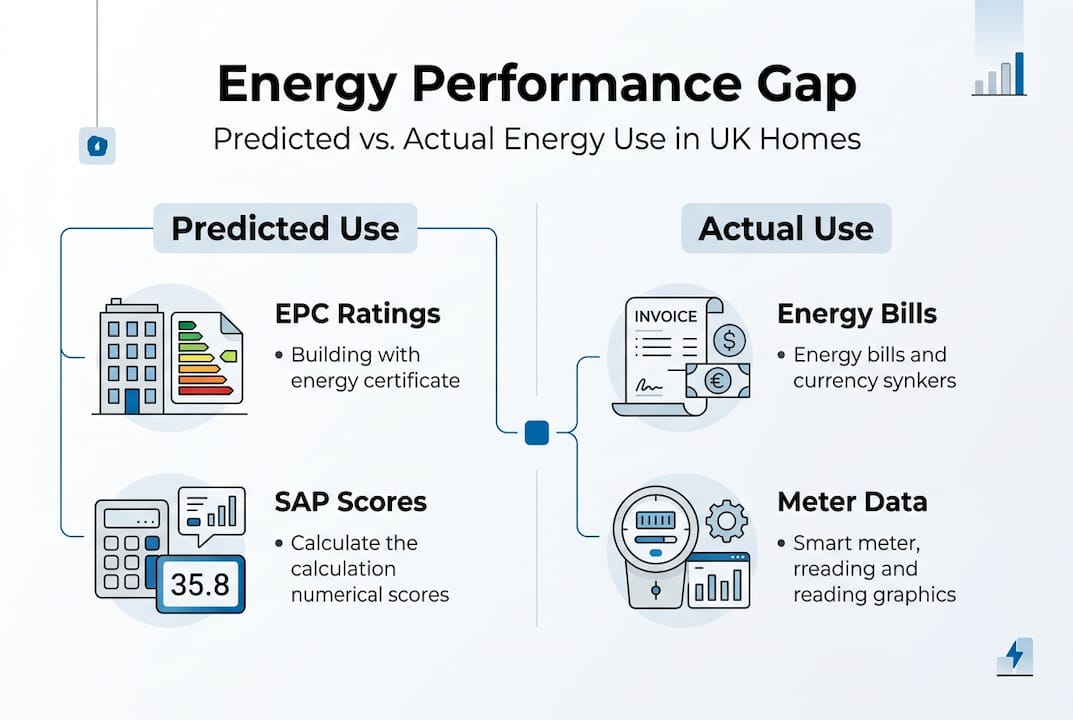
Accurate assessments are crucial for legal compliance, especially with upcoming regulations. Understanding SAP ratings helps property owners interpret these metrics correctly. The modelled consumption guide provides further insight into how predictions are generated and where they typically fail.
How is the energy performance gap measured?
Now that we’ve seen how the gap is measured, we can explore its real consequences for owners and investors, especially with new regulations coming. Measuring the energy performance gap requires comparing modelled predictions from SAP or EPC assessments against actual metered energy consumption.
The SAP rating has climbed from 45 in 1996 to 67 in 2023, but these metrics often fail to accurately predict energy bills. Property owners should track both their EPC rating and real consumption to identify gaps.
| EPC Band | Predicted Annual Usage (kWh/m²) | Typical Real Usage (kWh/m²) | Gap (%) |
|---|---|---|---|
| A | 25-50 | 35-65 | 20-30% |
| B | 51-75 | 60-95 | 15-25% |
| C | 76-100 | 85-125 | 10-25% |
| D | 101-150 | 110-180 | 8-20% |
| E | 151-200 | 155-240 | 3-20% |
| F | 201-250 | 200-280 | 0-15% |
| G | 251+ | 240-300 | -5-0% |
This table illustrates how higher-rated properties often underperform their predictions, whilst lower-rated homes may actually use less energy than models suggest. The gap varies based on property type, location, and occupant behaviour.
Pro Tip: Keep both EPC certificates and at least two years of actual energy bills for compliance checks and property valuations.
Property owners should request post-improvement testing after any retrofit work. Calculating energy savings requires accurate baseline data. The estimating energy use guide offers practical methods for tracking consumption. For long-term planning, the energy forecasting guide helps predict future performance under different scenarios.
What does the energy performance gap mean for UK property owners?
Faced with these consequences, owners and investors need practical ways to minimise their risk and close the gap. The energy performance gap creates several challenges for property owners, affecting costs, compliance, and asset value.
Key effects of the gap include:
- Higher running costs: Actual energy bills exceed predictions, reducing rental yields and increasing occupant complaints.
- Missed savings: Retrofit investments fail to deliver expected returns when real performance falls short.
- Regulatory penalties: Properties may fail to meet minimum energy efficiency standards despite acceptable EPC ratings.
- Inaccurate valuations: Property values based on EPC ratings may not reflect true running costs, affecting sales and mortgages.
- Tenant dissatisfaction: Renters facing higher bills than advertised may seek rent reductions or leave.
Only 52% of English dwellings are in EPC A-C bands, up from 23% in 2013, but EPCs overstate efficiency.
For landlords, the gap affects letting decisions. Properties with good EPC ratings but poor actual performance risk regulatory action as enforcement tightens. Mortgage lenders increasingly consider energy performance when assessing property value, and a wide gap between predicted and actual use can affect loan terms.
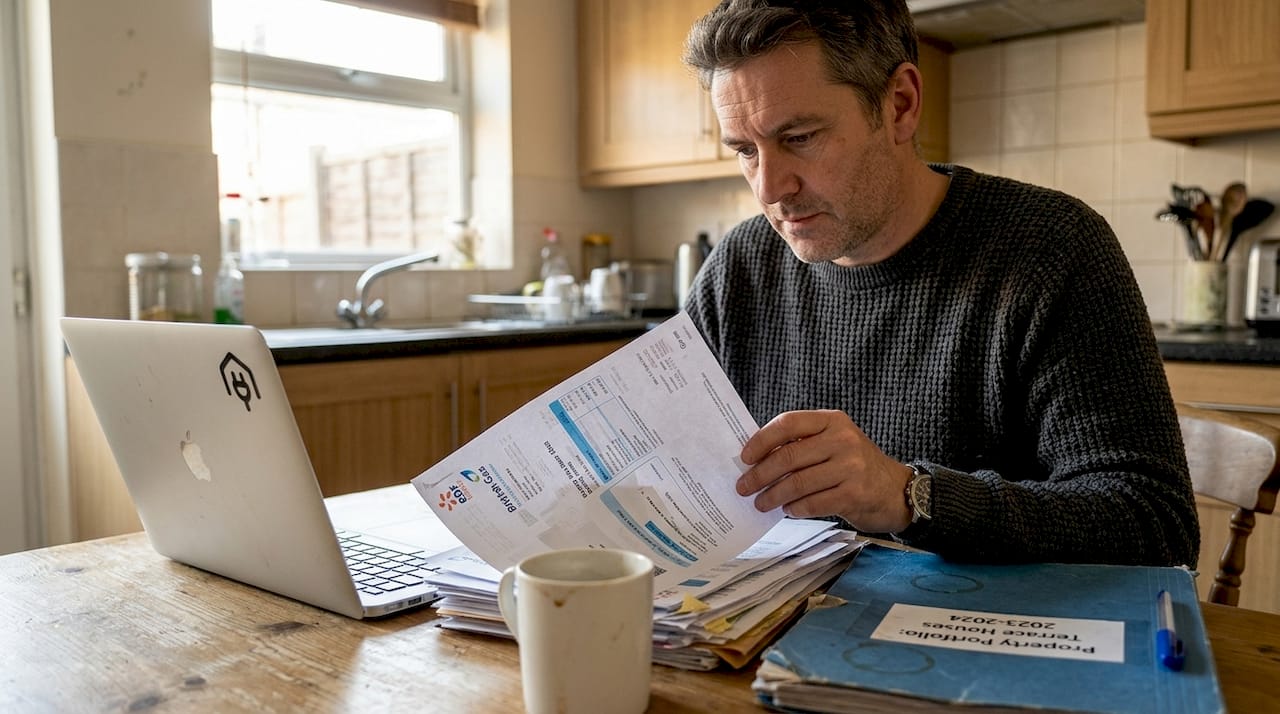
The upcoming Home Energy Model will introduce more rigorous assessment methods, potentially exposing performance gaps that current EPCs miss. Property owners should prepare for stricter compliance requirements. Why efficiency matters explores the broader implications for property portfolios. The standards explained guide clarifies current and future regulatory requirements.
For detailed statistics and policy context, consult the official EPC statistics published by the UK government.
How can you reduce the energy performance gap?
To conclude, let’s quickly summarise the most important lessons learned. Reducing the energy performance gap requires targeted actions that address the root causes identified earlier.
Practical steps include:
- Invest in quality retrofits: Choose experienced contractors who follow best practice installation standards and provide performance guarantees.
- Request post-improvement tests: Insist on thermal imaging, air tightness testing, and commissioning reports after any energy efficiency work.
- Educate occupants: Provide clear guidance on optimal heating schedules, ventilation practices, and system controls to align behaviour with design assumptions.
- Use advanced energy models: Adopt tools like the Home Energy Model that account for real-world variables more accurately than traditional SAP assessments.
- Monitor ongoing performance: Install smart metres and track consumption patterns to identify issues early.
| Action | Estimated Gap Reduction | Typical Cost | Main Benefit |
|---|---|---|---|
| Professional air tightness testing | 10-15% | £300-600 | Identifies construction defects |
| Heating system commissioning | 8-12% | £200-400 | Optimises system efficiency |
| Occupant training programme | 5-10% | £100-250 | Aligns behaviour with design |
| Annual performance review | 3-8% | £150-300 | Maintains system performance |
| Advanced modelling (HEM) | 15-25% | £500-1,000 | Improves prediction accuracy |
Best practice includes regular assessments and actioning evidence from real energy bills. Property owners should document all improvements and maintain records of both predicted and actual performance.
The new Home Energy Model tools offer more accurate predictions by incorporating dynamic factors that SAP overlooks. Early adoption helps property owners prepare for upcoming regulatory changes. Energy models and standards explains the different assessment methodologies available.
Ongoing monitoring is essential. Set up quarterly reviews of energy consumption against predictions, and investigate any significant deviations immediately. This proactive approach prevents small issues from becoming major compliance problems.
Summary: Key lessons for property owners and investors
The energy performance gap represents a critical challenge for UK property owners. EPCs and SAP ratings often overestimate actual energy use by 8% to 48%, creating financial and regulatory risks. This gap stems from modelling assumptions, build quality issues, poor installation, and occupant behaviour.
Three high-impact actions for property owners:
- Verify actual performance: Track real energy consumption against EPC predictions for at least 12 months after any retrofit work.
- Demand quality assurance: Require post-installation testing, commissioning reports, and performance guarantees from contractors.
- Prepare for new standards: Familiarise yourself with the Home Energy Model and upcoming regulatory changes to stay ahead of compliance requirements.
Early action reduces costs, improves property values, and ensures compliance with tightening energy efficiency regulations. Property owners who address the performance gap now will be better positioned for future market conditions and regulatory changes.
Next steps: Close the gap with better models and expert guidance
Home Energy Model resources provide property owners with the tools and expertise needed to resolve compliance and efficiency challenges. Advanced modelling options deliver more accurate predictions than traditional SAP assessments, helping owners make informed investment decisions.
Explore types of home energy models to find the right assessment approach for your property portfolio. The Home Energy Model explained guide offers detailed information on how this new methodology improves accuracy and supports compliance.
For comprehensive analysis of your property’s performance gap, review the performance gap details resource. Professional assessments identify specific issues and provide actionable recommendations tailored to your property.
Taking action now ensures your properties meet current standards and prepares you for upcoming regulatory changes. Accurate energy modelling protects investment value, reduces running costs, and supports long-term sustainability goals.
Frequently asked questions
How much do EPCs and SAP ratings overestimate actual energy use?
Studies show that EPCs and SAP ratings overestimate real energy usage by 8% to 48%, especially in homes with lower efficiency bands. Higher-rated properties often underperform predictions due to complex systems not operating as designed.
Will the Home Energy Model regulations affect my investment property?
Yes, the new Home Energy Model regulations mean tighter standards for compliance and may impact valuations, renting, or sales. Property owners must ensure accurate energy performance assessments to meet upcoming requirements.
What can I do if my property’s energy bills are higher than its EPC suggests?
Track your real energy use over at least 12 months, schedule a professional post-retrofit assessment including air tightness testing, and consider quality upgrades to heating systems and insulation. Document all findings for compliance purposes.
Why is closing the energy performance gap important for landlords?
Closing the gap ensures compliance with minimum energy efficiency standards, maximises property value, reduces long-term running costs, and improves tenant satisfaction. Regulatory enforcement is tightening, making accurate performance essential for letting properties legally.