

TL;DR:
- Improving home insulation and fabric features is essential before installing renewable systems.
- Common renewable options include solar PV and heat pumps, supported by grants and staged planning.
- Regular monitoring and maintenance of systems ensure long-term efficiency and compliance.
Rising energy bills and tightening EPC regulations are placing real pressure on UK homeowners and landlords. From 2026 onwards, new minimum energy efficiency standards are reshaping what it means to own or let a property. The good news is that a structured, step-by-step approach to renewable energy makes compliance achievable and cost-effective. This guide walks through everything from assessing your current energy performance to installing and maintaining renewable systems, helping you avoid common pitfalls and make the most of available grants and incentives.
Table of Contents
- Check your energy basics first
- Plan your renewable energy upgrade
- Install and commission renewable systems
- Monitor, maintain, and verify performance
- The real path to lasting energy savings
- Get expert support for your home energy upgrades
- Frequently asked questions
Key Takeaways
| Point | Details |
|---|---|
| Start with energy basics | Assess your property and complete insulation and draught-proofing before adding renewables. |
| Plan for compliance | Staged upgrades and smart solutions help meet UK EPC standards cost-effectively. |
| Choose the right tech | Solar PV, heat pumps, and smart meters can dramatically improve energy ratings and bill savings. |
| Certified installation matters | Always use accredited installers to access grants and ensure safe, reliable setup. |
| Monitor to maximise savings | Track performance and maintain systems to ensure ongoing efficiency and legal compliance. |
Check your energy basics first
Before investing in solar panels or a heat pump, the most effective starting point is understanding where your home currently stands. An Energy Performance Certificate (EPC) gives a clear picture of your property’s energy use, identifying weaknesses and recommending improvements. Without this baseline, any renewable investment risks underperforming because the underlying fabric of the building is working against it.
The distinction between fabric improvement and adding renewables matters enormously. Fabric improvements refer to the physical structure of your home: insulation, windows, doors, and draught sealing. Renewables generate or manage energy. Installing solar PV on a poorly insulated house is like filling a leaking bucket. A fabric-first approach means assessing via EPC, sealing draughts, adding loft insulation to 270-300mm, fitting cavity wall insulation, upgrading controls, and improving glazing before adding any renewable technology.
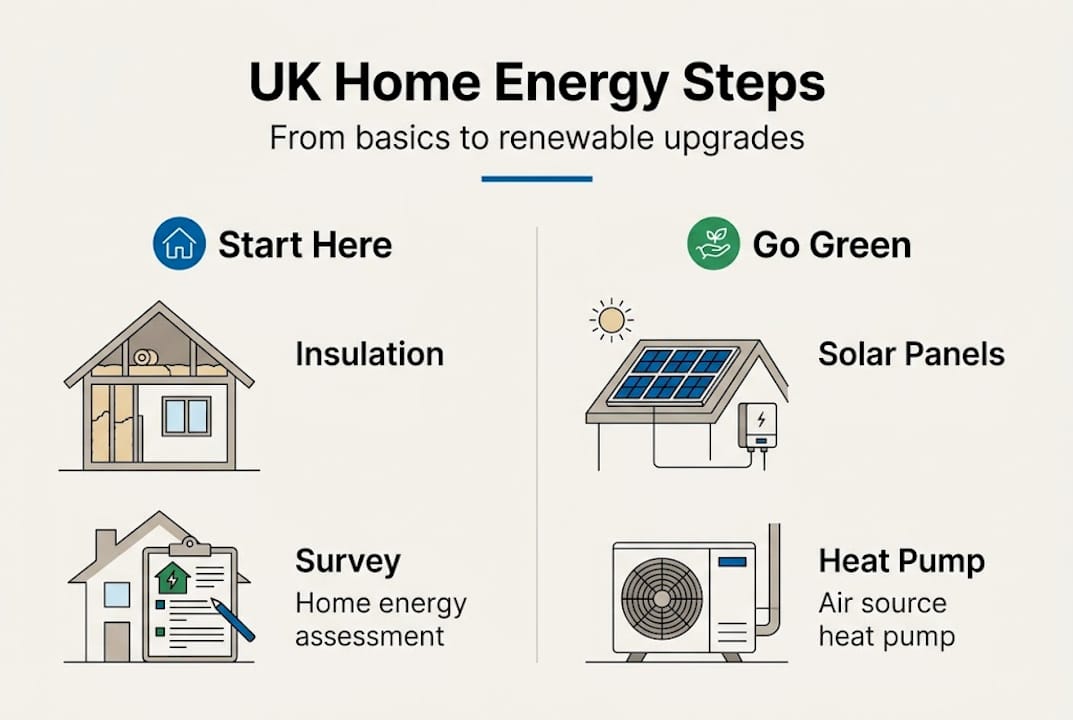
Understanding your EPC rating helps prioritise which fabric improvements will deliver the greatest uplift. For London properties in particular, EPC tips for London can guide decisions specific to older housing stock common in the capital.
Common energy leaks to address first:
- Uninsulated loft space (heat loss up to 25%)
- Unfilled cavity walls
- Single glazing or poorly sealed window frames
- Draughty doors, letterboxes, and floorboards
- Outdated heating controls or thermostats
Typical costs for key fabric upgrades:
| Improvement | Estimated cost | Potential annual saving |
|---|---|---|
| Loft insulation (270mm) | £300 to £600 | Up to £150 |
| Cavity wall insulation | £500 to £1,500 | Up to £250 |
| Double glazing (full house) | £4,000 to £10,000 | Up to £235 |
| Draught proofing | £100 to £300 | Up to £60 |
| Smart thermostat | £150 to £300 | Up to £75 |
Pro Tip: Improving insulation before installing renewables increases the efficiency of those systems. A well-insulated home requires a smaller, cheaper heat pump and generates a better return from solar panels.
Once you understand why getting the basics right is essential, you are ready to explore how to build on this foundation.
Plan your renewable energy upgrade
With a solid foundation in place, it is time to decide which renewable solutions fit your needs and regulatory obligations. UK energy policy is moving quickly. The Minimum Energy Efficiency Standards (MEES) currently require rental properties to hold an EPC rating of E or above. Proposed EPC C requirements by 2030 will use a multi-metric approach covering fabric performance, heating systems, and smart readiness. The cost cap is set at £10,000 per property, with exemptions available in certain circumstances.
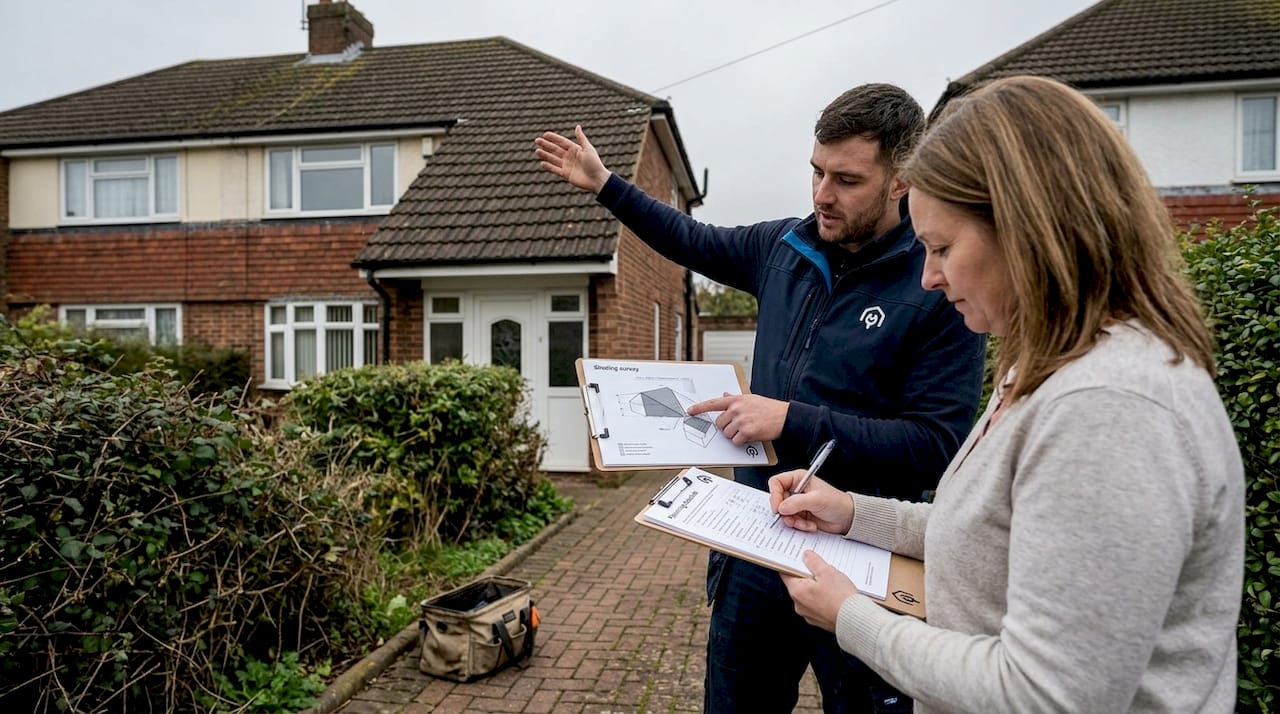
For most homes, the main renewable options are solar photovoltaic (PV) panels, air source heat pumps (ASHPs), and smart meters. Each suits different property types and budgets. Exploring the full renewable energy workflow helps clarify which combination is right for your situation. Understanding why energy efficiency matters for property owners also puts the financial case in perspective.
Comparison of main renewable options:
| Technology | Typical upfront cost | Estimated annual saving | Key grant available |
|---|---|---|---|
| Solar PV (4kW system) | £6,000 to £8,000 | £400 to £600 | Warm Homes Plan |
| Air source heat pump | £8,000 to £15,000 | £500 to £900 | BUS grant (£7,500) |
| Smart meter | Free (via supplier) | £50 to £100 | N/A |
Step-by-step planning process:
- Obtain or update your EPC to establish a baseline rating.
- Identify which fabric improvements are still outstanding.
- Research which technologies suit your property type and orientation.
- Check eligibility for the Boiler Upgrade Scheme (BUS) or Warm Homes Plan grants.
- Obtain at least three quotes from accredited installers.
- Agree a staged upgrade plan if full installation is not immediately affordable.
- Confirm planning permission requirements, particularly for listed buildings or conservation areas.
Budgeting pitfalls include underestimating scaffolding costs for solar, overlooking the need for electrical upgrades, and missing grant application deadlines. Staged upgrades, starting with a smart meter and solar PV before adding a heat pump, often prove more manageable financially.
Pro Tip: Combining solar PV with a smart meter is frequently enough to lift a property from EPC D to C under the new multi-metric framework, without the cost of a full heat pump installation.
Install and commission renewable systems
Once you have chosen the right renewable system and budgeted for it, installation is your next step. Preparation before any installer arrives is critical. Confirm that insulation is in place, the electrical consumer unit is modern enough to handle new loads, and that any required planning consents have been granted.
Step-by-step installation process:
- Book a pre-installation survey with your chosen installer.
- Complete any outstanding fabric improvements identified in the survey.
- Confirm grant applications are submitted and approved before work begins.
- Allow the installer to fit the system, including inverters, pipework, or heat distribution components.
- Commission the system with the installer present to verify output and controls.
- Register the installation with the relevant certification body (MCS for heat pumps and solar).
- Obtain all handover documentation, warranties, and performance data.
For heat pumps specifically, ASHP installation involves a pre-survey heat loss calculation, site preparation, unit fitting, and full commissioning. An MCS-accredited installer is required to claim the Boiler Upgrade Scheme grant. Solar PV typically takes one to two days on site, while a heat pump installation usually runs two to four days, with the full process from survey to commissioning taking several weeks.
“Many grants require accredited installers. Hire carefully to ensure you can claim the financial support available.”
Working with older or harder-to-treat homes adds complexity, particularly around pipework sizing and heat emitter compatibility for heat pumps. Common mistakes include fitting an undersized heat pump, failing to upgrade radiators to suit lower flow temperatures, and not registering the system with MCS promptly after installation.
Always request a commissioning certificate and check that your installer has provided the relevant handover pack. This documentation is essential for future EPC assessments and grant compliance checks.
Monitor, maintain, and verify performance
With your new systems running, ongoing checks will help protect your investment and compliance standing. Monitoring is not optional. Systems that are not maintained or checked regularly can drift below their rated performance, reducing both savings and EPC scores.
Smart meters provide real-time data on energy consumption, making it easier to spot anomalies. Monitoring apps for solar inverters and heat pump controllers give daily output figures that can be compared against expected performance. Renewable technologies including solar, smart meters, and heat pumps all contribute to EPC ratings and support the UK’s push for EPC C across the housing stock by 2030.
Regular maintenance checklist:
- Clean solar panels every six to twelve months
- Check inverter error logs quarterly
- Service the heat pump annually via a qualified engineer
- Inspect pipework and insulation for damage each winter
- Review smart meter data monthly for unexpected consumption spikes
What to track and when:
| Metric | Frequency | Action if off target |
|---|---|---|
| Solar output (kWh) | Monthly | Check panels for shading or soiling |
| Heat pump COP | Annually | Service or recalibrate controls |
| Energy bills | Monthly | Cross-reference with smart meter data |
| EPC rating | Every 10 years (or on change) | Commission new assessment |
If performance falls short of expectations, start by reviewing the monitoring data before assuming a fault. Controls and software updates are often the simplest fix. Achieving a higher EPC rating after installation requires keeping systems well-maintained and up to date.
Pro Tip: Many heat pump manufacturers release firmware updates that improve efficiency. Ask your installer to check for software updates during the annual service visit.
The real path to lasting energy savings
There is a persistent belief that a single large investment, such as a new heat pump or a full solar array, will solve a property’s energy problems in one go. In practice, the UK retrofit experience tells a different story. Properties that see the best long-term results are those where owners commit to continuous, staged improvement rather than one expensive intervention.
Quick fixes often disappoint because they treat symptoms rather than causes. A heat pump installed in a draughty, poorly insulated house will struggle to perform efficiently, and the savings will never match projections. What years of working with UK retrofits consistently shows is that staged upgrades, planned around grants, regulatory deadlines, and technology improvements, deliver far better payback over five to ten years.
Landlords and homeowners who follow a staged upgrade approach tend to stay ahead of regulatory changes rather than scrambling to comply at the last minute. They also benefit from falling technology costs and evolving grant schemes. Patience and planning are more valuable than speed.
Get expert support for your home energy upgrades
Navigating the journey from initial assessment to verified performance improvement is straightforward with the right guidance. homeenergymodel.co.uk offers practical resources covering every stage, from understanding your current position through to selecting and verifying the right upgrades. Starting with a home energy assessment gives a clear picture of where your property stands and what improvements will have the greatest impact. The energy performance guide provides detailed support for improving building efficiency, while the section on practical home improvements helps translate guidance into action for UK property owners.
Frequently asked questions
What is the best renewable energy system for a typical UK home?
The best system depends on insulation levels, roof orientation, and available budget. Solar PV and heat pumps typically deliver the greatest EPC impact for most UK properties.
Do I need an EPC before installing renewable energy?
Yes. An EPC identifies energy weaknesses and confirms which upgrades will have the most effect, ensuring renewables perform as expected. The fabric-first principle supports this approach.
What grants or support schemes are available for home renewables in 2026?
The Boiler Upgrade Scheme offers £7,500 towards an air source heat pump, and the Warm Homes Plan provides broader grant and loan support for solar and heat pump installations.
How do I ensure my rental property meets upcoming EPC standards?
Complete fabric upgrades first, then add renewables such as solar PV or a heat pump. Staged improvements are often the most cost-effective route to achieving EPC C by 2030.
How long does it take to install a heat pump?
The physical installation takes two to four days, but the full process including surveys and commissioning typically spans several weeks from first contact to completion.