
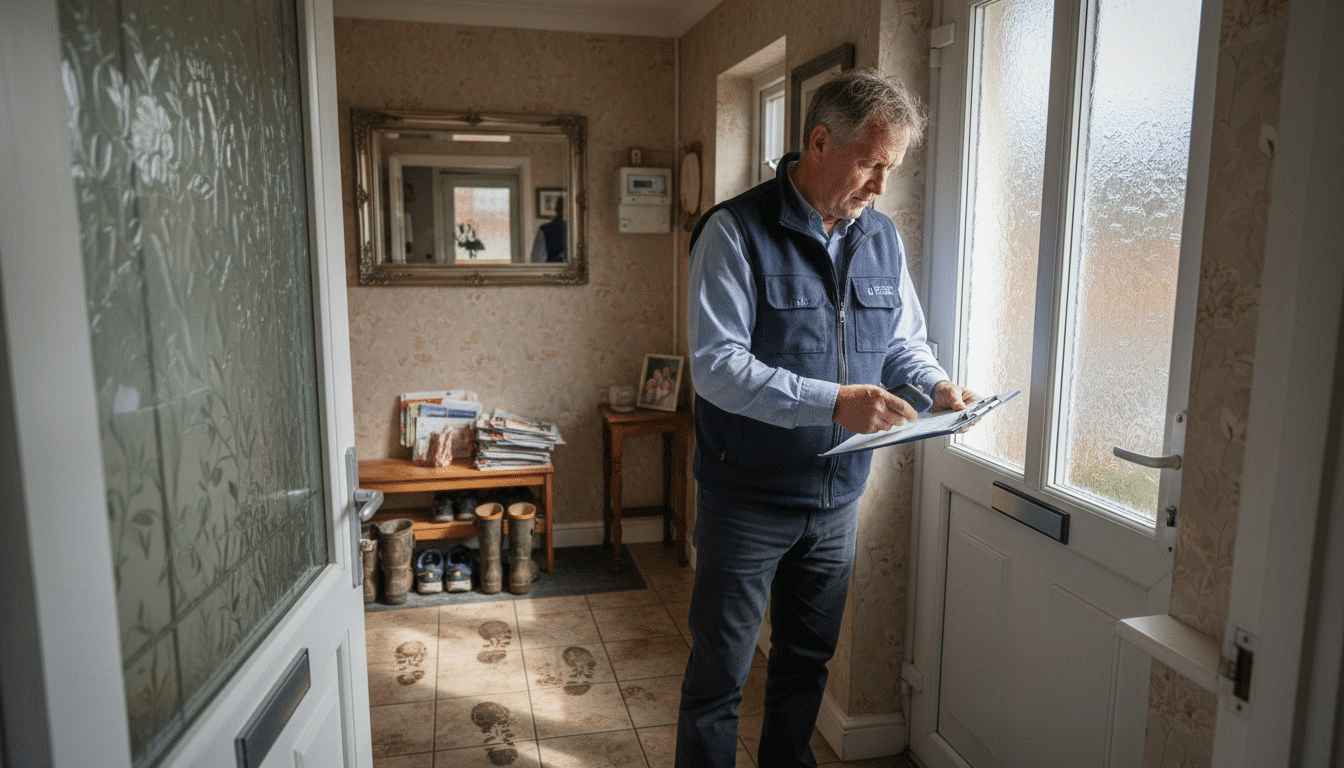
Finding ways to meet stricter energy standards can feel daunting for many UK landlords and property investors. Increased attention on Energy Performance Certificate compliance means understanding property suitability and renewable energy integration is more important than ever. By exploring data-driven assessment tools and the Home Energy Model, you will discover practical steps to maximise efficiency, achieve regulatory goals, and enhance property value in a changing market.
Table of Contents
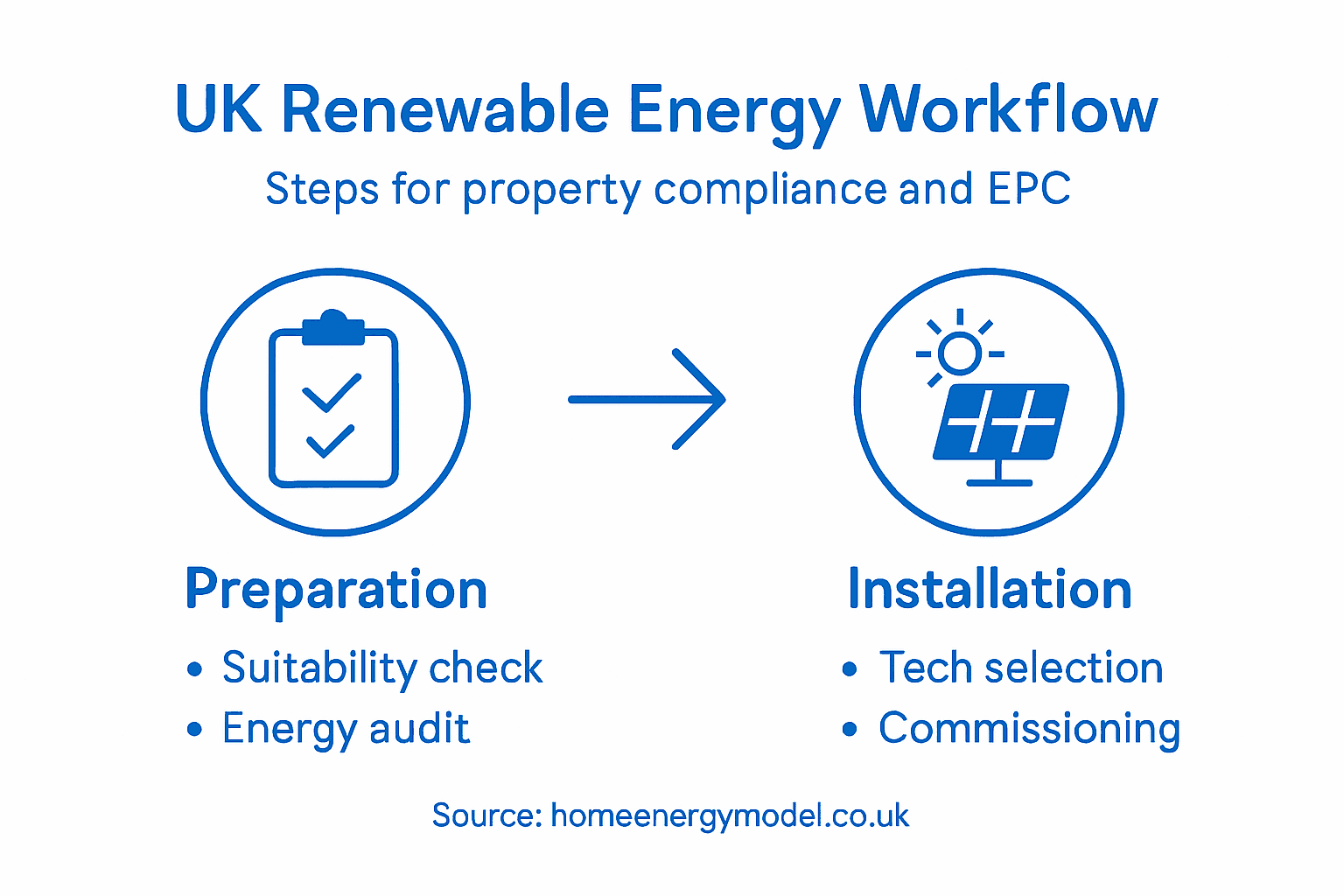
- Step 1: Evaluate Property Suitability For Renewable Systems
- Step 2: Assess Current Energy Use And Identify Improvements
- Step 3: Plan Integration Of Suitable Renewable Technologies
- Step 4: Install And Commission Renewable Energy Solutions
- Step 5: Verify Compliance And Update EPC Documentation
Quick Summary
| Essential Insight | Clarification |
|---|---|
| 1. Evaluate Property Suitability | Conduct a detailed property assessment to determine compatibility with renewable technologies based on unique characteristics and environmental conditions. |
| 2. Assess Current Energy Use | Collect data on energy consumption to identify areas for improvement, aiding in effective renewable energy strategy development. |
| 3. Plan Renewable Technology Integration | Strategically select and design systems based on property features, local climate, and energy requirements for optimal efficiency and cost-effectiveness. |
| 4. Ensure Professional Installation | Engage certified professionals for the installation of renewable technologies to guarantee compliance with regulations and optimal system performance. |
| 5. Update EPC Documentation | After installation, ensure all energy performance records reflect improvements to maintain compliance and potentially enhance property value. |
Step 1: Evaluate property suitability for renewable systems
Evaluating property suitability for renewable energy systems requires a comprehensive analysis of multiple factors. Successful implementation depends on understanding your property’s unique characteristics and potential for sustainable energy generation.
To determine renewable energy compatibility, you will need to assess several critical aspects. Data-driven property assessment enables landlords and homeowners to make informed decisions about energy infrastructure. Key evaluation criteria include:
- Building age and construction
- Roof orientation and structural integrity
- Current energy efficiency ratings
- Local environmental conditions
- Available government incentives
Prior to installation, conduct a detailed property survey to understand specific constraints and opportunities. This assessment will help identify which renewable technologies align best with your property’s characteristics. Solar photovoltaic (PV) systems, air source heat pumps, and biomass solutions each have unique installation requirements and performance metrics.
Accurate property evaluation is the foundation of successful renewable energy investment.
Insulation quality and thermal performance play crucial roles in determining system effectiveness. Properties with poor insulation may require retrofitting before renewable system installation to maximise energy efficiency and potential returns.
Expert recommendation: Engage a professional energy assessor to conduct a comprehensive property evaluation and provide tailored recommendations for renewable energy implementation.
Step 2: Assess current energy use and identify improvements
Assessing your property’s current energy consumption is a critical first step towards implementing effective renewable energy solutions. By understanding your existing energy patterns, you can develop targeted strategies for reducing consumption and improving overall efficiency.
Personalised energy performance tools enable homeowners to gain detailed insights into their property’s energy usage. Begin by collecting comprehensive data about your current energy consumption, including:
- Utility bill historical records
- Heating and cooling system specifications
- Insulation and building envelope details
- Appliance energy ratings
- Typical household energy consumption patterns
Careful analysis of these factors will help identify potential areas for improvement. Pay particular attention to high-energy consumption zones within your property, such as heating systems, poorly insulated areas, and inefficient appliances.
Detailed energy assessment is the cornerstone of effective energy efficiency strategies.
Consider conducting a professional energy audit to obtain precise measurements and expert recommendations. This comprehensive evaluation will provide a clear roadmap for reducing energy consumption and implementing renewable technologies.
Pro tip: Create a spreadsheet tracking your monthly energy usage to visualise consumption trends and identify potential savings opportunities.
Step 3: Plan integration of suitable renewable technologies
Planning the integration of renewable energy technologies requires a strategic approach tailored to your property’s specific characteristics and energy requirements. The goal is to select systems that maximise efficiency, reduce carbon emissions, and provide long-term financial benefits.
Renewable technology planning involves carefully evaluating multiple factors to determine the most appropriate solutions for your property. Key considerations include:
- Property orientation and roof structure
- Local climate and environmental conditions
- Current energy consumption patterns
- Available budget and potential return on investment
- Compatibility with existing infrastructure
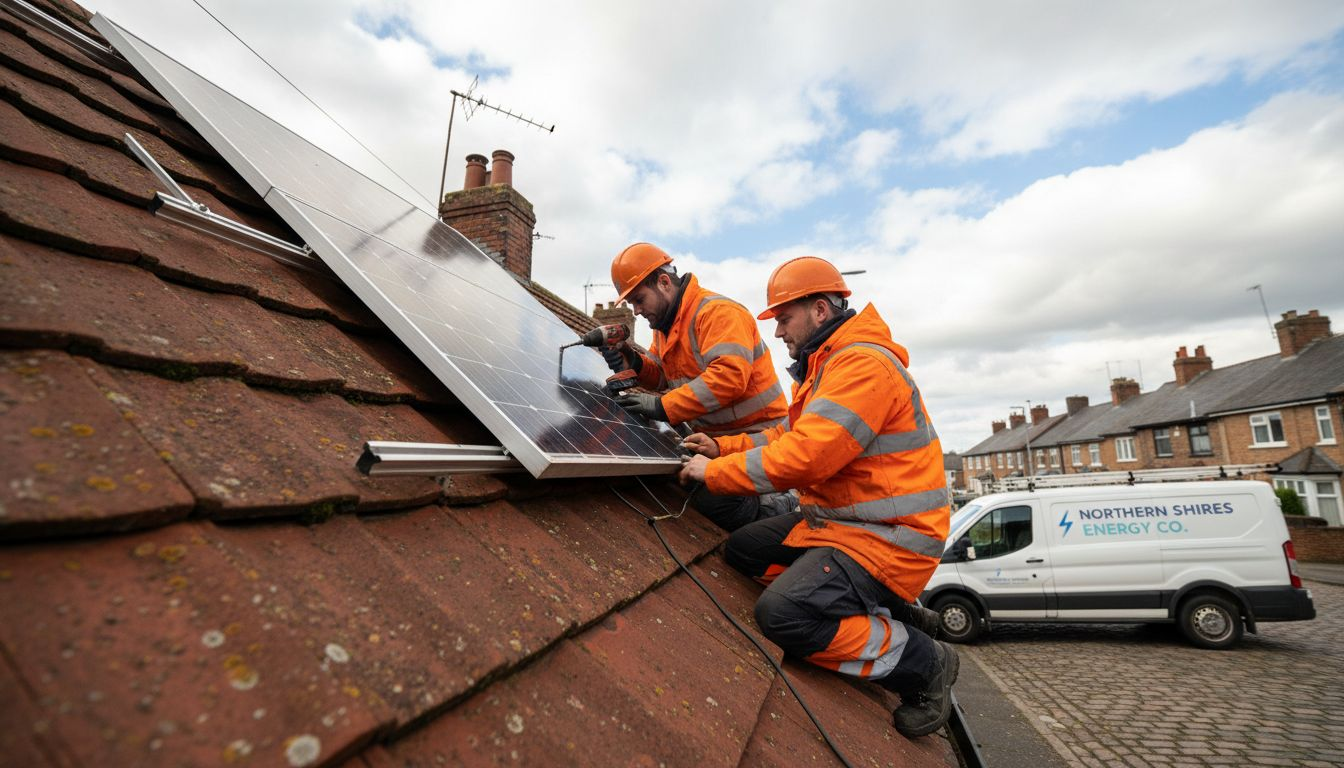
Different renewable technologies offer unique advantages for UK properties. Solar photovoltaic (PV) systems remain particularly popular, providing efficient energy generation for many residential settings. Heat pumps and battery storage systems can complement solar installations, creating a comprehensive approach to sustainable energy production.
Below is a comparison of three popular renewable energy technologies for UK homes:
| Technology Type | Key Advantage | Main Consideration |
|---|---|---|
| Solar Photovoltaic | Reduces electricity bills | Requires suitable roof |
| Air Source Heat Pump | Low-carbon heating solution | Needs external space |
| Biomass System | Uses renewable fuel source | Requires fuel storage |
Successful renewable technology integration balances technical feasibility with financial practicality.
Consider consulting with a professional renewable energy specialist who can provide detailed recommendations specific to your property’s unique characteristics. They can help navigate technical requirements, potential planning permissions, and optimise system design for maximum efficiency.
Pro tip: Conduct a detailed site survey before finalising your renewable technology plans to identify potential installation challenges and opportunities.
Step 4: Install and commission renewable energy solutions
Installing renewable energy technologies requires meticulous planning and adherence to specific UK regulations to ensure safe and efficient implementation. Your goal is to transform your property’s energy infrastructure while maintaining compliance with national standards.
Renewable energy installation guidelines emphasise the importance of professional implementation and regulatory compliance. Critical steps in the installation process include:
- Securing necessary permits and approvals
- Selecting certified and accredited installation professionals
- Ensuring electrical and structural safety standards
- Verifying system compatibility with existing infrastructure
- Conducting comprehensive performance testing
Different renewable technologies demand unique installation approaches. Solar photovoltaic systems require precise roof mounting, while heat pumps need careful ground or air source positioning. Each technology presents specific technical considerations that demand expert handling.
Proper installation and commissioning are fundamental to achieving optimal renewable energy performance.
Work closely with your chosen installation team to understand the detailed process, potential disruptions, and expected system performance. Ensure all documentation, warranties, and compliance certificates are properly maintained for future reference and potential government incentive applications.
Pro tip: Request a comprehensive post-installation performance report to validate your renewable energy system’s efficiency and identify any potential optimization opportunities.
Step 5: Verify compliance and update EPC documentation
After installing renewable energy technologies, updating your property’s Energy Performance Certificate becomes a crucial step in demonstrating improved energy efficiency and maintaining regulatory compliance. This process ensures your property’s documentation reflects the latest improvements in sustainable energy infrastructure.
Energy Performance Certificate renewal requires careful documentation and professional assessment of your property’s updated energy characteristics. Key steps in the verification process include:
- Gathering installation documentation
- Scheduling an accredited EPC assessor
- Providing comprehensive system performance data
- Verifying technical specifications of new renewable technologies
- Updating property energy efficiency records
The updated Energy Performance Certificate will capture the impact of your renewable energy investments, potentially improving your property’s energy rating and market value. Assessors will examine the new installations, their efficiency metrics, and how they contribute to overall property energy performance.
Accurate EPC documentation is essential for legal compliance and demonstrating your property’s sustainable energy capabilities.
Prepare all relevant installation certificates, technical specifications, and performance data to streamline the assessment process. Ensure that all documentation is current and provides a comprehensive overview of your renewable energy systems.
The following table summarises important documentation steps after renewable energy installation:
| Step | Purpose | Who Is Involved |
|---|---|---|
| Collect installation records | Proof for compliance and incentives | Homeowner, installer |
| Schedule EPC assessment | Obtain updated certification | Accredited EPC assessor |
| Update efficiency records | Demonstrate improved energy rating | Homeowner, property agent |
Pro tip: Maintain a dedicated digital folder with all renewable energy installation documents to facilitate smooth EPC updates and future property transactions.
Ensure Your UK Property Meets Renewable Energy Compliance with Confidence
Navigating the complex process of implementing domestic renewable energy solutions and updating Energy Performance Certificates can feel overwhelming. This article highlights key challenges such as evaluating property suitability, assessing current energy use, planning technology integration, and verifying compliance. Property owners and landlords often struggle with knowing how to align their upgrades with evolving regulations like the upcoming Home Energy Model and the Future Homes Standard.
At homeenergymodel.co.uk, we specialise in simplifying these challenges by providing up-to-date insights on government initiatives and energy performance assessment methods for UK properties. Our resources empower you to understand the latest energy compliance requirements, evaluate your property’s energy efficiency with accuracy, and confidently prepare for EPC updates following renewable installations. Explore detailed guidance on energy and water efficiency calculations, learn about the critical role of EPCs in today’s property market, and stay ahead of regulatory changes.
Ready to transform your property’s energy performance while ensuring regulatory compliance? Visit homeenergymodel.co.uk now to access expert advice tailored for homeowners and professionals and take the first step towards sustainable, compliant property management.
Frequently Asked Questions
How do I evaluate my property’s suitability for renewable energy systems?
Evaluating your property involves assessing factors like building age, roof orientation, and current energy efficiency ratings. Conduct a detailed property survey to identify specific constraints and opportunities for implementing renewable technologies.
What information do I need to assess my current energy use?
You will need data such as historical utility bills, specifications of heating and cooling systems, and appliance energy ratings. Collect this data to gain insights into your energy consumption and identify areas for improvement.
How can I plan the integration of suitable renewable technologies?
Plan by considering your property’s orientation, local climate, and current energy consumption patterns. Create a strategic outline based on these factors to help select the most efficient renewable systems for your needs.
What steps are involved in installing renewable energy solutions?
Installing renewable energy technologies requires securing permits, selecting certified professionals, and ensuring compliance with safety standards. Work closely with your installation team to understand the process and schedule to minimise disruption.
How do I verify compliance and update my Energy Performance Certificate (EPC)?
To verify compliance, gather all installation documentation and schedule an assessment with an accredited EPC assessor. Ensure your EPC reflects the improvements made by the new renewable technologies to demonstrate their impact on energy efficiency.
What documents should I prepare after my renewable energy installation?
Prepare installation records, performance data, and technical specifications of your new systems. Keeping all these documents organised will help streamline your EPC assessment process and facilitate future property evaluations.