

A home’s energy efficiency rating improves by reducing heat loss first, then upgrading the heating and hot water, then adding generation. The rating is the A to G band on an Energy Performance Certificate (EPC). Each band reflects a score, and each upgrade adds points. The quickest route is to read the existing certificate, fix the cheap items, insulate, and only then spend on heating systems. A new EPC is the only way to prove the rating has changed.
This guide sets out the order of work, typical UK costs, the traps that catch owners and landlords, and how to confirm the result.
TL;DR
- Start with the current EPC. Its element ratings and recommendations show where the heat escapes.
- Do the cheap measures first: LED lighting, draught-proofing and a hot water cylinder jacket.
- Insulate in order: loft, then cavity walls, then solid walls. Insulation usually gives the best return per pound.
- Heating upgrades matter, but the EPC method is cost-based, so a heat pump may add fewer points than expected.
- Only a new EPC from an accredited assessor shows a changed rating.
Table of Contents
- What the current EPC tells you
- Work in this order
- Quick wins: low-cost measures
- Insulation: the core of most upgrades
- Windows and glazing
- Heating, hot water and renewables
- Choosing what to do: a worked approach
- Rules for landlords and tenants
- Our view on improving the rating
- Check the result with a new EPC
- Common mistakes to avoid
- FAQ
- Sources
What the current EPC tells you
The certificate is the starting point, and it is already free to read. An EPC rates a home from A to G and lists suggested improvements. It also describes the walls, roof, floor, windows, heating and lighting, and it stays valid for 10 years. Scores run from G (1 to 20) up to A (92 and above).
The most useful part is the element table. Each building element is graded from very poor to very good. A roof or wall marked very poor is where the biggest heat losses sit, so that is where the first pound of spending should go.
The certificate also has limits:
- Calculations assume standard occupancy and heating patterns, so real household consumption may differ from the estimate.
- The running costs shown are often out of date, because they reflect prices at the time of assessment.
- The recommendations are a list of options, not a plan. They need ordering by cost, disruption and the work already planned for the property.
If no certificate exists, or the existing one is close to 10 years old, a fresh domestic EPC assessment gives an accurate baseline before any money is spent.
Work in this order
The sequence matters as much as the measures. Industry guidance is to cut heat loss first: loft, then cavity wall, then solid wall insulation, followed by windows, heating controls, heating systems and generation. Heating a leaky house with a better boiler or heat pump wastes part of the gain.
A second rule comes from local authority retrofit guidance. The Surrey Home Energy Improvement Guide advises starting with low or zero cost measures within budget and aligning upgrades with renovation or repair work already planned. Re-roofing, replastering and kitchen refits are the moments when insulation costs least.
| Stage | Measures | Typical cost | Disruption |
|---|---|---|---|
| 1. Quick wins | LED bulbs, cylinder jacket, draught-proofing, heating controls | Under £100 for most items | Minimal |
| 2. Fabric | Loft top-up, cavity wall fill, floor insulation | Hundreds to low thousands | Low to moderate |
| 3. Heavy fabric | Solid wall insulation, new windows | Thousands to tens of thousands | High |
| 4. Systems | Boiler, heat pump, solar PV | Thousands | Moderate |
The costs below are typical figures quoted in UK guides and vary by property size and region. Treat them as a budgeting guide and get written quotes.
Quick wins: low-cost measures
LED lighting
Switching every fitting to LED is the simplest EPC improvement, and the lighting line on a certificate rewards a high share of low-energy bulbs. The gain is small, but the cost is low and the saving on bills starts at once. Rented homes can use this measure too, since bulbs need no landlord permission.
Hot water cylinder jacket
If the home has a hot water cylinder with thin or no insulation, an 80mm jacket costs £15 to £25 and can be recorded as an improvement by an EPC assessor. Insulating exposed hot water pipes near the cylinder is a sensible companion job.
Draught-proofing
Sealing gaps around doors, windows, loft hatches, chimneys and floorboards reduces uncontrolled heat loss. It is cheap, and it helps comfort straight away. One caution applies: do not seal a home so tightly that ventilation fails. RICS warns that retrofit measures can affect ventilation and create moisture, condensation or decay risks if poorly planned. Keep extractor fans, trickle vents and airbricks working, and leave open flues and chimneys that serve a live appliance alone.
Heating controls
A programmable or smart thermostat, thermostatic radiator valves and a correctly set boiler flow temperature cut waste. Controls feed into the heating section of the EPC calculation, so they can add points as well as reduce bills.
Insulation: the core of most upgrades
Loft insulation
Loft insulation is usually the first big job. Topping up to 270mm costs around £300 to £600 and is described as a cost-effective way to improve thermal efficiency. Check for damp and keep eaves ventilated before laying new material. Boarding over insulation compresses it and reduces its effect, so raise the boards on a frame if storage is needed.
Cavity wall insulation
Homes built with cavity walls from the 1920s onward are often candidates. Typical cost sits between £500 and £1,500. A survey should confirm the cavity is suitable and not already filled, and that the walls are not exposed to driving rain in a way that creates damp risk. Use an installer who provides a guarantee.
Solid wall insulation
Solid walls, common in older terraces and pre-1920s houses, lose more heat but cost far more to treat: roughly £5,000 to £20,000. Internal insulation takes up room and affects period features. External insulation changes the look of the house and may need planning permission, particularly in conservation areas. Because of the cost, this measure is usually timed with major refurbishment. Older properties need particular care, as covered in the guide to making old homes efficient.
Floors
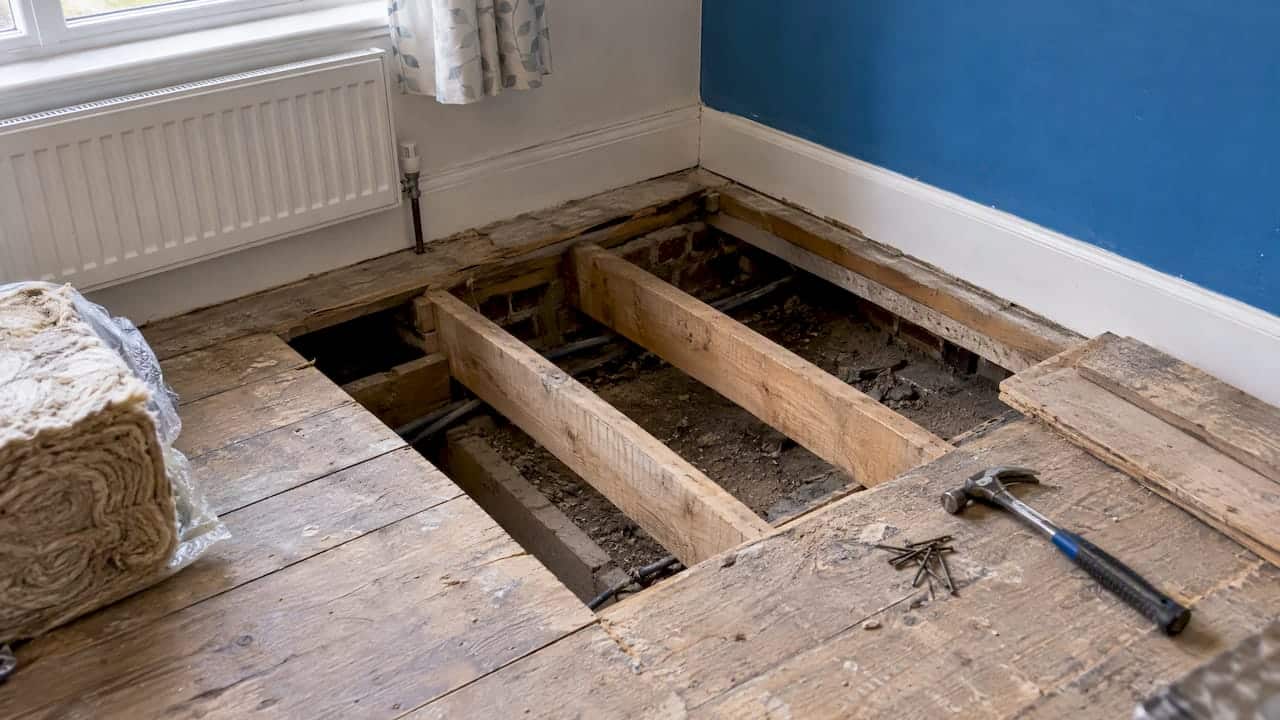
Suspended timber floors can be insulated from below or between joists, and the work is easiest when floorboards are already up. Gaps at skirting level are worth sealing at the same time.
Windows and glazing
Double glazing improves the windows line on an EPC, but it is rarely the cheapest points per pound. Replacing single glazing in a draughty home brings comfort benefits beyond the rating. Where the windows are sound, secondary glazing or draught strips can capture part of the benefit for less money.
Summer comfort deserves attention too. South-facing glass can overheat a home, and solar control options are worth weighing during a renovation. The thermal performance of window films is one aspect to read about when planning glazing upgrades alongside other works. Shading, blinds and external shutters are further routes that do not touch the EPC score but protect comfort.
Heating, hot water and renewables
Boilers and heating systems
A modern condensing boiler with good controls is more efficient than an old non-condensing unit, and replacing a very old boiler is among the largest single points gains available to a gas-heated home. Radiators sized correctly and balanced, and a hot water cylinder with a good thermostat, support the gain.
Heat pumps
Air-source heat pumps cost approximately £8,000 to £15,000 installed. They cut carbon significantly, but their effect on the EPC score is limited by the rating’s cost-based calculation. Which? points out that EPC recommendations prioritise current fuel costs over carbon impact, which explains why a certificate may not recommend a heat pump even when it is the better choice environmentally.
So the rating and the real-world result can diverge. A heat pump in a well-insulated home is a strong long-term decision, but an owner chasing points alone should compare the insulation options first. Grant support in England and Wales is run through the Boiler Upgrade Scheme. Grant values, eligibility and end dates change, so check the official page before committing to a quote.
Solar panels
Solar PV generates electricity on site and is recognised in the EPC calculation. It works best on an unshaded south, east or west roof, and it pairs well with an efficient electric heating system. Roof condition and orientation should be confirmed by an installer before any commitment.
Choosing what to do: a worked approach
A practical way to prioritise is to score each option on three questions: what does it cost, how many points does it add, and how much does it cut the bills.
- Read the EPC recommendations and note the indicative cost and rating effect for each.
- Remove anything the property cannot take, such as cavity fill in a solid-walled house.
- Group jobs that share access, for example loft insulation with draught-proofing and loft hatch work.
- Pair large measures with works already planned, such as a re-roof or new kitchen.
- Get at least three written quotes for anything above a few hundred pounds, and ask about guarantees.
- Reassess after each stage rather than assuming the target band is reached.
A typical semi-detached home in band D, for instance, often has gaps in the loft insulation, little draught-proofing and a basic thermostat. Those three items cost a small fraction of a heat pump, and together they frequently account for much of the way towards C. A property in band E or F with solid walls and an old boiler usually needs the boiler and wall questions answered as well. Results vary, which is why a fresh assessment after the work is the test.
Rules for landlords and tenants
Tenants cannot always make changes themselves, but there are routes. In England and Wales, government guidance on the tenants’ energy efficiency improvements provisions tells tenants to check their tenancy type, decide which improvements to request, secure suitable funding and prepare a written request. Without any landlord consent, tenants can still change bulbs, add draught excluders and manage heating controls where allowed.
Landlords face minimum energy efficiency standards for rented homes, and the required band has been subject to government proposals and change. The rules should be confirmed on the official government pages before planning work. Where a property cannot reach the minimum for cost or technical reasons, the EPC exemption rules explain what may apply. A fuller plan for rented stock is in the landlord’s guide to improving EPC ratings.
Our view on improving the rating
We see the same pattern repeatedly: owners pick the most visible upgrade, such as new windows or a heat pump, before the roof and the draughts have been dealt with. The certificate then disappoints, and the owner assumes the method is broken. Usually the order was wrong.
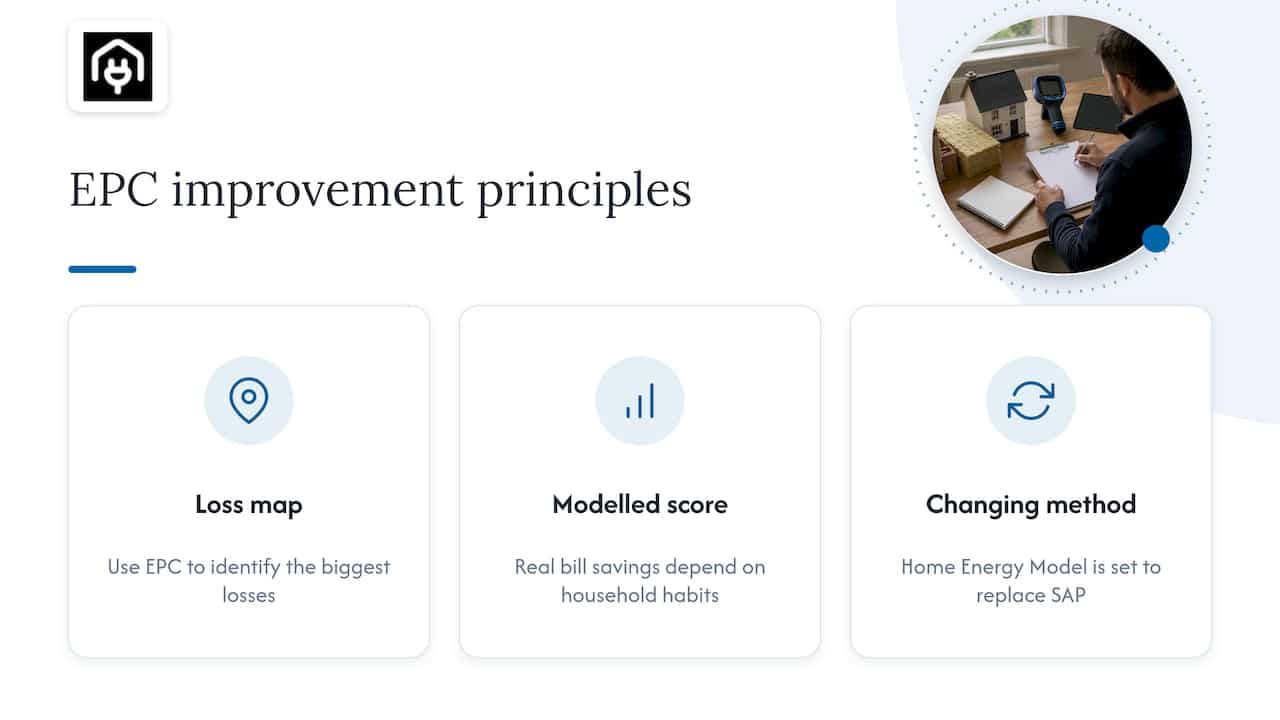
Three points guide our advice. First, treat the EPC as a map of the biggest losses, not a verdict. Second, remember that the EPC is a modelled score, so the saving on a real bill depends on how the household lives. Third, methodology is changing: the Home Energy Model is the government’s new approach to assessing a building’s performance, set to replace SAP and align with the Future Homes Standard. Anyone planning a larger retrofit should expect the way performance is calculated to keep evolving, and should favour fabric measures that perform under any method.
For wider ideas on sequencing, see our guide to energy efficient home upgrades.
— Danny
Check the result with a new EPC
Bills are a rough signal, but weather, tariffs and habits all move them. The EPC does not reflect actual use either: its energy costs assume standard use, not the household’s actual energy use, and a new certificate is the only way to show a changed rating.
Keep invoices, installer guarantees, photographs of insulation before it is covered, and any certificates. The assessor may ask for proof of work they cannot see, such as cavity fill or loft depth, and evidence helps the improvement get recorded.
Book an assessment
When the work is complete, a new certificate fixes the improved rating on record. Homeenergymodel connects property owners and landlords with assessors through an online quote request. Start with the domestic EPC page, or the commercial EPC page for non-domestic premises. For new builds and conversions, SAP calculations are also available through the SAP calculation service.
Common mistakes to avoid
- Starting with the boiler or heat pump. Insulate first so the new system can be smaller and cheaper to run.
- Sealing the house without ventilation. Condensation and mould follow poorly planned airtightness.
- Boarding over loft insulation. Compressed material loses performance.
- Skipping guarantees. Insulation and glazing failures are expensive to remedy without paperwork.
- Assuming the recommended order on the certificate is the best order. It reflects modelled cost and effect, not your plans or budget.
- Expecting the bill to fall by the modelled amount. Real savings depend on use, tariffs and weather.
FAQ
How can I improve my house energy rating cheaply?
Start with LED bulbs, draught-proofing, a hot water cylinder jacket and better heating controls. A jacket costs around £15 to £25. A loft top-up is the next most cost-effective step for most homes.
Does a heat pump improve an EPC rating?
It can, but the gain is often smaller than people expect. The rating method is cost-based, so it favours cutting fuel cost over cutting carbon. A heat pump is still worth considering for long-term emissions, ideally after the fabric has been insulated.
How long does an EPC last, and when should it be redone?
An EPC stays valid for 10 years. Commission a new one after major improvements if the new rating matters, for example before selling or letting.
Can tenants improve a rented home’s energy rating?
Tenants can make small changes such as bulbs and draught excluders. For larger works they need the landlord, and the government’s tenants’ provisions guidance explains how to make a written request in England and Wales.
Will insulation always raise my rating?
Not by a fixed amount. The points depend on what is there already, the size of the home and the measure chosen. Poorly planned work can also cause damp, so use a qualified installer and confirm the result with a new EPC.
Sources
- EPC recommendations: what they mean
- How to get an Energy Performance Certificate you can trust (Which?)
- How to improve your home’s EPC rating (UK, 2026)
- The Surrey Home Energy Improvement Guide
- EPC cost and how to improve your rating before selling
- Retrofitting and improving the energy efficiency of your home (RICS)
- Tenants’ energy efficiency improvements provisions (GOV.UK)
- Boiler Upgrade Scheme (Ofgem)