
The most effective house heating tips fall into three groups: run the existing system sensibly, stop heat escaping, and heat only the spaces in use. A steady temperature of around 18°C to 20°C in occupied rooms, a timer that matches the household routine, draught-proofing and loft insulation cover most of the savings available to a typical UK home. Everything below is practical, ordered from free changes to larger upgrades.
TL;DR
- Aim for at least 18°C in the rooms in use, especially for anyone aged 65 or over or with a health condition, according to the Met Office.
- A higher thermostat setting does not heat a house faster. Bring the heating on earlier instead, as Citizens Advice explains.
- Draughts account for roughly 15% of heating spend on average, so sealing gaps is one of the cheapest fixes.
- Loft insulation of around 270 mm is the standard recommendation, and anything at 100 mm or less should be topped up.
- An EPC shows which upgrades suit a particular property and in what order.
Table of Contents
- What temperature should a house be heated to?
- Use the heating system properly
- Stop heat escaping
- Heat the people, not the whole house
- Where to start: a simple order of work
- Perspective
- Find out what suits the property
- FAQ
- Sources
What temperature should a house be heated to?
For most households the answer is 18°C to 20°C in living areas. The Met Office advises heating a home to at least 18°C, particularly where someone is 65 or over, has reduced mobility or has a health condition. Home Energy Scotland gives a lower baseline of at least 15°C for colder months and notes that a steady temperature helps prevent condensation, which is why a home left to go cold and then blasted warm can end up damp.
Is 17 degrees cold for a house?
Seventeen degrees sits just under the 18°C level the Met Office treats as the ideal minimum for occupied rooms. For a healthy adult who is active and dressed in layers it is tolerable, and it is above the 15°C baseline mentioned by Home Energy Scotland. For anyone elderly, unwell, very young or sitting still for long periods, a degree or two more is the safer target. Bedrooms and rarely used rooms can sit lower than the living room.
Each degree has a cost
Figures from Australian government sources illustrate the principle, even though climates and tariffs differ. Sustainability Victoria puts the extra cost of each degree higher at around 15%, while energy.gov.au gives a range of 5% to 10%. The exact figure depends on the home, but the direction is the same everywhere: a lower setting that still feels comfortable is the cheapest warmth available.
Use the heating system properly
A boiler and radiators work best when they are controlled, not simply switched on and off. The Energy Saving Trust says a central heating system with a boiler should have at least a programmer, a room thermostat and thermostatic radiator valves (TRVs), and that using these controls well could save around £100 a year in Great Britain. If none are fitted, it puts the cost of adding a programmer, thermostat and TRVs on all radiators at around £600.
1. Set the timer to the routine
A programmer lets the heating come on shortly before the household wakes or returns and switch off when everyone is out or in bed. Heating a home that is empty serves no purpose, and a timer removes the need to remember.
2. Start earlier, not hotter
Turning the thermostat to 25°C does not warm the house faster. It only makes the boiler run longer and overshoot. Citizens Advice suggests switching the heating on about 30 minutes before it is needed, or earlier if the home is slow to warm or the weather is very cold. A few weeks of adjusting the start time will show how long a particular house needs.
3. Place and protect the thermostat
A room thermostat reads the temperature where it sits. Sustainability Victoria advises keeping it away from draughts and heat sources and off an external wall, otherwise it switches the system off or on at the wrong moment. If the hallway thermostat sits beside a front door, moving it or sealing the draught can change how the whole system behaves.
4. Use TRVs room by room
TRVs let each radiator reach a different temperature. A spare room or box room can be set low while the living room stays at the main target. Make sure at least one room, usually the one with the thermostat, has its radiators fully open so the boiler can register the temperature.
5. Keep radiators clear
Sofas pushed against radiators and curtains draped over them trap heat where it is not needed. Leave space in front so warm air can circulate. Long curtains should stop above the radiator, or be tucked behind it when the heating is on.
6. Add reflective panels on external walls
The Centre for Sustainable Energy (CSE) notes that reflective panels behind radiators on external walls reflect heat back into the room and reduce what is lost to the outside. They are inexpensive and suit solid or poorly insulated walls best.
7. Bleed radiators if they are cold at the top
A radiator that is warm at the bottom and cool at the top usually has air trapped inside. Bleeding it with a radiator key restores the heat output. If the whole system loses pressure, or several radiators stay cold, a heating engineer should look at it.
8. Use a boiler in preference to plug-in heaters
CSE points out that gas and oil are generally cheaper than electricity, so heating with a boiler is often more cost-effective than running plug-in electric heaters for whole-room heating. Portable heaters make sense for short periods in a single small room, not as the main source of heat.
9. Use a ceiling fan in reverse where fitted
Warm air rises. The Australian Government notes that reversible ceiling fans on a low setting help push that warm air back down and spread it around the room. This applies mainly to rooms with high ceilings and a fan already installed.
10. Follow the right approach for heat pumps
Houses with heat pumps behave differently from gas boilers. ASHRAE advises that large overnight setbacks are not recommended where they would trigger auxiliary heating. A heat pump generally works best at a steady, moderate temperature, so follow the installer’s guidance on schedules.
Stop heat escaping
Heating controls only help if the heat stays in the building. This is where the largest and longest-lasting savings sit.
11. Draught-proof windows, doors and floors
On average, around 15% of heating spend is lost to draughts, according to CSE. Australia’s energy.gov.au says sealing gaps around windows, doors and floorboards may reduce heat loss by 15% to 25%. Typical targets are:
- gaps around window frames and opening sashes;
- the bottom and edges of external doors;
- letterboxes and keyholes;
- gaps between floorboards and skirting boards;
- unused chimneys, which can be fitted with a removable cap or balloon.
Keep trickle vents and extractor fans in kitchens and bathrooms working. Ventilation is still needed to control moisture, and fuel-burning appliances need an air supply. Our step-by-step guide to draught-proofing windows covers materials and methods.
12. Top up the loft insulation
The Met Office says homes should have at least 10 to 11 inches (270 mm) of loft insulation, and those with 4 inches (100 mm) or less should be topped up. A simple check: if the ceiling joists are visible above the insulation, there is probably too little. Our guide on how to insulate a loft explains the materials and the safe way to work in a loft space.
13. Insulate walls, pipes and the hot water cylinder
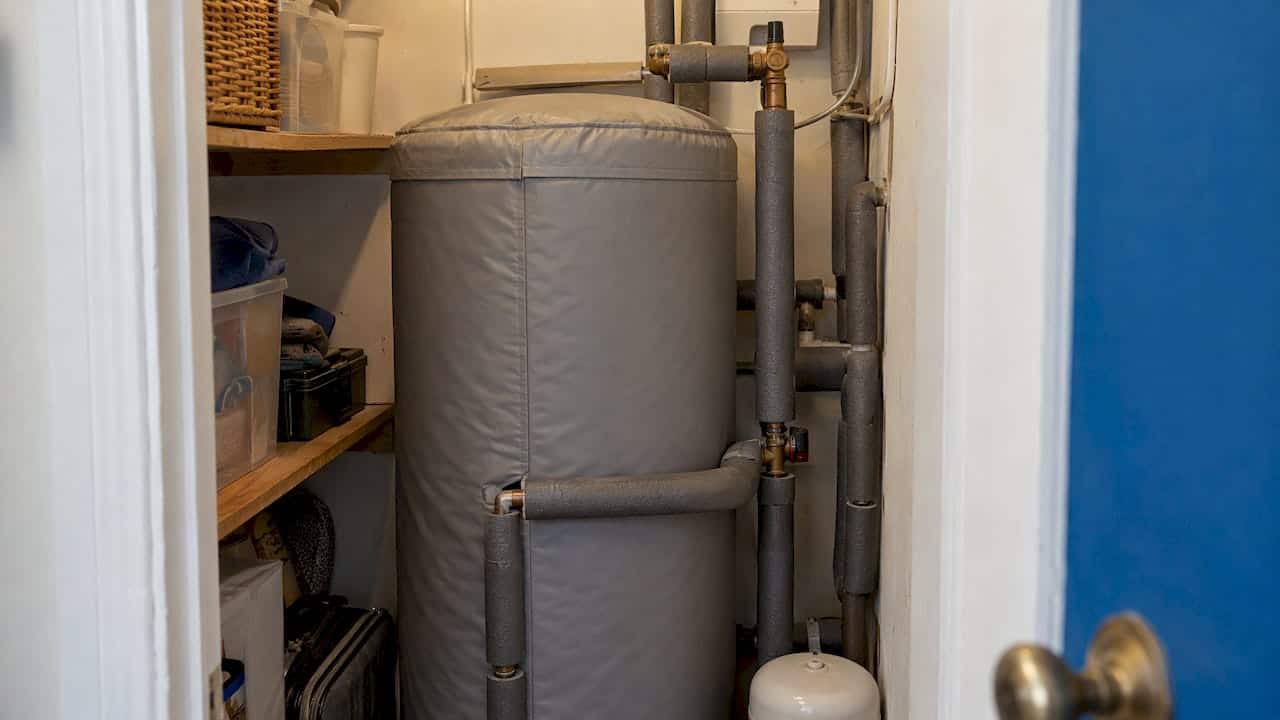
The Met Office also lists walls, pipes and the hot water cylinder as places to insulate. A cylinder jacket and lagging on exposed pipes are low-cost jobs. Wall insulation (cavity or solid) is a larger project and suits a professional survey first, because the right method depends on the construction of the house.
14. Understand the scale of the benefit
Sustainability Victoria reports that a fully insulated home can save 40% to 50% on heating costs compared with an uninsulated one. That is an Australian figure for a full retrofit, so UK savings will differ with the starting point. The Energy Trust of Oregon gives a lower figure of around 15% a year for combined air sealing and insulation in US homes. Read together, they show that results depend heavily on how leaky and under-insulated a home is to begin with.
15. Close curtains at dusk
The Met Office recommends drawing curtains at dusk, and window coverings reduce heat lost through glass. Thicker or lined curtains do more than thin ones. Open them on sunny days to let free solar warmth in.
Heat the people, not the whole house
Some of the most effective house heating tips involve no equipment at all. CSE suggests prioritising heating in one small room, wearing several thin layers, using rugs or blankets on floors, closing doors to unused rooms and using draught excluders so heat stays in the spaces being used.
16. Heat one room well
In a cold spell, concentrating on a single room, such as the living room, and closing its door gives better comfort than lukewarm heating everywhere.
17. Layer clothing
Several thin layers trap air better than one thick garment. A hat and warm socks make a noticeable difference to how warm a room feels.
18. Cover bare floors
Rugs on floorboards or tiles cut the sense of cold underfoot and slow heat loss through the floor.
19. Close doors to rooms not in use
Keeping internal doors shut stops heat flowing into hallways and unused bedrooms. Do not close them fully on rooms with damp problems, as air still needs to move.
20. Keep warm drinks and meals regular
Hot food and drinks help the body stay warm. This is a comfort measure that supports, not replaces, adequate room heating for vulnerable people.
Where to start: a simple order of work
| Step | Action | Typical effort |
|---|---|---|
| 1 | Check thermostat position and timer settings | Free, same day |
| 2 | Lower the setting by a degree and layer clothing | Free |
| 3 | Close curtains and doors, clear radiators | Free |
| 4 | Draught-proof windows, doors, floors | Low cost, DIY |
| 5 | Top up loft insulation to around 270 mm | Moderate cost |
| 6 | Add or upgrade heating controls and TRVs | Moderate cost |
| 7 | Wall insulation and larger upgrades | Larger project, survey first |
For more ideas that fit around this order, see our pieces on low-cost energy-saving tips for UK homes and winter home energy tips for property owners. Landlords weighing the same decisions across several properties can use our guide to cutting heating costs for landlords.
Perspective
We see the same pattern in the questions that reach us. Most households start with the thermostat, which is reasonable, but the property itself decides how much heat is needed in the first place. A leaky roof space and gaps around the frames mean the boiler works harder for the same result.
That is why we treat heating advice and energy performance as one subject. Habits and controls cost little and should come first. Fabric improvements such as insulation and draught-proofing then lock in the benefit. An Energy Performance Certificate lists recommended measures for a specific property, which turns general tips into a short, ordered list.
For landlords, developers and owners planning larger work, the same logic applies at design stage. Accurate energy calculations show how a building will perform before money is spent, and our guidance is written to make that process clear for both professionals and homeowners.
Danny
Find out what suits the property
General tips work for most homes, but the right upgrades differ for a Victorian terrace, a 1990s semi and a new build. A domestic EPC records the current energy rating and lists recommended improvements. Owners can request a quote through our domestic EPC page, and our guide to EPC energy-saving tips explains how to use the recommendations once the certificate arrives.
FAQ
How do I warm up my house faster?
Turning the thermostat higher does not speed up warming. It only uses more energy once the target is passed. Switch the heating on about 30 minutes earlier, or longer in very cold weather, and close doors and curtains so the heat stays in the rooms being warmed.
What is the best way to run my heating?
Use a programmer so the heating follows the household routine, set the room thermostat to a comfortable temperature of around 18°C to 20°C, and use TRVs to lower the temperature in rooms that are rarely used. The Energy Saving Trust says good use of controls could save around £100 a year in Great Britain.
Is 17 degrees cold for a house?
It is slightly below the 18°C the Met Office recommends as a minimum for occupied rooms, and noticeably cool for older people, those with health conditions or anyone sitting still. A healthy, active adult may be comfortable with extra layers. Raising the setting by a degree or improving insulation are the usual remedies.
Does draught-proofing make a real difference?
Yes, because draughts are a major route for heat loss. CSE estimates that about 15% of heating spend is lost this way on average. Sealing windows, doors and floor gaps is low in cost, though ventilation such as trickle vents and extractor fans should be left working.
Is it cheaper to leave the heating on low all day?
It depends on the home, so there is no single rule. A well-insulated house holds heat longer and benefits from a steady, moderate setting, while a leaky one loses heat quickly whatever the schedule. Matching the timer to when rooms are occupied, and improving insulation, gives the most reliable saving.
Sources
- Keeping your home warm this winter, Met Office
- Save money heating your home, Citizens Advice
- Cheap ways to keep warm at home, Centre for Sustainable Energy
- Heating controls, Energy Saving Trust
- Heat your home efficiently, Sustainability Victoria
- Winter energy savings, energy.gov.au
- Insulation and draught proofing, energy.gov.au
- Winter Consumer Tips, ASHRAE
- Cold-weather tips for PNW homes, Energy Trust of Oregon