
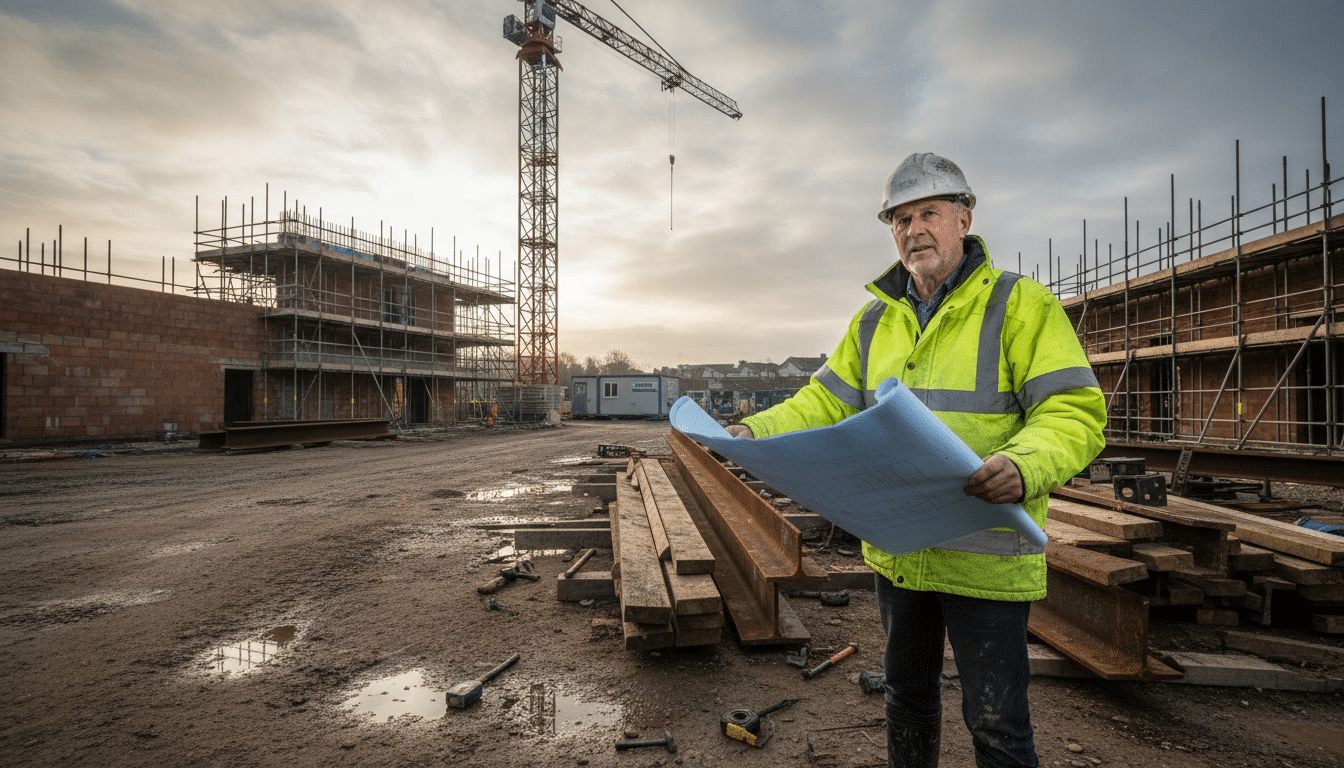
Building in the United Kingdom means more than minimising energy bills or meeting local council targets. The arrival of the Home Energy Model brings embodied energy into sharp focus, challenging property developers and energy consultants to look beyond operational efficiency. With about 20% of the built environment’s carbon footprint linked to embodied carbon processes, understanding the full lifecycle impact of building materials is now crucial for achieving both regulatory compliance and ambitious sustainability goals.
Table of Contents
- Embodied Energy In UK Construction Explained
- Types And Calculation Boundaries For Embodied Energy
- How Embodied Energy Is Measured In Buildings
- Role Of Embodied Energy In The Home Energy Model
- Compliance, Costs And Practical Challenges For Developers
Key Takeaways
| Point | Details |
|---|---|
| Understanding Embodied Energy | Recognising the full lifecycle of energy consumption in construction is essential for sustainability. Embodied energy represents significant carbon emissions throughout a building’s lifecycle, not just operational energy. |
| Measurement and Methodologies | Accurate embodied energy assessment relies on lifecycle assessment methodologies and materials databases that provide energy values for construction materials. This allows for informed decision-making in sustainability planning. |
| Regulatory Compliance Challenges | Developers must navigate complex compliance regulations concerning embodied carbon, necessitating new skills, technologies, and cross-functional collaboration to manage carbon impacts effectively. |
| Proactive Strategies | Early-stage assessments and clear documentation of embodied carbon can lead to impactful decisions in material selection and design, ultimately minimising the overall environmental footprint of construction projects. |
Embodied energy in UK construction explained
Constructing buildings involves far more than just the visible materials and labour. Embodied energy represents the total energy consumed throughout a building’s entire lifecycle, from raw material extraction to final construction and potential demolition. According to the UK Green Building Council’s research on carbon emissions, approximately 20% of the built environment’s carbon footprint stems directly from embodied carbon processes.
In practical terms, embodied energy encompasses all the energy required to produce building materials, transport them to construction sites, assemble structures, maintain components, and eventually dismantle or recycle them. This includes the energy used in manufacturing concrete, steel, glass, and other construction materials, as well as the fuel consumed by machinery, transportation vehicles, and on-site equipment. The UK government recognises these complex calculations, highlighting the technical challenges in precisely measuring and reducing embodied carbon across different construction projects.
Understanding embodied energy is crucial for architects, developers, and property managers aiming to create more sustainable buildings. While operational energy (used during a building’s active lifecycle) has traditionally received more attention, embodied energy represents a significant opportunity for reducing overall carbon emissions. The construction industry can make substantial environmental impacts by selecting low-carbon materials, optimising design processes, and implementing more efficient manufacturing techniques.
Pro tip: When planning construction projects, conduct a comprehensive embodied carbon assessment early in the design phase to identify potential energy reduction strategies and material alternatives.
Types and calculation boundaries for embodied energy
Embodied energy calculations are complex processes that require defining precise measurement boundaries across a building’s entire lifecycle. Detailed lifecycle assessment methods reveal multiple stages where energy consumption can be quantified, ranging from initial material extraction through to final demolition and potential recycling.
Typically, embodied energy calculation boundaries include several critical stages. These encompass raw material extraction, manufacturing processes, transportation, on-site construction activities, ongoing maintenance, potential refurbishment works, and end-of-life deconstruction or disposal. Each stage contributes differently to the total energy consumption, with manufacturing and transportation often representing significant proportions of a building’s embodied energy profile.
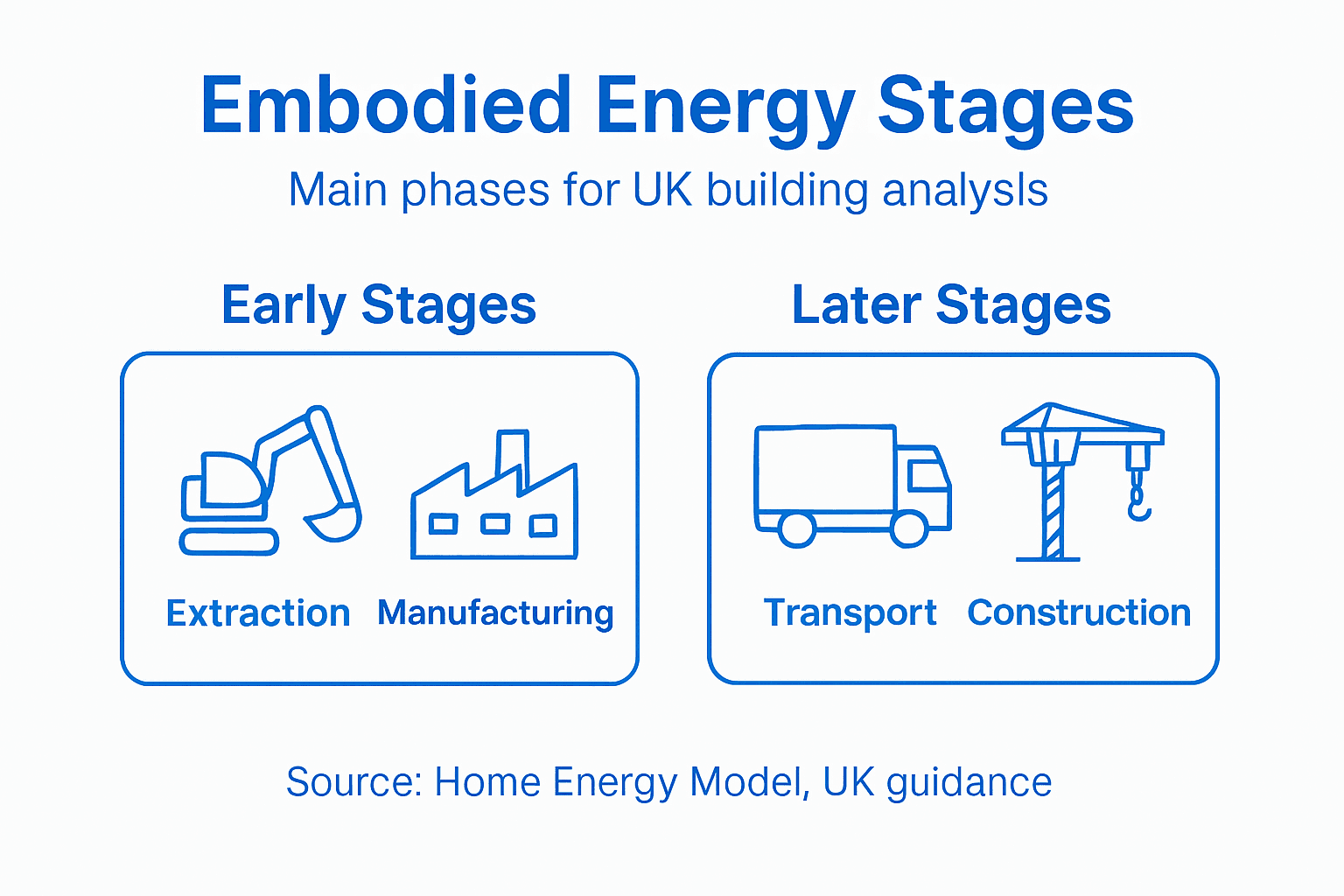
The boundaries of embodied energy calculations can vary significantly depending on the specific methodology and project requirements. Some assessments might focus solely on initial construction phases, while more comprehensive approaches consider the entire lifecycle, including maintenance, replacement of building components, and eventual demolition. This variation means that different projects can produce substantially different embodied energy figures, even for seemingly similar structures.
Here is a summary of the main stages included in embodied energy calculations for UK buildings:
| Stage | Description | Typical Impact Level |
|---|---|---|
| Extraction | Obtaining raw building materials | Moderate to High |
| Manufacturing | Processing materials into usable products | High |
| Transportation | Moving materials to construction sites | Moderate |
| Construction | Assembling and installing materials | Moderate |
| Maintenance | Repairs and ongoing replacements | Low to Moderate |
| End-of-life | Demolition, disposal, or recycling | Variable, depends on reuse |
Pro tip: When conducting embodied energy assessments, clearly define and document your calculation boundaries to ensure consistency and comparability across different project evaluations.
How embodied energy is measured in buildings
Embodied energy measurement relies on sophisticated life cycle assessment (LCA) methodologies that meticulously track energy consumption across multiple stages of a building’s existence. Comprehensive material databases have been developed by researchers to provide precise energy values for nearly 200 different construction materials used in UK buildings.

The measurement process involves a systematic approach of calculating energy consumption at each stage of a material’s lifecycle. Practitioners multiply the quantity of each material by its specific embodied energy value, considering stages such as raw material extraction, manufacturing, transportation, construction, maintenance, and eventual demolition. Environmental product declarations (EPDs) have become increasingly important in providing standardised data for these complex calculations, enabling more accurate and transparent assessments.
UK regulations are progressively moving towards whole life carbon assessments, which require a more holistic approach to embodied energy measurement. This means construction professionals must now consider not just the immediate energy consumption of materials, but their entire environmental impact from production through to end-of-life disposal. Advanced computational tools and specialised software are increasingly being used to perform these intricate calculations, allowing for more precise and comprehensive energy evaluations.
Below is a comparison of tools and approaches used for embodied energy measurements in UK construction:
| Method or Tool | Key Benefit | Limitation |
|---|---|---|
| Life Cycle Assessment (LCA) | Comprehensive energy tracking | Resource-intensive process |
| Material Databases | Quick access to data | May lack latest material info |
| Environmental Product Declarations (EPDs) | Standardised data benchmarking | Limited coverage for some products |
| Specialised Software | Accurate and efficient modelling | Requires specialised training |
Pro tip: Invest in specialised LCA software and maintain up-to-date material databases to ensure the most accurate embodied energy measurements for your construction projects.
Role of embodied energy in the Home Energy Model
The Home Energy Model represents a significant evolution in understanding building energy performance, moving beyond traditional operational energy assessments to incorporate comprehensive carbon footprint evaluations. This approach recognises that a building’s total environmental impact extends far beyond its day-to-day energy consumption, encompassing the entire lifecycle of construction materials and processes.
As operational emissions continue to decrease through improved energy efficiency and renewable technologies, embodied energy has become increasingly critical in holistic energy assessments. The model now considers the carbon generated during material production, transportation, construction, and eventual demolition, providing a more nuanced understanding of a building’s true environmental footprint. This comprehensive approach allows architects, developers, and policymakers to make more informed decisions about sustainable building design and material selection.
By integrating embodied energy metrics, the Home Energy Model supports the UK’s net zero targets by creating a more transparent framework for assessing building sustainability. Construction professionals can now quantify the carbon impact of their design choices, comparing different materials and construction methods to minimise overall environmental impact. This represents a fundamental shift from simply measuring energy consumption to understanding the complete carbon lifecycle of buildings.
Pro tip: Utilise early-stage embodied energy calculations to guide material selection and design strategies, potentially reducing overall carbon emissions before construction begins.
Compliance, costs and practical challenges for developers
Developers face significant hurdles in navigating the emerging landscape of embodied carbon regulations, with complex compliance challenges presenting substantial financial and operational obstacles. The transition requires fundamental shifts in design processes, material selection, and comprehensive carbon accounting, which demand considerable investment in new skills, technologies, and assessment methodologies.
The economic implications of embodied carbon compliance are multifaceted. While initial costs for low-carbon materials and detailed carbon assessments can be substantial, developers must balance these against long-term sustainability benefits and potential regulatory penalties. Supply chain transparency becomes crucial, requiring sophisticated tracking of material origins, manufacturing processes, and embedded carbon values across complex construction networks.
Professional upskilling represents another critical challenge for the construction sector. Teams must develop new competencies in carbon measurement, lifecycle assessment, and sustainable design strategies. This necessitates significant investment in training, potentially reshaping recruitment practices and professional development approaches within architectural and engineering firms. The complexity of embodied carbon calculations demands interdisciplinary collaboration and a systematic approach to understanding environmental impact.
Pro tip: Develop a comprehensive carbon tracking strategy early in project planning, integrating specialised software and creating cross-functional teams to manage embodied carbon compliance effectively.
Take Control of Embodied Energy in Your UK Building Projects
Understanding embodied energy is essential for anyone involved in UK construction aiming to reduce carbon footprints and meet future regulations. The challenges of accurately measuring embodied energy and balancing material choices can be overwhelming. Key pain points include complex lifecycle assessments, compliance with evolving standards, and integrating embodied carbon into design early. These are not just technical hurdles but critical steps to creating sustainable, future-proof buildings.
At homeenergymodel.co.uk, you will find expert guidance on the upcoming Home Energy Model (HEM) that incorporates embodied energy into comprehensive building assessments. Our resources help you navigate the transition from traditional energy metrics to holistic strategies that include embodied carbon. Discover how to align with the Future Homes Standard and empower your development by understanding practical steps and compliance requirements. Act now to stay ahead in sustainability and regulation by exploring how the Home Energy Model can transform your building practices.
Ready to reduce embodied carbon impact and optimise building performance Use our detailed insights and tools at homeenergymodel.co.uk to start planning smarter projects today.
Frequently Asked Questions
What is embodied energy in construction?
Embodied energy refers to the total energy consumed throughout a building’s entire lifecycle, from raw material extraction to final construction and potential demolition. It includes energy used in manufacturing materials, transportation, assembly, maintenance, and disposal.
Why is embodied energy important for UK buildings?
Embodied energy is crucial for sustainable building practices as it represents a significant portion of carbon emissions in the built environment. Understanding and managing embodied energy can help architects and developers reduce overall carbon footprints.
How is embodied energy measured in buildings?
Embodied energy is measured using lifecycle assessment (LCA) methodologies, which track energy consumption at various stages of a material’s lifecycle. Practitioners quantify each material’s use and apply its specific embodied energy value for accurate assessments.
What stages are included in embodied energy calculations?
Embodied energy calculations typically include stages such as raw material extraction, manufacturing, transportation, construction, ongoing maintenance, and end-of-life deconstruction or disposal. Each stage contributes uniquely to the total energy consumption.