

Most British buildings now shoulder a climate cost hidden from everyday view. Embodied carbon already makes up around 10% of total UK greenhouse gas emissions, outpacing major sectors like aviation. For British landlords and property investors, understanding this carbon footprint is no longer optional as new energy regulations target the full impact of construction. Learn how these evolving rules and smart building strategies can help you future-proof your portfolio, protect value, and make sustainability a competitive advantage.
Table of Contents
- What Is Embodied Carbon In Buildings?
- Major Sources And Key Emissions Stages
- Embodied Versus Operational Carbon Explained
- How UK Standards And EPCs Address Embodied Carbon
- Landlord Duties, Costs, And Mitigation Strategies
Key Takeaways
| Point | Details |
|---|---|
| Embodied Carbon Importance | Embodied carbon accounts for about 10% of the UK’s total greenhouse gas emissions, highlighting the need for better tracking and reduction strategies in the construction sector. |
| Lifecycle Emissions Stages | Key stages contributing to embodied carbon include material extraction, manufacturing, transportation, construction, maintenance, refurbishment, and demolition. |
| Operational versus Embodied Carbon | While operational carbon emissions occur during a building’s use, embodied carbon is locked in at the construction stage, making early design decisions crucial. |
| Landlord Responsibilities | Landlords must integrate sustainability into investment strategies by adopting low-carbon materials and engaging with sustainability consultants to manage lifecycle carbon impacts effectively. |
What Is Embodied Carbon In Buildings?
Embodied carbon represents the total greenhouse gas emissions generated during the complete lifecycle of building materials and construction processes. This comprehensive carbon footprint encompasses everything from raw material extraction and manufacturing through to transportation, installation, maintenance, and eventual disposal or demolition of building components.
At its core, embodied carbon includes all carbon emissions produced before a building becomes operational. Detailed carbon assessments from UCL research indicate these emissions represent a substantial proportion of a building’s total carbon impact. Unlike operational carbon – which tracks energy consumed during a building’s use – embodied carbon captures the upfront environmental cost of construction materials and processes.
The significance of embodied carbon in the UK cannot be overstated. According to industry data, these emissions currently account for approximately 10% of total UK greenhouse gas emissions, exceeding the combined carbon output of aviation and shipping. With projected growth, experts anticipate embodied carbon will comprise the majority of built environment emissions by 2035. This trend underscores the critical need for comprehensive carbon tracking and reduction strategies across the construction sector.
Pro tip: When planning a construction project, request detailed embodied carbon calculations from your architects and engineers to understand and minimise your building’s upfront carbon footprint.
Major Sources And Key Emissions Stages
Embodied carbon emissions emerge across multiple critical stages in a building’s lifecycle, creating a complex network of carbon-intensive processes. Comprehensive UK government research identifies seven primary emissions stages that collectively contribute to a building’s total carbon footprint: material extraction, manufacturing, transportation, construction, maintenance, refurbishment, and demolition.
The most carbon-intensive materials in construction include cement, steel, and glass. These materials demand significant energy during production, with cement manufacturing alone contributing approximately 8% of global carbon emissions. Steel production involves high-temperature processes that require substantial fossil fuel consumption, while glass manufacturing involves energy-intensive melting and shaping techniques that further escalate carbon output.
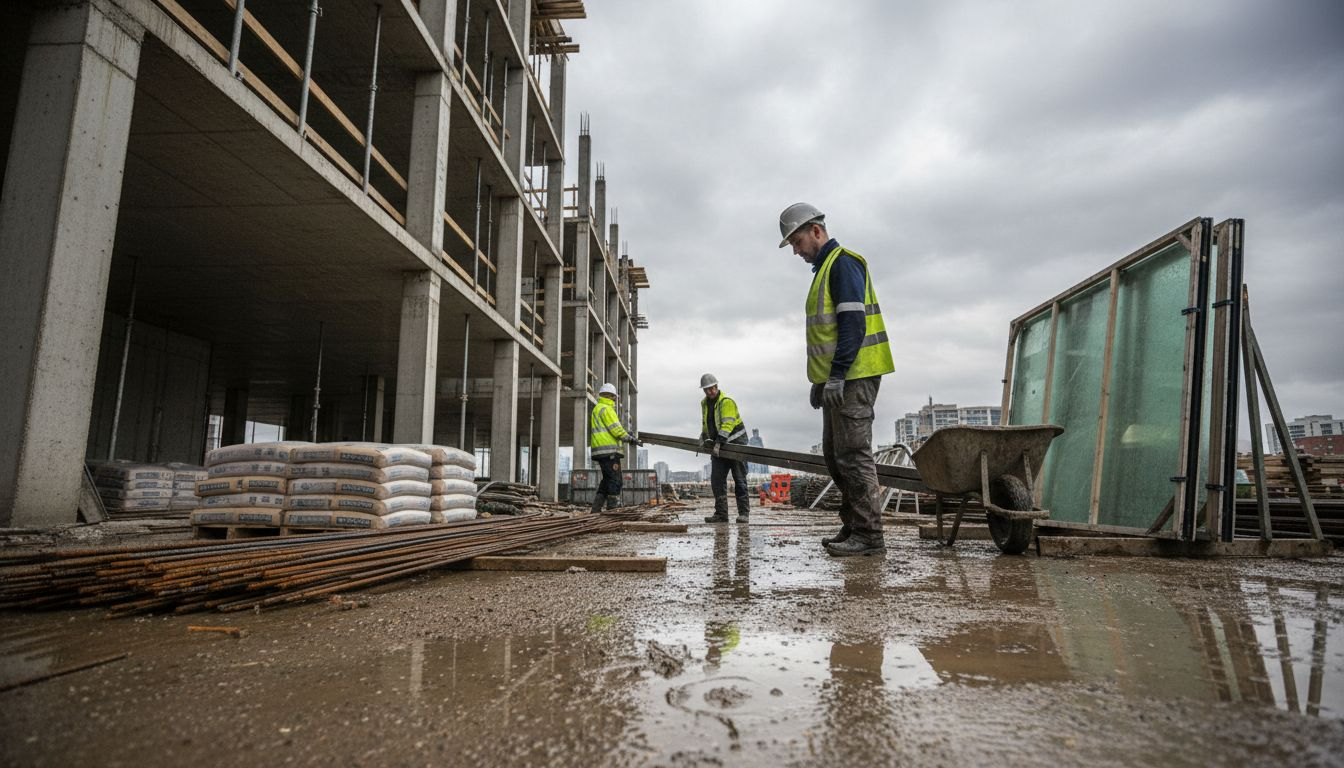
Each emissions stage presents unique challenges for carbon reduction. Material extraction involves mining and processing raw materials, which generates substantial greenhouse gas emissions. Manufacturing transforms these raw materials into building components, consuming significant energy and producing additional carbon. Transportation of materials across supply chains adds another layer of emissions, with long-distance transportation increasing the carbon footprint. Construction processes, including on-site machinery and installation techniques, further contribute to the overall embodied carbon profile.
Pro tip: Consider specifying low-carbon alternative materials and requesting detailed carbon emissions assessments during the design phase to effectively minimise your project’s embodied carbon impact.
Embodied Versus Operational Carbon Explained
Embodied and operational carbon represent two distinct yet interconnected aspects of a building’s total carbon footprint. Operational carbon encompasses the greenhouse gas emissions generated during a building’s active use, primarily through energy consumption for heating, cooling, lighting, and electrical equipment. Whole life carbon approaches reveal the complex relationship between these two carbon types, highlighting their evolving significance in sustainable building design.
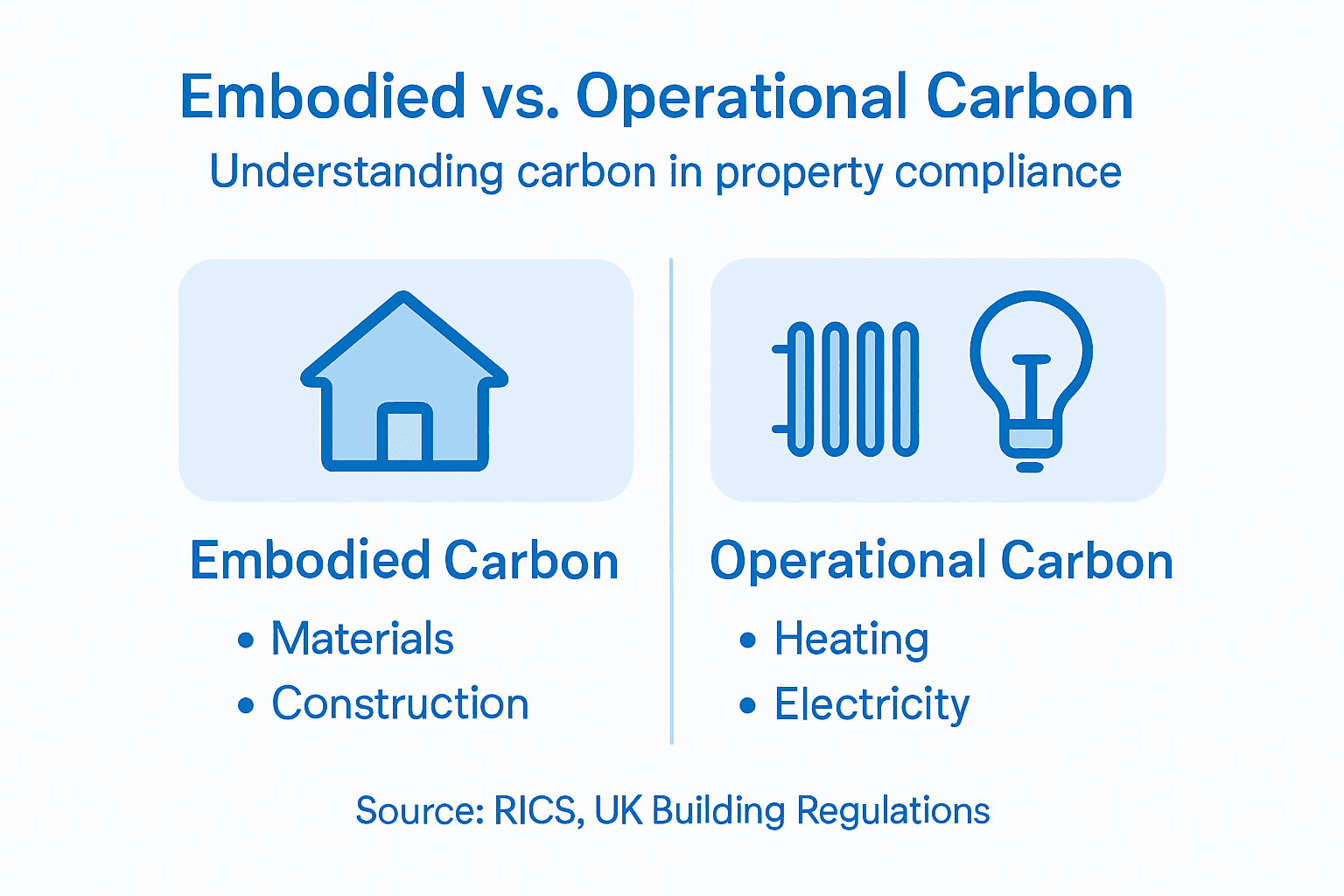
Traditionally, operational carbon dominated discussions about building emissions, with significant focus on reducing energy consumption through improved insulation, efficient heating systems, and renewable energy integration. However, as energy grids become increasingly decarbonised and building energy efficiency improves, embodied carbon is emerging as a critical consideration. Research indicates that for new, energy-efficient buildings, embodied carbon can now account for up to 50% of total lifecycle emissions, fundamentally changing how architects and developers approach carbon reduction strategies.
The key distinction lies in their timing and measurement. Operational carbon is calculated based on ongoing energy use throughout a building’s lifetime, typically measured annually. Embodied carbon, conversely, represents a one-time carbon investment made during the construction process, including material production, transportation, construction, and eventual demolition. This means that while operational carbon can be reduced through ongoing efficiency improvements, embodied carbon is essentially ‘locked in’ at the point of construction, making early design decisions crucially important for long-term carbon performance.
Here is a summary of the main differences between embodied and operational carbon:
| Aspect | Embodied Carbon | Operational Carbon |
|---|---|---|
| Timing of Emission | Before occupation | During building use |
| Main Activities | Material extraction, manufacturing, construction | Heating, cooling, lighting, equipment use |
| Scope for Reduction | Requires early design decisions | Can be improved throughout use |
| Duration of Impact | Locked in at construction | Ongoing over lifecycle |
| Measurement Focus | One-time calculation | Annual energy measurement |
Pro tip: Adopt a whole life carbon approach by calculating both embodied and operational carbon during the initial design phase, allowing for more comprehensive and effective carbon reduction strategies.
How UK Standards And EPCs Address Embodied Carbon
The UK is developing a comprehensive approach to addressing embodied carbon through evolving regulatory frameworks and assessment standards. Whole life carbon assessment standards are emerging as a critical mechanism for tracking and managing carbon emissions across building lifecycles, with key organisations driving systematic changes in construction and property management practices.
Currently, the UK’s regulatory landscape is transitioning from voluntary to mandatory reporting. The proposed Part Z Building Regulations represent a significant milestone, aiming to mandate whole life carbon assessments and establish clear limits on embodied carbon emissions. Energy Performance Certificates (EPCs), traditionally focused on operational energy use, are gradually expanding to incorporate more comprehensive carbon measurement approaches, reflecting the growing recognition of embodied carbon’s importance in overall building sustainability.
Key regulatory developments include the Royal Institution of Chartered Surveyors (RICS) Whole Life Carbon Assessment standard and the UK Net Zero Carbon Buildings Standard. These frameworks provide structured methodologies for measuring, reporting, and ultimately reducing carbon emissions across different stages of a building’s lifecycle. The standards encourage architects, developers, and property managers to consider carbon impacts during design, construction, and maintenance phases, promoting a more holistic approach to sustainable building practices.
Pro tip: Consult with sustainability professionals to understand how emerging UK carbon standards might impact your current and future property development strategies.
Landlord Duties, Costs, And Mitigation Strategies
Landlords are increasingly encountering complex responsibilities related to embodied carbon management, with emerging regulatory expectations transforming traditional property investment approaches. Strategic carbon mitigation approaches now require proactive planning and sophisticated understanding of lifecycle carbon impacts across property portfolios.
The financial implications of embodied carbon are multifaceted. Initial investments in low-carbon materials and sustainable design might appear more expensive, but comprehensive lifecycle analysis reveals potential long-term cost savings. Thoughtful material selection and design optimization can reduce embodied carbon emissions by up to 50% without substantial additional expenditure. Landlords must now consider carbon performance alongside traditional financial metrics, integrating sustainability considerations into core investment decision-making processes.
Mitigation strategies demand a holistic approach. This includes early engagement with designers, architects, and sustainability consultants to model and minimise carbon impacts during the design phase. Key actions involve selecting low-carbon construction materials, implementing circular economy principles like material reuse and recycling, and leveraging advanced carbon tracking tools. Landlords should also prioritise transparent carbon reporting, preparing for increasingly stringent regulatory requirements that will likely mandate comprehensive carbon performance disclosures.
The table below highlights key strategies for landlords to minimise embodied carbon and their main benefits:
| Strategy | Main Benefit | Example Action |
|---|---|---|
| Specify low-carbon materials | Reduces upfront emissions | Choose recycled steel or low-carbon concrete |
| Implement material reuse | Minimises waste and new emissions | Salvage bricks for new builds |
| Invest in lifecycle analysis | Informs investment decisions | Use carbon modelling software |
| Engage with sustainability experts | Ensures regulatory compliance | Hire a carbon auditor |
Pro tip: Develop a comprehensive carbon management strategy that integrates embodied carbon considerations into your property investment and development processes, treating sustainability as a critical financial and operational performance metric.
Navigate Embodied Carbon Challenges with Confidence in UK Property Compliance
Embodied carbon represents a pressing challenge for landlords and property investors striving to meet increasingly strict UK regulations. The upfront carbon footprint locked in through materials and construction processes demands early strategic planning to avoid costly compliance risks and support long-term sustainability goals. As the article highlights, the shift towards whole life carbon assessments means understanding embodied carbon is no longer optional but essential for managing property portfolios responsibly.
Unlock the full picture of energy and carbon performance with trusted insights on Home Energy Model. Our resource centre breaks down the latest developments replacing SAP in 2025 and explains how EPCs will evolve to incorporate embodied carbon alongside operational energy use. Act now to align your projects with the Future Homes Standard and gain clarity on carbon reduction strategies by exploring our practical guides on energy efficiency calculations. Take control of your building’s environmental impact and investment value today by visiting Home Energy Model and preparing for the next generation of UK property compliance.
Frequently Asked Questions
What is embodied carbon in buildings?
Embodied carbon refers to the total greenhouse gas emissions generated during the entire lifecycle of building materials, from extraction and manufacturing to transportation and demolition.
How does embodied carbon differ from operational carbon?
Embodied carbon includes emissions produced before a building is operational, while operational carbon pertains to emissions generated during a building’s use through energy consumption.
Why is embodied carbon important for UK property compliance?
Embodied carbon is crucial as it currently accounts for approximately 10% of total UK greenhouse gas emissions and will likely become the majority of built environment emissions by 2035, prompting regulatory changes.
What steps can property developers take to manage embodied carbon?
Developers can manage embodied carbon by specifying low-carbon materials, implementing circular economy principles, and conducting lifecycle analyses to inform sustainable design decisions.