
Cavity wall insulation reduces heat loss through the external walls, lowers heating demand, cuts draughts and can reduce the risk of condensation on internal walls. It is also one of the few upgrades that is quick, does not change how a home looks and does not require occupants to move out. The benefits depend on one condition: the property must have suitable, empty cavities and the work must be done properly. This guide sets out the gains, the downsides, the checks that decide whether a home qualifies and what to do if something goes wrong.
TL;DR
- Filling an empty, suitable cavity cuts heat loss through the walls, which usually means lower heating bills and a more even indoor temperature.
- The work typically takes about half a day and the appearance of the building is unchanged.
- It is not right for every home. Severe driving rain exposure, existing damp, structural defects or narrow cavities call for a professional assessment first.
- Ventilation matters more after insulation, so trickle vents and extractor fans must stay working.
- Keep the installer’s guarantee paperwork. It is the first point of contact if problems appear later.
Table of Contents
- What cavity wall insulation does
- The main benefits
- The downsides and risks
- Pros and cons at a glance
- Is your home suitable? A practical check
- Ventilation after insulation
- Costs, grants and what changes over time
- Perspective: how we see cavity wall insulation
- If something goes wrong: guarantees and claims
- Planning an EPC after the work
- Frequently asked questions
- Sources
What cavity wall insulation does
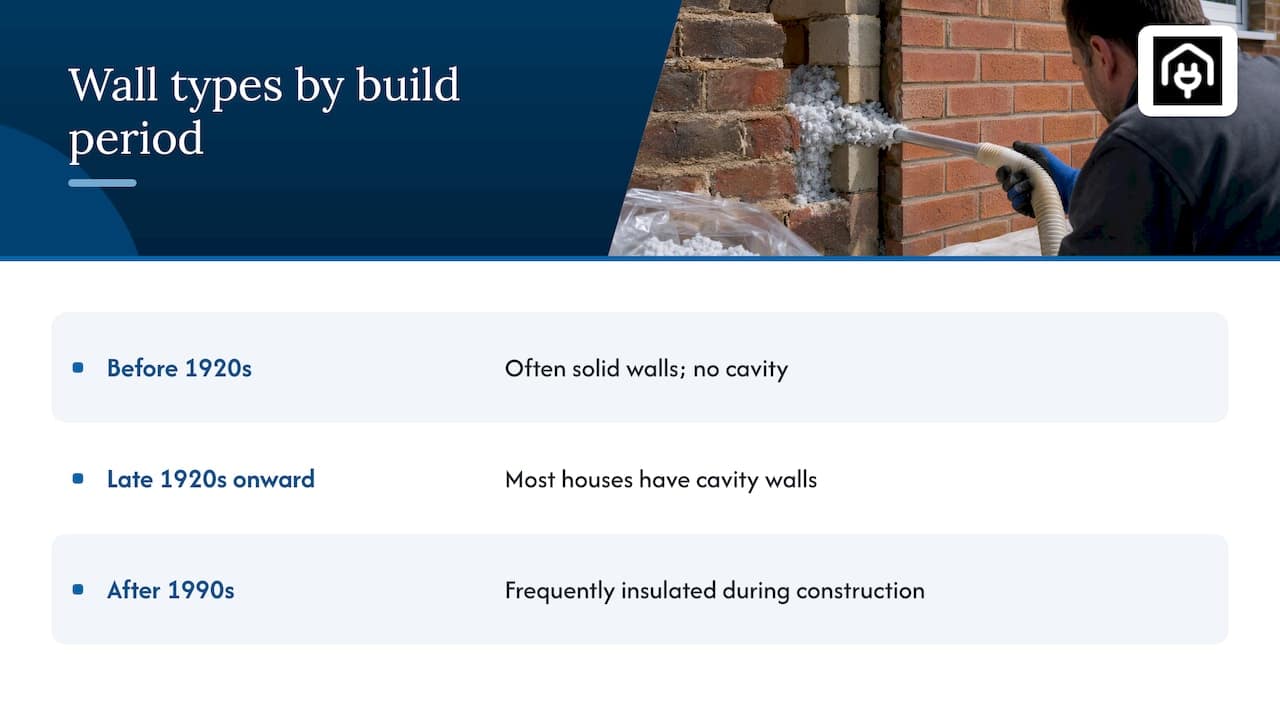
Most houses built from the late 1920s onwards have cavity walls. The cavity was originally designed to stop rain that hits the outer wall from crossing to the inner wall and affecting the internal structure. A cavity wall has two layers with a gap between them, usually brick outside and blockwork inside. Left empty, that gap lets heat pass from the warm interior to the cold exterior more easily than it should.
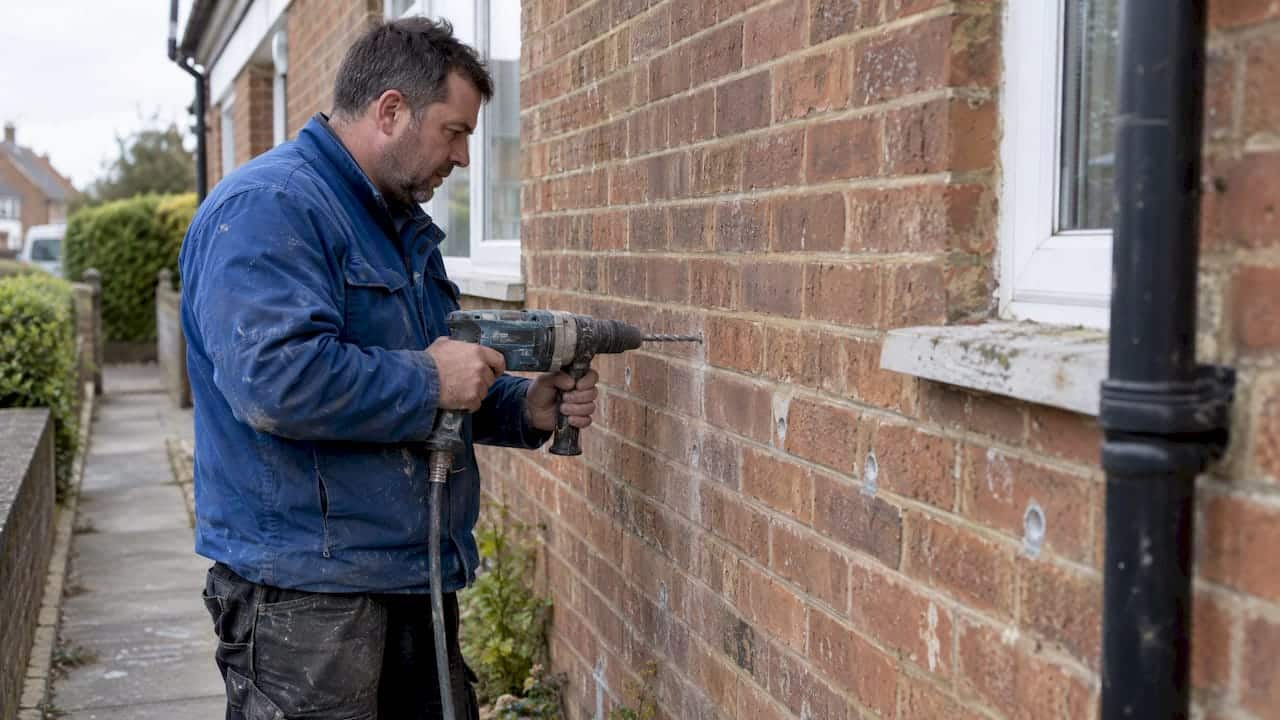
Cavity wall insulation fills the gap with an insulating material, usually blown in through small holes drilled in the outer leaf, which are then made good. The wall keeps its function as a rain barrier, but heat now has a much harder route out.
Homes built before the 1920s often have solid walls with no cavity. Those need internal or external wall insulation instead, which is a larger and costlier job. Homes built after the 1990s frequently have insulation fitted during construction, so there may be nothing to add.
The main benefits
Lower heating demand and bills
Walls are a major route for heat loss in a typical home, so treating them has an outsized effect compared with many other measures. Government guidance describes cavity wall insulation as one of the most cost-effective ways of improving energy efficiency in homes, provided it is installed in suitable properties and backed by proper standards and guarantees.
How much a household saves depends on several things:
- the size and type of the property (a detached house has more wall area than a mid-terrace)
- how much of the wall is cavity and how much is already insulated
- the fuel used for heating and its unit price
- how the heating is run and the temperature the household prefers
Treat any single headline figure with caution. A fair estimate comes from an assessor or installer who has looked at the actual walls, not from a generic average.
A warmer, more even home
Insulated walls stay warmer on the inside surface. Rooms feel more comfortable at the same thermostat setting, and cold radiating from external walls is reduced. Many households respond by lowering the thermostat slightly or shortening heating hours, which is where the bill reduction comes from.
Fewer draughts
Filling the cavity can reduce air movement within the wall build-up, which contributes to a less draughty feel. It is not a substitute for sealing gaps around doors, windows, skirting boards and loft hatches, but it supports those measures.
Lower risk of condensation on cold walls
Condensation forms when warm, moist indoor air meets a cold surface. Warmer wall surfaces reduce that risk. This is a genuine benefit in a well-installed system, but it is also where problems arise when the installation is poor or the property unsuitable, which is covered below. The UK Health Security Agency estimates that around 2 million people in England live in homes with significant damp or mould, which is why moisture control deserves attention in any insulation project.
Quick, tidy installation
The job usually takes around half a day, and occupants do not need to leave while it is carried out. There is no internal redecoration and no change to the external look of the building beyond the small drill holes being filled.
Better energy performance rating and wider value
Insulating walls can improve a property’s Energy Performance Certificate (EPC) rating, which matters for sale, letting and for eligibility under some support schemes. A domestic EPC recorded after the work shows the new fabric performance. Landlords in particular should watch the rating, as minimum standards for rented homes continue to be a live policy area.
Lower carbon emissions
Less heat demand means less fuel burned. For households working towards lower emissions, wall insulation is also a sensible step before changing the heating system, because a better-insulated home can often be heated with a smaller, cheaper system.
The downsides and risks
Pros and cons belong together. Most installations are completed to a high standard, but the Government’s own consumer guide notes that failures typically arise when work is done in unsuitable buildings or without proper pre-installation inspection.
Unsuitable properties
Cavity wall insulation is not a universal fix. Oxfordshire County Council’s retrofit guidance points to several situations that call for site-specific assessment, or may rule it out:
- properties exposed to severe driving rain
- walls with existing damp or structural defects
- narrow cavities, generally those under 50 mm
In exposed locations, rain can cross a filled cavity more easily, so a surveyor should judge whether the exposure is acceptable.
Damp and mould after poor installation
Voids, debris in the cavity or gaps in coverage can create cold spots. NHBC guidance on condensation explains that a thermal bridge is a localised weakness in the insulation layer, where a more conductive material interrupts it. Moisture tends to collect at these points, which can show up as patches of condensation or mould on the inside wall.
Ventilation needs more attention
A tighter, better-insulated envelope holds moisture in if the home is not ventilated properly. Best practice treats retrofit as a whole-house approach, which means keeping trickle vents open and working, and not blocking or sealing air bricks and vents.
Not a cure for moisture from daily habits
Insulation alone cannot fix moisture caused by drying washing indoors, cooking without extraction or poor design. NHBC makes the point that homeowners need to maintain ventilation and not block vents.
Pros and cons at a glance
| Aspect | Benefit | Watch point |
|---|---|---|
| Heating bills | Lower heat demand through the walls | Savings vary with property size, fuel and habits |
| Comfort | Warmer wall surfaces, fewer cold spots in the room | Poor fill can leave cold patches in the wall |
| Disruption | About half a day, no need to move out | Drill holes must be properly made good |
| Appearance | External look unchanged | None, if the work is done neatly |
| Moisture | Lower condensation risk on warm walls | Unsuitable property or voids can cause damp |
| Ventilation | Works well with a planned ventilation strategy | Blocked vents or closed trickle vents raise risks |
| Suitability | Most cavity walls, especially post-1930 homes, can be filled | Exposed sites, damp, defects and narrow cavities need assessment |
Is your home suitable? A practical check
Suitability is decided on the building, not on the sales pitch. The steps below follow the logic used in professional pre-installation inspections.
- Confirm the wall type. Brick bond patterns, the age of the house and the thickness of the wall give clues. Houses built after about 1930 are most likely to have cavities that can be filled.
- Check whether the cavity is already filled. Some homes were insulated at build stage or in an earlier retrofit. Old guarantee paperwork or a borescope inspection answers this.
- Look at the condition of the walls. Cracked brickwork, failed pointing, damp patches and leaking gutters should be fixed before any filling.
- Assess exposure. Coastal, hilltop and other exposed sites with heavy driving rain need professional judgement.
- Measure the cavity. A cavity under 50 mm is generally unsuitable according to local authority guidance.
- Arrange a pre-installation inspection. The Energy Saving Trust toolkit explains that some measures may not suit a building and that the inspection establishes the extent of work needed and the appropriate method.
- Review ventilation. Check extractor fans, trickle vents and air bricks before and after the work.
An EPC or a fabric-based energy assessment often helps at this stage, since it records the existing wall construction and identifies the next best measures in order of value.
Ventilation after insulation
The most common regret after wall insulation is moisture, and the cause is usually ventilation rather than the insulation. Practical habits help:
- keep trickle vents on windows open
- run extractor fans in kitchens and bathrooms during and after use
- do not block air bricks or wall vents
- dry clothes with a vented dryer or outdoors where possible
- keep heating at a steady, moderate level rather than short bursts of high heat
For homes needing a ventilation upgrade, see the guides on home ventilation solutions and how to ventilate a home efficiently. Owners planning wider work on a house may also find it useful to read about the key stages of a home energy transition, a French-language overview of how insulation, ventilation and heating upgrades fit into one sequence.
Costs, grants and what changes over time
No installer price is quoted here because costs vary with house size, access and material, and a written quote based on a survey is the only reliable figure.
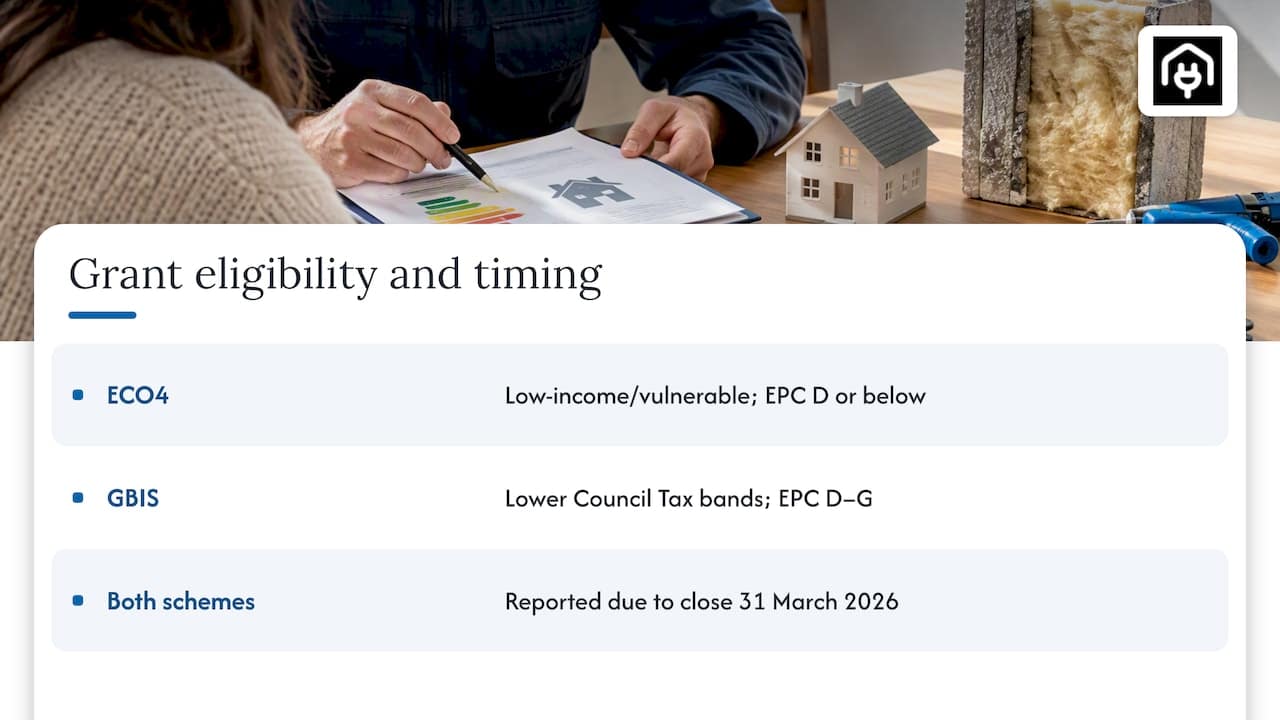
Grants have changed repeatedly. The Energy Company Obligation (ECO4) and the Great British Insulation Scheme (GBIS) were regulated by Ofgem and, according to the City of Edinburgh Council, were due to close on 31 March 2026, though other support might still exist. ECO4 targeted low-income and vulnerable households in properties rated EPC D or below, and GBIS targeted households in lower Council Tax bands with an EPC of D to G. As schemes are replaced or extended, check the current position with Ofgem, GOV.UK or your local council before signing anything.
Be wary of anyone offering “free” insulation without checking the property first. A proper scheme still requires a suitability assessment.
Perspective: how we see cavity wall insulation
We work with property owners, landlords and developers who need to understand how fabric measures show up in energy assessments, and cavity wall insulation comes up often. Our view is plain: it is one of the most worthwhile upgrades in a suitable home, and one of the most damaging in an unsuitable one.
Three points guide how we advise people.
Survey first, quote second. The decision should rest on wall construction, cavity width, exposure and condition. A sales call is not an assessment.
Treat the house as a system. Walls, loft, windows, ventilation and heating interact. Insulation raises the importance of ventilation, so the two should be planned together. Our guides on residential insulation and practical retrofit examples show how measures combine in real UK properties.
Keep the evidence. Guarantee certificates, survey notes and photographs are useful when selling, letting or raising a concern. An updated EPC then records the improvement in a form buyers and tenants recognise.
For a wider comparison with other measures, see our overview of the benefits of home insulation and our fuller pros, cons and key choices on cavity wall insulation.
— Danny
If something goes wrong: guarantees and claims
Most installations come with a guarantee. When damp, mould or cold patches appear after installation, the Government’s consumer guide advises that the first step is to contact the original installer or the guarantee provider, such as through the industry guarantee schemes, rather than starting a third-party legal claim. The same guide covers insulation installed under the Green Deal or ECO.
Some practical points:
- Find the guarantee certificate. If it is lost, the installer or the scheme can often help trace it.
- Record the problem with dated photographs and notes on where moisture appears.
- Have the cause identified. Leaking gutters, failed pointing or poor ventilation can be responsible, and they are not always the insulation.
- Be cautious of unsolicited calls or messages from claims management companies promising compensation. GOV.UK advises researching any company before engaging it, and contacting the original installer or guarantee provider directly first.
Planning an EPC after the work
Once insulation is in, an updated EPC captures the improvement. It is useful when selling, when letting and when showing eligibility for further measures. Property owners can request a quote for a domestic EPC through our online form, and developers working on new builds can look at our SAP calculation service. We connect requests with assessors, who confirm the scope and price before any work begins.
Frequently asked questions
What are the downsides of cavity wall insulation?
The main risks arise when the property is unsuitable or the installation is poor: damp, cold spots and mould can follow. Exposed sites, existing damp, defects and narrow cavities need assessment first. Reduced ventilation after the work can add to moisture problems.
Is it worth having cavity wall insulation?
For a home with empty, suitable cavities it usually is, because the work is quick and addresses a significant route of heat loss. The return depends on the size of the house, the fuel used and the quote received. A survey tells you whether your walls qualify at all.
Why is my house so cold even with cavity wall insulation?
Walls are only one part of the picture. Heat may still escape through the loft, windows, doors and floors, or through draughts. Voids in the fill or a poorly performing heating system can also be the cause, so an inspection of the cavity and an energy assessment are the sensible next steps.
Is it hard to sell a house with cavity wall insulation?
A properly installed and guaranteed installation is generally a selling point, as it supports a better EPC rating. Buyers and surveyors may ask questions where there is damp or no guarantee paperwork, so keep the certificate and any survey records to hand.
Sources
- Cavity wall insulation (CWI): consumer guide to issues arising from installations, GOV.UK
- Cavity wall insulation, Oxfordshire County Council
- Condensation, NHBC
- The burden of disease caused by damp and mould in English housing, UK Health Security Agency
- Cavity wall insulation, Haringey Council
- Cavity walls, Croydon Council
- Pre-installation inspections, Energy Saving Trust insulation toolkit
- Cavity Wall Insulation Action Plan, NIHE
- Financial help for energy efficiency and low carbon heating improvements, City of Edinburgh Council