
TL;DR:
- Cavity wall insulation reduces heat loss and lowers energy bills when properly applied.
- Risks such as dampness and poor workmanship require thorough assessment before installation.
- Participating in government schemes can enable free insulation for eligible UK homeowners and landlords.
Cavity wall insulation is widely promoted as one of the most cost-effective ways to improve a home’s energy efficiency, and for many UK properties, that reputation is well-earned. Yet the reality is more nuanced. Property type, location, wall condition, and eligibility for financial support all shape whether this upgrade delivers real value or creates unexpected problems. For homeowners and landlords working towards better EPC ratings or preparing for the incoming Home Energy Model (HEM) assessment methodology, getting this decision right matters considerably more than simply following general advice.
Table of Contents
- What is cavity wall insulation and how does it work?
- The main advantages of cavity wall insulation
- Key disadvantages and common challenges
- Is cavity wall insulation worth it? Decision table for UK homes
- Alternative insulation options and complementary upgrades
- Our take: why there’s no single answer for UK homes
- Take the next step for a warmer, more efficient home
- Frequently asked questions
Key Takeaways
| Point | Details |
|---|---|
| Not all homes benefit | Cavity wall insulation suits many post-1920s UK homes but is not ideal for every property. |
| Major energy savings | Properly installed insulation can significantly cut heating costs and help meet EPC standards. |
| Check for grants | Many homeowners and landlords qualify for free or reduced-cost installation under government schemes. |
| Consider alternatives | If not suitable, explore loft, floor, or solid wall insulation as part of a broader energy strategy. |
| Quality matters | Always use accredited installers for best performance and to avoid potential damp issues. |
What is cavity wall insulation and how does it work?
Cavity wall insulation fills the gap, known as the cavity, between two layers of brick or blockwork that form the external walls of most UK homes built after the 1920s. Prior to that period, most homes were built with solid walls, which are a different challenge entirely. The insulating material, typically mineral wool, polystyrene beads, or polyurethane foam, is injected through small holes drilled in the outer wall. Once installed, it significantly reduces the amount of heat that escapes through the wall fabric.
Heat loss through uninsulated cavity walls accounts for a substantial portion of a home’s total energy waste. Filling that cavity slows the transfer of heat from the warm interior to the cold exterior, which means less energy is needed to maintain a comfortable temperature. The principle is straightforward, but suitability is not.
Properties most likely to benefit:
- Homes built between the 1920s and 1990s with unfilled cavities
- Properties in relatively sheltered locations away from persistent driving rain
- Homes with cavity widths of at least 50mm
- Buildings in good structural condition with no significant existing damp issues
Properties less suited to cavity wall insulation:
- Homes with solid walls (typically pre-1920s construction)
- Properties in exposed coastal or upland areas where driving rain penetrates
- Buildings with existing damp, structural cracks, or wall tie failure
- Homes with cavities already filled or with partial fill in poor condition
Costs vary considerably depending on property size and type, but installation costs £400 to £2,700, with many eligible households accessing it for free through schemes such as ECO4, the Great British Insulation Scheme (GBIS), or the Warm Homes Plan. For landlords managing multiple properties, eligibility criteria and funding routes are worth investigating carefully. You can find practical insulation tips for UK homes that cover eligibility in more detail.
Key fact: Cavity wall insulation installation typically costs between £400 and £2,700, but qualifying homeowners and landlords can access it at no cost through ECO4, GBIS, and the Warm Homes Plan, making this one of the most accessible energy upgrades available in the UK.
Pro Tip: Always have an accredited installer carry out a pre-installation survey before committing. The survey should assess cavity width, wall condition, and exposure rating. Do not rely solely on a telephone assessment or a short visual check.
The main advantages of cavity wall insulation
With the basics established, it is time to look at why so many UK homeowners and landlords choose this upgrade when their property qualifies.
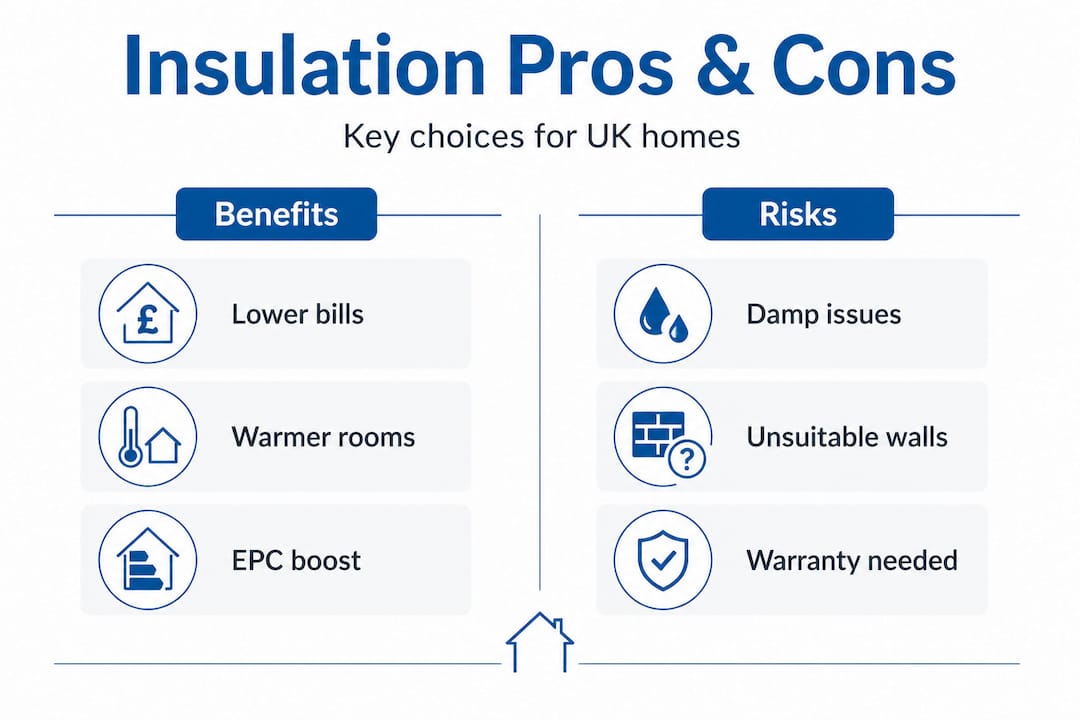
The most immediate benefit is a reduction in heat loss, which translates directly into lower heating bills. For a typical semi-detached home, annual savings can reach £150 to £275 depending on the property’s size, heating system, and how well insulated it was before. Over a decade, that is a meaningful sum, especially when combined with rising energy costs.
The principal advantages at a glance:
- Lower energy bills: Reduced heat loss means boilers and heat pumps run less often to maintain the same indoor temperature
- Improved comfort: Fewer cold spots near external walls and a more consistent temperature throughout the home in winter
- Better EPC rating: Cavity wall insulation is one of the measures most likely to push a property up an EPC band, which is increasingly important for landlords facing Minimum Energy Efficiency Standards (MEES) requirements
- Reduced condensation risk: When walls are warmer on the inside surface, the risk of surface condensation forming drops noticeably
- Financial support available: Many qualifying households access this upgrade free of charge through government-backed schemes
The connection to EPC improvement is particularly relevant for landlords. Properties currently rated EPC E, F, or G face growing pressure from regulation, with government targets pushing towards EPC C as a baseline for privately rented homes. Cavity wall insulation alone may not get every property there, but it is often one of the most impactful single measures. Understanding the broader energy efficiency benefits for landlords and homeowners helps frame this decision in its full context.
For owner-occupiers, the programme of proven upgrades for making old homes efficient often places cavity wall insulation near the top of the priority list, especially when loft insulation is also being considered at the same time.
Pro Tip: Pairing cavity wall insulation with loft insulation at the same time often reduces total installation cost and disruption, and delivers noticeably better results than either measure on its own. Many schemes will fund both together.
Key disadvantages and common challenges
Here is where even experienced owners can get caught out. Cavity wall insulation carries real risks when applied to the wrong property or installed poorly.
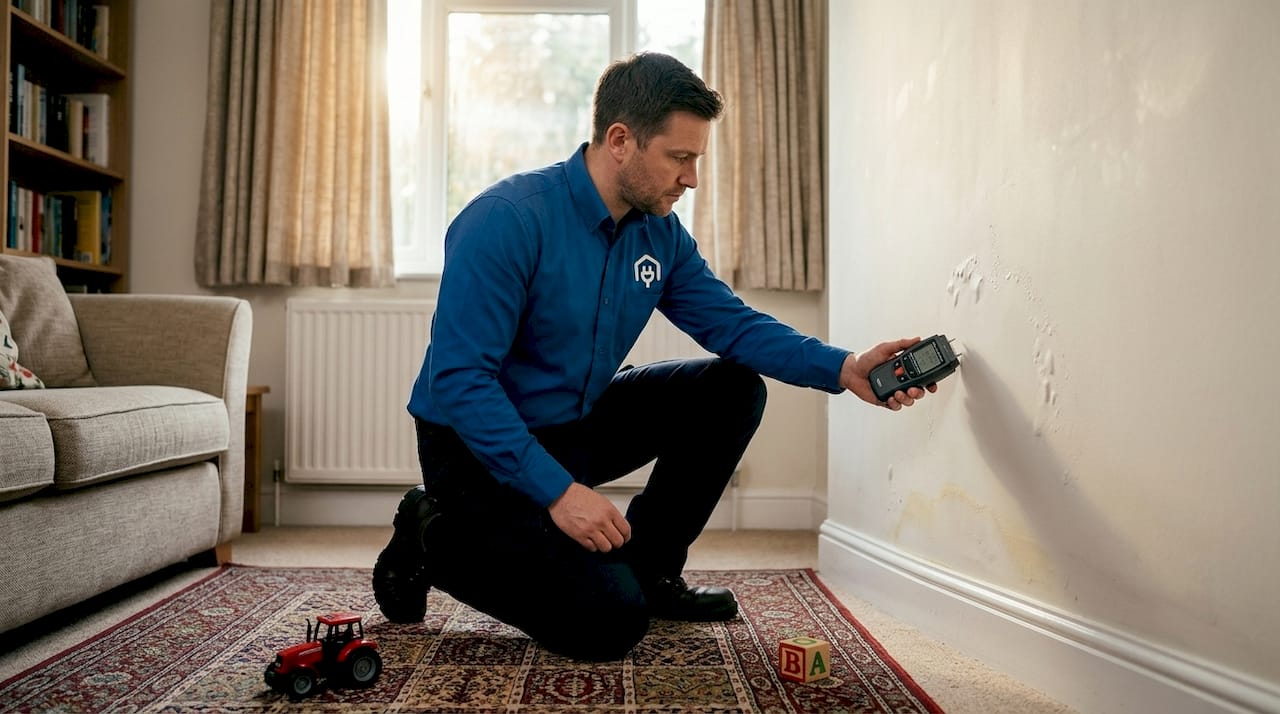
The most serious concern is damp. If insulation material bridges the cavity in a wall that is already suffering from moisture ingress, or if the property sits in a high-exposure rainfall zone, the insulation can carry moisture from the outer leaf to the inner leaf. The result can be persistent damp patches, mould growth, and potential structural damage. This issue has affected a significant number of UK homes where insulation was installed without adequate prior assessment.
Key disadvantages to weigh carefully:
- Risk of damp penetration in exposed or damp-prone properties if the wall is not thoroughly assessed before installation
- Variable workmanship: Not all installers drill holes at the right density or ensure complete cavity fill, leaving cold bridges and reducing overall effectiveness
- Upfront cost for ineligible owners: The range of eligible households for free insulation does not cover every homeowner, and full-price installation can represent a significant outlay
- Installation disruption: Drilling through the outer wall, moving furniture, and protecting interior surfaces takes time and can be disruptive, particularly in occupied rental properties
- Difficult to inspect or remediate: Once insulation is injected, it is essentially invisible. Identifying poor fill or localised problems later often requires specialist surveying, and remediation can be costly
For landlords, the question of Warm Home Discount eligibility and associated scheme requirements is also worth factoring in, particularly when tenants are in place and minimising disruption is a priority.
Pro Tip: Always request a written warranty and a post-installation inspection certificate from your installer. Reputable installers operating under CIGA (Cavity Insulation Guarantee Agency) should provide a 25-year guarantee as standard. If they do not offer one, that is a serious red flag.
Is cavity wall insulation worth it? Decision table for UK homes
To help reason through your specific situation, this table and guide can clarify whether cavity wall insulation is a realistic and worthwhile option.
| Property type | Wall construction | Grant eligibility | Recommended action |
|---|---|---|---|
| Post-1920s, unfilled cavity | Cavity brick/block | Eligible (ECO4/GBIS) | High priority, pursue free installation |
| Post-1920s, unfilled cavity | Cavity brick/block | Not eligible | Assess cost vs savings; payback typically 3 to 5 years |
| Pre-1920s solid wall | Solid brick/stone | Any | Not suitable; consider solid wall insulation instead |
| Exposed coastal/upland location | Cavity brick/block | Any | Assess exposure rating first; may not be suitable |
| Property with existing damp | Cavity brick/block | Any | Resolve damp issues before proceeding |
| Partially filled or failed cavity | Cavity brick/block | Any | Survey required; may need remediation first |
Step-by-step guide to assessing your situation:
- Confirm your wall type. Check your home’s age and consult a surveyor or accredited assessor if unsure whether you have a cavity or solid wall.
- Commission a cavity wall survey from a CIGA-registered installer who will assess cavity width, fill status, and exposure rating.
- Check grant eligibility by contacting an ECO4-registered installer or your local authority to identify available funding through GBIS or the Warm Homes Plan.
- Compare costs and savings. If you are not eligible for a grant, calculate the payback period based on your current energy bills and expected savings for your property size.
- Consider timing. If your property also needs loft insulation, floor insulation, or glazing upgrades, a combined approach through a whole-home assessment often delivers better value.
- Proceed only when satisfied with the installer’s credentials, survey findings, and warranty terms.
For a wider view of how insulation fits into longer-term planning, exploring sustainable home practices for 2026 and a detailed energy-saving guide for UK homes can support a more structured approach.
Alternative insulation options and complementary upgrades
If cavity wall insulation is not suitable for your property right now, or if you want to maximise the overall performance of your home, there are several alternatives and complementary measures worth considering.
| Insulation type | Typical cost | Disruption level | Best suited to | Approximate annual saving |
|---|---|---|---|---|
| Cavity wall insulation | £400 to £2,700 | Low | Post-1920s homes with unfilled cavities | £150 to £275 |
| Loft insulation | £300 to £600 | Very low | Most UK homes with accessible loft | £150 to £300 |
| Floor insulation | £800 to £2,000 | Moderate | Suspended timber floors | £50 to £100 |
| Internal wall insulation | £5,500 to £10,000 | High | Solid-wall homes, renovation projects | £250 to £450 |
| External wall insulation | £8,000 to £22,000 | Moderate to high | Solid-wall homes, flats | £250 to £450 |
Benefits of combining several measures:
- Each additional measure reduces the baseline heat loss further, meaning the cumulative saving exceeds the sum of individual improvements
- Combining cavity wall with loft insulation can bring many properties from EPC D to C in a single programme of works
- A whole-home approach is better aligned with how the Home Energy Model (HEM) will assess properties, rewarding fabric efficiency alongside heating system performance
- Addressing multiple measures in sequence or simultaneously can reduce scaffolding and labour costs compared to separate projects spread over years
For a thorough review of where to start and what delivers the best return, the energy efficient home upgrades guide for UK owners provides a structured framework for planning improvements across different property types.
Our take: why there’s no single answer for UK homes
Experience with UK property energy performance teaches one consistent lesson: the homes that benefit most from cavity wall insulation are not necessarily the ones where it gets installed. The default assumption, that any property built after the 1920s with an unfilled cavity should simply go ahead and install it, overlooks too many variables.
Installers operating under sales incentives do not always prioritise thorough pre-installation surveys. The consequences, persistent damp, mould, and costly remediation, fall entirely on the homeowner or landlord. There is also the frequently ignored reality that for properties in high-rainfall or coastal locations, even technically suitable walls carry a meaningful risk of moisture bridging over time.
The counterintuitive truth is that sometimes doing nothing is the right answer, at least until other issues are addressed or until a whole-home energy plan has been drawn up. A landlord who installs cavity wall insulation in a property with underlying damp problems may spend far more on remediation than they save on energy bills over a decade.
What works consistently is a methodical, evidence-based approach. Getting an independent energy assessment before committing to any single measure, understanding how your property performs as a whole, and then prioritising the interventions with the best risk-adjusted return is far more reliable than following general advice or responding to a cold-call offer of free insulation. The guidance available on making old homes efficient through proven upgrades reflects this thinking and offers a more structured path forward.
Cavity wall insulation has genuinely transformed the comfort and efficiency of millions of UK homes. The challenge is ensuring it is applied where it will actually perform as intended, and not simply where it is easiest to sell.
Take the next step for a warmer, more efficient home

For property owners and landlords ready to move beyond general advice and get a clearer picture of what their specific property needs, homeenergymodel.co.uk offers practical resources to support informed decision-making. Understanding how energy models for landlords assess fabric performance, heating systems, and insulation impact together gives a far more accurate picture than any single-measure calculation. The Home Energy Model explained section covers how the new HEM methodology will assess properties from 2025 onwards, including how insulation improvements translate into improved EPC outcomes. For those wanting a technical foundation, the energy simulation guide for UK housing provides further context on how energy performance is modelled and measured across different property types.
Frequently asked questions
Can I get cavity wall insulation for free in the UK?
Many homeowners and landlords qualify for free cavity wall insulation through ECO4, GBIS, or the Warm Homes Plan if they receive qualifying benefits, have a low household income, or meet specific landlord criteria. Contacting a registered installer or your local authority is the fastest way to confirm eligibility.
What is the typical payback time for cavity wall insulation?
For most UK properties, cavity wall insulation pays for itself within three to five years through reduced heating bills, and the payback period is significantly shorter for households who qualify for a fully funded installation.
Are there risks of damp with cavity wall insulation?
Yes, damp is a genuine risk when insulation is installed in walls that are exposed to driving rain, have existing moisture problems, or are assessed insufficiently before installation. Choosing a CIGA-registered installer and insisting on a thorough pre-installation survey significantly reduces this risk.
What if my home has solid walls?
Solid walls do not have a cavity to fill, so cavity wall insulation is not applicable. Internal wall insulation or external wall insulation are the appropriate alternatives for solid-wall properties, both of which typically involve higher costs and greater disruption but can deliver substantial energy savings.