

Insulating a home reduces heat loss, lowers energy bills, improves indoor comfort, and cuts carbon emissions. For UK homeowners and property managers, the advantages of home insulation extend well beyond lower heating costs. They include better health outcomes, stronger property values, and compliance with government energy standards. The UK government’s Clean Energy Campaign and the Warm Homes Plan both identify insulation as one of the most cost-effective improvements available to households.
Key benefits at a glance:
- Lower energy bills by retaining heat that would otherwise escape through walls, roofs, and floors
- Reduced carbon emissions by cutting the energy demand for heating
- Improved indoor comfort through stable temperatures and fewer draughts
- Better health outcomes by maintaining the WHO-recommended minimum of 18°C indoors
- Higher property value through improved Energy Performance Certificate (EPC) ratings
- Long-term savings as cavity wall and loft insulation typically last around 40 years
How insulation saves energy and lowers heating bills
Heat escapes a home through multiple pathways: walls, the roof, floors, windows, and gaps around doors and pipework. Approximately 33% of heat is lost through uninsulated walls alone in UK homes, making wall insulation one of the highest-impact upgrades available.
Cavity wall insulation, fitted into the gap between a property’s inner and outer walls, can save around £140 per year on energy bills, totalling around £5,880 over its lifetime, with installation costs typically ranging from £1,000 to £3,000. Loft insulation at the recommended 270–300mm thickness can save around £40 per year, with a lifetime saving of around £1,680. A 10cm layer of fibreglass loft insulation can reduce roof heat loss by up to 75%.
Statistic: Wall insulation can save around £200 a year on energy bills, according to the UK government’s Clean Energy Campaign.
Insulation also makes homes more compatible with low-carbon heating systems. Properly installed insulation reduces heating demand, enabling heat pumps to operate more efficiently and deliver warmth at lower running costs. For homeowners considering a heat pump, improving the building fabric first is the logical starting point. Homeenergymodel’s guide to the most efficient heating options covers this relationship in detail.
Environmental and carbon reduction benefits
Insulation directly reduces a home’s carbon footprint by cutting the energy needed for heating. The UK government’s Warm Homes Plan identifies fabric insulation as a cornerstone of the country’s clean energy transition, with the built environment accounting for a substantial share of national carbon dioxide emissions.
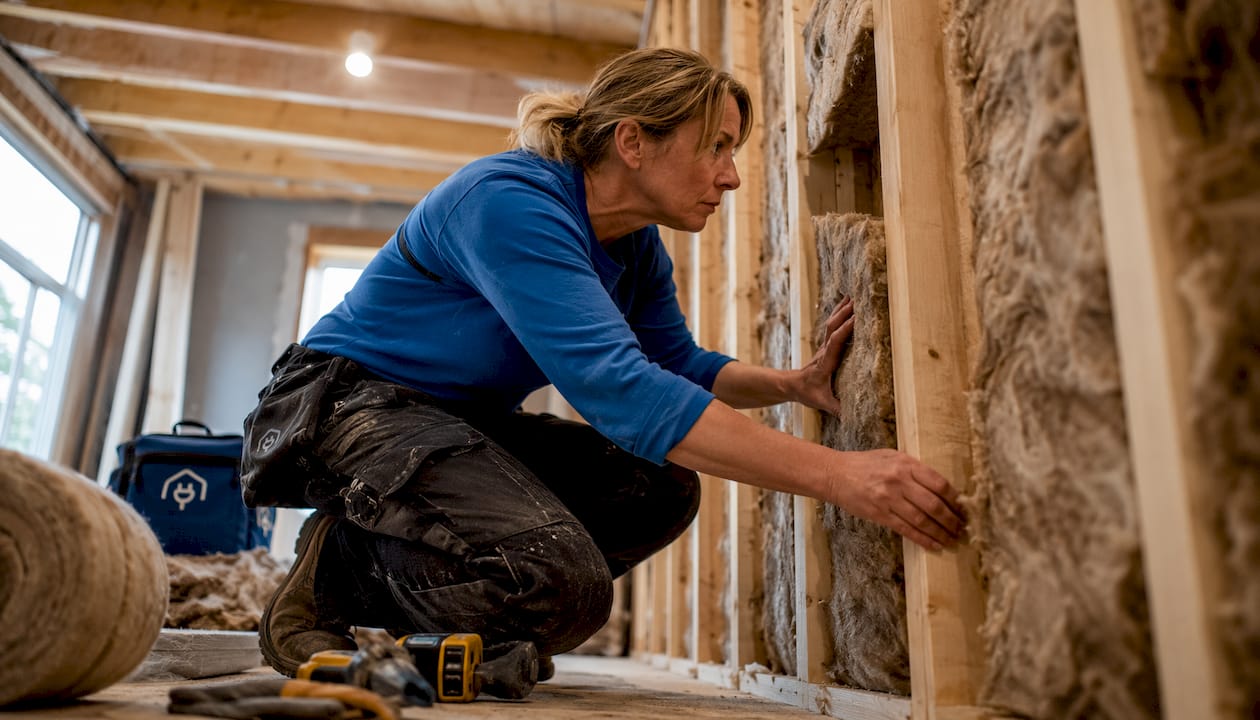
Wall insulation alone can reduce emissions by around 600kg a year, according to the Clean Energy Campaign. At scale, this contribution is significant: the Warm Homes Plan estimates that over 1 million homes could receive fabric measures by 2030 through minimum energy efficiency standards in the rented sector.
Key environmental advantages include:
- Lower greenhouse gas emissions from reduced fossil fuel combustion for space heating
- Reduced reliance on gas as insulated homes require less heat input overall
- Support for the UK’s 2050 net zero target by improving the thermal performance of existing housing stock
- Fabric-first approach prioritised in UK building efficiency standards, reducing the size of heating systems required and the renewable energy needed to offset remaining emissions
- Alignment with the Warm Homes Plan and the government’s broader low-carbon home strategy
Health, comfort, and wellbeing advantages
The World Health Organisation recommends a minimum indoor temperature of 18°C for health. Poorly insulated homes frequently fall below this threshold in winter, increasing the risk of respiratory and cardiovascular illness, particularly for older residents and young children.
Stable indoor temperatures also support mental health. The Warm Homes Plan cites evidence that appropriate insulation reduces stress and improves sleep, especially for vulnerable groups who spend more time at home. Cold, damp conditions are associated with anxiety and poor sleep quality, effects that adequate thermal insulation can directly address.
Statistic: Fabric insulation measures, when installed with appropriate ventilation, help reduce damp and mould, improve thermal comfort, and lower the risk of underheating.
Moisture control is another practical benefit. Installing insulation with adequate ventilation reduces damp issues, mould growth, and improves indoor air quality. Condensation on cold wall surfaces is a common problem in uninsulated UK homes, and solid wall insulation raises surface temperatures enough to prevent it in most cases.
Pro Tip: Internal wall insulation must be installed across entire rooms, not just partial wall sections. Covering only part of a wall creates temperature differentials that cause interstitial condensation and mould growth within the wall structure.

Common home insulation types available in the UK
UK homes vary considerably in construction, and the right insulation type depends on the property’s age, wall type, and condition. The Great British Insulation Scheme and ECO4 both cover a range of measures, from cavity wall to solid floor insulation.
-
Cavity wall insulation suits most homes built after the 1920s. It is the most common measure delivered under the Great British Insulation Scheme, accounting for 37% of the 135,700 measures installed to date. Installation is minimally disruptive and typically completed in a few hours.
-
Solid wall insulation (external) suits pre-1920s properties with solid brick or stone walls. External insulation wraps the outside of the building, preserving internal floor area and offering the best moisture protection. It is more expensive and requires scaffolding.
-
Solid wall insulation (internal) is the preferred option where external facades must be retained, such as in conservation areas or listed buildings. It reduces room floor area slightly and requires careful ventilation planning, particularly in bathrooms and kitchens.
-
Loft insulation is one of the most cost-effective measures available and is often suitable for DIY installation. Loft insulation accounted for 28% of measures delivered under the Great British Insulation Scheme.
-
Underfloor insulation addresses heat loss through ground floors, particularly in older properties with suspended timber floors. It is less commonly installed but delivers meaningful comfort improvements in draughty homes.
-
Draught-proofing is the lowest-cost intervention, sealing gaps around windows, doors, and pipework. The Warm Homes Plan includes draught-proofing as a low-cost, low-regret measure suitable for most households.
Long-term and financial benefits of insulating your home
The financial case for insulation extends well beyond annual bill savings. Insulation improves market value, and the absence of insulation is increasingly viewed as a liability by buyers, who factor in the cost of remedial work when making offers. A higher EPC rating, which insulation directly improves, signals lower running costs and attracts more buyers. Understanding how EPC ratings work is therefore relevant to any property manager planning upgrades.
Insulation also protects the building fabric itself. According to the Chief Construction Adviser’s report on solid wall insulation, long-term insulation prolongs building fabric lifespan and reduces maintenance and repair costs. Keeping walls warmer and drier prevents the freeze-thaw damage and moisture ingress that degrade brickwork and mortar over decades.
Government financial support is available through several schemes:
- Great British Insulation Scheme (GBIS): A £1 billion programme targeting homes with EPC ratings of D to G, administered by Ofgem and scheduled to run until april 2026.
- ECO4: Targets fuel-poor and low-income households with whole-house retrofit support, including wall, loft, and floor insulation.
- Warm Homes: Local Grant: Available to households with incomes of £36,000 or less, or those in eligible postcode areas, covering insulation, heat pumps, and solar panels at no cost to the homeowner.
A social rented home receiving insulation and solar panels through the Warm Homes: Social Housing Fund could save £350 on annual energy bills, while a privately rented end-terraced home could save £410 per year. Over a 40-year product lifespan, those savings accumulate to a substantial return on the original installation cost. Property managers assessing the full picture of energy improvements can find further guidance through Homeenergymodel’s resource on home energy models for landlords.
Key takeaways
Insulation is the single most cost-effective improvement UK homeowners can make to reduce energy bills, cut carbon emissions, and improve indoor health and comfort.
| Point | Details |
|---|---|
| Heat loss through walls | Around 33% of heat escapes through uninsulated walls; wall insulation is the highest-impact upgrade for most UK homes. |
| Bill savings | Cavity wall insulation saves around £140 per year; wall insulation broadly saves around £200 per year. |
| Carbon reduction | Wall insulation can reduce household carbon emissions by around 600kg per year. |
| Health standard | The WHO recommends a minimum indoor temperature of 18°C; insulation helps homes maintain this threshold reliably. |
| Government support | ECO4, the Great British Insulation Scheme, and the Warm Homes: Local Grant all fund insulation upgrades at reduced or no cost to eligible households. |