

The Decent Homes Standard (DHS) is the minimum condition a rented home in England must meet. In 2026 the government confirmed a new version that covers both social and private rented homes from 2035. The part that lands first is energy: private landlords must reach EPC C by 1 October 2030. A valid, current EPC is the starting point for planning that work, and we can arrange a domestic EPC assessment.
TL;DR
- The current DHS dates from 2001 and was last updated in 2006. It applies to social homes in England only.
- The new DHS has five criteria and applies to social and private rented homes from 2035.
- Thermal comfort, including the energy standard, is Criterion D. Private landlords must reach EPC C by 1 October 2030.
- Spending on EPC upgrades is capped at £10,000 per property, with a 10-year exemption if the home still falls short.
- Local authority housing teams will enforce the standard in the private rented sector.
Table of Contents
- What the Decent Homes Standard is and who it covers today
- The 2026 timetable in brief
- The five criteria of the new standard
- Criterion D in practice: the 2030 EPC C deadline
- How many homes would fail, and what it could cost
- Enforcement and what landlords should expect
- A practical preparation plan
- How the standard links to the Future Homes Standard
- Our perspective
- Get your properties assessed
- FAQ
- Sources
What the Decent Homes Standard is and who it covers today
The DHS sets a floor for housing quality. The current standard was introduced in 2001 and last updated in 2006, and it binds social landlords in England. It has worked: the government’s final impact assessment records non-decent social homes falling from 38% in 2001 to 10% in 2023.
Private landlords have never been bound by it. The Renters’ Rights Act 2025 allows the government to extend it to private lets. The implementation roadmap of 13 November 2025 places this in Phase 3 of the Act’s rollout.
The standard is set for England. The MEES energy rules for private rentals cover England and Wales.
The 2026 timetable in brief
The January 2026 policy statement settled the question left open by the consultation, which had proposed either 2035 or 2037. The new DHS applies from 2035. Law firm Trowers & Hamlins notes the long lead time is meant to give landlords time to plan and carry out works, and the government expects to monitor compliance ahead of the deadline.
The key dates:
| Date | What happens | Applies to |
|---|---|---|
| 1 April 2030 | EPC C on one metric | Social landlords |
| 1 October 2030 | EPC C (or a registered exemption) | Private landlords, England and Wales |
| 1 April 2039 | EPC C on a second metric | Social landlords |
| 2035 | New DHS applies in full | Social and private rented homes |
These dates come from the policy statement. The government’s 2025 update response says the legislation behind the private energy standard aims to come into force in 2027. Check GOV.UK for the current position before you commit to a works programme.
The five criteria of the new standard
The new DHS has five criteria. A home that fails any one is non-decent. They are hazards, repair, facilities, thermal comfort and damp and mould.
Criterion A: hazards
The home must be free of serious health and safety hazards.
Criterion B: repair
A home fails if one or more key building components is not in reasonable repair, or if two or more other components are not. Key components include things like the roof, walls and heating. Keep dated records of inspections and repairs so you can show a component was sound.
Criterion C: facilities and safety features
Flats must provide at least three of the listed facilities, and houses at least two. The list covers a modern kitchen, a modern bathroom and WC, adequate noise insulation and a suitably sized common entrance. The new standard also requires child-resistant window restrictors on all windows that present a fall risk for children.
Criterion D: thermal comfort
This criterion brings in the minimum energy efficiency standard (MEES). It uses new headline EPC metrics: fabric performance, smart readiness and heating system. It is the criterion with the nearest deadline, covered below.
Criterion E: damp and mould
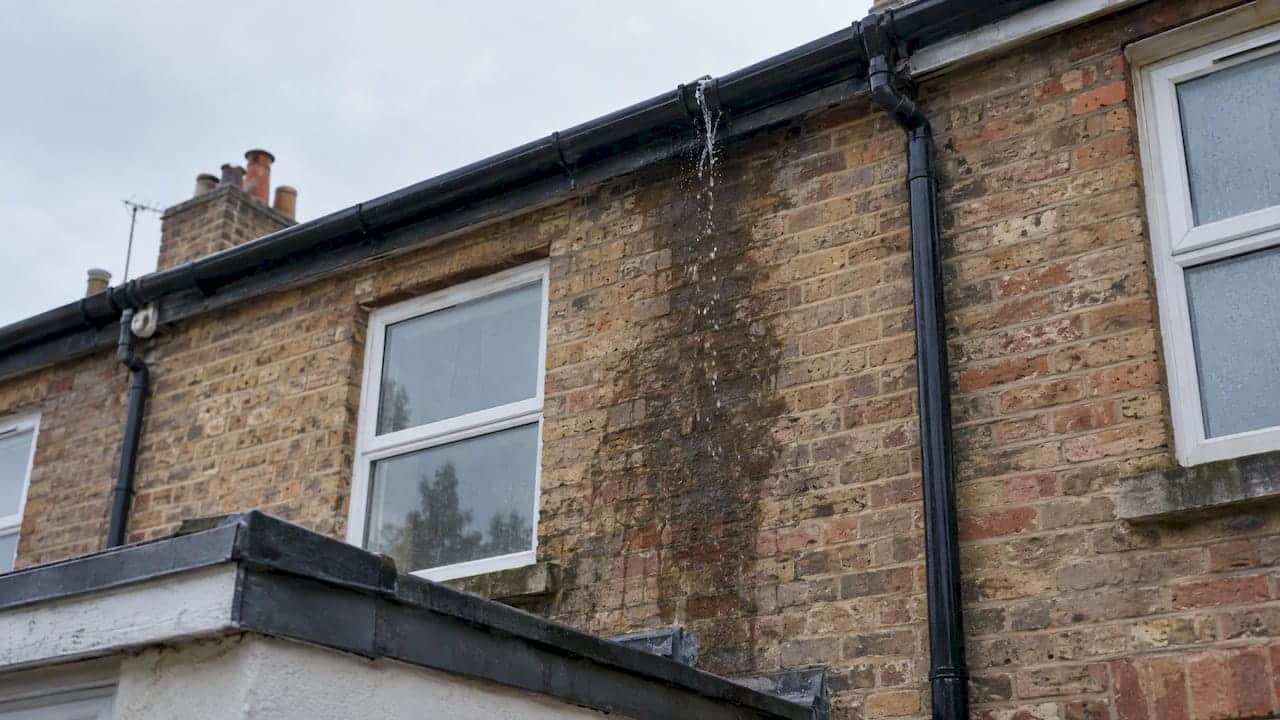
This is new. A home is non-decent if the landlord has not remedied damp and mould. Damp often has a cause in the building, such as a leaking gutter, failed ventilation or poor insulation, so a survey that finds the cause comes before any cosmetic treatment. For general background on tackling room damp, stopping dampness in a room is a practical read on surveys and warranties when hiring a contractor.
Criterion D in practice: the 2030 EPC C deadline
For private landlords, the energy requirement is the one to plan for now. Under the government response of 21 January 2026:
- Compliance is required by 1 October 2030.
- The primary standard is set against the fabric performance metric on new EPCs.
- The secondary standard is set against either the smart readiness or the heating system metric, at the landlord’s discretion.
The response also sets a £10,000 cost cap with exemptions valid for 10 years, recognises existing EPC C properties until their EPC expires, and excludes short-term lets from scope. The Warm Homes Plan coverage adds a low-value exemption where £10,000 would be 10% or more of the property’s value.
The practical consequence is that your current EPC may not be the one that counts. Reformed EPCs use the new metrics, so a home rated C today needs checking against the new certificate once it is available. Our guides explain how to improve EPC ratings and how to prioritise energy upgrades, and the EPC exemption rules are worth reading before you register one.
How many homes would fail, and what it could cost
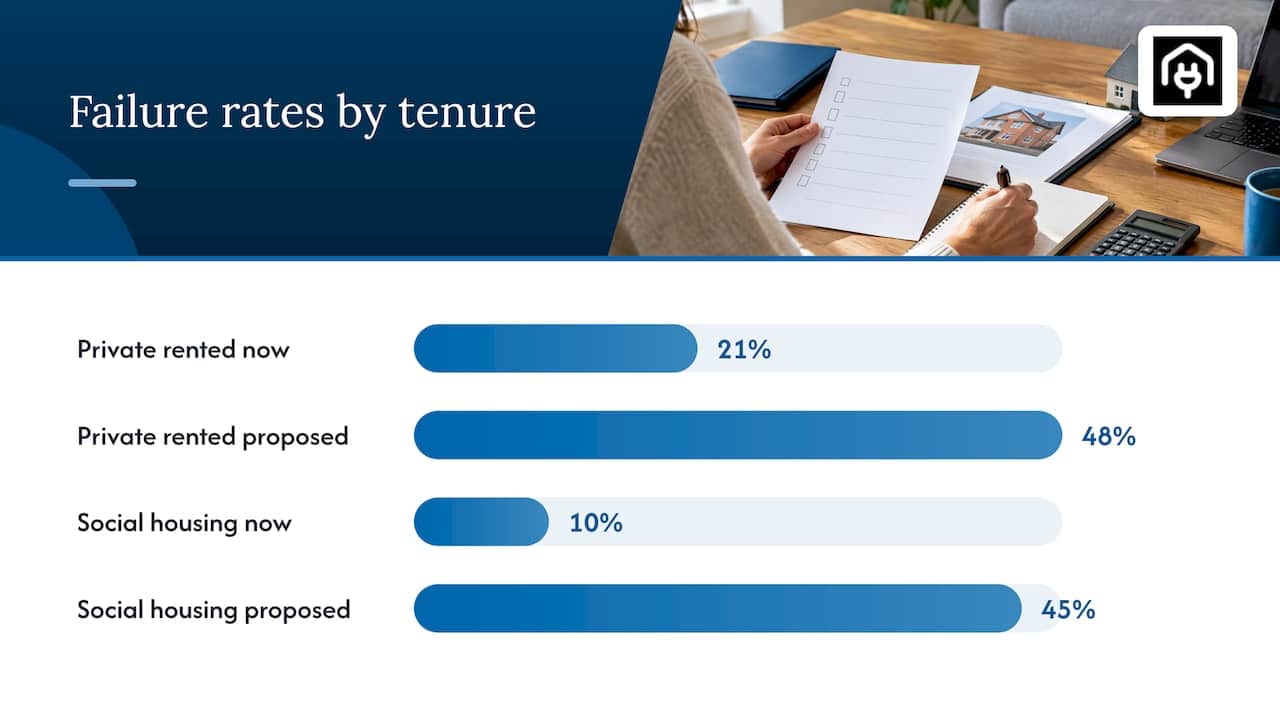
MHCLG’s modelling briefing, based on 2023 English Housing Survey data, estimates the private rented failure rate would rise from 21% to 48%, or from 1.0 million to 2.4 million homes. In social housing it would rise from 10% to 45%.
The same briefing puts the total cost of meeting the standard at £26.5 billion in the private rented sector, of which £5.4 billion is above existing obligations. Many homes will therefore need work that is already required for other reasons. Planning those works together saves money and disruption.
Enforcement and what landlords should expect
Local authority housing teams will enforce the new DHS in the private rented sector, and the Regulator of Social Housing does so for social homes, from 2035. The Renters’ Rights Act already strengthens council powers. The roadmap says new investigatory powers took effect on 27 December 2025, with expanded civil penalties from 1 May 2026. Councils received £18.2 million in 2025/26 to build enforcement capacity.
A second phase due in late 2026 creates a compulsory database of private rented properties, followed by a Landlords Ombudsman. Councils will know which properties exist and who owns them.
The Regulatory Policy Committee has asked the government to explain how it expects landlords to comply from the first year and how enforcement will deliver results. Expect the detail to develop before 2035.
A practical preparation plan
- Check each property’s EPC. Note the rating, the expiry date and any recommendations.
- Map each home against the five criteria. Record hazards, component condition, facilities, thermal performance and any damp or mould.
- Fix damp causes first. Damp and ventilation faults often sit alongside poor energy performance, so combining the works is cheaper than doing them separately.
- Plan energy upgrades against the £10,000 cap. Keep invoices and evidence of works. Start with fabric measures, because fabric performance is the primary metric.
- Schedule work around tenancy changes to cut disruption.
- Keep records. Councils will expect evidence of repairs, inspections and any exemption.
If you manage a mixed portfolio, our energy policy guide to 2030 and the 2026 landlord rating guide give more context.
How the standard links to the Future Homes Standard
The Future Homes Standard sets energy rules for new-build homes, while the DHS sets condition rules for existing rented homes. The CIOB’s Miruna Leitoiu observes that energy efficiency is now a core part of what makes a home decent, rather than a separate issue. Developers and building professionals can see our SAP calculation service for new-build compliance.
Our perspective
The headline date is 2035, but the useful date for most landlords is 2030. EPC C by 1 October 2030 is the first requirement that will test a portfolio, and the reformed EPC metrics mean an old certificate is a poor guide to where a home will land.
We would start with data. A current EPC for every property shows the gap between where a home is and where it needs to be, and it lets you spread work across years rather than facing a single bill. Homes that fail on energy often have damp and ventilation faults too, so surveying both together makes sense.
Treat the DHS as one standard covering safety, repair, facilities, warmth and damp. Landlords who plan for all five now will avoid rushed, expensive works later.
Danny
Get your properties assessed
A domestic EPC shows where each property stands today and what improvements are recommended. We offer domestic EPC assessments through our quote request form, and for new builds and conversions we offer SAP calculations. Commercial landlords can request a commercial EPC.
To start, complete the quote form on the page for the assessment you need.
FAQ
Does the new Decent Homes Standard apply to private landlords now?
No. The new standard applies to private rented homes in England from 2035. The current standard covers social housing only until then. The Renters’ Rights Act 2025 gives the government the power to extend it to the private sector.
What is the Decent Homes Standard 2026 deadline for EPC C?
Private landlords in England and Wales must have EPC C or a valid exemption registered by 1 October 2030. Social landlords must meet EPC C on one metric by 1 April 2030 and a second by 1 April 2039.
How much must a landlord spend on energy upgrades?
The cap is £10,000 per property. If a property still falls short after that spend, a 10-year exemption is available. A low-value exemption also applies where £10,000 would be 10% or more of the property’s value.
Who enforces the standard in private lets?
Local authority housing teams will enforce the new standard in the private rented sector. Councils already hold wider powers under the Renters’ Rights Act, including civil penalties for breaches.
Sources
- The New Decent Homes Standard: policy statement, GOV.UK
- Decent Homes Standard Final Impact Assessment, GOV.UK
- Implementing the Renters’ Rights Act 2025: our roadmap, GOV.UK
- Update on the reform to Decent Homes Standards, Trowers & Hamlins
- Improving the energy performance of privately rented homes: 2025 update, GOV.UK
- Government response on private rented energy performance, GOV.UK
- Warm Homes Plan confirms 2030 deadline for landlords, Mortgage Solutions
- EHS Briefing: Modelling a new Decent Homes Standard, GOV.UK
- RPC opinion: Decent Homes Standard impact assessment, GOV.UK
- What the UK’s new housing standards mean, CIOB