
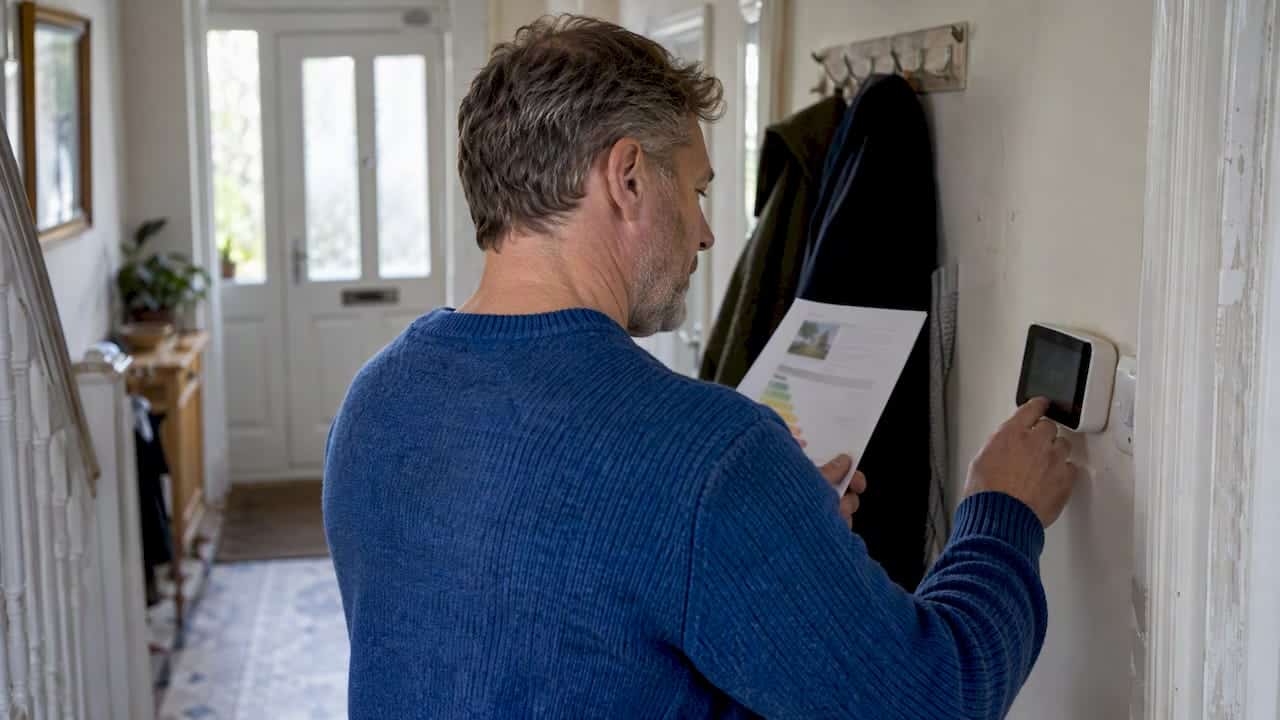
Combine behaviour changes, such as switching off standby, not overfilling the kettle and washing at 30°C, with low-cost fixes like LEDs, draught-proofing and a cylinder jacket. Energy Saving Trust figures show these habits add up, and Ofgem points to the EPC for prioritising what comes next. Our Home Energy Model resources help you target it.
TL;DR:
- Switching appliances off at the plug saves around £45 a year in Great Britain and £55 in Northern Ireland, according to Energy Saving Trust figures.
- Washing at 30°C and cutting one weekly cycle can save up to £26 a year in Great Britain and £32 in Northern Ireland.
- Lowering a boiler’s flow temperature to about 65°C can improve efficiency on conventional and many combi boilers, but check room comfort during cold spells.
- A smart meter only helps when you act on its display; use your EPC to choose upgrades after making inexpensive fixes.
- Grant eligibility and application windows vary by income, property rating, and other criteria, so check GOV.UK and your local council before committing to major work.
Table of Contents
- 1. Ten affordable actions you can take today
- 2. Where heating and hot water savings come from
- 3. Kitchen and laundry habits that trim running costs
- 4. Phantom loads and smarter appliance choices
- 5. Cheap lighting upgrades and small fixes with fast payback
- 6. Which insulation measures should come first?
- 7. Grants and schemes that help fund bigger upgrades
- 8. How an EPC and your smart meter shape the right next step
- 9. The sequence I would follow in most homes
- 10. Request a Domestic EPC to find your best-return measures
- FAQ
- Sources
1. Ten affordable actions you can take today
These steps cost little or nothing, and each one nudges your bill in the right direction.
- Turn appliances off at the plug rather than leaving them on standby.
- Boil only the water you need in the kettle.
- Swap remaining bulbs for LEDs and switch lights off in empty rooms.
- Wash at 30°C and cut one wash a week.
- Run the dishwasher only when full, on an eco cycle.
- Line-dry clothes instead of using the tumble dryer.
- Turn the heating down slightly and set thermostat schedules.
- On a time-of-use tariff, use timers or delay functions to shift heavy appliances to off-peak hours.
- Read your meter daily, or check your smart meter display for spikes.
- Unplug chargers when they are not charging a device.
Our guide on how to decrease your electric bill goes deeper on each of these.
2. Where heating and hot water savings come from
Heating is usually the biggest slice of a household energy bill, so small control changes matter most here in winter.
- Lower your boiler’s flow temperature to around 65°C, which often improves efficiency on conventional and many combi boilers. Check comfort during cold spells and adjust if rooms struggle to warm up.
- Turn the thermostat down slightly. You will rarely notice the difference, but the meter will.
- Fit a hot water cylinder jacket and insulate exposed pipes.
- Use programmable controls or a smart thermostat so you are not heating empty rooms.
- Keep showers short. A four-minute shower is a useful target, as the Energy Saving Trust quick tips suggest.
Pro Tip: Change one setting at a time and give it a week, so you can see on your meter which change helped.
3. Kitchen and laundry habits that trim running costs
You do not need new appliances to spend less in the kitchen and utility room. Choosing the right tool for each job is the starting point.
- Use a microwave or air fryer for small portions instead of heating a full-size oven.
- Avoid overfilling the kettle: the Energy Saving Trust puts this at £10 a year in Great Britain and £12 in Northern Ireland.
- Wash at 30°C and run one fewer cycle a week, worth up to £26 in Great Britain and £32 in Northern Ireland, according to the same source.
- Fill the dishwasher fully and pick the eco programme, so you run fewer, more efficient cycles.
- Line-dry where you can. If you must use a tumble dryer, a sensor or heat-pump model costs less to run than a basic vented one.
4. Phantom loads and smarter appliance choices
Standby drain is easy to overlook because nothing looks switched on. Switching appliances off at the plug saves around £45 a year in Great Britain and £55 in Northern Ireland, Energy Saving Trust figures show. A multi-socket extension with a switch makes this easy for TV and games console setups.
When you buy, look beyond the letter grade:
- Compare the kWh per year or kWh per cycle figure, because a bigger, higher-rated unit can still use more energy than a smaller one.
- Pick the size you actually need.
- Choose a laptop or tablet over a desktop where practical, as they draw far less power.
Our list of energy saving appliances for UK homes covers the options in more detail.
5. Cheap lighting upgrades and small fixes with fast payback
Small jobs can repay their cost quickly, and many are straightforward to do.
- Replace every remaining bulb with an LED. They use far less power and last much longer, and switching lights off in empty rooms saves around £7 a year in Great Britain and £9 in Northern Ireland.
- Add motion sensors or timers in corridors, cupboards and outdoor spaces.
- Draught-proof doors and windows with strips, and block unused chimneys with a draught excluder.
- Fit tap aerators to cut hot water use without changing how a tap feels.
Ofgem’s advice on saving money on your energy bill lists similar small upgrades.
6. Which insulation measures should come first?
Insulation works around the clock, so the right order matters. Loft and cavity wall insulation can be worthwhile in homes that lack them, with cylinder and pipe insulation as cheap add-ons.
- Top up or replace a worn hot water cylinder jacket and lag accessible pipes.
- Seal droughts around windows and doors. DIY strips suit most homes, while a professional can handle awkward gaps.
- Keep trickle vents and extractor fans working. Draught-proofing should never block ventilation in kitchens and bathrooms.
- For double glazing or wall insulation, get a property-specific assessment first, so the spend goes where it counts.
Our SAP calculations guide explains how assessors model a building’s fabric.
7. Grants and schemes that help fund bigger upgrades
Larger measures such as insulation, boiler upgrades and heat pumps cost more upfront, but several UK schemes can reduce that bill for eligible households.
- The Warm Home Discount, the Energy Company Obligation (ECO) and the Great British Insulation Scheme are outlined on Gov.
- The Boiler Upgrade Scheme supports heat pump installations.
- Suppliers and government programmes may also fund improvements, as Ofgem explains in its energy efficiency help guidance.
Each scheme has its own eligibility rules and application windows, which depend on income, property rating and other criteria. Check GOV.UK and your local council for current details before you commit to any work.
8. How an EPC and your smart meter shape the right next step
Generic tips only go so far. Your home’s construction, glazing and insulation decide which upgrade pays back best, and two tools help you see that clearly.
- A smart meter is a tool for transparency, not an automatic saver. Citizens Advice stresses that you must use the in-home display to find high-usage appliances and change habits.
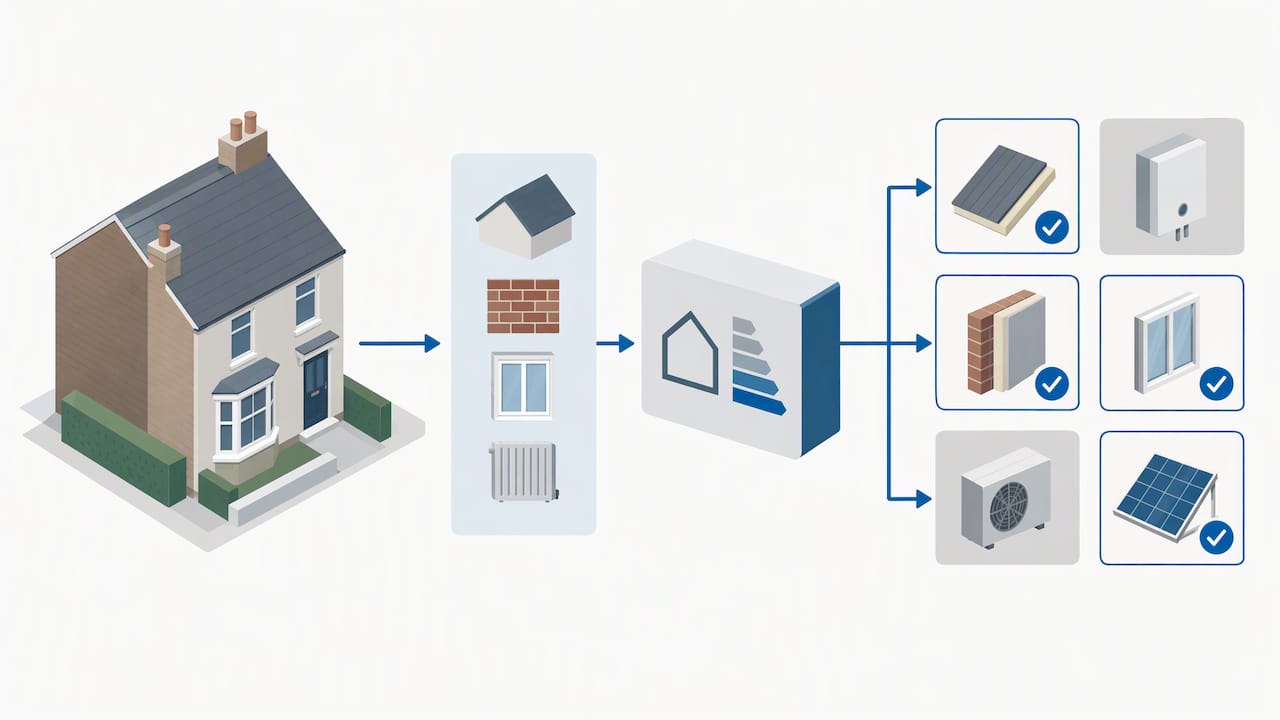
- An EPC accounts for how your property is built, so it highlights the improvements likely to return most. Gov notes that tailored tools beat generic advice.
- Combine both: fix small things first, then fund fabric upgrades if the EPC shows poor performance.
Smart meters only save money when you act on what the display shows.
Our guide to using your EPC and smart meter to save walks through the process.
9. The sequence I would follow in most homes
Start with behaviour and low-cost fixes, which often cost little. Only then use an EPC or targeted assessment to decide which fabric upgrades deserve your money. Spending on insulation before you know where the heat escapes can lead to poorly targeted improvements.
— Danny
10. Request a Domestic EPC to find your best-return measures
A Domestic EPC or tailored assessment shows which improvements suit your specific home. We offer Domestic EPCs: request a quote for your Domestic EPC.
FAQ
What are five ways to save energy at home?
Switch appliances off at the plug, wash at 30°C, avoid overfilling the kettle, swap bulbs for LEDs and turn the thermostat down slightly. These changes cost little and suit most households. The Energy Saving Trust gives savings estimates for each.
How can I reduce my gas bill?
Lower your boiler flow temperature, turn the thermostat down by 1°C and use programmable controls. Insulating your hot water cylinder and draught-proofing doors and windows also help. Check comfort during cold weather and adjust as needed.
What is the 30 minute heating rule?
There is no official rule by that name in the guidance we have reviewed. Savings come from setting heating schedules around when you are home, rather than running it constantly or in short bursts. A programmable thermostat makes this easy.
Is a smart meter enough to cut my bill?
No. A smart meter gives you data, but savings come from using the display to spot high-usage appliances and change habits. Citizens Advice makes this point clearly.