
TL;DR:
- Combining no-cost actions with an assessment-led plan can significantly lower your energy bills. An EPC or HEM assessment helps identify the most effective property improvements before spending on technology.
The fastest way to decrease your electric bill is to combine immediate no-cost actions with a structured, assessment-led upgrade plan. Start by adjusting thermostat settings, switching to LED lighting, and eliminating standby power. Then commission an Energy Performance Certificate (EPC) or Home Energy Model (HEM) assessment to identify which property-specific improvements deliver the highest return before committing to any significant spend.
- Set your room thermostat to a comfortable level; turning it down by one degree can noticeably reduce heating costs.
- Switch all bulbs to LED and turn off lights in unoccupied rooms.
- Unplug devices on standby; chargers, televisions, and set-top boxes draw power continuously.
- Wash clothes at 30°C and run full loads only.
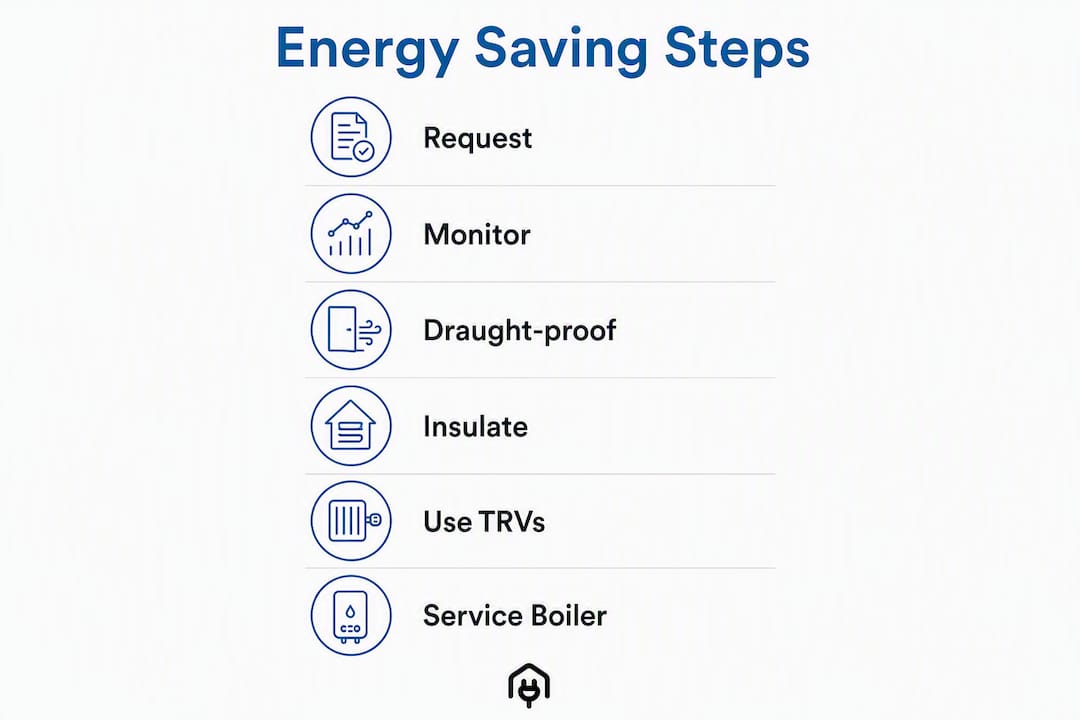
- Draught-proof doors and windows, but preserve permanent ventilation to prevent condensation.
- Book an EPC or HEM assessment to get a property-specific improvement roadmap.
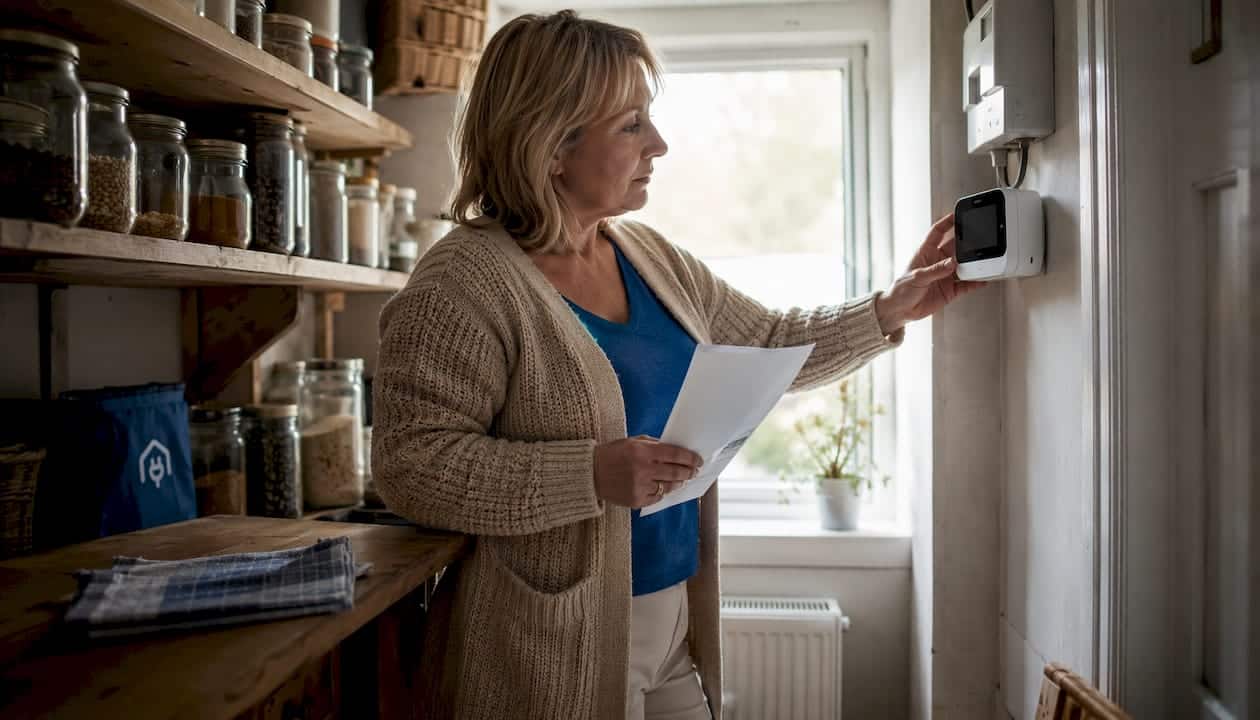
Pro Tip: Request a smart meter from your supplier at no charge. The in-home display shows real-time consumption in pounds and pence, making it straightforward to spot which appliances are driving costs.
Table of Contents
- What are the quickest ways to reduce home energy costs?
- Which fabric and heating measures give the biggest savings?
- How do smart meters and tariffs help you cut power bills?
- Are solar panels, batteries and heat pumps worth the investment?
- What do EPC and HEM assessments actually tell you?
- Realistic costs, savings and payback timelines
- Where can UK homeowners find grants and financial support?
- A practical plan: assess, act, and review
- Key takeaways
- Why assessment-first is the only sensible starting point
- Homeenergymodel: EPC and HEM assessments for UK properties
- Useful sources and official references
What are the quickest ways to reduce home energy costs?
Ofgem highlights everyday changes and small home improvements as effective first steps to cut gas and electricity bills. The measures below cost little or nothing and produce measurable results within the first billing cycle.
- Thermostat discipline: Each 1°C reduction in room temperature produces a meaningful saving on heating costs. Target 18–21°C in living areas and lower in bedrooms overnight.
- LED lighting: LED bulbs use up to 90% less energy than traditional incandescent bulbs and last significantly longer.
- Standby reduction: Switching off appliances at the socket rather than leaving them on standby removes a persistent, low-level drain across every room.
- Washing habits: A 30°C wash uses considerably less electricity than a 40°C cycle. Drying clothes outdoors avoids tumble dryer costs entirely.
- Kettle discipline: Boiling only the water needed is one of the simplest energy-saving techniques with an immediate impact.
Track progress through a smart meter’s in-home display or a supplier app. Comparing weekly consumption figures confirms which changes are working.
Pro Tip: Draught-proofing doors and windows is effective, but never block permanent ventilation bricks or trickle vents. Sealing essential airflow causes condensation and mould, which creates far costlier problems than the heat loss it was meant to prevent.
Which fabric and heating measures give the biggest savings?
Insulation and heating controls consistently deliver the largest, most durable reductions in energy use for UK homes. Unlike behavioural changes, they work continuously without requiring daily effort.
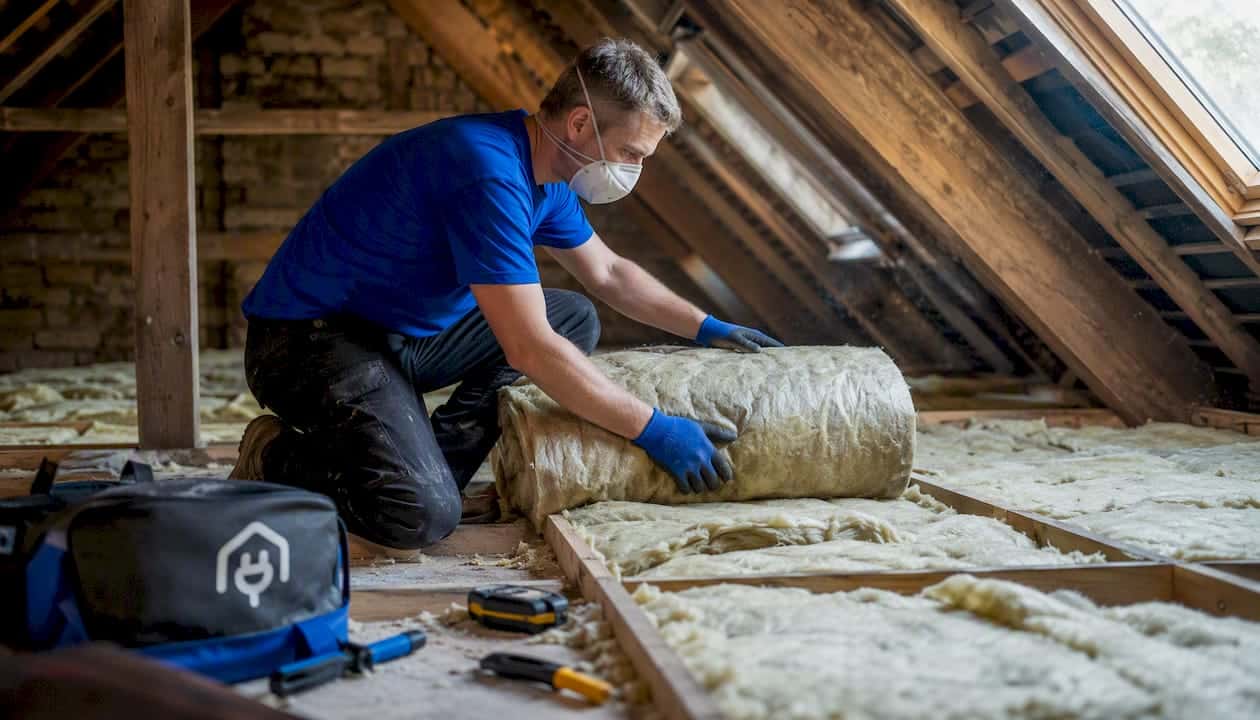
Insulation priorities: Loft insulation is typically the highest-return measure for uninsulated homes, followed by cavity wall insulation. Solid wall insulation costs more and involves greater disruption, but produces substantial savings in older properties with solid brick construction. Draught-proofing complements insulation by reducing infiltration losses.
Heating controls: Thermostatic radiator valves (TRVs) allow room-by-room temperature management, preventing heated rooms from being overheated. A smart thermostat adds scheduling and remote control, reducing waste when the property is unoccupied. Lowering a combi boiler’s flow temperature to around 60°C improves system efficiency, though households with elderly or very young residents should adjust carefully to maintain comfort.
Boiler servicing: An annual service keeps combustion efficiency at its rated level and identifies faults before they escalate into expensive repairs or replacements.
| Measure | Typical installed cost | Estimated annual saving | Approximate payback |
|---|---|---|---|
| Loft insulation (top-up) | Moderate cost | Noticeable annual saving | Few years payback |
| Cavity wall insulation | Moderate to higher cost | Substantial annual saving | Multiple years payback |
| Solid wall insulation | High cost | Moderate annual saving | Long payback period, grant-dependent |
| Smart thermostat | Moderate cost | Moderate annual saving | Few years payback |
| Draught-proofing | Low cost | Moderate annual saving | Short payback period |
Cost and saving ranges are indicative; actual figures depend on property size, construction type, and current energy tariff.
Pro Tip: Commission an EPC before booking insulation contractors. The certificate’s recommendations section identifies which measures apply to your specific property and construction type, preventing spend on measures that offer poor return for that building.
How do smart meters and tariffs help you cut power bills?
Smart meters are offered free of charge by all energy suppliers and replace estimated billing with automatic, accurate readings. The in-home display provides near-real-time feedback, which research consistently links to sustained reductions in consumption by making usage visible and tangible.
Beyond accurate billing, smart meters unlock access to time-of-use tariffs. These tariffs charge lower unit rates during off-peak periods, typically overnight, and higher rates at peak times. Households with electric vehicles, batteries, or flexible appliances can shift consumption to cheaper windows and reduce their effective unit cost significantly.
Action checklist for smart meters and tariffs:
- Contact your supplier and request a smart meter installation at no cost.
- Set up the in-home display and check daily consumption figures for the first two weeks.
- Identify the two or three highest-use appliances and assess whether their timing is flexible.
- Ask your supplier which time-of-use tariffs are available on your smart meter.
- Use an Ofgem-approved price comparison service to check whether switching supplier offers a better unit rate.
- Review tariff performance every 12 months, particularly after installing solar panels or a battery.
Pro Tip: Switching to Direct Debit payment, where possible, often reduces the tariff rate compared with prepayment or standard credit arrangements. Check with your supplier whether this applies to your account.
Are solar panels, batteries and heat pumps worth the investment?
Major low-carbon technologies reduce electricity bills by generating power on-site, storing it, or replacing high-cost fossil fuel heating with more efficient electric alternatives. The financial case depends on property suitability, available grants, and tariff structure.
Solar PV and battery storage: A solar panel system reduces grid electricity consumption during daylight hours. Adding a battery stores surplus generation for evening use, increasing self-consumption and reducing exposure to fossil fuel price volatility. The Warm Homes Plan includes government-backed low- and zero-interest loans for solar and battery installations, making upfront costs more manageable. An owner-occupier with solar panels and a battery could save £450 on their annual energy bill through the Consumer Loans scheme.
Heat pumps: An air source heat pump moves heat rather than generating it, making it more efficient than a gas boiler per unit of electricity consumed. An owner-occupier upgrading to a heat pump and adopting a time-of-use tariff could save £130 on their annual energy bill. The Boiler Upgrade Scheme provides a £7,500 grant for eligible applicants, with the grant increased to £9,000 for homes currently on heating oil from 21 July.
| Technology | Typical installed cost | Grant available | Example annual saving |
|---|---|---|---|
| Solar PV (4kWp) | Moderate to high cost | Low/zero-interest loan (Warm Homes Plan) | Moderate annual saving |
| Solar PV + battery | Higher cost | Low/zero-interest loan | Significant annual saving |
| Air source heat pump | Higher cost | £7,500 BUS grant (rising to £9,000 for oil-heated homes from 21 July) | Noticeable annual saving with time-of-use tariff |
Pro Tip: A HEM assessment before installing a heat pump confirms whether the building fabric is suitable. Installing a heat pump in a poorly insulated property reduces efficiency and may not deliver projected savings. Fabric-first, then technology.
What do EPC and HEM assessments actually tell you?
An EPC is the most reliable way to identify which improvements will give the highest return for a specific property. It rates the building from A to G, lists recommended measures, and estimates the cost and saving for each. For homeowners and landlords, it is the starting point for any credible improvement plan.
The Home Energy Model (HEM) is the government’s replacement for the Standard Assessment Procedure (SAP), due to take effect in 2025 as part of the Future Homes Standard. HEM uses more detailed inputs, including actual occupancy patterns, heating system performance, and fabric data, to produce more accurate energy and carbon calculations. For property professionals, HEM assessments provide greater confidence in projected savings and compliance outcomes.
How to use an assessment effectively:
- Commission an EPC from an accredited assessor before planning any works.
- Review the recommendations page: measures are listed with estimated costs and savings specific to the property.
- Cross-reference recommendations with available grants (ECO, HUG, Boiler Upgrade Scheme) to identify fully or partially funded options.
- For new builds or major retrofits, commission a HEM assessment to meet Future Homes Standard requirements and produce bankable savings projections.
- Ask the assessor to explain the methodology inputs so the outputs can be verified and used in planning applications or compliance submissions.
An assessment-first approach reduces wasted spend: run an EPC or HEM to identify the single measure that delivers the biggest reduction for your building fabric and occupancy pattern before committing to major works.
Pro Tip: EPCs are valid for ten years, but a property that has undergone significant works should be reassessed. An outdated EPC may understate the current rating and limit access to grants or rental compliance.
For a deeper understanding of EPC ratings and their implications, Homeenergymodel publishes detailed guidance tailored to UK property professionals.
Realistic costs, savings and payback timelines
Three worked examples illustrate how to estimate payback for common measures.
-
Loft insulation top-up: Installation cost £450. Estimated annual saving £200. Payback: 2.25 years. This is typically the fastest-returning measure in an under-insulated home.
-
Cavity wall insulation: Installation cost £900. Estimated annual saving £300. Payback: 3 years. Eligibility for ECO funding can reduce or eliminate the upfront cost entirely.
-
Solar PV with battery: Installation cost £12,000 before grants or loans. Estimated annual saving £450. Payback: approximately 26 years at full cost, reducing to 13–15 years with a zero-interest government loan and export tariff income.
Simple payback formula: Installed cost ÷ Annual saving = Payback in years. Use the EPC’s estimated savings figures as the input, not manufacturer projections.
Payback calculations based on current tariff rates will shift as energy prices change. Build in a sensitivity check using a 20% higher and 20% lower unit rate to understand the range of outcomes before committing to major spend.
Seasonal variability affects solar PV returns significantly. Generation peaks in summer and drops in winter, so annual saving figures mask a wide monthly spread. A home energy audit checklist can help identify room-by-room consumption patterns before sizing a solar system.
Where can UK homeowners find grants and financial support?
Several government programmes reduce or eliminate the upfront cost of energy improvements. Eligibility varies by income, property type, and tenure.
- Energy Company Obligation (ECO): Requires larger energy suppliers to fund insulation and heating measures for low-income and vulnerable households. Contact your supplier directly to check eligibility.
- Boiler Upgrade Scheme (BUS): Provides £7,500 towards a heat pump installation (£9,000 for oil-heated homes). Available to owner-occupiers in England and Wales.
- Home Upgrade Grant (HUG): Funds energy efficiency improvements and low-carbon heating for low-income households in properties with an EPC rating of D or below.
- Warm Homes Plan: The government’s £15 billion programme to upgrade up to five million homes by 2030, combining direct grants for low-income households with low- and zero-interest loans for others.
- Warm Homes: Local Grant: Arranged through local authorities; eligible households may receive free insulation, heat pumps, smart controls, or solar at no cost. Check eligibility via GOV.UK.
- Supplier hardship funds: Ofgem advises contacting your supplier early if bills are unmanageable. Suppliers have regulatory obligations to offer payment plans, hardship funds, and efficiency support.
Before applying, gather:
- A current EPC (dated within ten years, or more recent if works have been completed).
- Proof of income or benefit entitlement if applying for means-tested schemes.
- Recent energy bills showing current tariff and consumption.
- Property details: construction type, wall type, current heating system.
Pro Tip: Local authority energy teams often know about additional council-funded schemes not listed on national websites. A single call to the council’s housing or environmental health team can reveal funding that online searches miss.
A practical plan: assess, act, and review
A structured three-step approach prevents wasted spend and ensures compliance at each stage.
-
Assess: Commission an EPC immediately. Review the recommendations and cross-reference with grant eligibility. For landlords and property professionals, check whether the current EPC rating meets Minimum Energy Efficiency Standards (MEES) and plan for tightening requirements.
-
Act in order of ROI: Begin with no-cost behavioural changes and draught-proofing. Move to insulation and heating controls, prioritising measures identified in the EPC. Apply for ECO, HUG, or BUS funding before committing to major works. Install solar PV, batteries, or a heat pump once fabric improvements are complete and grant applications are confirmed.
-
Review: Reassess consumption after each phase using smart meter data. Commission a new EPC after significant works to confirm the improved rating and unlock further grant eligibility. For new builds or deep retrofits, commission a HEM assessment to meet Future Homes Standard requirements.
Follow the home energy savings workflow published by Homeenergymodel for a detailed step-by-step checklist covering each stage.
Pro Tip: Landlords should note that MEES requirements are expected to tighten. Planning improvements now, guided by a current EPC, avoids last-minute compliance costs and keeps rental properties lettable.
Key takeaways
The most cost-effective way to reduce home energy costs is to combine immediate no-cost actions with an assessment-led upgrade plan that prioritises measures by ROI and links them to available grant funding.
| Point | Details |
|---|---|
| Start with quick wins | Thermostat adjustment, LED lighting, and standby reduction cost nothing and produce immediate savings. |
| Assessment before major spend | An EPC or HEM assessment identifies the highest-return measures for your specific property before any significant investment. |
| Fabric before technology | Insulation and heating controls deliver reliable, durable savings and improve the performance of any subsequent low-carbon technology. |
| Grants reduce payback significantly | ECO, Boiler Upgrade Scheme, HUG, and the Warm Homes Plan can reduce or eliminate upfront costs for eligible households. |
| Homeenergymodel for assessments | Homeenergymodel provides EPC and HEM assessments, retrofit advice, and compliance guidance for UK homeowners and property professionals. |
Why assessment-first is the only sensible starting point
The conventional approach to cutting energy bills tends to follow enthusiasm rather than evidence: a neighbour installs solar panels, so the next step seems obvious. In practice, a property with poor wall insulation and an inefficient heating system will see far greater returns from fabric improvements than from generation technology. Solar panels on a draughty, poorly insulated house are an expensive solution to a problem that cheaper measures would have reduced first.
The shift to HEM from SAP is significant precisely because it moves assessment closer to real-world performance. More accurate inputs produce more reliable savings projections, which means fewer unpleasant surprises after installation. For property professionals advising clients on retrofit sequencing, that accuracy has direct financial and compliance implications.
The grants available through the Warm Homes Plan, ECO, and the Boiler Upgrade Scheme are genuinely substantial. But accessing them efficiently requires a current, accurate EPC. Without one, eligibility checks are guesswork and the improvement roadmap is generic rather than property-specific. The assessment is not a bureaucratic hurdle; it is the tool that makes every subsequent decision more reliable.
Homeenergymodel: EPC and HEM assessments for UK properties
For homeowners and property professionals ready to act, Homeenergymodel provides domestic and commercial EPC assessments, Home Energy Model consultations, and retrofit advice aligned with current UK compliance requirements. Rather than working from generic guidance, each assessment produces property-specific recommendations that map directly to available grant schemes and compliance thresholds.
The practical next step is to commission a home energy assessment that identifies your property’s highest-return improvements and confirms current EPC rating. For landlords managing multiple properties, the Home Energy Model explained page sets out how HEM assessments translate into retrofit recommendations and compliance outcomes. Contact Homeenergymodel to request an assessment and receive a clear, prioritised improvement plan for your property.
This article provides general information on energy efficiency measures and UK grant schemes. Eligibility criteria, grant levels, and compliance requirements change regularly. Confirm current details with GOV.UK, Ofgem, or a qualified energy assessor before committing to works or applications.
Useful sources and official references
- Improve your home’s energy efficiency — GOV.UK
- Save money on your energy bill — Ofgem
- Get help with your energy bills — Ofgem
- Save energy in your home — Clean Energy Campaign
- Warm Homes Plan — GOV.UK
- Boiler Upgrade Scheme — GOV.UK
- Apply for the Warm Homes: Local Grant — GOV.UK
- Energy performance certificates — Homeenergymodel
- Home Energy Model explained — Homeenergymodel
- Cutting expenses with solar power — Solar X Energy