
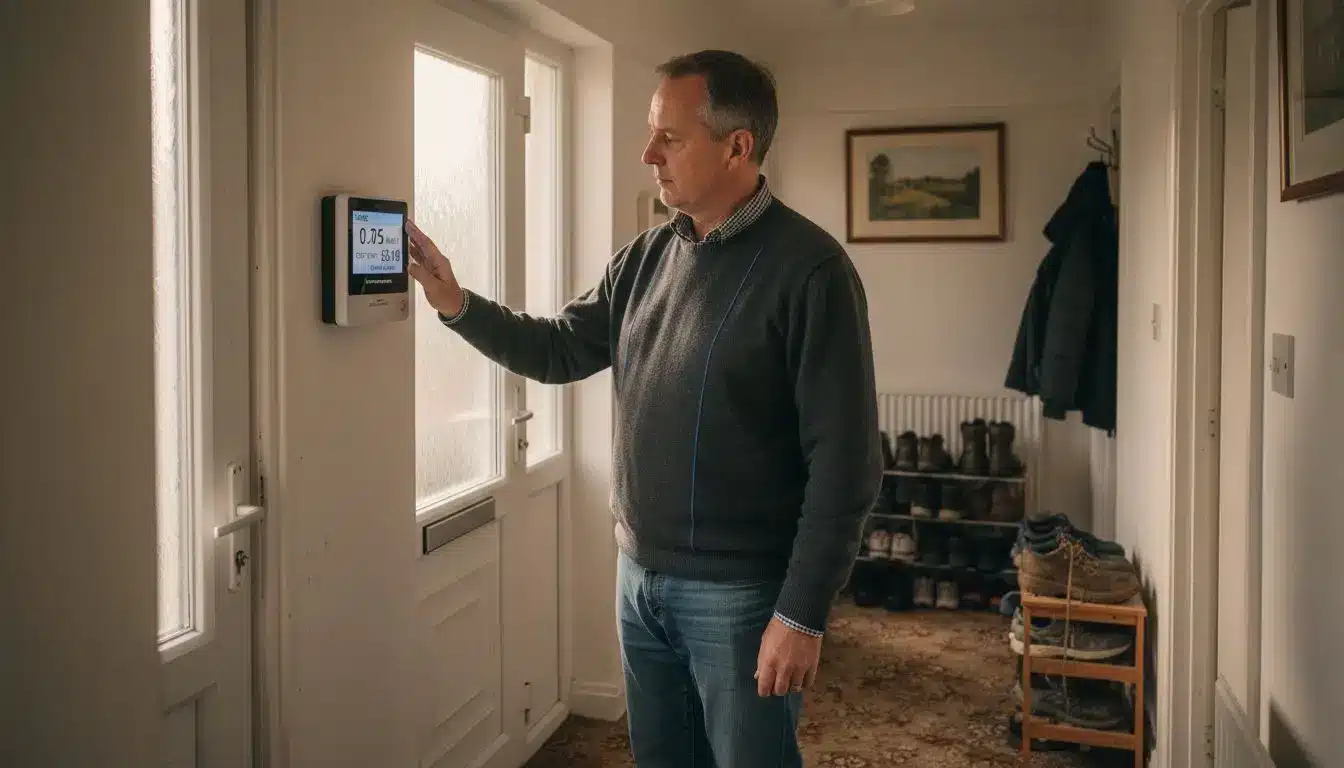
Despite their potential to save hundreds of pounds yearly, only 2.8% of UK homes currently use smart Time of Use tariffs. Time of Use tariffs charge different electricity rates based on when you consume power, rewarding households that shift usage to cheaper periods. This guide explains what ToU tariffs are, how they work with smart meters, and how you can benefit in 2026. You’ll discover cost-saving strategies, understand the technology requirements, and learn practical steps for switching.
Table of Contents
- Understanding Time of Use Tariffs in the UK
- How Time of Use Tariffs Work
- Smart Meters and Technology Role
- Benefits, Risks, and Savings Potential
- Tariff Comparisons and Common Misconceptions
- Regulatory Context and Future Outlook
- Practical Steps for Switching and Optimization
- Explore Home Energy Solutions for UK Properties
- Frequently Asked Questions
Key Takeaways
| Point | Details |
|---|---|
| Dynamic Pricing | ToU tariffs charge different rates based on consumption time, encouraging off-peak use. |
| Smart Meter Requirement | SMETS2 smart meters with half-hourly data recording are mandatory under MHHS rollout. |
| Savings Potential | Shifting usage to cheaper periods can reduce electricity bills by up to 20%. |
| Different from Economy 7 | Traditional tariffs offer fixed night rates, while ToU provides flexible multi-period pricing. |
| 2026 Policy Mandate | Government requires ToU tariff interoperability by late 2026 for smart home compatibility. |
Understanding Time of Use Tariffs in the UK
Time of Use tariffs represent a shift from flat-rate electricity pricing to dynamic pricing based on when you consume power. Instead of paying the same rate all day, you’re charged different amounts during peak, off-peak, and shoulder periods.
From 2026, UK households will be transitioned to Market-wide Half-Hourly Settlement enabling billing based on actual usage timings. MHHS is a major regulatory change requiring half-hourly electricity consumption data for accurate billing. This rollout fundamentally changes how suppliers calculate your bills and creates opportunities for significant savings.
Understanding these electricity tariffs for UK landlords and homeowners starts with recognizing the three main pricing periods:
- Peak periods: High demand times, typically weekday mornings and evenings, with the highest rates
- Off-peak periods: Low demand times, usually overnight and weekends, with the lowest rates
- Shoulder periods: Transitional times between peak and off-peak, with moderate rates
The transition from flat tariffs to ToU enables fairer pricing reflecting actual grid costs. When demand is high, electricity generation becomes more expensive and often relies on carbon-intensive sources. By charging more during peak times, ToU tariffs encourage you to shift consumption to periods when renewable energy is abundant and grid strain is minimal.
This pricing structure works because smart meters in UK homes can now track your consumption every 30 minutes. Understanding these tariff periods is essential for optimizing your energy use and reducing costs. You can learn more about MHHS and ToU tariffs to grasp how this regulatory framework supports your household.
How Time of Use Tariffs Work
ToU tariffs operate through time-segmented pricing that reflects electricity demand patterns. Electricity prices rise during peak demand periods and fall off-peak, with smart meters recording consumption every 30 minutes. This granular data enables suppliers to calculate your exact costs based on when you used power.
Common UK peak times occur weekday mornings (roughly 7am to 9am) and evenings (4pm to 8pm) when millions of households simultaneously use appliances, heating, and lighting. Off-peak periods typically run overnight from 11pm to 7am when demand drops significantly. Shoulder periods fill the gaps, offering moderate rates during mid-morning, afternoon, and late evening hours.
Here’s how your bill gets calculated under ToU tariffs:
- Your smart meter records electricity consumption in 30-minute intervals throughout the billing period
- The supplier assigns each interval to its corresponding tariff period (peak, shoulder, or off-peak)
- Consumption in each period is multiplied by the relevant rate
- All period costs are summed with your standing charge to create the total bill
This precise billing method replaces estimated readings and flat rates. Understanding energy bills and use helps you recognize where savings opportunities exist. The variation between peak and off-peak rates can be substantial, sometimes differing by 300% or more.
Pro Tip: Monitor your consumption patterns for a month before switching. Identify which high-energy activities you can realistically shift to off-peak times. This preparation helps you estimate potential savings and avoid disappointment.
You can explore dynamic pricing during peak periods to understand how suppliers adjust rates based on wholesale electricity costs and grid demand.
Smart Meters and Technology Role
To access ToU tariffs, you need a SMETS2-compatible smart meter capable of recording half-hourly data. SMETS2 smart meters with half-hourly data are mandatory for ToU tariffs, while Economy 7 and older meters are phased out under MHHS. Legacy meters simply cannot provide the granular consumption data required for accurate ToU billing.
The MHHS rollout means traditional meter types are becoming obsolete for dynamic pricing. Economy 7 meters only distinguish between day and night rates using simpler technology. SMETS1 meters lack the standardized communication required for seamless supplier switching. Only SMETS2 meters meet the technical specifications for the modern smart grid.
Smart meters enable suppliers to implement dynamic ToU tariffs by providing accurate half-hourly consumption data. This technology forms the foundation for various smart home integrations that maximize your savings:
- Smart meters: Automatically transmit consumption data to suppliers, eliminating manual readings and enabling precise billing
- Home batteries: Store cheap off-peak electricity for use during expensive peak periods
- EV chargers: Schedule charging sessions overnight when rates are lowest
- Smart appliances: Program dishwashers, washing machines, and heating systems to run during off-peak windows
These technologies work together to automate load shifting. Rather than manually timing every appliance, you can set systems to respond automatically to tariff periods. Understanding how smart meters work helps you appreciate their central role in this ecosystem.
If you have solar panels and smart tech, ToU tariffs become even more valuable. You can store excess solar generation in batteries during the day and export surplus to the grid during peak periods for maximum export payments. The integration of smart grid technologies creates a responsive energy system that benefits both households and the wider grid.
Pro Tip: Pairing ToU tariffs with home energy technology like batteries or smart EV chargers maximizes both financial savings and environmental benefits. The initial investment pays back faster when you’re arbitraging between peak and off-peak rates.
Explore the role of smart meters in ToU tariffs and review smart meter requirements and MHHS rollout details to ensure your property is ready.
Benefits, Risks, and Savings Potential
Households shifting energy use to off-peak times can save hundreds of pounds annually with ToU tariffs. For an average UK household consuming 2,900 kWh yearly, effective load shifting can reduce electricity bills by 10% to 20%. This translates to £150 to £300 in annual savings depending on your consumption patterns and flexibility.

Beyond financial benefits, ToU tariffs reduce grid peak demand and carbon emissions by encouraging load shifting. When millions of households move consumption away from peak periods, the grid requires less expensive and polluting backup generation. You’re directly supporting the UK’s net zero goals while cutting your costs.
Key benefits include:
- Lower bills: Significant savings for households that can shift 40% or more of consumption to off-peak periods
- Environmental impact: Reduced reliance on carbon-intensive peak generation
- Grid support: Flattened demand curves help stabilize the electricity system
- Technology synergy: Enhanced value from solar panels, batteries, and EVs
However, ToU tariffs carry risks if your lifestyle or consumption patterns don’t align with off-peak periods. If you primarily use electricity during peak times and cannot shift usage, you’ll pay more than with a flat-rate tariff. Understanding how ToU impacts energy bills requires honest assessment of your flexibility.
Potential pitfalls include:
- Higher costs: Bills increase if you consume mostly during peak periods without behavior changes
- Complexity: More complicated tariff structures require active management
- Lifestyle constraints: Shift workers, families with young children, or those working from home may struggle to avoid peak usage
- Initial adjustment: Learning new consumption patterns takes time and attention
Average savings of 10% to 20% are achievable but depend entirely on your ability to shift high-energy activities like heating, laundry, and EV charging to off-peak windows. Realistic assessment of your schedule and energy needs is essential before switching.
You can review the savings potential of ToU tariffs and explore environmental benefits of ToU tariffs to weigh these considerations.
Tariff Comparisons and Common Misconceptions
ToU tariffs offer variable pricing with multiple daily periods, whereas Economy 7 provides a fixed cheaper night rate. Understanding these differences helps you choose the right tariff for your household and technology setup.
| Feature | Time of Use Tariff | Economy 7 | Economy 10 |
|---|---|---|---|
| Pricing Periods | Multiple daily periods (peak, shoulder, off-peak) | Two periods (day, night) | Two periods (day, night) |
| Rate Flexibility | Dynamic rates responding to demand | Fixed differential rates | Fixed differential rates |
| Meter Requirement | SMETS2 smart meter mandatory | Dedicated Economy 7 meter | Dedicated Economy 10 meter |
| Best For | Flexible households with smart tech | Night storage heating users | Large properties with storage heating |
| Night Hours | Varies by supplier (6-9 hours) | Fixed 7 hours overnight | Fixed 10 hours (split periods) |
Traditional tariffs like Economy 7 offer predictability with simple day and night rates. You know exactly what you’ll pay during each period. ToU tariffs sacrifice this simplicity for potentially greater savings through more granular pricing and multiple daily periods.
Common misconceptions about ToU tariffs create confusion:
- Myth: All households will automatically save money on ToU tariffs
- Reality: Savings depend on your ability to shift consumption to off-peak periods
- Myth: You can use any smart meter for ToU tariffs
- Reality: Only SMETS2 meters with half-hourly data capability are compatible
- Myth: Off-peak times are the same across all ToU tariffs
- Reality: Each supplier defines its own peak and off-peak windows within broad parameters
Your usage patterns and technology compatibility determine suitability. A household with electric vehicle charging, smart appliances, and flexible schedules will benefit far more than one with rigid peak-time consumption. Understanding energy bill misconceptions prevents disappointing switches.
ToU tariffs reward flexibility and technology adoption, while traditional tariffs suit those preferring simplicity and predictable billing. Compare ToU vs Economy 7 tariffs carefully and review common misconceptions about ToU tariffs before deciding.
Regulatory Context and Future Outlook
By mid to late 2026, UK energy suppliers must support ToU tariff interoperability and standardized data formats. This government mandate ensures smart appliances and home energy systems can respond automatically to tariff signals, creating seamless integration between pricing and consumption.
ToU tariffs form a cornerstone of UK energy market modernization and net zero strategies. The government recognizes that flexible demand management reduces the need for expensive grid upgrades and fossil fuel backup generation. By encouraging households to shift consumption, ToU tariffs support renewable energy integration and grid stability.
Adoption is expected to accelerate rapidly from the current 2.8% household registration. As MHHS rollout completes and awareness grows, millions of UK homes will transition to dynamic pricing. The combination of regulatory mandates, supplier competition, and consumer technology adoption creates powerful momentum.
Key policy drivers and market trends:
- Regulatory mandates: Suppliers must offer ToU tariffs with standardized formats for smart device compatibility
- Net zero alignment: Load shifting reduces carbon emissions by optimizing renewable energy use
- Technology standardization: Interoperable systems enable automated responses to price signals
- Consumer choice: Competitive market ensures diverse ToU tariff options for different household needs
Consumers benefit from clearer tariff choices and enhanced technology compatibility as the market matures. Understanding UK housing energy standards helps you see how ToU tariffs fit within broader energy efficiency regulations.
The regulatory framework creates certainty for households investing in smart technology. You can be confident that your home battery, EV charger, or smart appliances will work with future ToU tariffs regardless of your supplier. Review UK ToU tariff regulations for detailed policy information.
Practical Steps for Switching and Optimization
Switching to a ToU tariff and maximizing savings requires systematic preparation and ongoing optimization. Follow these steps to ensure a successful transition:
- Check smart meter compatibility: Verify you have a SMETS2 meter or arrange installation through your current supplier
- Analyze your usage: Review bills and smart meter data to understand your consumption patterns across different times
- Compare tariffs: Research ToU offerings from multiple suppliers using comparison websites and direct quotes
- Calculate potential savings: Estimate your savings based on realistic load shifting scenarios for your household
- Switch supplier: Complete the switch process, ensuring no exit fees apply to your current contract
- Implement load shifting: Adjust appliance use, program smart devices, and modify heating schedules
- Monitor results: Track your bills and consumption data monthly to verify savings and refine strategies
Flexible energy uses suitable for off-peak shifting:
- EV charging: Program vehicle charging to occur entirely during overnight off-peak hours
- Washing machines and dishwashers: Use delay-start functions to run during off-peak periods
- Electric heating: Preheat water and charge storage heaters during cheap rate windows
- Home batteries: Charge from grid during off-peak, discharge during peak to avoid expensive electricity
Pro Tip: Use smart scheduling apps and home automation systems to manage load shifting automatically. Manual management becomes tedious, but automated systems maintain optimal patterns effortlessly.
When switching energy supplier in the UK, verify contract terms carefully. Check for exit fees, understand the tariff’s peak and off-peak definitions, and confirm smart meter compatibility before committing. Some suppliers offer mobile apps showing real-time tariff periods and consumption, making optimization easier.
If you have solar PV and home energy optimization systems, coordinate your switching strategy to maximize both generation export payments and consumption cost savings. Regular monitoring after switching helps you identify additional optimization opportunities and ensures you’re achieving expected savings.
Explore Home Energy Solutions for UK Properties
Navigating ToU tariffs, smart meter requirements, and energy optimization becomes simpler with expert guidance tailored to UK properties. HomeEnergyModel.co.uk provides comprehensive resources helping homeowners and landlords understand the 2026 regulatory landscape and maximize energy efficiency.
Our platform offers detailed information on types of home energy models for landlords and the upcoming home energy model explained methodology replacing SAP. Whether you’re optimizing a single property or managing a portfolio, you’ll find practical guidance on compliance, performance improvements, and cost reduction strategies.
We also provide step-by-step support for switching energy suppliers and implementing ToU tariffs effectively. Our resources help you assess smart meter compatibility, calculate savings potential, and integrate renewable technologies for maximum benefit. Explore our site to access tools and expert insights supporting your transition to smarter, more efficient energy management in 2026 and beyond.
Frequently Asked Questions
What is the difference between Time of Use tariffs and Economy 7?
Time of Use tariffs vary rates throughout the day in multiple periods (peak, shoulder, off-peak), while Economy 7 offers a fixed cheaper rate during 7 night hours. ToU tariffs provide more granular pricing responding to actual grid demand, whereas Economy 7 uses simple day and night differentiation. ToU requires SMETS2 smart meters, while Economy 7 works with dedicated legacy meters being phased out under MHHS.
Do I need a smart meter for a Time of Use tariff?
Yes, you need a SMETS2 smart meter with half-hourly data recording capability for ToU tariffs. Legacy meters including SMETS1 and Economy 7 meters cannot provide the granular consumption data required for accurate ToU billing. If you don’t have a SMETS2 meter, contact your supplier to arrange free installation before switching to a ToU tariff.
Can ToU tariffs increase my electricity bill?
Yes, if you mainly use electricity during peak periods without shifting usage patterns, your bills may increase under ToU tariffs. Peak rates are significantly higher than flat tariff rates, so households unable to move consumption to off-peak windows will pay more. Honest assessment of your flexibility and lifestyle constraints is essential before switching.
How do I find out if my home is eligible for a ToU tariff?
Check if you have a SMETS2 smart meter installed by examining your meter display or contacting your supplier. Then compare available ToU tariffs within your postcode using energy comparison websites or supplier websites directly. Most UK homes with SMETS2 meters can access ToU tariffs, though specific offerings vary by region and supplier.
Are all UK homes required to switch to ToU tariffs by 2026?
No, ToU tariffs remain optional for consumers. However, the MHHS rollout will transition most households to half-hourly settlement by 2026, creating the infrastructure for ToU tariffs. Suppliers must offer ToU options, but you can choose to remain on traditional flat-rate or Economy 7 tariffs if they better suit your needs. Switching timelines and tariff availability may vary by supplier and region.