

Heating bills can spiral quickly when properties are poorly insulated, a familiar frustration for many UK landlords. As regulations like the Home Energy Model place tighter demands on energy performance, understanding heat loss has never been more crucial. Recognising how thermal energy escapes through walls, roofs, windows and floors helps landlords protect profits, improve comfort and meet legal requirements for property efficiency.
Table of Contents
- What Is Heat Loss in Buildings?
- Types of Heat Loss and Key Mechanisms
- Calculating Heat Loss: Standards and Methods
- Legal Requirements for Heat Loss Compliance
- Financial Risks and EPC Implications for Landlords
- Effective Strategies to Minimise Heat Loss
Key Takeaways
| Point | Details |
|---|---|
| Understanding Heat Loss | Heat loss through conduction, convection, and radiation significantly impacts energy efficiency and costs for UK landlords. |
| EPC Compliance | Adhering to Energy Performance Certificate standards is crucial for legal compliance and can influence property value and rental potential. |
| Insulation as a Priority | Implementing effective insulation solutions can drastically reduce heat loss and improve overall energy performance of properties. |
| Financial Implications | Investing in energy-efficient upgrades can lead to long-term savings and enhance property attractiveness to environmentally conscious tenants. |
What Is Heat Loss in Buildings?
Heat loss represents the unintended transfer of thermal energy from inside a building to the external environment, a critical challenge for UK landlords seeking to maintain energy efficiency. Understanding heat transfer mechanisms can significantly impact property management and operational costs.
In practical terms, heat loss occurs when warm interior air escapes through poorly insulated walls, windows, roofs, and floors, forcing heating systems to work harder to maintain comfortable temperatures. This process not only increases energy consumption but also leads to substantial financial inefficiencies. According to research from the Energy Saving Trust, buildings can lose up to 25% of their heat through poorly insulated roofs and walls, creating a direct impact on a landlord’s heating expenditure.
The primary mechanisms of heat loss include conduction (heat transfer through solid materials), convection (heat movement through air currents), and radiation (heat emission from warm surfaces). Factors such as building age, construction materials, insulation quality, and maintenance significantly influence these heat transfer processes. Effective home energy loss assessment can help landlords identify and address these thermal inefficiencies strategically.
Pro tip: Conduct a professional thermal imaging survey to precisely map heat loss points in your property, enabling targeted insulation improvements and maximum energy efficiency.
Types of Heat Loss and Key Mechanisms
Buildings experience heat loss through three primary thermal transfer mechanisms: conduction, convection, and radiation. Each mechanism represents a distinct pathway through which thermal energy can escape, presenting unique challenges for UK landlords aiming to maintain energy efficiency and reduce heating costs.

Conduction occurs when heat transfers directly through solid materials like walls, floors, and windows. Materials with poor insulation properties, such as single-glazed windows or uninsulated brick walls, allow significant heat transfer. Heat pump performance research indicates that building material selection dramatically influences thermal efficiency, with some materials allowing substantially more heat loss than others.
Convection involves heat movement through air currents, typically happening when warm air escapes through gaps, cracks, and ventilation systems. Common convection sources include unsealed window frames, doorways, and poorly insulated roof spaces. These air leakage points can cause rapid heat loss, forcing heating systems to work harder and increasing energy consumption. Radiation represents the third mechanism, where heat radiates from warm surfaces to cooler surrounding areas, a process particularly noticeable through windows and uninsulated external walls.
Here is a comparison of the main heat loss mechanisms and their characteristics:
| Mechanism | Typical Locations | Impact on Energy Use | Reduction Strategy |
|---|---|---|---|
| Conduction | Walls, floors, windows | High in poorly insulated homes | Install effective insulation |
| Convection | Gaps, roof spaces | Accelerates heat escape | Seal draughts and air leaks |
| Radiation | Windows, external walls | Can be significant | Use low-emissivity glazing |
Pro tip: Invest in a professional thermal imaging survey to precisely map heat loss points, enabling targeted insulation improvements and maximising your property’s energy efficiency.
Calculating Heat Loss: Standards and Methods
Calculating heat loss in buildings requires a systematic approach guided by established British standards and regulations. Approved Document L provides the definitive framework for UK landlords and property owners seeking to assess and mitigate thermal energy transfer in residential properties.
The primary method for calculating heat loss involves comprehensive thermal performance assessments that examine multiple factors. These include measuring air permeability, evaluating building fabric characteristics, assessing insulation levels, and determining the thermal transmittance (U-value) of different construction elements. Landlords must consider heat loss through walls, roofs, floors, windows, and doors, with each component contributing to the overall thermal efficiency of a property.
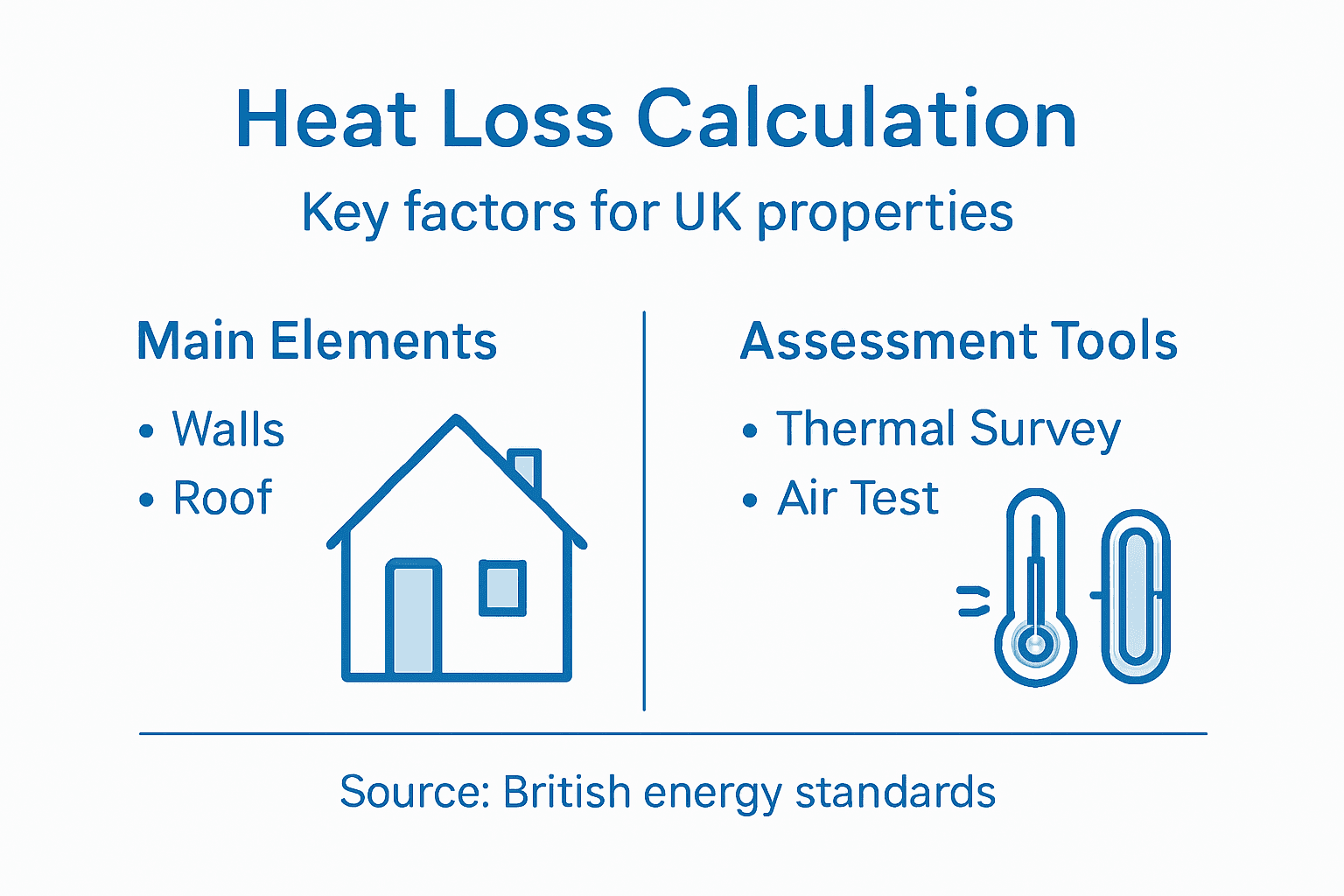
Standard calculation methodologies typically involve detailed mathematical models that quantify heat transfer across building surfaces. These models account for variables such as external temperature, internal heating requirements, building orientation, and specific material properties. Professional energy assessors use sophisticated software and measuring techniques to generate precise heat loss calculations, enabling property owners to identify potential thermal inefficiencies and implement targeted improvements.
Pro tip: Request a comprehensive thermal performance assessment that provides a detailed breakdown of your property’s heat loss points, allowing for strategic and cost-effective insulation upgrades.
Legal Requirements for Heat Loss Compliance
UK landlords must navigate a complex landscape of legal requirements governing heat loss and energy efficiency in residential properties. Building Regulations Part L establishes the fundamental legal framework for thermal performance standards, mandating specific compliance measures for property owners and developers.
The regulatory landscape includes multiple key requirements that directly impact heat loss management. These include mandatory thermal performance calculations, minimum insulation standards, air permeability testing, and regular energy efficiency assessments. Landlords must ensure their properties meet prescribed U-value thresholds for walls, roofs, floors, and windows, with specific performance targets that reduce overall heat transfer and minimize energy consumption.
Beyond national building regulations, additional compliance mechanisms exist for heat network operators and property managers. These regulations impose strict monitoring and reporting requirements, compelling organisations to demonstrate active management of thermal efficiency. Non-compliance can result in significant financial penalties, potential legal challenges, and restrictions on property development or rental permissions. Energy performance certificates, detailed thermal assessments, and continuous improvement strategies are now essential components of responsible property management.
Pro tip: Conduct annual thermal performance audits to proactively identify and address potential heat loss issues before regulatory inspections.
Financial Risks and EPC Implications for Landlords
UK landlords face significant financial risks directly tied to Energy Performance Certificates (EPCs) and their property’s thermal efficiency. Energy Performance Regulations establish crucial legal frameworks that can substantially impact property value, rental potential, and operational costs.
The financial implications of poor EPC ratings are extensive and multifaceted. Properties with low energy efficiency ratings can experience decreased market value, reduced rental attractiveness, and potential legal penalties. Minimum Energy Efficiency Standards (MEES) prohibit landlords from leasing properties with energy ratings below E, effectively forcing property owners to invest in substantial energy efficiency upgrades or risk significant financial penalties.
Beyond immediate compliance costs, landlords must consider long-term financial strategies related to energy performance. Properties with higher EPC ratings typically command premium rental rates, attract more environmentally conscious tenants, and demonstrate lower ongoing maintenance expenses. The initial investment in thermal upgrades can translate into substantial long-term financial benefits, including reduced energy consumption, increased property marketability, and potential tax incentives for energy-efficient improvements.
The following table summarises key EPC-related risks and benefits for landlords:
| EPC Rating Outcome | Consequence for Landlords | Long-Term Financial Effect |
|---|---|---|
| Below Minimum Standard | Legal penalties or rental bans | Income decline, increased costs |
| Meets High Standard | Improved market value, tenant demand | Lower bills, fewer void periods |
| Moderate Improvement | Enhanced compliance, no penalties | Steady rental income, future savings |
Pro tip: Prioritise energy efficiency upgrades that offer the most significant EPC rating improvements with the lowest initial investment, focusing on cost-effective insulation and heating system enhancements.
Effective Strategies to Minimise Heat Loss
Reducing heat loss requires a comprehensive approach targeting multiple aspects of building thermal performance. Home heating upgrade strategies demonstrate that systematic interventions can significantly improve energy efficiency and reduce operational costs for UK landlords.
The primary strategies for minimising heat loss include robust insulation techniques across critical building elements. Wall insulation represents a crucial intervention, with options ranging from cavity wall treatments to external and internal wall insulation systems. Roof and loft insulation can prevent up to 25% of heat escape, while floor insulation addresses thermal losses through ground-level surfaces. Double or triple-glazed windows with low-emissivity coatings provide superior thermal barriers compared to traditional single-glazed installations.
Additional heat loss reduction techniques involve mechanical and systemic improvements. Draught-proofing windows, doors, and structural gaps can eliminate unwanted air infiltration. Upgrading heating systems to modern, high-efficiency models like condensing boilers or heat pumps can dramatically reduce energy consumption. Smart thermostatic controls enable precise temperature management, allowing landlords to optimise heating patterns and minimise unnecessary energy expenditure.
Pro tip: Conduct a professional thermal imaging survey to identify specific heat loss points, enabling targeted and cost-effective insulation upgrades.
Take Control of Heat Loss and Boost Your Property’s Energy Efficiency
Understanding heat loss is crucial for UK landlords determined to reduce soaring heating costs and meet strict energy performance standards. The challenges of conduction, convection, and radiation heat transfer can leave properties inefficient and costly to manage. By recognising these specific issues you can take confident steps to secure better insulation, comply with evolving regulations like the Future Homes Standard, and enhance your Energy Performance Certificate (EPC) ratings.
Discover expert guidance on the upcoming Home Energy Model (HEM) methodology and practical tools at homeenergymodel.co.uk. This resource empowers landlords with insights into government energy initiatives while offering advice tailored to your property’s unique needs. Don’t leave your property exposed to costly heat loss — act now to optimise your building’s thermal performance. Visit homeenergymodel.co.uk to explore how accurate energy assessments and strategic improvements can safeguard your investment and reduce expenses today.
Frequently Asked Questions
What causes heat loss in buildings?
Heat loss in buildings is caused by the unintended transfer of thermal energy through conduction, convection, and radiation. Poor insulation in walls, roofs, windows, and floors allows warm interior air to escape, increasing energy consumption and heating costs.
How can I calculate heat loss in my property?
To calculate heat loss, landlords should conduct comprehensive thermal performance assessments that measure air permeability, evaluate insulation levels, and determine the U-values of different construction elements using established methodologies as outlined in the Approved Document L.
What are the legal requirements for landlords regarding heat loss?
Landlords must comply with Building Regulations Part L, which mandates specific thermal performance standards, minimum insulation levels, and regular energy efficiency assessments to ensure properties reduce overall heat transfer and energy consumption.
What strategies can I implement to reduce heat loss?
Effective strategies to reduce heat loss include installing proper insulation in walls, roofs, and floors, using double or triple-glazed windows, draught-proofing, and upgrading heating systems to high-efficiency models. Conducting thermal imaging surveys can identify specific areas needing improvement.